“Man is truly the king of the animals, for his brutality exceeds theirs.”
— Ulysse Mérou reflects on human nature after observing ape society.

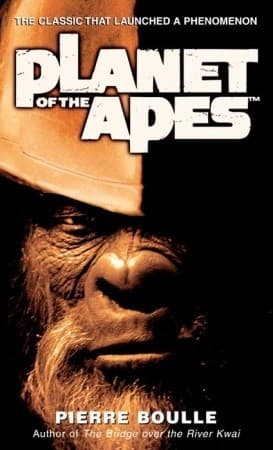
Pierre Boulle (1963)
Genre
Fantasy / Science Fiction
Reading Time
240 min
Key Themes
See below
Sign in to track this book
When a human journalist crash-lands on a planet where intelligent apes dominate and humans are feral beasts, he must fight to prove his sentience before humanity's last spark is extinguished.
The story starts with Jinn and Phyllis, a rich couple on a space cruise. They find a bottle with a manuscript inside. They read it. The manuscript, in French, tells of Ulysse Mérou's amazing and terrible experiences. Jinn and Phyllis, at first doubtful, are drawn into the tale of a planet where apes are the intelligent species, and humans are primitive animals. This setup creates a feeling of wonder and disbelief, hinting at the unusual nature of Ulysse's story and a possible shocking ending.
Ulysse Mérou, a journalist, goes on a space trip to the star Betelgeuse with Professor Antelle, a scientist, and his assistant, Levain. After two years (which feel like months due to time dilation), they find a planet orbiting Betelgeuse, which they name Soror. From space, they see plants and a city, but no clear signs of advanced life. When they land, they meet beautiful, naked, and seemingly primitive humans who act like wild animals, living simply in nature. The three astronauts are happy at first, thinking they have found paradise, but soon realize these humans have no intelligence, language, or self-awareness.
While watching the primitive humans, Ulysse, Antelle, and Levain see a hunt. Gorillas, chimpanzees, and orangutans, dressed, riding horses, and using guns, hunt the wild humans. Professor Antelle and Levain are caught in the stampede. Ulysse, hidden at first, is also captured. This brutal event changes their view of the planet and shows the true order: apes are the intelligent species, and humans are just beasts. The astronauts are now captive animals, no different from the native human population.
Ulysse is taken to a research facility in the ape city, where he is caged with other humans. He is watched, poked, and experimented on, like an animal in a zoo. He sees the different roles of the ape species: gorillas are the military/workers, orangutans are the conservative religious/political leaders, and chimpanzees are the scientists. Professor Antelle, unable to handle the role reversal and shame, quickly becomes animalistic, losing his intelligence and becoming like the native humans. Levain dies during an experiment. Ulysse, however, holds onto his intellect, trying to find a way to show he is human.
During his captivity, Ulysse tries to communicate, drawing shapes and speaking French, but no ape understands him. Zira, a chimpanzee scientist who studies human behavior, notices his efforts. Zira is interested in Ulysse's unusual intelligence, which is far beyond that of other humans she has studied. She starts treating him differently, being kind to him and studying him more closely. She names him 'Ulysse' after a myth, seeing his unique qualities, though she still sees him as a very intelligent animal.
Ulysse's efforts pay off when he says a clear word in French during an experiment. Zira is surprised and brings her fiancé, Cornélius, a chimpanzee scientist, to see it. After much effort, Ulysse shows he can speak and understand. This discovery is important, challenging the apes' long-held beliefs about human inferiority. While Cornélius is careful, Zira becomes Ulysse's supporter, seeing the deep meaning of his intelligence. This event changes Ulysse's captivity, making him a subject of intense scientific and philosophical discussion, not just an animal.
With Zira and Cornélius's help, Ulysse is shown to the ape scientific community. His ability to speak and reason causes a commotion. Some chimpanzees are fascinated, but the conservative orangutan leaders, led by Dr. Zaius, are upset and threatened by Ulysse. They fear that acknowledging human intelligence could upset their society and challenge their myths about ape superiority. Ulysse must learn their language quickly to defend himself and explain where he came from. He tries to tell the story of humanity's advanced civilization, but his claims are met with doubt and hostility from the establishment.
Through talks with Zira and Cornélius, Ulysse learns about ape history and their theories of evolution. The apes believe they evolved from primitive forms to their current state, while humans stayed animalistic. Ulysse tries to present his own theory: that humans were once the main species on Earth, and apes evolved from them. This idea is mocked and seen as heresy by the orangutans. He finds that the apes have old artifacts, which they say are from their own ancestors, but Ulysse recognizes them as possibly human-made, suggesting a hidden past they do not want to face.
Cornélius, driven by science, starts an archaeological dig in a forbidden area outside the city, based on Ulysse's suggestions. He uncovers ruins of an advanced human city, with complex technology and art. This proves that an intelligent human civilization existed on Soror long before the apes became dominant. The evidence goes against the apes' history and religious beliefs. Dr. Zaius and the orangutan council are angry, seeing the threat this poses to their social order. They try to hide the findings, but the truth is known among the scientific chimpanzees.
Despite the political issues, Ulysse, with Zira and Cornélius's help, secretly fixes his spaceship. He takes Nova, a primitive human woman with whom he has a child, with him. Professor Antelle, fully animalistic, is left behind. Ulysse, Nova, and their infant son launch into space, leaving Soror, hoping to return to a civilized Earth. Their escape is a desperate attempt to survive and find a world where intelligence is valued. The future of Soror and the apes, left to deal with the truth of their origins, is unknown.
After another long space journey, Ulysse brings his ship back to Earth. He hopes for a triumphant return to a world of intelligent humans. However, when he lands, he sees a terrible sight: the welcoming committee is uniformed, intelligent gorillas, speaking their own language. A gorilla official approaches his ship, smoking a cigar, and looks at him with scorn. Ulysse is devastated, realizing that Earth has suffered the same fate as Soror. The manuscript ends suddenly, leaving Ulysse's ultimate fate unclear, but suggesting a repeating and unavoidable dominance of apes over humans across the cosmos.
The story returns to Jinn and Phyllis, the space tourists who found Ulysse's manuscript. After reading the tale, they discuss what it means. Jinn dismisses Ulysse's story as a fantasy, especially the idea of intelligent humans. He says, 'It's quite obvious they couldn't possibly have built a civilization like that.' Phyllis agrees, finding the idea funny. The shocking reveal is when the reader realizes that Jinn and Phyllis are intelligent, speaking apes, confirming Ulysse's final, devastating discovery about Earth. This ending shows the widespread nature of the ape-dominated future and recontextualizes the whole story, leaving the reader with a feeling of irony and dread.
The Protagonist
Ulysse starts as an adventurous explorer, is reduced to an animalistic captive, and then fights to regain his status as an intelligent being, only to face ultimate disillusionment upon returning to Earth.
The Supporting
Antelle begins as an intellectual leader but quickly descends into an animalistic state, losing his humanity and becoming a cautionary tale.
The Supporting
Levain's journey is cut short, serving as an early casualty that underscores the peril faced by the human explorers.
The Supporting
Nova remains largely unchanged, representing the static state of primitive humans, but her bond with Ulysse symbolizes a hope for human continuity.
The Supporting
Zira evolves from a curious scientist to a courageous advocate, risking her reputation to support Ulysse and challenge societal norms.
The Supporting
Cornélius transitions from a skeptical scientist to a courageous archaeologist, risking his career to uncover the truth about the planet's history.
The Antagonist
Zaius remains steadfast in his opposition, embodying the resistance of established power to inconvenient truths.
The Mentioned
Jinn serves as a narrative frame, initially a disbelieving reader who is revealed to be part of the very phenomenon Ulysse describes.
The Mentioned
Phyllis serves as a narrative frame, initially a disbelieving reader who is revealed to be part of the very phenomenon Ulysse describes.
The novel shows how quickly civilization and intelligence can be lost. Professor Antelle's fast change to an animal after losing his dignity shows how important environment and psychology are to maintaining human intellect. The story's premise—intelligent humans becoming primitive animals—demonstrates that advanced civilization is not a sure thing, but a delicate structure that can fall, allowing other species to rise. Ulysse's constant effort to stay sane and communicate highlights this fragility.
“What does a man lose when he loses his intellect? His humanity, perhaps. But what is humanity without intellect?”
A main theme is the prejudice shown by both humans and apes. At first, Ulysse and his friends see the native humans as mere animals, not intelligent. This mirrors how the apes treat all humans. The apes, especially the orangutans, strongly believe in their own superiority and human inferiority, refusing to accept any proof that challenges this view. This theme criticizes how societies create hierarchies based on arbitrary differences and how hard it is to overcome deep-seated prejudices, even with clear evidence, as seen with Dr. Zaius's resistance to Cornélius's findings.
“It is quite obvious they couldn't possibly have built a civilization like that.”
The book explores what defines intelligence and the role of communication. Ulysse's struggle to speak and be understood is central to his fight for survival and recognition. The apes' initial inability to understand his language or drawings shows the barriers between intelligent species. The slow process by which Zira and Cornélius come to understand Ulysse shows that intelligence is not just about natural ability but also about shared ways of understanding. The novel suggests that not being able to communicate well can lead a species to be seen as primitive.
“The greatest tragedy is to possess intelligence but lack the means to express it.”
The most important theme is the idea that history and evolution repeat, rather than moving in a straight line. The discovery of a human civilization before the apes on Soror, along with Ulysse's return to an ape-dominated Earth, suggests a recurring pattern where one dominant species rises and falls, only to be replaced by another. This challenges the idea that humans are special and implies a universal rule where intelligence and dominance can shift between species. The ending leaves the reader with a chilling feeling that humanity's fate on Soror is not unique but a possible future for any civilization, including Earth's.
“It was as if the universe had decided, for some unknown reason, to reverse the order of things, not just on Soror, but everywhere.”
The novel warns against the dangers of intellectual and societal stagnation. The apes on Soror, especially the orangutans, resist new ideas and scientific discovery, clinging to tradition and old beliefs. This complacency, driven by fear of challenging their founding myths, stops them from understanding their true history and the threats they face. Similarly, the implied downfall of human civilization on Earth and Soror could be from a form of intellectual or social stagnation that made them vulnerable to being overthrown by a rising species, suggesting that progress and adaptability are important for survival.
“Tradition weighed heavily on their minds, more heavily than any scientific truth.”
A story within a story, found by characters who are later revealed to be significant.
The novel employs a frame story where the primary narrative (Ulysse's account) is discovered as a manuscript in a bottle by two space tourists, Jinn and Phyllis. This device creates immediate intrigue and suspense, as the reader experiences Ulysse's story through the filter of these external characters. The true power of this device is revealed in the final pages when Jinn and Phyllis are shown to be intelligent apes, thus delivering a shocking twist that recontextualizes the entire narrative and foreshadows Ulysse's ultimate fate on Earth. It serves to amplify the irony and the cyclical nature of the plot.
Allows for vast amounts of time to pass on Earth while the protagonists experience only months.
The concept of relativistic time dilation, a real phenomenon in physics, is used to explain the vast time difference between Ulysse's journey and the passage of time on Earth. While Ulysse and his crew experience only a few months during their two-year journey to Betelgeuse, and then their return trip, centuries could have passed on their home planet. This scientific principle is crucial for the shocking ending, enabling Earth to undergo a profound societal transformation (from human to ape dominance) during the protagonists' absence without requiring an implausibly rapid shift in real-time for Ulysse.
Attributes human-like qualities to apes and animalistic traits to humans, reversing societal roles.
Boulle masterfully uses anthropomorphism for the apes, endowing them with complex societies, language, technology, and distinct social classes (gorillas for labor/military, orangutans for politics/religion, chimpanzees for science). Conversely, humans are depicted with animalistic traits, being mute, naked, and treated as beasts. This inversion of traditional roles is the core satirical device of the novel, forcing the reader to confront prejudices and question the inherent superiority of humanity. It highlights the arbitrary nature of 'civilization' and 'barbarism' when species roles are reversed.
The audience knows more about the characters' fate or situation than the characters themselves.
Dramatic irony is prevalent throughout the novel, particularly in the framing device. From the moment Jinn and Phyllis discover the manuscript, the reader is aware that they are intelligent apes, a fact Ulysse Mérou only discovers at the very end of his story. This creates a constant undercurrent of dread and anticipation for the reader, who understands the full implications of Ulysse's narrative in a way Ulysse himself cannot until the final pages. The irony deepens as Jinn and Phyllis dismiss the 'absurd' idea of intelligent humans, unknowingly reading about their own species' rise to power.
Uses humor, irony, or exaggeration to criticize human society and its flaws.
Pierre Boulle uses the ape society on Soror as a satirical mirror to human civilization. The distinct roles of the ape species (gorillas as laborers, orangutans as conservative leaders, chimpanzees as intellectuals) can be seen as exaggerated reflections of human social structures and prejudices. The apes' scientific debates, religious dogma, and political infighting, particularly their resistance to inconvenient truths, are thinly veiled critiques of human institutions. The novel satirizes human arrogance, speciesism, and the fragility of intellectual progress, suggesting that humans are not so different from their simian counterparts.
“Man is truly the king of the animals, for his brutality exceeds theirs.”
— Ulysse Mérou reflects on human nature after observing ape society.
“On the planet Soror, it is the apes who are the masters and men who are the beasts.”
— Ulysse discovers the shocking reversal of roles on the alien world.
“Intelligence is not a monopoly of the human race.”
— Ulysse realizes apes possess advanced cognitive abilities.
“We apes have evolved; you humans have remained in a state of nature.”
— An ape scientist explains the divergence in development.
“The truth is often stranger than fiction, and more terrifying.”
— Ulysse contemplates the bizarre reality he faces.
“In this world, it is not the fittest who survive, but the most adaptable.”
— Reflection on the apes' rise to dominance.
“Language is the key to civilization, and we have lost it.”
— Ulysse observes the primitive state of humans on Soror.
“The apes have built a society on the ruins of human greatness.”
— Description of ape civilization's foundations.
“Fear is the greatest motivator, and the apes fear what they do not understand.”
— Analysis of ape behavior towards humans.
“We are not so different, you and I. We both seek to understand our place in the universe.”
— An ape character expresses a moment of empathy.
“The past is a mirror in which we see our future.”
— Reflection on the cyclical nature of history.
“In the end, it is not strength but wisdom that prevails.”
— Ulysse learns a lesson from the apes' success.
“The line between beast and being is thinner than we think.”
— Philosophical musing on the nature of humanity.
“On Soror, I found a world where my own kind were the monsters.”
— Ulysse's personal realization about humanity.
Ready to see how well you understood this book? Take our interactive quiz with 10 questions.
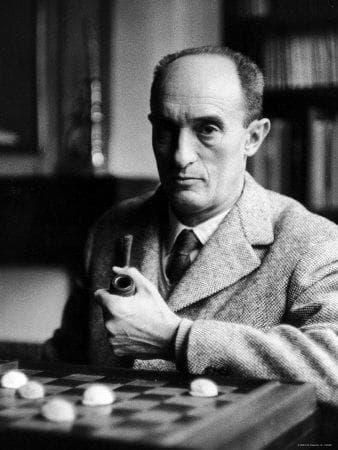
Biography coming soon.







