“A man who is not afraid of the sea will soon be drowned, for he will be going out on a day he shouldn't. But we do be afraid of the sea, and we do be alive.”
— Captain Hunter reflects on the dangers of the ocean and the wisdom of fear.

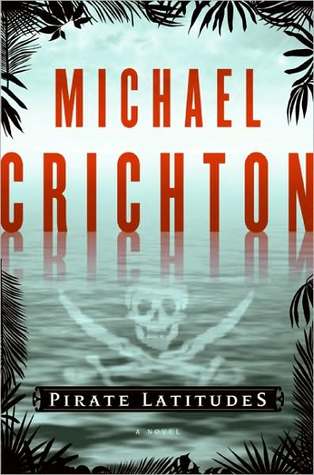
Michael Crichton (2009)
Genre
Thriller / Fantasy / Historical Fiction
Reading Time
360 min
Key Themes
See below
Sign in to track this book
In 1665 Jamaica, a privateer captain gathers a crew to raid a Spanish stronghold and take a treasure ship; his problems just begin after a hard-won victory.
In 1665 Port Royal, Jamaica, Captain Charles Hunter, a privateer, is called by Sir James Almont, the English governor. Almont reveals that a Spanish galleon, the *El Trinidad*, with gold and jewels from New Spain, is in the Spanish harbor of Matanceros, Cuba, for repairs. Almont, wanting to get rich, orders Hunter to gather a crew and capture the *El Trinidad*. This mission is dangerous because Matanceros is guarded by the Spanish commander Cazalla. Hunter has doubts about the defenses and Cazalla's reputation, but Almont's offer of treasure and a hint of being called a coward make Hunter accept the job.
Hunter starts to gather a crew, knowing he needs discretion and skill for this secret operation. He recruits familiar people and new ones, including the giant Lazue, the navigator Sanson, the agile Arabella, and a diver named Enders. Each person has a skill for the raid. Hunter chooses his ship, the *Cassandra*, for its speed. Despite the secrecy, rumors of a treasure hunt spread in Port Royal, attracting dangerous people, but Hunter keeps the real target secret. With supplies loaded and the crew told about their mission, the *Cassandra* sails at night towards Matanceros.
The *Cassandra* approaches Matanceros at night, navigating reefs and avoiding Spanish patrols. Hunter plans to get into the harbor by climbing the cliffs at the entrance. The crew climbs the rock faces using ropes and hooks. They quietly get rid of Spanish guards on the cliffs and at the harbor entrance. Surprise is important, and their stealth helps them get past the main defenses without being noticed. Their goal is to disable the shore batteries and clear a path for the *Cassandra* to enter the harbor and reach the *El Trinidad* undetected.
After disabling the shore batteries, Hunter's crew attacks the *El Trinidad*, anchored near the docks. The Spanish crew, though surprised, fights back. A hand-to-hand fight happens on the galleon's decks. Hunter, Lazue, and Arabella lead the attack, fighting with skill. Many of Hunter's men are hurt or killed, but their desire for the treasure pushes them. The remaining Spanish sailors are overwhelmed and surrender or are thrown overboard. Hunter secures the ship, finding it full of gold, silver, and jewels, confirming the intelligence.
With the *El Trinidad* secured, Hunter tells his crew to get both ships ready to leave. They quickly move supplies and some of the treasure to the *Cassandra*. As they try to leave the harbor, the alarm is raised, and the Spanish commander, Cazalla, mobilizes his forces. Cazalla's ships, including a frigate, chase them. A sea battle happens as Hunter tries to get away from the Spanish fleet. The *Cassandra* and the *El Trinidad* fire cannons at Cazalla's ships, taking damage but staying ahead. Hunter's navigation skills and the speed of the *Cassandra* are tested as they try to escape Cazalla.
During the chase, a kraken comes from the sea, attacking both English and Spanish ships. The squid causes damage, crushing hulls and pulling men into the sea. Many lives are lost as the creature attacks without care. During the kraken's attack, a hurricane hits the Caribbean. The storm is huge, scattering the remaining ships and destroying the fleets. Masts break, sails tear, and hulls are hit by waves. Both the *Cassandra* and the *El Trinidad* are badly damaged, and Cazalla's frigate is also crippled. The natural disasters are more deadly than any battle, leaving few survivors and scattering the treasure.
The *Cassandra* wrecks on a deserted island during the hurricane, along with the damaged *El Trinidad*. Hunter, Arabella, Lazue, Sanson, Enders, and a few other survivors make it to shore. The island is empty, with little food or shelter. Tensions are high among the survivors as supplies run low and the environment is harsh. Hunter tries to keep order and morale, while some crew members, especially Lazue, become resentful and mutinous, questioning Hunter's leadership and the fate of their treasure. The group faces hunger, exposure, and the island's dangers.
Cazalla, who also survived the storm and kraken attack, finds Hunter on the island with his smaller crew. Wanting revenge and to get back the *El Trinidad*'s treasure, Cazalla attacks Hunter's camp by surprise. A long battle follows, with both sides fighting for survival. Hunter and Cazalla fight in a personal duel, driven by their animosity. The island becomes a battlefield, with many casualties. The fate of the treasure and the lives of the survivors are at stake in this fight.
During the final battle or after it, Hunter, perhaps chasing Cazalla or seeking shelter, finds a hidden cove or cave on the island. He finds this is the kraken's lair. Inside the lair, he finds the kraken, and evidence of its activity – not just remains of sea creatures, but also parts of the *El Trinidad*'s cargo, including some treasure, which the kraken had pulled down. This discovery shows the kraken's power and its role in destroying both fleets, adding a supernatural element to the events and explaining why ships disappeared in the region.
As the battle with Cazalla ends, or shortly after, an English ship spots the wreckage and survivors on the island. Hunter and the few remaining crew members, including Arabella, are rescued. However, much of the *El Trinidad*'s treasure is lost to the sea, eaten by the kraken, or too hard to get from the island. Back in Port Royal, Hunter faces the reality of his mission's outcome. He survived, but the fortune he was sent to get is mostly gone, and many of his crew died. He reports to Governor Almont, who is disappointed by the lack of treasure but relieved that Hunter, a valuable asset, returned alive, though without the promised riches.
The Protagonist
Hunter begins as a confident privateer, faces unimaginable challenges that test his leadership and survival skills, and ultimately returns a survivor, though forever changed by the horrors encountered.
The Supporting
Almont remains largely static, a powerful figure who initiates the plot but is unaffected by its direct dangers, driven solely by his desire for wealth.
The Antagonist
Cazalla starts as an imposing military figure, becomes a relentless pursuer, and ultimately meets a violent end in a desperate act of vengeance.
The Supporting
Arabella proves her worth and resilience throughout the perilous journey, surviving against all odds and solidifying her place as a trusted ally.
The Supporting
Lazue transforms from a loyal, powerful first mate to a mutinous threat, driven by greed and desperation, ultimately leading to his demise.
The Supporting
Sanson remains a consistently competent and loyal crew member, a steady presence amidst chaos.
The Supporting
Enders performs his specialized role effectively, a testament to the diverse skills needed for such an ambitious mission.
The Antagonist
The Kraken appears as a force of nature, causing widespread destruction and then retreating to its lair, a primal antagonist.
This theme is a main part of *Pirate Latitudes*, showing how weak humans are against nature. The book clearly shows the force of a hurricane, which destroys both English and Spanish fleets, making human conflict seem small. The kraken, a sea creature, also shows this theme, acting as a force that destroys ships and lives, showing that even pirates and soldiers are at the mercy of the ocean's power. Hunter's fight to survive on the island against hunger and exposure highlights this constant battle.
“The sea, in its indifferent fury, cared nothing for flags or gold, only for the breaking of wood and bone.”
The desire for wealth and power drives almost every character. Governor Almont's desire to get rich for himself and the crown starts the mission. Captain Hunter, while doing his duty, also wants the fortune of the *El Trinidad*. Cazalla wants to get back the treasure and protect his king's assets. This theme is most clear in the crew's increasing tensions and desires for mutiny after the shipwreck, as the promise of gold becomes a fight for survival, showing how greed can ruin alliances.
“Gold, they all knew, was a powerful god, capable of turning men into devils or angels, depending on its presence or absence.”
The story is a constant test of human strength and the will to survive against hard odds. From the raid on a fortified port to escaping an enemy fleet, surviving a kraken attack, and a hurricane and shipwreck, Hunter and his crew are always pushed to their limits. Their resilience is shown through their cleverness in solving problems, their physical toughness in combat, and their mental strength when despairing. The island part of the story especially shows the desperate fight for life.
“In the face of such overwhelming odds, survival itself became the only true treasure.”
*Pirate Latitudes* gives a realistic, harsh picture of 17th-century privateering and piracy. Life in Port Royal is hard, and missions are deadly. The book details hand-to-hand combat, violent deaths, and the constant threat of disease, betrayal, or execution. The characters, though skilled, are often ruthless, reflecting their world. This theme contrasts with romantic ideas of pirate adventures, showing the constant danger, the moral compromises, and the high cost of seeking fortune at sea.
“Life in Port Royal was cheap, and a man could lose it for a shilling or a glance.”
The central object driving the plot and character motivations.
The treasure aboard the Spanish galleon *El Trinidad* serves as the primary MacGuffin in *Pirate Latitudes*. Its immense value and the perceived ease of its capture (initially) propel Captain Hunter and his crew into action. The treasure is the ultimate goal for the English, the object of fierce protection for the Spanish, and the source of both hope and ultimately despair for Hunter's crew. While the pursuit of the treasure drives the entire plot, its eventual loss due to natural forces ironically highlights the futility of human greed against the power of nature, making the journey, not the destination, the true narrative focus.
Non-human elements that act as primary obstacles and catalysts for disaster.
Instead of relying solely on human antagonists, Crichton introduces the Kraken and a devastating hurricane as powerful, indiscriminate forces that act as major antagonists. These natural elements decimate both the English and Spanish fleets, effectively leveling the playing field and forcing characters to confront primal threats beyond human control. This device shifts the narrative from a purely historical naval adventure to a struggle for survival against the raw power of the natural world, adding a layer of unpredictability and terror that human adversaries alone could not provide, and ultimately leading to the loss of the MacGuffin.
A sustained chase sequence that heightens tension and character stakes.
The desperate pursuit by Cazalla's Spanish fleet after the capture of the *El Trinidad* serves as a prolonged and high-stakes plot device. This continuous chase maintains intense suspense, forcing Hunter to constantly outmaneuver his relentless enemy. It compresses time and space, bringing the two opposing forces into repeated, brutal confrontations. The pursuit escalates the personal vendetta between Hunter and Cazalla, making their eventual showdown on the island even more impactful. It also provides the perfect setting for the introduction of the kraken and the hurricane, as both fleets are vulnerable while engaged in this high-tension chase.
A confined, resource-scarce environment that amplifies conflict and desperation.
The deserted island where Hunter's and Cazalla's shipwrecked crews find themselves serves as a crucial isolated setting. This environment strips characters of their ships, resources, and the familiar structures of civilization, forcing them into a primal struggle for survival. The scarcity of food and water, combined with the psychological toll of isolation, intensifies internal conflicts among Hunter's crew, leading to mutiny, and sets the stage for the final, brutal confrontation with Cazalla. The island's hidden kraken lair further emphasizes its role as a place of both despair and terrifying discovery.
“A man who is not afraid of the sea will soon be drowned, for he will be going out on a day he shouldn't. But we do be afraid of the sea, and we do be alive.”
— Captain Hunter reflects on the dangers of the ocean and the wisdom of fear.
“In this world, a man makes his own luck.”
— Hunter advises his crew on taking initiative in their pirate endeavors.
“The sea does not forgive. It does not forget.”
— A sailor warns about the unforgiving nature of the ocean.
“Gold is the only true king in these waters.”
— A pirate declares the primacy of treasure in their world.
“Every man has a price, and every woman, too.”
— Hunter comments on human nature and corruption in the Caribbean.
“A ship is only as good as her crew.”
— Emphasizing teamwork and loyalty among pirates.
“The wind favors the bold, not the cautious.”
— Encouraging daring actions in sailing and piracy.
“In the end, we are all slaves to our desires.”
— A philosophical observation on human motivations.
“Trust is a luxury we cannot afford.”
— Warning about the treacherous nature of pirate alliances.
“The horizon holds both promise and peril.”
— Reflecting on the dual nature of exploration at sea.
“A sharp mind is worth more than a sharp sword.”
— Highlighting the importance of strategy over brute force.
“We are not men of honor, but men of opportunity.”
— A pirate justifies their actions in the lawless Caribbean.
“The sea whispers secrets to those who listen.”
— A mystical take on the ocean's allure and mystery.
“In this life, you either take or you are taken.”
— A grim view of the pirate world's survival of the fittest.
Ready to see how well you understood this book? Take our interactive quiz with 10 questions.

Biography coming soon.







