“The Beauty of the House is immeasurable; its Kindness infinite.”
— Piranesi's initial, profound belief about the House.

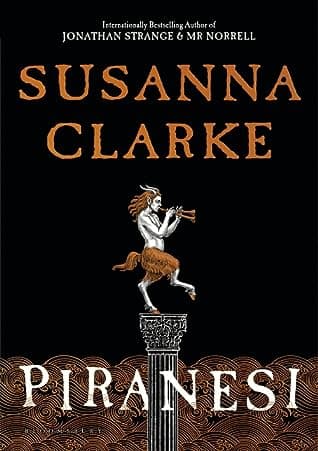
Susanna Clarke (2020)
Genre
Literary Fiction / Fantasy / Mystery / Science Fiction
Reading Time
240 min
Key Themes
See below
Sign in to track this book
In a vast house of classical statues and surging tides, Piranesi's calm life with 'The Other' falls apart as forgotten memories hint at a dark truth beyond his labyrinthine world.
Piranesi, the narrator, lives in a huge House made of countless halls, each filled with statues and affected by massive tides that flood the lower levels. He carefully records the House's features, its birds' behavior, and the tides' patterns in his journals. He believes he is the only human, besides 'The Other,' a man he meets twice a week in the Vestibule. The Other is an older, well-dressed man who talks with Piranesi about 'A Great and Secret Knowledge,' asking for Piranesi's help finding specific old knowledge within the House. Piranesi accepts his role as a researcher, despite having memory gaps and only a vague understanding of his past.
Piranesi helps The Other in his search for 'A Great and Secret Knowledge,' believing it will unlock the House's mysteries. The Other often asks Piranesi about his memories, especially before the House, but Piranesi's memories are broken and unreliable. The Other dismisses Piranesi's detailed observations of the House's natural events, like the tides and birds, as unrelated to their goal. He encourages Piranesi to focus on theories and 'ancient knowledge,' subtly guiding Piranesi's research while acting superior. Piranesi, eager to please and fulfill his role, continues his explorations with renewed effort.
While exploring a distant part of the House, Piranesi finds proof of another person's presence. He finds an old, discarded backpack, a can of food, and a note written in a language he does not fully understand, referring to '16.' This discovery deeply disturbs Piranesi, as The Other has always said that only two people, himself and Piranesi, exist in the House. The idea of a third person, possibly alive, goes against everything he has been told and makes him question his reality. He begins to doubt The Other's honesty and the truth of his own existence.
Piranesi finds a hidden journal in a statue niche he had not explored before. The journal, written in his own hand but with a different tone, talks of a 'Labyrinth' and a 'Minotaur.' This discovery is deeply upsetting, as Piranesi has no memory of writing it. The journal entries describe an experiment and a person named 'Ket-tering,' who seems to be an earlier version of himself. The entries also say the House is not just halls but a built environment, a prison. This reveal shatters Piranesi's calm view of the House and plants the seed of doubt about The Other's real intentions and his own identity.
Piranesi receives a mysterious message carved into a statue: 'LOOK FOR 16. FIND 16. 16 IS THE ONLY FRIEND YOU HAVE.' This message, seemingly from the unknown third person, strengthens the idea of a hidden truth. At the same time, The Other becomes more agitated and avoids questions, demanding Piranesi keep their meetings secret and warning him against seeking others. Piranesi, torn between The Other's warnings and the clear evidence of a forgotten past, feels a growing need to uncover the truth about 16 and his own identity. The message pushes Piranesi to secretly rebel against The Other's control.
Piranesi's memories start to return in clear, confusing flashes. He remembers being Dr. Raphael Ketterley, an academic who studied unusual knowledge. He was drawn into a dangerous partnership with Laurence Arne-Sayles. Arne-Sayles, a smart but immoral scholar, believed in other worlds and wanted to use them. Piranesi realizes that The Other is Laurence Arne-Sayles, and the House is not an ancient, mystical place, but a carefully built prison meant to take knowledge from him. His 'amnesia' was from a traumatic event caused by Arne-Sayles.
Piranesi confronts Arne-Sayles with his returning memories, accusing him of manipulation and imprisonment. Arne-Sayles, at first dismissive, eventually admits his plan, revealing he lured Ketterley into the House to use his unique ability to see and navigate its complex structure. The 'Great and Secret Knowledge' was just an excuse to keep Ketterley focused and obedient. The House, far from being sacred, is a complex, self-sustaining prison, a psychic trap designed by Arne-Sayles. Piranesi feels a deep betrayal and anger, realizing his entire life within the House was a lie created by Arne-Sayles.
Piranesi's memories become clear, and he recalls Sarah Raphael, a police detective investigating Ketterley's disappearance. She was the one leaving the cryptic messages, trying to guide him to safety and help him remember. Sarah Raphael, called '16' in her messages, represents hope and a link to the outside world. She had been working hard to find and free him, knowing he was trapped by Arne-Sayles. This reveal changes Piranesi's view from victim to someone involved in his own rescue, giving him a renewed sense of purpose and control.
Guided by Sarah Raphael's instructions and his fully restored memories, Piranesi (now Ketterley) finds a hidden exit from the House. He and Sarah escape, leaving Arne-Sayles trapped inside the labyrinth. The move to the outside world is jarring for Ketterley, who struggles to understand modern society's vastness and complexity compared to the House's ordered, though confined, reality. He feels a deep loss for the House, which, despite being his prison, had also been his entire world and held a strange beauty for him. The escape is freedom but also a separation from everything he knew.
Back in the outside world, Ketterley struggles to adjust. He finds comfort in nature, especially the ocean and sky, which remind him of the House's tides and clouds. He continues to see the world's beauty and patterns through his time in the House, finding connections and meaning where others might not. He remains friends with Sarah Raphael, who helps him navigate his new reality. While no longer imprisoned, the House stays a significant part of his identity, shaping his perception and offering a unique view of existence. He finds himself still drawn to its memory, appreciating its unique beauty even as he understands its cruelty.
The Protagonist
Piranesi transforms from a contented prisoner with fragmented memories into Dr. Ketterley, a man who reclaims his identity, confronts his captor, and begins the difficult process of reintegrating into the outside world, forever changed by his experience.
The Antagonist
Arne-Sayles remains largely static in his ambition and cruelty, though his control over Piranesi ultimately crumbles, leading to his own isolation within the House.
The Supporting
Sarah Raphael's arc is one of unwavering dedication, culminating in her successful rescue of Ketterley and her continued support in his reintegration.
The Mentioned
Valence's arc is largely in the past, serving as a tragic precursor to Ketterley's own imprisonment, highlighting Arne-Sayles's pattern of exploiting and discarding others.
The novel explores how reality is built through perception, memory, and outside influence. Piranesi's first reality in the House, full of calm beauty and purpose, is shaped by his limited memories and The Other's manipulation. As his memories return, his view of the House changes from a wonderful sanctuary to a cruel prison. This theme asks what is truly real and how much our understanding of the world is subjective and open to outside forces. For example, Piranesi's detailed observations of the tides and statues are 'real' to him, but The Other dismisses them as unimportant, showing the clash between personal experience and imposed stories.
“Perhaps it is the statues that are to be understood as people, and we are merely the birds, the fish, the clouds.”
Memory is central to Piranesi's identity. His amnesia, caused by trauma from Arne-Sayles, takes away his past and allows a new identity to form. The gradual return of his memories is a painful but necessary process of reclaiming his true self, Dr. Raphael Ketterley. The novel suggests that without a complete memory, a person's identity is fragile and easily manipulated. The trauma of his imprisonment and the recovery of his memories show how identity is not fixed but a changing process of remembering and combining past experiences, even the most painful ones.
“I understood that the Other had not only stolen my memories, but had stolen my very self.”
The House is both a physical and psychological prison. Piranesi first sees his life within its endless halls as one of purpose and freedom, as he can explore and record. However, this freedom is an illusion, depending on his ignorance of his true situation and Arne-Sayles's control. The contrast between his perceived freedom and actual imprisonment shows how sneaky psychological manipulation can be. True freedom comes only when he remembers his past and escapes, even if the outside world at first feels confusing and limiting. His eventual appreciation for the House's beauty, despite it being a prison, adds complexity to this theme.
“The House is my friend. It is my home. It is all the World.”
The Other's endless search for 'A Great and Secret Knowledge' shows how obsessive intellectual ambition can corrupt. Arne-Sayles is willing to sacrifice human lives and ethical limits in his quest for power through unusual understanding. He sees people as tools to reach his intellectual goals, not as individuals with inherent worth. This theme serves as a warning against the unchecked pursuit of knowledge, especially when it loses empathy and moral responsibility. The destruction and suffering caused by his experiments highlight that some knowledge comes at too high a price.
“The Other had always talked of Knowledge as if it were a beautiful, precious thing. But I had come to see that it could also be a terrible weapon.”
Piranesi's fragmented memories and biased perspective initially obscure the truth of his situation.
The narrative is entirely from Piranesi's first-person perspective, but his memories are incomplete and actively suppressed. This makes him an unreliable narrator, as his understanding of his world and his past is flawed. The reader experiences his reality as he perceives it, leading to a gradual unveiling of the truth alongside him. This device creates suspense and mystery, forcing the reader to question everything Piranesi believes and making the revelations about his true identity and the House's nature all the more impactful.
The infinite, statue-filled House functions as both a physical prison and a symbolic representation of the mind.
The House is not merely a setting but a central character and a powerful symbol. Its infinite, repetitive halls and the constant, unpredictable tides create a sense of both wonder and entrapment. Physically, it is Piranesi's prison. Symbolically, it represents the labyrinth of the mind, particularly Piranesi's own fragmented memory and his struggle to find his way out of the mental maze imposed by Arne-Sayles. The statues, each unique, can be seen as fragments of memory or potential selves, waiting to be discovered.
Piranesi's meticulous journals and found notes serve as crucial clues and a record of his evolving understanding.
Piranesi's journals are a primary means by which the plot unfolds and the mystery deepens. Initially, they reflect his serene, but limited, understanding of the House. Later, the discovery of his 'other' journal, written by Dr. Ketterley, provides critical information about his past and Arne-Sayles's experiments. The cryptic notes from '16' (Sarah Raphael) also serve as vital breadcrumbs, guiding Piranesi towards the truth. These written artifacts provide objective evidence that contrasts with Piranesi's subjective, manipulated memories, helping both him and the reader piece together the fragmented reality.
References to Greek myths subtly foreshadow the House's true nature as a prison and its inhabitants' roles.
The novel subtly employs allusions to classical Greek myths, particularly the Labyrinth and the Minotaur. The House itself is a labyrinth, a place of confinement and disorientation. Piranesi, in his initial state of amnesia and exploration, is akin to Theseus trying to navigate the maze, while Arne-Sayles embodies the manipulative and dangerous Minotaur figure, trapping others within his constructed world. These allusions enrich the narrative, providing a mythical framework that hints at themes of imprisonment, hidden monsters, and the quest for liberation, even before these elements are explicitly revealed.
“The Beauty of the House is immeasurable; its Kindness infinite.”
— Piranesi's initial, profound belief about the House.
“Perhaps I am the first person ever to be in the House. Perhaps I am the only person.”
— Piranesi contemplating his unique existence within the House.
“The House is not an ordinary place. It is a place of wonder and mystery, of beauty and terror.”
— Piranesi reflecting on the extraordinary nature of his world.
“It seems to me that the only way to understand the House is to live in it. To experience it. To observe it.”
— Piranesi describing his methodology for understanding his environment.
“I am not mad. I am not mad. I am not mad.”
— Piranesi's internal mantra as he grapples with confusing revelations.
“The stars are not stars. They are the eyes of the House.”
— Piranesi's poetic and personified view of the celestial bodies within his world.
“I have no memory of a world outside the House. I have no desire for one.”
— Piranesi expressing his contentment and lack of external longing.
“The House is the only thing that is real. Everything else is a dream.”
— Piranesi's unwavering conviction about the reality of his world.
“There are no doors in the House, only arches.”
— A simple observation by Piranesi that highlights the House's unique architecture.
“My mind is a House of many rooms, and some of them are locked.”
— Piranesi reflecting on his own fragmented memory and identity.
“To be lost is to be found, in a way.”
— Piranesi musing on the nature of being lost and the potential for discovery within it.
“I am not a prisoner. I am a resident.”
— Piranesi's defiant assertion of his status within the House, refuting an external label.
“The House is a labyrinth, but it is also a home.”
— Piranesi's dual perception of the House as both complex and comforting.
“The tide comes in, and the tide goes out. It is the rhythm of the House.”
— Piranesi observing the regular, natural cycles within the House.
“My journal is my only companion, my only confidant.”
— Piranesi highlighting the importance of his writings in his isolated life.
Ready to see how well you understood this book? Take our interactive quiz with 10 questions.
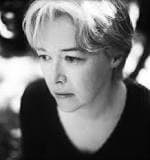
Susanna Mary Clarke is an English author known for her debut novel Jonathan Strange & Mr Norrell (2004), a Hugo Award-winning alternative history. Clarke began Jonathan Strange in 1993 and worked on it during her spare time. For the next decade, she published short stories from the Strange universe, but it was not until 2003 that Bloomsbury bought her manuscript and began work on its publication. The novel became a best-seller.







