“I have never tried that before, so I think I should definitely be able to do that.”
— Pippi expresses her confidence in trying new things, reflecting her adventurous spirit.

Astrid Lindgren (1988)
Genre
Fantasy / Children's / Young Adult
Reading Time
160 min
Key Themes
See below
Sign in to track this book
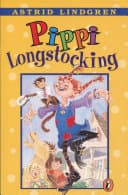
With a horse on her porch, a monkey on her shoulder, and a boundless spirit, Pippi Longstocking turns the ordinary world of Tommy and Annika upside down with her unconventional adventures.
Tommy and Annika Settergren, two well-behaved and ordinary children, live in a quiet town. Their lives take an unexpected turn when a new resident moves into the abandoned house next door, Villa Villekulla. This new neighbor is nine-year-old Pippi Longstocking, an incredibly strong, red-haired girl with pigtails that stick straight out. She lives alone, accompanied only by her pet monkey, Mr. Nilsson, and a horse, which she keeps on her porch. Pippi introduces herself to Tommy and Annika, immediately captivating them with her unconventional ways, her trunk full of gold coins, and her tales of adventure with her sea captain father. The children are instantly drawn to her freedom and unique perspective on life.
On their first visit to Villa Villekulla, Tommy and Annika see Pippi's strength firsthand. She effortlessly lifts her horse onto the porch and shows how she bakes pancakes by tossing the dough into the air. During breakfast, Pippi prepares for her friends a peculiar meal, which includes a lot of sugar and unconventional ingredients. She also tells a tall tale about a country where people walk on their hands. Tommy and Annika are amazed by her physical prowess and her imagination, finding her completely unlike any adult or child they have ever met. They spend the day playing with her, enchanted by her world.
Tommy and Annika are concerned that Pippi is missing out on an education and convince her to try going to school with them. Pippi agrees, but her time in the classroom is short and chaotic. She struggles with following rules and sits on her desk, draws on the floor, and offers her own unique, often nonsensical, answers to the teacher's questions. When asked to do arithmetic, she invents her own calculations, and during a lesson on geography, she claims to have visited every country. The teacher, though initially patient, eventually realizes that Pippi is unsuited for the rigid structure of school, and Pippi decides she's had enough, returning home to her adventures.
When a circus comes to town, Tommy and Annika invite Pippi to join them. At the circus, Pippi's antics steal the show. She challenges the strongman, Mighty Adolf, and easily lifts him above her head, much to the crowd's astonishment. She then joins a tightrope walker on the rope, showing no fear, and even rides a horse standing up, performing tricks that outshine the professional performers. The circus director is amazed and tries to hire her, but Pippi declines, preferring her freedom. Her performance becomes the talk of the town, cementing her reputation for strength and fearlessness.
Pippi decides to host a coffee party for Tommy and Annika. It is far from a traditional affair. She bakes a huge cake and serves it with a variety of sweets, encouraging her friends to eat as much as they like. During the party, she tells more of her fantastic stories, including one about a girl who fell into a well and was rescued by a strong man. Her table manners are unconventional, but the children enjoy the relaxed and fun atmosphere. The party is filled with laughter and Pippi's exuberance, making it a memorable event for her friends.
One night, two burglars, Bloom and Thunder-Karlsson, hear rumors of Pippi's trunk full of gold coins and decide to break into Villa Villekulla. They sneak into her house while Pippi is asleep, but she quickly awakens. Instead of being scared, Pippi treats them like playthings. She makes them dance, lifts them into the air, and throws them around the room. The baffled and bruised thieves are no match for her strength. After a comical ordeal, Pippi sends them away empty-handed, even giving them a single gold coin each as a 'consolation prize' for their trouble, leaving them bewildered by their failed attempt.
A fire breaks out in a tall building in town, trapping several children on an upper floor. The fire department struggles to reach them. Pippi, seeing the chaos, quickly acts. Using her strength, she finds a long plank of wood, props it against the building, and climbs up with agility. She then carries the children down to safety, one by one, to the relief and amazement of the crowd below. Her selfless act of heroism further solidifies her reputation as an extraordinary and kind-hearted individual, despite her often mischievous demeanor.
Pippi decides she needs some new clothes and takes Tommy and Annika with her on a shopping trip. In the clothing store, Pippi's choices are, as expected, unconventional. She tries on various outfits, often wearing them in peculiar ways or combining clashing styles. She also buys an excessive amount of candy and toys, paying for everything with handfuls of her gold coins. The shopkeepers are initially perplexed by her methods but are happy with the large purchases. Pippi's shopping excursion turns into another lively and amusing adventure, demonstrating her disregard for social norms and her generosity.
Pippi receives a letter from her father, Captain Longstocking, inviting her to join him on his ship, the Hoptoad, to sail the seas once more. Tommy and Annika are heartbroken at the thought of Pippi leaving. Pippi, too, feels a pang of sadness at the idea of leaving her friends. She throws a grand farewell party for them, filled with games and treats. However, during the party, Pippi realizes how much she loves Villa Villekulla and her friends. She makes a sudden decision to stay, much to the joy of Tommy and Annika, who are thrilled their extraordinary neighbor will remain.
As Christmas approaches, Pippi ensures that Tommy and Annika have an unforgettable holiday. She decorates Villa Villekulla in her own exuberant style, creating a festive atmosphere. She prepares a lavish Christmas feast, complete with many cakes and sweets. Pippi also gives generously, making sure her friends receive wonderful and unique gifts. Her energy and joyful spirit infuse the holiday with extra magic and fun. The chapter shows Pippi's warmth and her ability to make every occasion extraordinary, reinforcing her special bond with Tommy and Annika as they celebrate together.
The Protagonist
Pippi remains largely unchanged throughout the series, her primary arc being to bring joy and adventure to Tommy and Annika's lives and find a sense of belonging in Villa Villekulla.
The Supporting
Tommy's arc involves embracing spontaneity and fun, learning to look beyond conventional rules through Pippi's influence.
The Supporting
Annika's arc involves overcoming her initial cautiousness to fully enjoy the freedom and excitement Pippi brings.
The Supporting
Mr. Nilsson remains a constant, loyal companion, reflecting Pippi's unchanging nature.
The Supporting
The horse serves as a consistent symbol of Pippi's power and unconventional life.
The Mentioned
Captain Longstocking's arc involves his eventual return, offering Pippi a choice between her independent life and joining him at sea.
The Supporting
The teacher's arc involves recognizing and accepting that not all children fit into traditional educational molds.
The Antagonist
Their arc involves attempting a crime and failing spectacularly, learning a lesson about underestimating others.
Pippi Longstocking embodies freedom and independence. Living alone without adult supervision, she makes her own rules, sets her own bedtime, and spends her money as she pleases. Her lack of conventional constraints allows her to pursue any adventure she desires, from joining the circus to sailing the seas. This theme is evident in her refusal to conform to school rules, her unique way of managing her household, and her ability to make her own decisions, inspiring Tommy and Annika to embrace a similar sense of liberation from strict rules.
“''I don't need any parents to tell me what to do. I have a monkey and a horse, and I live in a house all by myself.''”
Pippi's world is driven by imagination and a playful spirit. She invents fantastic stories, engages in imaginative games, and sees the world through a lens of wonder and possibility. Her ability to turn ordinary situations into extraordinary adventures, like her coffee parties or her shopping trips, shows how play can transform reality. Tommy and Annika, initially constrained by their ordinary lives, are drawn into Pippi's imaginative world, learning to embrace spontaneity and find joy in unconventional activities. This theme suggests that imagination is a powerful tool for enjoying life.
“''I've invented a new game. We'll pretend that the floor is a raging river and we have to jump from chair to chair to avoid being swept away!''”
Pippi consistently challenges adult authority and societal expectations. Her brief stint at school, where she sits on her desk and offers nonsensical answers, directly confronts the rigid structure of education. Her unconventional manners, her living arrangements, and her interactions with adults like the teacher or the police illustrate her disregard for established norms. This theme explores the idea of questioning rules that seem arbitrary and highlights the humor and sometimes wisdom in viewing the world from an entirely different, uninhibited perspective. Pippi encourages critical thinking about why things are done a certain way.
“''Why should I learn to read? I can get along perfectly well without it. And besides, I know a lot more than the teachers do anyway.''”
Pippi's superhuman strength is not just comedic but a central aspect of her self-reliance. She doesn't need adults to protect or provide for her; she can lift her horse, fend off burglars, and even rescue children from a fire. This physical strength is mirrored by her emotional and mental resilience. She is never lonely or afraid, confident in her own abilities to handle any situation. This theme shows the importance of inner and outer strength, demonstrating that one can be capable and independent regardless of age or conventional expectations.
“''I am the strongest girl in the world!''”
Despite her eccentricities, Pippi forms a deep and meaningful friendship with Tommy and Annika. They accept her for who she is, without trying to change her. Pippi, in turn, offers them adventure, excitement, and unconditional companionship. The theme shows the joy that diverse friendships can bring, where differences are celebrated rather than criticized. Pippi's decision to stay in Villa Villekulla, rather than sail with her father, shows the value she places on her connection with her friends, demonstrating the importance of belonging and mutual affection.
“''It's so good to have friends, isn't it? Especially when they're as nice as you two.''”
Used to create Pippi's extraordinary abilities and comedic situations.
Hyperbole is a fundamental plot device, central to Pippi's character and the book's humor. Pippi's superhuman strength, her ability to lift a horse, defeat strongmen, and carry adults are all examples of extreme exaggeration. Her tall tales, like those of her travels or the strange customs of other countries, also employ hyperbole. This device serves to establish Pippi as a larger-than-life character, making her adventures fantastic and memorable, and allowing for comedic and impossible situations that defy logic and delight young readers. It creates a sense of wonder and fun that defines the narrative.
The integration of extraordinary elements into an otherwise ordinary world.
The book blends elements of fantasy into a realistic setting, creating a sense of magical realism. Pippi's strength, her talking monkey, and her trunk of gold coins are fantastical elements that exist without extensive explanation within the otherwise normal Swedish town where Tommy and Annika live. This device allows for the suspension of disbelief, creating a world where the extraordinary is simply accepted, rather than questioned. It emphasizes the idea that magic can be found in everyday life and that a child's perspective can transform the mundane into the marvelous.
Tommy and Annika serve as a contrast to Pippi's wild nature.
Tommy and Annika Settergren act as foil characters to Pippi. Their well-behaved, polite, and conventional natures highlight Pippi's wild, independent, and unconventional personality. By presenting Pippi against the backdrop of their ordinary lives, the author emphasizes Pippi's unique qualities and the refreshing impact she has. The children's initial shock and subsequent delight at Pippi's antics allow the reader to experience Pippi's world through a relatable lens, making her extraordinary actions stand out even more. This contrast underscores the themes of freedom and challenging norms.
A series of self-contained adventures, loosely connected.
The novel is structured as a series of largely self-contained episodes or vignettes, each detailing a different adventure or escapade of Pippi's. While there's an overarching narrative of Pippi living in Villa Villekulla and her friendship with Tommy and Annika, most chapters present a new challenge or situation that Pippi resolves in her unique way (e.g., going to school, visiting the circus, dealing with thieves). This episodic structure makes the book highly accessible for young readers, allowing each chapter to offer a complete, satisfying story, while still contributing to the overall character development and world-building.
“I have never tried that before, so I think I should definitely be able to do that.”
— Pippi expresses her confidence in trying new things, reflecting her adventurous spirit.
“Don't you worry about me. I'll always come out on top.”
— Pippi reassures her friends Tommy and Annika of her resilience.
“I am the strongest girl in the world.”
— Pippi declares her physical strength, a key trait of her character.
“If I were a bird, I'd fly away to the moon.”
— Pippi muses whimsically about freedom and imagination.
“It's not easy to be a pirate, but it's fun.”
— Pippi reflects on her adventurous life as a pirate's daughter.
“I don't know what I'm going to do, but something great.”
— Pippi expresses her optimistic and spontaneous approach to life.
“You understand Teacher, don't you know that you have to be a little bit crazy to live in this world?”
— Pippi challenges conventional wisdom during a school visit.
“I have a horse on my porch and a monkey on my shoulder, and that's the way I like it.”
— Pippi describes her unconventional household with pride.
“When I grow up, I'm going to be a pirate, of course.”
— Pippi declares her career aspirations to Tommy and Annika.
“It's good to have money and all that, but you also have to have a little fun.”
— Pippi comments on balancing practicality with enjoyment.
“I don't think I'll ever be a grown-up. They don't know how to have fun.”
— Pippi critiques adulthood while celebrating childhood joy.
“If you're very strong, you must also be very kind.”
— Pippi explains her philosophy of using strength for good.
“Life is a grand adventure, or it is nothing.”
— Pippi summarizes her outlook on living fully and boldly.
“I can do anything I want, and so can you.”
— Pippi encourages others to embrace their freedom and potential.
Ready to see how well you understood this book? Take our interactive quiz with 10 questions.
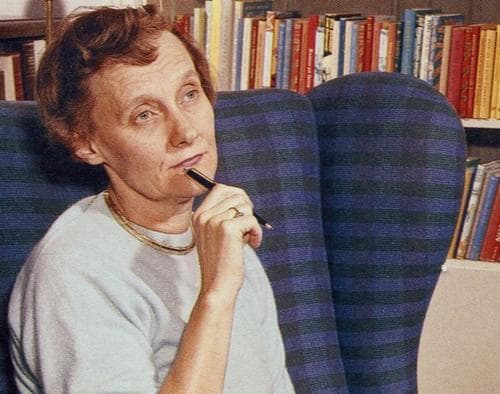
Astrid Anna Emilia Lindgren was a Swedish writer of fiction and screenplays. She is best known for several children's book series, featuring Pippi Longstocking, Emil of Lönneberga, Karlsson-on-the-Roof, and the Six Bullerby Children, and for the children's fantasy novels Mio, My Son, Ronia the Robber's Daughter, and The Brothers Lionheart. Lindgren worked on the Children's Literature Editorial Board at the Rabén & Sjögren publishing house in Stockholm and wrote more than 30 books for children. In 2017, she was calculated to be the world's 18th most translated author. Lindgren had by 2010 sold roughly 167 million books worldwide. In 1994, she was awarded the Right Livelihood Award for "her unique authorship dedicated to the rights of children and respect for their individuality." Her opposition to corporal punishment of children resulted in the world's first law on the matter in 1979, while her campaigning for animal welfare led to a new law, Lex Lindgren, in time for her 80th birthday.







