“War is a monster.”
— Saylor's mother says this to him as he prepares to leave for the war.

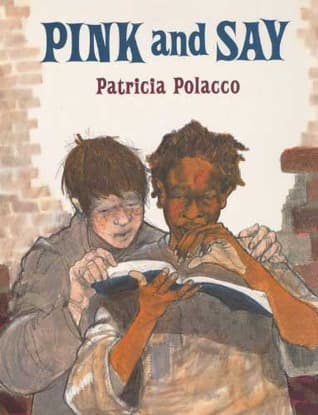
Patricia Polacco (1994)
Genre
Children's / Historical Fiction
Reading Time
15 min
Key Themes
See below
Sign in to track this book
During the Civil War, a white Union soldier's life changes forever when a young Black soldier saves him, making him face the harsh truth of slavery and the pointlessness of war.
The story begins with Sheldon Russell Curtis, a fifteen-year-old white Union soldier from Ohio, badly wounded and left on a Civil War battlefield. He lies among the dead, sure he will die soon. His leg is broken, and he is weak from blood loss and fear. As night falls and battle sounds fade, a young Black soldier, Pinkus Aylee, finds Sheldon. Despite the danger and racial bias of the time, Pinkus, a soldier from the 48th Colored Troops, risks his life to save Sheldon, lifting him onto his back and carrying him away from the fighting, toward an unknown safety.
Pinkus, with great strength, carries the much larger Sheldon through the night. Sheldon, half-conscious and in pain, knows Pinkus is trying to save him and that Confederate patrols are a constant threat. Pinkus reassures him and keeps going, speaking softly of reaching his home where his mother, Moe Moe, can treat Sheldon's wounds. The journey is hard and dangerous, but Pinkus's steady resolve keeps them moving toward the hidden farm that is their only hope for shelter and medical care far behind enemy lines.
At Pinkus's small, isolated farm, Sheldon meets Moe Moe, Pinkus's mother. She is a strong, wise woman who immediately takes charge of Sheldon's care. With gentle hands, she cleans and bandages his infected wound, using traditional remedies and her knowledge of healing. Sheldon, at first cautious due to his ingrained biases, is deeply moved by her kindness. Moe Moe treats him like her own son, providing food, comfort, and a safe place, knowing the great danger she and Pinkus are in for hiding a white Union soldier, especially with Confederates in the area.
While Sheldon recovers, he and Pinkus talk, sharing stories about their lives before the war. Sheldon tells about his family's farm in Ohio and his simple life. Pinkus, in turn, shares his experiences growing up as a free Black man in the South, explaining his choice to fight for the Union to ensure freedom for everyone, especially his enslaved ancestors. Despite their different backgrounds and the social rules of the time, a close friendship and mutual respect grow between them. They see each other's humanity and their shared wish for peace and justice, going beyond the racial lines society had drawn.
One day, Pinkus takes out a worn Bible, his only book, and starts to read from it. Sheldon admits he cannot read, which surprises Pinkus. Pinkus, who values reading as a way to freedom and knowledge, decides to teach Sheldon. He patiently guides Sheldon through the letters and words, showing the power of reading. For Pinkus, reading is not just a skill but a symbol of the freedom he is fighting for, a freedom he hopes will one day extend to all people, including his own mother.
As Sheldon's leg starts to heal, a feeling of dread settles over the farm. One morning, the quiet is broken by the sound of approaching horses. A Confederate patrol, having gotten a tip or just scouting, finds the isolated farm. There is no time to hide. The soldiers quickly overrun the small home, capturing both Sheldon and Pinkus. Moe Moe tries to step in, begging for her son and the wounded soldier, but her pleas are ignored. The harsh reality of war and its brutal results comes down on them, ending their short time of safety.
The Confederate soldiers question Sheldon, demanding to know why he, a white Union soldier, was being sheltered by a Black family. They threaten him with serious consequences if he does not cooperate. Facing the immediate threat of death, and understanding his captors' racial biases, Sheldon is pressured to deny his friendship with Pinkus and to distance himself from the Black family. He is offered a chance to save himself by rejecting Pinkus, a choice that weighs heavily on his conscience, forcing him to face the moral complexity of his situation and the ultimate test of his character.
Despite Sheldon's desperate inner struggle and the Confederates' attempts to separate them, the bond between Sheldon and Pinkus remains clear. The Confederates, seeing Pinkus as a Black Union soldier, treat him with extreme cruelty. They separate the two friends, taking Pinkus away while leaving Sheldon, likely because of his visible injury and race. As Pinkus is led away, he turns back, and his eyes meet Sheldon's, a silent goodbye passing between them, full of unspoken thanks, fear, and deep loss. This is their last interaction.
Sheldon, despite his injury, is not released. Instead, he is sent to Andersonville Prison, one of the most notorious Confederate prisoner-of-war camps. There, he endures terrible conditions: hunger, disease, exposure, and constant brutality. The experience is a living hell, harming him both physically and emotionally. He sees unspeakable suffering and death daily, a sharp contrast to the brief peace and kindness he found with Pinkus and Moe Moe. The memory of Pinkus and his mother, and the lessons learned, become a source of strength for Sheldon amidst the despair.
After the war ends, Sheldon, a thin and broken man, is among the few survivors of Andersonville. He eventually returns home, changed forever by his experiences. He asks about Pinkus, hoping to find his friend alive. The news he gets is crushing: Pinkus Aylee, a soldier of the 48th Colored Troops, was taken to a nearby field and hanged immediately upon capture, a common and brutal fate for Black Union soldiers captured by the Confederacy. This news crushes Sheldon, confirming his worst fears and cementing the tragic end of his friendship.
Sheldon Russell Curtis carries the memory of Pinkus and Moe Moe for the rest of his long life. The lessons of courage, compassion, and the pointlessness of war, taught to him by his Black friends, stay deeply with him. He never forgets Pinkus's bravery, Moe Moe's kindness, or the impact they had on his understanding of humanity and injustice. The story ends with Sheldon, now an old man, telling this painful yet important experience to his granddaughter, making sure that Pinkus Aylee's sacrifice and their deep bond will not be forgotten by future generations.
The Protagonist
Sheldon transforms from a prejudiced, wounded boy into a man deeply empathetic and committed to remembering the injustices of war and racism.
The Supporting/Co-Protagonist
Pinkus remains steadfast in his principles and bravery, ultimately making the ultimate sacrifice for freedom and humanity.
The Supporting
Moe Moe remains a steadfast figure of unconditional love and wisdom, providing a brief haven of peace amidst the war.
The Antagonist
They remain a constant, unyielding force of oppression and violence.
The Mentioned
Her role is to listen and carry forward the story.
The story shows acts of humanity and compassion even during the brutal Civil War. Pinkus saving Sheldon, a white Union soldier, and Moe Moe's selfless care for him go beyond racial divides and the violence of war. Moe Moe treating Sheldon's wounds like he is her own son, and Pinkus risking everything for a stranger, are powerful examples. This shows that even in the darkest times, kindness and connection can win, offering hope and fighting the dehumanizing effects of war.
“'I couldn't leave you, child. Not with a leg like that.'”
The story clearly shows the terrible reality and pointlessness of war. Sheldon, left for dead on a bloody field, immediately shows the high cost of conflict. Pinkus and Sheldon's capture, leading to Pinkus's tragic death and Sheldon's suffering in Andersonville, highlights the devastating and often random nature of wartime violence. The contrast between Moe Moe's peaceful farm and the sudden arrival of Confederate soldiers further shows how war shatters innocence and destroys lives, leaving lasting pain on those who survive.
“'It was a terrible, terrible war. The worst of times. A time of much sorrow.'”
The story directly addresses the deep-seated racial biases of the Civil War era. Sheldon's upbringing likely taught him some prejudice, which Pinkus's and Moe Moe's actions challenge and ultimately overcome. Pinkus, as a Black Union soldier, represents the fight for freedom and equality, a cause for which he ultimately dies. The Confederates' brutal treatment of Pinkus—his immediate hanging—clearly shows the extreme racism and dehumanization Black soldiers faced. The story effectively exposes the injustice of slavery and the courage of those who fought against it.
“'I'm fighting for my freedom, and the freedom of my people. It's why I joined up.'”
The entire story is told as a memory by an elderly Sheldon to his granddaughter, stressing the importance of remembering and sharing historical truths. Sheldon's lifelong commitment to keeping Pinkus's story alive, despite the pain, shows how memory can honor sacrifice and teach future generations important lessons. By sharing his experiences, Sheldon ensures that Pinkus's bravery and the injustices of the war are not forgotten, turning a personal tragedy into a legacy of remembrance and a warning against hatred and war.
“'And so, child, I tell you this story, so you will never forget.'”
An older Sheldon recounts his story to his granddaughter.
The story is framed by an elderly Sheldon Russell Curtis telling his granddaughter about his wartime experiences. This device immediately establishes a reflective and poignant tone, signaling that the events are being recalled from a significant distance in time. It also emphasizes the theme of memory and the importance of passing down history. By having an older Sheldon narrate, the reader understands that he survived, but the emotional weight of his past experiences, particularly Pinkus's fate, is carried throughout the narrative, making the ending more impactful.
Pinkus's ability to read and his teaching of Sheldon.
Pinkus's possession of a Bible and his ability to read, contrasted with Sheldon's illiteracy, serves as a powerful symbol. For Pinkus, reading represents freedom, knowledge, and dignity – values often denied to enslaved Black people. His act of teaching Sheldon to read is not merely passing on a skill but sharing a path to empowerment and understanding. The Bible itself, as a sacred text, underscores the moral and spiritual dimensions of their bond and the inherent goodness they represent against the backdrop of war's depravity. It symbolizes hope and the potential for a better future.
Sheldon and Pinkus, though different, highlight shared humanity.
Sheldon and Pinkus serve as foil characters. Sheldon is a young, white, initially prejudiced, and wounded soldier, representing a common perspective of the time. Pinkus is a free Black soldier, educated, courageous, and deeply committed to the cause of freedom for all. Their differences in race, social standing, and background highlight how humanity, compassion, and friendship can transcend societal barriers. Pinkus's altruism and moral clarity serve to illuminate Sheldon's internal growth and challenge his preconceived notions, ultimately forging a bond that emphasizes their shared humanity over their superficial differences.
Subtle hints of danger and an impending tragic outcome.
Foreshadowing is used subtly throughout the narrative to build tension and hint at the inevitable tragic climax. The isolated nature of Moe Moe's farm, while a sanctuary, also suggests its vulnerability to discovery. The constant threat of Confederate patrols is mentioned, creating a sense of unease. The very act of Pinkus, a Black Union soldier, harboring a white Union soldier in Confederate territory is inherently dangerous. These elements subtly prepare the reader for the eventual capture and the heartbreaking separation and fate that befall Pinkus, making the tragic ending feel both shocking and sadly inevitable.
“War is a monster.”
— Saylor's mother says this to him as he prepares to leave for the war.
“You are my brother now.”
— Pinkus says this to Saylor after he helps him, signifying their bond.
“We'll be safe here, Say. No one will find us.”
— Pinkus reassures Saylor when they are hiding in his home.
“I never saw my mama again, Say.”
— Pinkus shares a painful memory with Saylor about his mother.
“My mama said, 'Don't you ever hate.'”
— Pinkus recalls his mother's advice about hatred.
“He was just a boy, too, Say.”
— Pinkus says this about a fallen Confederate soldier, emphasizing shared humanity.
“Pinkus, he was black. And I was white. We were on different sides of the war, but we were the same.”
— Saylor reflects on their shared humanity despite racial and military divisions.
“I want to go home, Pink.”
— Saylor expresses his longing for home while wounded and scared.
“Promise me, Saylor, that you will tell this story.”
— Pinkus makes Saylor promise to share their experience.
“The memory of Pinkus and his mama kept me alive.”
— Saylor reflects on what sustained him after the war.
“It was the hardest promise I ever kept.”
— Saylor describes the difficulty of fulfilling his promise to Pinkus.
“He took my hand, and for a moment, the war was gone.”
— Saylor describes a moment of peace and connection with Pinkus.
“And I remembered Pinkus, and his mama, and the war, and how hate can steal the sweetness from everything.”
— Saylor's final reflection on the impact of war and hatred.
Ready to see how well you understood this book? Take our interactive quiz with 10 questions.

Dan Gemeinhart
4.5

Kate O'Hearn
4.4

Jeanne Birdsall
4.4

Jen Wang
4.4

Wendelin Van Draanen
4.3

John Marsden
4.3

Chris Van Allsburg
4.3

Jennifer A. Nielsen
4.2