BookBrief
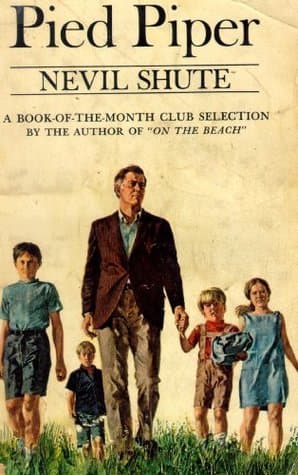
Pied Piper cover
Archivist's Choice

Pied Piper

Nevil Shute (1941)

Genre

Historical Fiction

Reading Time

5 hours 30 min

Key Themes

See below

Track Your Reading

Sign in to track this book

During the 1940 Blitzkrieg, an elderly Englishman leads a group of war-orphaned children across France, escaping the Nazi-occupied coast.

Synopsis

In the summer of 1940, as war spreads across Europe, seventy-year-old Englishman John Howard is vacationing in France. When the conflict grows, he decides to return home, agreeing to take two English children with him. However, the trip quickly becomes dangerous as trains stop running and roads fill with refugees. More displaced children, from different countries, join his group, expanding his responsibility beyond the first two. Howard, despite his age and the increasing danger, guides his group of children across war-torn France. They face shortages, the constant threat of enemy forces, and the despair of the refugee crisis. Their goal is to reach the French coast and find a way across the Channel to England. Once at the coast, they find not an easy escape, but a struggle for survival and a frantic search for any way to cross. Howard's determination is tested as he works to protect and deliver his young charges to safety. The story ends with a dangerous sea crossing and their arrival in England.
Reading time
5 hours 30 min
Difficulty
Easy
Pacing
Moderate
Mood
Heartwarming, Resilient, Hopeful, Poignant
✓ Read this if...
You enjoy poignant historical fiction about ordinary people performing extraordinary acts of courage during wartime, with a focus on human resilience and the bond between generations.
✗ Skip this if...
You prefer fast-paced military thrillers or stories with minimal emotional depth.

Plot Summary

The Start of the Journey

John Howard, a seventy-year-old Englishman on a fishing holiday in the Jura mountains of France in May 1940, decides to end his trip early as the war worsens. German forces advance, and in a small village, his host, Madame Perodeau, asks him to take her two grandchildren, eight-year-old Nicole and five-year-old Pierre, back to England. Howard, a widower and former diplomat, reluctantly agrees, despite not being comfortable with children. They start their journey by train, heading west towards the coast, unaware of the difficulties ahead.

A Growing Responsibility

As John Howard, Nicole, and Pierre travel by train, the war's chaos becomes clear. At a crowded station, they meet a Dutch family fleeing. The parents, overwhelmed, entrust their six-year-old son, Willem, to Howard, hoping to meet him in England. Howard, feeling a growing sense of duty, takes Willem. Train journeys are slow and delayed, packed with refugees, and often threatened by air raids. Howard starts to get used to his role as a guardian, finding ways to comfort and manage the children.

The German Boy

Further on, in a war-damaged village, John Howard finds a young German-Jewish boy named Otto. Otto's parents have been killed, and he is alone and scared. Despite the challenge of taking a German child to England during wartime, Howard's compassion wins out, and he takes Otto. The group now has five children. With trains becoming unreliable and roads full of refugees and military, Howard realizes they must find other ways to travel, often walking or relying on help from strangers.

The French Girl

As John Howard and his diverse group of children continue their slow, hard journey towards the coast, they find another child in trouble. In a largely abandoned and damaged village, they find a young French girl named Rose, about seven years old, who is traumatized and cannot speak. Her parents are gone, and Howard, unable to leave her, adds her to his group. Rose's quiet, scared presence adds another layer of responsibility for Howard, who now has six children of different backgrounds to care for while moving through a war zone.

Encountering the Enemy

While crossing the French countryside, John Howard and his six children meet a patrol of German soldiers. This is a moment of extreme tension, especially with Otto, the German-Jewish boy, in their care. Howard, using his past diplomatic experience, stays calm. He explains their situation, presenting himself as an old Englishman trying to get a group of children, including French and Dutch, to safety. The German officer, surprisingly, shows understanding and lets them pass. This shows Howard's quick thinking and the soldiers' brief humanity during the conflict.

Reaching the Coast

After weeks of walking, searching for food, and enduring constant hardship, John Howard and the children finally reach the French coast, near Brest. Their relief is short-lived, however, as they find not an organized evacuation but complete chaos. The port is full of refugees, soldiers, and damaged buildings. Rumors of German advances are common, and finding a way to England seems almost impossible. Howard faces the difficult task of securing passage across the Channel for himself and his six young, tired, and anxious charges.

A Desperate Search for Passage

At the chaotic French port, John Howard desperately searches for any boat to take them to England. He meets various people: cynical boat owners asking high prices, overwhelmed officials, and other refugees equally desperate. Howard tries to bargain and appeal to people's humanity, but the atmosphere is one of self-preservation and profiteering. He grows frustrated and disheartened by the lack of options, knowing time is running out as German forces get closer to the coast. The children, sensing his worry, become more restless.

The Fishing Boat

Against all odds, John Howard finally secures passage on a small, old fishing boat called the 'Joliette,' captained by a cynical but practical Frenchman named Monsieur Rougeron. The boat is barely seaworthy and already crowded with other refugees and a few British soldiers. Howard pays a significant sum, using his remaining money. The idea of crossing the English Channel in such a boat, especially with six young children, is daunting. The journey will be cold, dangerous, and uncomfortable, but it is their only hope of escaping the advancing German army.

The Channel Crossing

The crossing of the English Channel on the 'Joliette' is a hard experience. The small fishing boat is tossed by rough seas, and the children suffer from seasickness and fear. John Howard tirelessly cares for them, offering comfort and reassurance despite his own exhaustion and anxiety. They face the constant threat of German aircraft and naval patrols. The journey is long and uncomfortable, with limited food and water. Howard's determination is tested as he battles the elements and tries to keep the spirits of his young charges up, all while hoping to see the English coast.

Arrival in England

Miraculously, after a terrible journey, the 'Joliette' and its passengers finally reach the English coast, landing in Falmouth, Cornwall. John Howard is met by British authorities who are initially suspicious of his large, diverse group of children, especially Otto, the German boy. However, Howard's calm manner and the children's obvious distress soon convince them. The children receive medical checks, food, and warmth. Howard then begins the complex process of contacting agencies and embassies to find the parents or guardians of Nicole, Pierre, Willem, Otto, and Rose, fulfilling his promise.

Reunion and Farewell

In England, the search for the children's families begins. Nicole and Pierre are quickly reunited with their parents, who had also escaped France. Willem's parents, also in England, happily reclaim their son. Otto, the German-Jewish boy, is placed with a Jewish refugee organization that will care for him and look for any surviving relatives. Rose, the traumatized French girl, is taken in by a kind family who will help her recover. John Howard feels a mix of relief and sadness as each child leaves, leaving him alone, but with a deep sense of accomplishment.

Howard's Reflection

After ensuring all the children are settled, John Howard returns to his quiet life. However, he is changed. The journey, with its dangers and responsibilities, has given him a new sense of purpose and connection. He thinks about the bond he formed with each child, the moments of fear, laughter, and shared humanity. The experience has broken his previous complacency and isolation, leaving him with a deep appreciation for life and human strength. He realizes that in saving the children, he has, in a way, saved himself from a life of quiet solitude.

Principal Figures

John Howard

The Protagonist

Howard transforms from an isolated, slightly cynical widower into a compassionate, resourceful guardian who finds renewed purpose through his selfless act.

Nicole

The Supporting

Nicole matures quickly under duress, becoming a helpful and resilient companion to Howard.

Pierre

The Supporting

Pierre gradually grows more accustomed to the journey, finding security in Howard's care and the group's camaraderie.

Willem

The Supporting

Willem's quiet resilience helps him cope with the trauma of separation and find comfort in the new group.

Otto

The Supporting

Otto, initially traumatized and alone, finds safety and a temporary family with Howard, beginning a path towards healing.

Rose

The Supporting

Rose, initially mute and traumatized, slowly begins to heal through the care and safety provided by Howard and the group.

Monsieur Rougeron

The Supporting

Rougeron remains largely static, a figure of wartime pragmatism, but his actions enable the protagonists' escape.

Madame Perodeau

The Mentioned

Madame Perodeau's role is brief but pivotal, initiating Howard's journey and responsibility.

Themes & Insights

Humanity and Compassion Amidst War

The novel shows how kindness and compassion can appear even in the brutal conditions of war. John Howard, an elderly man with no experience with children, takes on the responsibility for six refugee children of different nationalities, including a German boy. His commitment to their safety, his ability to comfort them, and his refusal to leave any child, even at great personal risk, demonstrate the lasting power of human empathy. This is clear in his decision to protect Otto, a German-Jewish child, despite the danger, and his care for the traumatized Rose.

He found himself wondering at the resilience of children, and at his own capacity for caring for them, a capacity he had not known he possessed.

Narrator (referring to John Howard)

The Resilience of Children

A main theme is the remarkable strength of children caught in war. Despite seeing terrible things, losing families, and enduring hardship, the children – Nicole, Pierre, Willem, Otto, and Rose – adapt, find comfort in each other, and show incredible resilience. They endure long journeys, hunger, fear, and separation, yet still find time for play, laughter, and hope. Their ability to trust and form new bonds, especially with John Howard, highlights their capacity to survive and even do well despite difficulty, showing that war often fails to completely destroy innocence.

Children, he thought, were like young saplings, bending with the storm but not breaking, always reaching for the light.

Narrator (referring to John Howard's observations)

Duty and Responsibility

The story explores the deep sense of duty and responsibility John Howard feels towards the children. What starts as a reluctant agreement to help two children quickly becomes a moral need to protect a growing group of six. Howard, an older man, finds new purpose in this unexpected role. His commitment to bringing them safely to England, despite huge obstacles and personal danger, becomes his main mission. This theme shows how individuals can meet extraordinary challenges when others need help, going beyond personal comfort and self-preservation.

He had accepted a trust, and he would see it through, come what may.

Narrator (describing John Howard's resolve)

The Indiscriminate Nature of War

The novel clearly shows how war destroys lives indiscriminately, regardless of nationality, age, or social status. The children in Howard's care are French, Dutch, and German-Jewish, each losing family and home because of the conflict. The chaotic scenes of refugees, bombed villages, and desperate pleas for passage illustrate that war shatters lives across all borders. It removes the appearance of civilization, forcing ordinary people into extraordinary and often brutal situations, and highlights the widespread suffering civilians endure.

War, he reflected, made no distinctions. It took the young and the old, the innocent and the guilty, and left only desolation.

Narrator (John Howard's internal thought)

Plot Devices & Literary Techniques

The Expanding Group

Howard's party of children steadily grows, increasing his responsibility and the stakes.

This device involves the gradual accumulation of children under John Howard's care. Starting with two, his group expands to six, each child representing a new challenge and a deeper commitment. This escalating responsibility amplifies the narrative tension, highlights Howard's growing compassion, and underscores the widespread impact of the war on children. It also allows for a diverse representation of nationalities affected by the conflict, making the story more universal.

The Pied Piper Motif

Howard's role as a reluctant leader guiding children to safety, echoing the folk tale.

The title itself invokes the Pied Piper, a figure who leads children. In this story, John Howard becomes a modern, benevolent Pied Piper, not luring children away, but guiding them to safety from the dangers of war. This motif establishes Howard's unexpected role as a leader and protector of the innocent, framing his journey as a heroic, almost mythical undertaking against overwhelming odds. It adds a layer of symbolic depth to his actions and the children's reliance on him.

The Journey as Metaphor

The physical journey across France and the Channel symbolizes a passage through chaos and towards hope.

The arduous physical journey from the Jura mountains to the English coast serves as a powerful metaphor for the characters' passage through chaos, loss, and trauma towards safety and hope. Each stage of the journey—the failing trains, the crowded roads, the perilous sea crossing—represents a new challenge that must be overcome, reflecting the emotional and psychological journey of both Howard and the children as they confront the realities of war and forge new bonds.

The Age Gap

The stark contrast between Howard's age and the children's youth emphasizes vulnerability and unexpected bonds.

The significant age difference between the seventy-year-old John Howard and the young children (ranging from five to eight) is a key plot device. It highlights the vulnerability of the children and the unexpected nature of Howard's guardianship. This contrast underscores his selflessness and the profound, almost paternal, bond he forms with them. It also allows for moments of generational insight, as Howard reflects on his past life and the future these children represent, deepening his character arc.

Critical analysis

Notable Quotes

Every man and woman in England has got to make up his or her mind to be killed sooner than give in. If they will do that, then we shall win. If they will not, then we shall lose.

John Howard, an elderly Englishman, reflects on the war's demands while evacuating children.

There was a certain dignity about his age that made the younger people treat him with a respect that they would not normally have extended to a stranger.

Describing how John Howard's age garners him respect from the French villagers.

He knew that the whole world was mad, and he was sane, and that was a very lonely position to be in.

John Howard's internal monologue about the irrationality of war and his own clear-headedness.

It was impossible to imagine that such a thing as war could exist in such a beautiful place.

Observing the peaceful French countryside, contrasting with the ongoing conflict.

Children are not a commodity, to be bought and sold or left behind at will. They are a trust.

Howard's firm belief about the responsibility adults have towards children.

The only thing to do was to keep going, and not to think about it too much, because if you thought about it, you might stop.

John Howard's pragmatic approach to enduring the arduous journey with the children.

He found himself wondering, as he often did, what the point of it all was, this endless struggle, this endless killing.

Howard's recurring existential questioning about the purpose of war.

It was a strange feeling, to be responsible for so many lives, and yet to be so utterly alone.

Howard's internal conflict while leading the group of children.

The war had stripped away all the polite conventions, leaving only the bare bones of humanity.

Reflecting on how the war reveals fundamental human nature, good and bad.

There was a strength in numbers, even if the numbers were only children.

Howard realizing the collective spirit and resilience of the children, despite their vulnerability.

He had never thought of himself as a brave man, but he was doing brave things.

Howard's humble self-assessment despite his courageous actions during the evacuation.

The future was a dark and uncertain place, but the present was here, and it demanded action.

Howard's focus on the immediate tasks and challenges, rather than dwelling on the unknown future.

Sometimes, he thought, the only way to deal with the overwhelming horror was to focus on the very small, very immediate things.

Howard's coping mechanism for the trauma and stress of the journey.

The sound of children laughing, even in the midst of war, was a sound of hope.

Finding solace and optimism in the simple joy of the children despite their perilous situation.

Quiz

Test Your Knowledge

Ready to see how well you understood this book? Take our interactive quiz with 10 questions.

10
Questions
~5
Minutes
?
Best Score

Key Questions (FAQ)

'Pied Piper' is set in France and England during the tumultuous summer of 1940, a period dominated by the German Blitzkrieg and the fall of France. This historical backdrop creates an urgent atmosphere of chaos and displacement as John Howard attempts to navigate the war-torn landscape.

About the author

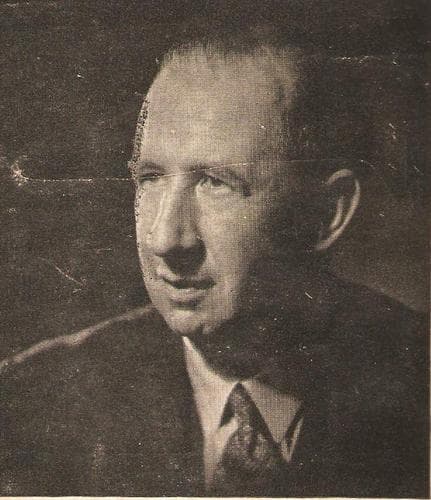
Nevil Shute

Nevil Shute Norway was an English novelist and aeronautical engineer who spent his later years in Australia. He used his full name in his engineering career and Nevil Shute as his pen name, in order to protect his engineering career from inferences by his employers (Vickers) or from fellow engineers that he was '"not a serious person" or from potentially adverse publicity in connection with his novels, which included On the Beach and A Town Like Alice.