“Sometimes the best way to find something is to stop looking for it.”
— Alice reflects on solving the mystery of her aunt's missing pie recipe.

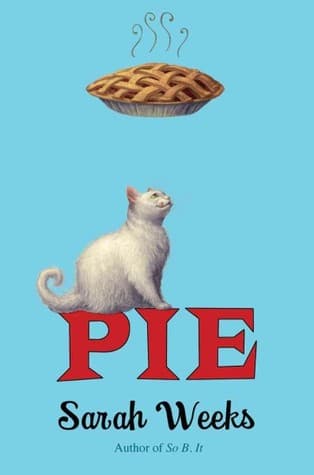
Sarah Weeks (2011)
Genre
Children's / Historical Fiction / Mystery / Young Adult
Reading Time
150 min
Key Themes
See below
Sign in to track this book
After her pie-queen aunt bequeaths her secret recipe to a remarkably disagreeable cat, a young girl named Alice must unravel a culinary mystery amidst a pie-crazed town to discover the true ingredients of happiness.
Eleven-year-old Alice Anderson lives a quiet life in Ipswitch, Pennsylvania. Her Aunt Polly is known as the "Pie Queen" for her pies and secret crust recipe. One day, Alice is called home with news that Aunt Polly has passed away peacefully. The town is distraught, and Alice is heartbroken. During the reading of the will, the town gathers, eager to hear who will inherit Polly's pie shop and, more importantly, her secret recipe. To everyone's astonishment, Polly leaves the pie shop to her assistant, Nora, and the secret pie crust recipe to her fat and ill-tempered cat, Lardo. Lardo, in turn, is left in the care of Alice, much to her surprise and the town's confusion.
After the will's revelation, Ipswitch goes into a frenzy. Everyone, from local residents to ambitious bakers, becomes obsessed with how a cat could inherit a recipe and how they might get their hands on it. The annual Blueberry Pie Contest, which Aunt Polly always won, becomes the new battleground. People start baking excessively, trying to copy Polly's crust or invent their own pies. The once peaceful town becomes a hotbed of suspicion and rivalry. Neighbors accuse each other of trying to steal the recipe or gain an unfair advantage. Alice finds herself at the center of this chaos, constantly hounded by people trying to get information about Lardo or the recipe.
Overwhelmed by the town's pie-mania and the responsibility of caring for Lardo, Alice confides in her best friend, Charlie Glimmer. Charlie, a bright and observant boy, is intrigued by the mystery. Together, they decide to investigate Aunt Polly's strange will. They start by examining Polly's belongings, hoping to find clues. Alice remembers Polly often saying, "The secret is in the crust," and wonders if there's a literal interpretation. Their initial searches yield no obvious recipe card or hidden message, but they begin to notice the unusual behavior of some townspeople, including Mrs. Neely and Mr. Hamner, who runs the local bakery.
As Alice and Charlie investigate, suspicious events begin. Someone breaks into Aunt Polly's house, seemingly searching for something, though nothing appears to be stolen. Lardo, the seemingly unconcerned cat, becomes a target. Several attempts are made to catnap Lardo, including an incident involving a fishing net. Alice and Charlie realize that the pie crust recipe is not just a culinary secret but a valuable item people are willing to go to great lengths to acquire. These incidents confirm their suspicion that there is more to Polly's will, and that the secret is not simply written down somewhere.
Alice begins to reflect on her memories of Aunt Polly, remembering specific phrases and habits. She recalls Polly's love for her old, worn-out recipe box, which seemingly contained only blank cards or mundane recipes. She also remembers Polly's frequent advice to "pay attention to the details" and her unique way of teaching without directly stating things. Alice realizes that Polly, a clever and whimsical woman, would not have made the recipe obvious. She and Charlie start to look for clues not in what Polly wrote, but in what she did and said, particularly around Lardo and the pie-making process.
Through their observations, Alice and Charlie begin to understand Lardo's true significance. They notice that Lardo was always present when Aunt Polly baked, often sitting on the counter. Alice remembers Polly kneading dough and humming a particular tune while Lardo watched. They also discover that Lardo's name, while seemingly just a reference to his size, might be another subtle hint. The attempts to steal Lardo further solidify their belief that the cat is not just a recipient of the will but an integral part of the secret itself, perhaps a living clue or a symbol for something larger.
The annual Blueberry Pie Contest arrives, and the town is abuzz with anticipation. Alice decides to bake a pie, not to win, but to honor her aunt. As she bakes, she carefully follows the steps she remembers Polly taking, paying close attention to the way Polly handled the dough and the ingredients. She realizes that the secret is not a single ingredient or a hidden note, but a technique, a feeling, and a philosophy passed down through observation and practice. It is about love, patience, and the joy of baking. The true recipe is in the baker's hands and heart, not on a piece of paper.
Alice, with Charlie's help, finally understands. Aunt Polly left the recipe to Lardo because Lardo, being a cat, cannot read or write. This forced people to look beyond the literal. The "secret" to the pie crust was not a hidden ingredient but a specific, delicate technique of handling the dough – a lightness of touch, a love for the process, and an understanding that the best results come from enjoyment, not competition. Polly wanted her legacy to be about the joy of baking and sharing, not about a competitive secret. The recipe was always there, in plain sight, demonstrated through her actions and her philosophy.
With the mystery solved, Alice bakes her pie for the contest, embodying the spirit of her aunt. While she does not win the contest, her pie is praised for its deliciousness. Many townspeople begin to appreciate the true meaning of Polly's legacy. The competitive frenzy starts to subside as people realize that the joy of baking and sharing is more rewarding than a secret recipe or a prize. Alice, having found a new purpose and understanding, continues to bake, honoring Aunt Polly's memory not by guarding a secret, but by sharing the love and joy that went into every pie. The town begins to heal, embracing community over competition.
Alice and Charlie reflect on Aunt Polly's life and her intentions. They realize that Polly's will was a final lesson, a clever way to teach the town about what truly matters: connection, generosity, and the simple pleasure of creating. By leaving the recipe to Lardo, she forced everyone to stop focusing on a tangible secret and instead look for the intangible qualities that made her pies so special. Alice embraces her role as Lardo's caretaker and, in a way, as the keeper of Polly's true legacy – not just the pies, but the values she embodied. The book ends with a renewed sense of community and the enduring warmth of Aunt Polly's influence.
The Protagonist
Alice transforms from a quiet girl mourning her aunt into a confident young woman who understands and carries on her aunt's true legacy.
The Supporting/Posthumous Catalyst
Though deceased, Polly's character arc is revealed through her lasting impact, demonstrating her ultimate wisdom and generosity.
The Supporting
Charlie remains a consistent and supportive friend, his arc primarily showing his growth in problem-solving and loyalty.
The Supporting/Plot Device
Lardo's 'arc' is not personal development but rather his evolving significance as a symbol and catalyst for discovery.
The Supporting
Nora's arc involves stepping up to manage the pie shop, demonstrating her quiet strength and loyalty to Polly's memory.
The Supporting/Antagonistic
Mrs. Neely's arc demonstrates the corrupting influence of greed and competition, eventually returning to a more community-oriented spirit.
The Supporting/Antagonistic
Mr. Hamner's arc shows his initial competitive drive soften as he, like others, begins to understand the true spirit of Polly's legacy.
The Collective Character/Setting
The town's arc moves from a state of communal grief to competitive frenzy, and finally, to a more harmonious understanding of Polly's message.
The book explores what constitutes a lasting legacy beyond material possessions or tangible secrets. Aunt Polly's will initially seems to be about a recipe, but it reveals that her true legacy is her philosophy of life, her love for baking, her generosity, and her ability to build community. Alice's journey is about understanding and carrying on this intangible legacy, rather than just finding a piece of paper. The shift in the town's focus from a secret recipe to the joy of baking shows this theme.
“"The secret, Alice realized, wasn't in a special ingredient or a hidden note. It was in the hands that made the pie, the love that went into it, and the joy of sharing it."”
The story portrays the contrast between a harmonious community and one consumed by competition. Before Polly's death, Ipswitch is united by its love for her pies. Afterward, the town devolves into suspicion and rivalry, with neighbors turning against each other in pursuit of the 'secret recipe.' The mystery's resolution brings the town back to understanding and appreciation for shared joy and collaboration. This shows the destructive nature of unchecked competition and the restorative power of community.
“"The pie contest, once a friendly rivalry, had become a battleground for bragging rights and greed."”
Alice's journey is one of self-discovery. Initially, she feels like 'just Alice,' living in her famous aunt's shadow. Through deciphering Polly's will and caring for Lardo, Alice uncovers her own strengths, her memory, her intuition, and her ability to bake. She learns to trust herself and finds her voice, understanding that she can carry on her aunt's spirit in her own way, forging her own identity connected to Polly.
“"Maybe the real secret wasn't about pie at all. Maybe it was about finding your own way to be happy, your own way to make something good."”
The mystery of the pie recipe is solved not through direct clues, but through Alice's careful observation of her aunt's habits and her memories of Polly's words and actions. Polly deliberately crafted her will to force people to pay attention to the details of her life and her baking process. This theme emphasizes that true understanding often comes from quiet attentiveness and reflection, rather than frantic searching or literal interpretation. Wisdom can be passed down subtly.
“"Aunt Polly always said the secret was in the crust. But she never said it was written down anywhere."”
At its core, the book is about the power of love and generosity. Aunt Polly's actions, both in life and in death, are driven by a deep love for her community and a desire to impart a valuable lesson. Her pies were a symbol of her generosity. Alice, in turn, is motivated by her love for Polly, and her understanding of the recipe allows her to continue sharing that love through her own baking. This creates a sense of warmth and connection that goes beyond culinary skill.
“"Baking, Polly had taught her, was an act of love. And love, like good pie, was meant to be shared."”
Aunt Polly's last will and testament that leaves the secret recipe to her cat, Lardo.
This is the primary inciting incident and a central plot device. By leaving the recipe to a cat, Aunt Polly creates an unsolvable riddle that forces the entire town, and especially Alice, to look beyond the literal. It acts as a catalyst for the mystery, the town's 'pie-mania,' and Alice's personal journey. The will is a clever narrative tool that allows the author to explore themes of legacy, observation, and the true meaning of value, by making the 'secret' an intangible one.
Aunt Polly's fat cat, the 'inheritor' of the recipe, serving as a living clue.
Lardo is more than just a pet; he's a crucial plot device. His physical presence, his name (potentially a pun on 'lard' for pie crust), and the fact that he cannot literally 'hold' a recipe, all point towards the intangible nature of the secret. The attempts to catnap him heighten the stakes and underscore the town's obsession. Lardo is a symbol of the riddle, guiding Alice to understand that the answer lies in observation and memory, not in a hidden document.
The annual town event that becomes the battleground for the recipe's discovery.
The pie contest serves as a recurring plot point and a focal event that drives much of the external conflict. It provides a deadline and a stage for the town's competitive frenzy to play out. Ultimately, it becomes the setting for Alice's final act of understanding and her demonstration of her aunt's true legacy. It symbolizes both the destructive potential of competition and the unifying power of shared passion when approached with the right spirit.
Flashbacks and recollections that provide crucial insights into Polly's character and the recipe's secret.
Alice's memories are a vital narrative technique. Instead of a linear investigation, Alice's mind becomes the primary archive of clues. Recalling Polly's specific phrases, gestures, and habits (e.g., her way of kneading dough, her advice to 'pay attention') allows Alice to piece together the truth. This device emphasizes the theme of observation and shows how wisdom is often passed down through subtle, lived experiences rather than explicit instruction, making the reader experience the discovery alongside Alice.
“Sometimes the best way to find something is to stop looking for it.”
— Alice reflects on solving the mystery of her aunt's missing pie recipe.
“A pie is more than just a dessert; it's a piece of someone's heart.”
— Alice's aunt Polly describes the emotional significance of her pies.
“Secrets have a way of coming out, especially when they're baked into a crust.”
— Narrator comments on the hidden clues in Polly's pie recipes.
“You can't judge a person by the crumbs they leave behind.”
— Alice learns not to make assumptions about people during her investigation.
“Every family has its own recipe for love, and ours just happens to include a lot of butter.”
— Alice's mother explains their family's baking traditions.
“The truth is like a pie crust—it might crumble, but it holds everything together.”
— Alice realizes the importance of honesty while piecing together clues.
“Memories are the ingredients that make up who we are.”
— Alice thinks about her late aunt Polly and their shared moments.
“A good mystery is like a well-baked pie—it takes time and patience to get it right.”
— Alice compares her detective work to her aunt's baking process.
“Sometimes the simplest things hold the deepest meanings.”
— Alice discovers significance in ordinary objects related to the pie recipe.
“Home isn't a place; it's the people who make you feel like you belong.”
— Alice feels comforted by her family while dealing with loss.
“Courage isn't about being fearless; it's about doing what's right even when you're scared.”
— Alice musters bravery to confront the truth about the mystery.
“A recipe passed down is a story that never ends.”
— Reflection on how family recipes carry history and connection.
“The sweetest things in life often come from the hardest work.”
— Alice appreciates the effort behind her aunt's famous pies.
“Loss leaves a hole, but love can fill it with something new.”
— Alice copes with her aunt's death by continuing her baking legacy.
Ready to see how well you understood this book? Take our interactive quiz with 10 questions.

Biography coming soon.
Dan Gemeinhart
4.5
Kate O'Hearn
4.4

Jeanne Birdsall
4.4

Jen Wang
4.4
Wendelin Van Draanen
4.3

John Marsden
4.3

Chris Van Allsburg
4.3
Jennifer A. Nielsen
4.2