“It was a strange sort of freedom, to be so completely alone with my own thoughts, my own fears.”
— Lenora reflects on her isolation at the estate.

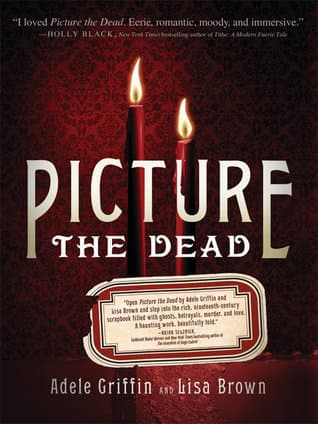
Adele Griffin (2010)
Genre
Fantasy / Historical Fiction / Mystery / Young Adult / Romance
Reading Time
260 min
Key Themes
See below
Sign in to track this book
In 1860s New York, a grieving orphan haunted by her dead fiancé's doppelgänger must decipher spectral clues to unravel the mystery of his true fate and reclaim her future.
The story opens with Jennie Lovell, an eighteen-year-old orphan, living with her cold Aunt and Uncle, the Crumbs, in London during World War I. Jennie mourns the death of her fiancé, Captain Richard Wharton, killed in action in France. Her aunt, Mrs. Crumb, pressures Jennie to marry Mr. Blackwood, a wealthy but unappealing older man, for financial security. Jennie feels trapped and alone, finding solace only in her memories of Richard and her sketching. She often feels a strange, chilling sensation and sees a fleeting shadowy figure, which she first believes is just her grief.
Mr. Blackwood continues to pursue Jennie, making her increasingly uncomfortable. During one of his visits, Jennie is overwhelmed by a cold presence and a vivid vision of a battlefield. She believes she is losing her mind, but the experiences become more frequent. One evening, while sketching, Jennie finds a locket with a miniature portrait of a young man, a complete stranger, tucked inside her sketchbook. This mysterious locket, along with the recurring visions, suggests her experiences are more than just grief.
Jennie, disturbed by the locket and visions, confides in her maid, Agnes, who is more superstitious. Agnes suggests the locket might be a clue from a ghost. Later, while walking through a park, Jennie feels pulled toward a specific grave. There, she sees a spectral figure—a young man in a soldier's uniform—who appears before her. He is the man from the locket. This terrifying encounter confirms Jennie's growing suspicion: she is being haunted, and the ghost is trying to communicate something important.
Through clearer manifestations and fragmented words, Jennie learns the ghost's name: Michael. Michael cannot speak full sentences, but he communicates through images and strong emotions. Jennie realizes Michael is trapped and needs her help to find peace. She becomes determined to uncover the truth behind his death and why he haunts her. This resolve gives her a new purpose beyond her own grief and her relatives' pressures. She begins to actively seek clues, feeling a strange connection to the spectral soldier.
Jennie starts investigating Michael's identity, using the limited information she has. She sketches his face repeatedly, hoping to recognize him or for someone else to. During one of Michael's manifestations, he shows her a fleeting image of a battlefield and a specific trench number. Jennie remembers Richard mentioning similar details in his letters. A shocking realization begins: Michael might have known Richard, or their deaths are connected. This possibility makes her haunting more personal.
Convinced that Michael and Richard are linked, Jennie discreetly researches soldiers who served in Richard's regiment and were reported missing or killed around the same time. She visits libraries and speaks to sympathetic acquaintances with military connections, all while avoiding her aunt's scrutiny. The process is slow, but Michael's silent presence urges her on. She starts to piece together fragments of information, focusing on the details Michael has shown her.
Jennie, with a kind librarian's help, gains access to records at the War Office. She discovers a soldier named Michael O'Malley, who served in Richard's regiment and was reported missing, not killed, in the same area where Richard died. More disturbingly, the records show inconsistencies and a rushed closure to his case. This suggests a possible cover-up. Michael's spectral presence becomes more agitated when Jennie is near these documents, confirming she is on the right path. She realizes his death was not a simple battlefield casualty.
Through a powerful manifestation, Michael reveals the full truth of his death to Jennie. He shows her a vision of himself being attacked and murdered by a fellow British officer, not by enemy fire. The officer then staged the scene to look like a casualty of war. Michael was killed because he witnessed a secret, illicit activity involving stolen supplies. The vision culminates with the shocking revelation that the officer responsible was Captain Richard Wharton, Jennie's fiancé. The truth shatters Jennie's idealized image of Richard and leaves her reeling.
The revelation of Richard's betrayal devastates Jennie. Her grief for him now includes anger and deep disillusionment. She understands why Michael has been haunting her: he needs justice and for the truth to be known. Jennie realizes that Richard, in his desperation or greed, not only murdered Michael but also left his body unburied, denying him peace. This knowledge is immense, forcing Jennie to re-evaluate everything she believed about love, honor, and loyalty during wartime.
Jennie, now committed to Michael's cause, understands that exposing Richard's crime will be difficult, given his posthumous hero status. She decides to use her artistic talent. She creates a series of detailed sketches depicting Michael's murder, using the precise images he showed her. Her plan is to present these to the authorities, along with the inconsistencies she found in the War Office records, hoping to spark an official investigation. She knows the risk, but Michael's spectral presence reinforces her resolve, guiding her hand.
Jennie presents her drawings and findings to a sympathetic but skeptical War Office official, Mr. Davies, who had helped her previously. Her aunt and uncle, discovering her activities, are furious, fearing scandal and the loss of Mr. Blackwood's offer. They try to discredit Jennie, claiming she is unstable with grief. However, the specificity and detail of Jennie's drawings, combined with the discrepancies in the records, are compelling. Mr. Davies agrees to launch a discreet investigation, recognizing the seriousness of her claims.
The investigation confirms Jennie's account. Richard Wharton's reputation is tarnished, and his actions are posthumously revealed. Michael O'Malley's body is eventually located and given a proper burial, bringing him the peace he sought. As Michael's spirit finally ascends, Jennie feels a deep sense of relief and closure. Her grief for Richard is replaced by a complex understanding of him, and a new sense of purpose. She rejects Mr. Blackwood and leaves her aunt and uncle, embracing her independence and her unique gift, ready to forge her own path.
The Protagonist
Jennie transforms from a passive, grieving orphan into a determined, independent woman who uses her unique abilities to seek justice and define her own future.
The Supporting/Ghost
Michael's arc is about finding closure and peace through Jennie's efforts, moving from a restless, trapped spirit to a soul at rest.
The Antagonist (posthumous)
Richard's arc is revealed in reverse; he is initially a hero, then exposed as a villain, challenging Jennie's perception of love and honor.
The Antagonist
Mrs. Crumb remains static, representing the oppressive forces Jennie must overcome.
The Supporting
Mr. Crumb's character remains static, serving as a foil to Jennie's eventual assertiveness.
The Supporting
Mr. Blackwood's role is primarily to provide external conflict for Jennie, which she ultimately rejects.
The Supporting
Agnes supports Jennie's journey, providing emotional comfort and practical advice.
The Supporting
Mr. Davies facilitates the resolution of the mystery, acting as an ally for Jennie.
The novel explores the many sides of grief, especially during wartime. Jennie first feels conventional grief for Richard, but this changes into a more complex sorrow when his true nature is revealed. Her journey with Michael helps her process not just her personal loss, but also the disillusionment of betrayal. Helping Michael find peace becomes a part of Jennie's own healing, changing her passive suffering into active purpose. This theme is clear from Jennie's mourning of Richard, through her emotional turmoil after discovering his treachery, to the final resolution where she finds her own peace after Michael's spirit departs.
“Grief was a heavy cloak, but sometimes, a cloak could also hide a weapon.”
A main theme is the deceptive nature of appearances, particularly concerning wartime heroism and personal integrity. Richard Wharton is first shown as a heroic, honorable fiancé, but is later unmasked as a murderer. This difference between his public image and his private actions challenges Jennie's views of love, loyalty, and even war 'heroes.' The entire mystery revolves around uncovering the hidden truth behind Michael's death, which society has simply called a casualty of war. This theme is powerfully shown when Jennie's idealized memories of Richard are shattered by Michael's spectral revelations.
“A hero's uniform could hide a villain's heart.”
Jennie's journey explores a young woman finding her voice and independence in a restrictive society. Orphaned and controlled by her manipulative aunt and uncle, Jennie is first pushed toward a loveless marriage of convenience. However, her supernatural experiences and her commitment to Michael's cause empower her. She defies expectations, challenges authority, and ultimately chooses her own path, rejecting the life planned for her. Her artistic talent also helps her express truths that words alone cannot convey, ending in her refusal of Mr. Blackwood and her departure from the Crumbs' home.
“I would not be a mere picture in someone else's frame.”
The pursuit of justice, rather than vengeance, drives both Michael's haunting and Jennie's actions. Michael's spirit does not seek to harm, but to ensure his murder is acknowledged and his body buried properly. Jennie, in turn, is motivated by a moral need to right a wrong, even if it means exposing the dark side of someone she once loved. The story's resolution focuses on the official acknowledgment of Michael's murder and the subsequent proper burial, showing that true justice is found in truth and peace, not just retribution. This theme is central to the entire narrative, from Michael's first appearance to his final ascent.
“He did not seek vengeance, only a name spoken aloud, a truth acknowledged.”
Michael O'Malley's ghost drives the entire plot and Jennie's character development.
Michael O'Malley's ghost is the primary plot device, serving as the catalyst for all major events. His initial, unsettling appearances force Jennie to confront the supernatural and question her sanity. As he reveals more clues, he propels her into an investigation she would never have undertaken otherwise. The ghost is not just a source of mystery but also an active communicator, using visions and emotional impressions to guide Jennie. Without Michael, Jennie would remain a grieving, passive figure, likely forced into an unwanted marriage. His presence literally 'haunts' the story forward, driving both the mystery and Jennie's personal growth.
Visions, feelings, and fragmented messages convey the ghost's story.
The method of communication between Michael and Jennie is a key plot device. Michael cannot speak conventionally, so he relies on Jennie's sensitivity and artistic talent. This includes strong emotional sensations (cold, fear, anger), fleeting visual impressions of places and events (the battlefield, the murder), and fragmented words or names. This indirect communication builds suspense and requires Jennie to actively interpret the clues, making her an integral part of solving the mystery. Her artistic ability to sketch what she sees and feels is crucial, allowing her to 'translate' Michael's non-verbal messages into tangible evidence.
A physical object that serves as the initial tangible clue and connection.
The mysterious locket containing the miniature portrait of Michael is the first concrete, physical clue that validates Jennie's supernatural experiences and kickstarts her investigation. It's a tangible link between the spectral world and her reality. Finding it in her sketchbook is a pivotal moment, confirming that her visions are not mere hallucinations. The locket provides Michael's image, which allows Jennie to begin her research and eventually identify him. It also symbolizes the hidden personal story that needs to be uncovered, a small, intimate object holding a significant, tragic secret.
World War I provides a backdrop of death, deception, and societal change.
The setting of World War I is more than just a backdrop; it's a crucial plot device that enables the central conflict. The war provides a context for widespread death and missing persons, making Michael's disappearance plausible and his murder easy to cover up. The societal values of the time, particularly the veneration of war heroes and the pressure on women to marry for security, amplify Jennie's initial helplessness and the difficulty of challenging official narratives. The chaos and moral ambiguity of war allow for the dark actions of characters like Richard Wharton to occur and remain hidden, while also highlighting the fragility of life and the prevalence of grief.
“It was a strange sort of freedom, to be so completely alone with my own thoughts, my own fears.”
— Lenora reflects on her isolation at the estate.
“The past is never truly dead. It just waits for the right moment to rise again.”
— A recurring theme as Lenora uncovers secrets.
“Sometimes the most beautiful things hide the darkest truths.”
— Lenora observes the seemingly perfect facade of the mansion and its inhabitants.
“He looked at me as if he saw not just me, but everything I could be.”
— Lenora describes a significant glance from a romantic interest.
“Fear is a powerful thing, but hope, even a tiny flicker, can be stronger.”
— Lenora struggles with her anxieties while pursuing the mystery.
“The dead have their own stories to tell, if only you're brave enough to listen.”
— A central idea related to Lenora's ability to 'picture the dead'.
“Every secret kept is a burden carried, and some burdens are too heavy to bear alone.”
— Lenora considers the weight of the family's hidden past.
“There are different kinds of ghosts. Some are of the past, and some are of what might have been.”
— Lenora's thoughts on the lingering presence of past events and missed opportunities.
“Love, I was learning, could be as much a trap as it was a salvation.”
— Lenora's complex feelings about her romantic entanglements and their consequences.
“To truly see someone, you must look beyond what they show you and into what they hide.”
— Lenora's developing understanding of the characters around her.
“The house itself seemed to breathe, a living entity with its own memories and secrets.”
— Lenora's impression of the imposing and mysterious estate.
“Sometimes the greatest strength is in admitting you need help.”
— Lenora's realization as she confronts the dangers of her investigation.
“The truth is a stubborn thing. It has a way of finding its way out, no matter how deeply buried.”
— A reflection on the inevitability of the past being revealed.
Ready to see how well you understood this book? Take our interactive quiz with 10 questions.

Adele Griffin is an American author known for her young adult fiction. Her novel "Picture the Dead," co-authored with her husband, Mike Grosso, was a finalist for the National Book Award. Griffin's work often explores themes of family and identity with a distinctive, often dark, sense of humor.







