“It was a strange feeling to be married to a man she had never seen, to be going to a land she had never known.”
— Riyo's initial thoughts on her journey to America as a picture bride.

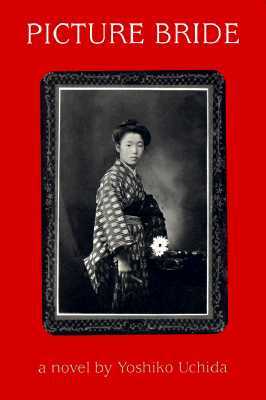
Yoshiko Uchida (1987)
Genre
Historical Fiction
Reading Time
222 min
Key Themes
See below
Sign in to track this book
A young Japanese picture bride faces arranged marriage, cultural clashes, and World War II internment, showing remarkable resilience despite her adopted country's betrayal.
In 1917, nineteen-year-old Hana Omiya leaves her comfortable life in Japan for San Francisco, America, as a picture bride. She carries only a small suitcase and a photo of her future husband, Taro Takeda, a man she has never met. After a difficult immigration process at Angel Island, Hana feels both fear and hope. Her first meeting with Taro is awkward; he is older and shorter than his photograph suggested, and his shopkeeper's life in Oakland seems less grand than she imagined. Despite her initial doubts and the stark reality of her new life, Hana is determined to fulfill her duty and make the best of her arranged marriage.
Hana moves into Taro's small apartment behind his general store in Oakland. Her new life is very different from her upbringing in Japan; she works constantly in the store, learns English, and deals with American prejudices. She quickly becomes friends with Mrs. Toda, another Japanese immigrant, who helps her adjust. Hana struggles with Taro's reserved nature and their lack of romantic connection, feeling isolated and lonely despite being married. She also sees the struggles of other Japanese immigrants, including the difficulties of raising children in a new culture and the constant fight against discrimination and poverty. Hana's early idealism about America begins to fade as she faces the harsh realities.
Hana develops a close friendship with Kiku and her husband, Henry. Kiku, a determined and ambitious woman, dreams of owning land and becoming a successful farmer, refusing the low-paying labor often forced on Japanese immigrants in the city. Despite huge challenges and 'alien land laws' that prevent Japanese from owning property, Kiku and Henry decide to leave Oakland and lease a farm in the Santa Clara Valley, hoping to grow strawberries. Hana admires Kiku's strength, and their friendship provides vital emotional support for both women as they navigate their new lives in America. Their shared experiences as Japanese women in a foreign land create a strong, lasting bond.
Over time, Hana and Taro's relationship slowly deepens, moving from a formal arrangement to mutual respect and affection. Hana gives birth to her first child, a daughter named Mary, and later a son, Ken. Motherhood brings Hana great joy and a new sense of purpose. She becomes a devoted mother, teaching her children a mix of Japanese values and American adaptability. Taro, though still reserved, shows his love through hard work and his commitment to providing for his family. The children connect their parents to their new country, representing their immigrant parents' hopes for a better future in America.
The Japanese American community in Oakland grows, establishing businesses, churches, and social organizations, forming a strong support network. Dr. Kaneda, a respected and educated community leader, becomes prominent, advocating for Japanese American rights and their integration into American society. However, this period also sees increasing anti-Japanese sentiment and discriminatory laws, such as the Alien Land Law, which prohibits Japanese immigrants from owning land. Hana and Taro, like many others, face daily reminders of their 'alien' status and the systemic racism that limits their opportunities and threatens their sense of belonging in America, despite their hard work.
The Takedas' general store faces ongoing economic difficulties, especially during the Great Depression. Taro works constantly, and Hana contributes significantly, often working late. They learn to be frugal and resourceful, making sacrifices to ensure their children have opportunities they never did. The broader Japanese American community also shares resources, creating informal support networks and cooperative ventures to help each other survive. Hana sees the incredible resilience of her community, who, despite constant discrimination and economic setbacks, maintain their dignity and determination to build a better life for their families in America. This period strengthens Hana's resolve and appreciation for her community.
As the 1930s turn into the early 1940s, tensions between the United States and Japan increase. The attack on Pearl Harbor on December 7, 1941, destroys the fragile sense of security for Japanese Americans. Overnight, they become objects of suspicion and hostility, labeled 'enemy aliens' regardless of their citizenship. Hana, Taro, and their children, Mary and Ken, experience a sudden and terrifying shift in public perception. Neighbors who were once friendly now eye them with distrust, and the threat of internment grows. The community, led by figures like Dr. Kaneda, tries to understand what will happen next, but a widespread sense of fear and helplessness descends upon them.
In early 1942, President Roosevelt issues Executive Order 9066, ordering the forced removal and incarceration of all people of Japanese ancestry from the West Coast. The Takedas, along with their friends Kiku and Henry, and the entire Japanese American community, receive only a few days' notice to get rid of their belongings and prepare for an unknown future. They are forced to sell their store and possessions for much less than their value, entrusting what little they can save to sympathetic friends or storing them in uncertain conditions. The sight of families packing meager belongings and boarding buses, leaving behind their homes and livelihoods, is filled with despair. Hana tries to remain strong for her children, but the weight of their forced displacement is immense.
The Takedas are sent to a desolate internment camp in the desert, a makeshift community of barracks, barbed wire, and guard towers. Life inside the camp is harsh and dehumanizing. Families live in cramped, basic conditions, sharing communal facilities and enduring the dust, heat, and cold of the desert. The loss of privacy, freedom, and dignity deeply affects everyone. Taro struggles with not being able to provide for his family, while Hana works to maintain normalcy for Mary and Ken, teaching them and participating in community activities. Despite the hardship, a resilient community spirit emerges, as people support each other and try to create a semblance of home in their confinement.
Life in the camp includes tragedies. Dr. Kaneda, the respected community leader, struggles deeply with the injustice of internment. His spirit, once so hopeful for Japanese Americans, breaks from the betrayal of the country he loved. Overwhelmed by despair and the loss of his life's work and dignity, he tragically takes his own life. This event deeply affects Hana and the entire community, symbolizing the deep psychological toll of their incarceration. Kiku also suffers a personal loss in the camp, further showing the devastating consequences of their forced removal and imprisonment.
The government introduces the 'loyalty questionnaire,' forcing internees to answer two controversial questions: whether they would serve in the U.S. armed forces and renounce allegiance to the Emperor of Japan. For many, especially older immigrants who were barred from U.S. citizenship, these questions present a cruel dilemma. Answering 'yes-yes' could mean fighting for a country that imprisoned them, while 'no-no' could lead to further segregation or deportation. The questionnaire creates deep divisions within the camp, tearing apart families and friendships as people face impossible choices. Hana and Taro navigate these difficult questions, trying to protect their children's future while maintaining their integrity.
As World War II ends, the internment camps begin to close. In 1945, the Takedas and other internees are finally released, but their freedom comes with new challenges. They return to a world that has largely forgotten them or remains hostile. Their homes and businesses are gone, their savings depleted, and anti-Japanese sentiment is still high. Many have nowhere to go and face the difficult task of rebuilding their lives from scratch. Hana and Taro, now older and scarred by their experience, must find a way to start over, relying on their inner strength and the bonds of family and community to face reintegration into American society.
Hana and Taro, with their children, return to Oakland with almost nothing. They struggle to find housing and work, facing continued discrimination. Despite the immense hardship and the trauma of internment, Hana's resilience is clear. She and Taro work tirelessly, taking any available jobs to support their family. They slowly begin to piece their lives back together, finding strength in their shared history and hope for their children's future. The internment has left a lasting mark, but it has also forged an unbreakable spirit within Hana, who remains determined to create a life of dignity and belonging for her family in America, proving that their spirit cannot be broken.
The Protagonist
Hana evolves from an innocent, somewhat sheltered girl into a resilient and wise woman who, despite profound loss, embodies the enduring spirit of her people.
The Supporting
Taro's character shows the quiet strength of immigrant men, enduring hardship and cultural alienation while striving to maintain his family's honor and well-being.
The Supporting
Kiku remains a symbol of hope and unwavering spirit, even as her dreams are shattered by the realities of discrimination and internment.
The Supporting
Henry's arc demonstrates the perseverance of the immigrant farmer, whose dreams are repeatedly challenged but whose spirit remains unbroken.
The Supporting
Dr. Kaneda's arc is a tragic one, representing the destruction of hope and spirit for those who believed wholeheartedly in the American dream, only to be betrayed.
The Supporting
Mrs. Toda serves as an initial mentor and a grounding presence for Hana, embodying the supportive network within the Japanese immigrant community.
The Supporting
Mary grows up experiencing the unique challenges of being Nisei, striving to find her place in America while honoring her heritage.
The Supporting
Ken's arc, though nascent, represents the generation that will carry forward the lessons of internment and strive for full acceptance in America.
The novel shows the challenges and hopes of Japanese immigrants in America. From Hana's initial hopes and disappointment upon arrival, to the tireless work of Taro and Kiku to build a life, the story explores the promise and betrayal of the American Dream. It highlights the constant fight against discrimination, cultural assimilation, and economic hardship, showing how immigrants tried to create a better future for their children despite systemic barriers. The dream is not easily achieved and is ultimately shattered by internment, yet the hope for it lasts.
“America was not the golden mountain of her dreams. It was a land of hard work, struggle, and often, heartache. Yet, it was also the land where her children would be born.”
A central theme is the strong resilience of Hana and the Japanese American community in the face of constant hardship. From the cultural shock of arrival, to daily discrimination, and finally to the profound injustice of internment, the characters repeatedly show their ability to endure and rebuild. Hana's quiet strength, Kiku's steady optimism, and the community's mutual support show the human spirit's ability to adapt, survive, and even find hope amid despair. This theme is most clear in their efforts to rebuild their lives after the camps.
“They had lost everything, but they had not lost their spirit. They would begin again, as they had always done.”
The novel explores the complex layers of identity for Japanese Americans. Hana, an Issei (first generation), balances her Japanese heritage with adapting to American customs. Her children, the Nisei (second generation), are American citizens but are constantly reminded of being 'other' by society. The forced internment brutally takes away their sense of belonging, questioning their loyalty and citizenship despite their deep ties to America. The characters' struggle to define who they are and where they belong, caught between two cultures and rejected by one, is a clear thread throughout the story.
“They were Americans by birth, Japanese by blood, and aliens in their own land.”
The most powerful part of this theme is the internment of Japanese Americans during World War II. The novel details the profound injustice of Executive Order 9066, which led to the arbitrary removal and incarceration of innocent citizens and legal residents. The betrayal is deeply felt by characters like Dr. Kaneda, who had dedicated his life to advocating for Japanese American integration, only to be imprisoned. The loss of property, dignity, and freedom, based solely on ancestry, highlights the devastating effects of wartime hysteria and racial prejudice, leaving lasting scars on the community.
“How could a country they loved, a country they had worked so hard to build, turn against them so cruelly?”
The photograph and the arranged marriage as a symbol of hope and initial disillusionment.
The concept of the 'picture bride' serves as the initial catalyst for Hana's journey and a powerful symbol throughout the narrative. The photograph represents both the promise of a new life and the stark reality of cultural differences and arranged unions. It highlights the hopes and dreams of immigrants, often built on idealized images, and the subsequent adjustments required when reality sets in. The photograph is a recurring reminder of the leap of faith taken by thousands of women and the often-unforeseen paths their lives would take in America.
The camp environment reflects broader societal injustices and human resilience.
The internment camp functions as a powerful microcosm, concentrating the themes of injustice, resilience, and community within its barbed-wire fences. Life inside the camp, with its communal living, loss of privacy, and shared hardship, forces characters to confront their identities and loyalties. It exposes the best and worst of human nature, highlighting both the dehumanizing effects of forced incarceration and the enduring capacity for human connection, mutual support, and hope even in the most oppressive circumstances. The camp becomes a crucible where characters' true strengths are forged.
The desire for land ownership represents the American Dream and rootedness.
The ambition of Kiku and Henry to own and cultivate land, despite discriminatory 'alien land laws,' symbolizes the quintessential American Dream of self-sufficiency and rootedness. For immigrants, land ownership represents not just economic security but also a deeper sense of belonging and permanence in a new country. The inability to own land due to racial prejudice underscores the systemic barriers faced by Japanese Americans, making their pursuit of farming a poignant struggle against injustice and a powerful symbol of their desire to truly make America their home.
The different experiences and perspectives of first and second-generation Japanese Americans.
The novel effectively uses the generational divide between the Issei (first generation, like Hana and Taro) and the Nisei (second generation, like Mary and Ken) to explore themes of identity, assimilation, and cultural conflict. The Issei cling to Japanese traditions and language, while the Nisei are American-born and educated, often feeling caught between two worlds. This divide is particularly poignant during internment, as the Nisei are American citizens imprisoned by their own country, forcing a re-evaluation of loyalty and belonging for both generations.
“It was a strange feeling to be married to a man she had never seen, to be going to a land she had never known.”
— Riyo's initial thoughts on her journey to America as a picture bride.
“America was not the beautiful picture she had imagined. It was a place of hard work and loneliness, of strange customs and unfamiliar faces.”
— Riyo's early disillusionment upon arriving in Oakland.
“The women learned to speak a new language, to cook new foods, and to make a new life for themselves in a land that was not always kind.”
— Narrator's observation on the resilience of the picture brides.
“She learned that strength was not always in the muscle, but often in the heart and in the spirit.”
— Riyo's personal growth as she faces hardships.
“Sometimes, when she felt most alone, she would look at the photograph of her parents and remember their faces, their voices, their love.”
— Riyo holding onto memories of her homeland.
“The children were a bridge between the old world and the new, speaking English with ease and embracing American ways.”
— Observation on the second generation's role in cultural assimilation.
“Even in the midst of hardship, there was beauty to be found, if one only looked for it.”
— Riyo finding small joys despite her difficult circumstances.
“She had come to America with a dream, and though it was not the dream she had imagined, it was a dream nonetheless.”
— Riyo reflecting on her life in America.
“The world was full of changes, and one had to learn to bend like the willow, or break like the dry branch.”
— A philosophical thought on the necessity of adaptability.
“It was not easy to be a Japanese in America, especially when the war came.”
— A direct reference to the challenges faced by Japanese Americans during WWII.
“They built their lives with their own hands, brick by brick, dream by dream, in a land that was both promise and challenge.”
— Description of the immigrant experience and hard work.
“The quilt she pieced together was a symbol of her life, each scrap a memory, each stitch a lesson learned.”
— Riyo's quilt-making as a metaphor for her life experiences.
“She understood now that home was not just a place, but a feeling, a bond with those you loved.”
— Riyo's evolving understanding of 'home'.
“They were pioneers in their own way, these women who crossed an ocean for a dream, however blurred and uncertain.”
— A broader reflection on the courage of the picture brides.
Ready to see how well you understood this book? Take our interactive quiz with 10 questions.