“All children, except one, grow up.”
— The opening line of the novel, introducing the central theme of childhood and adulthood.


J.M. Barrie (1970)
Genre
Fantasy / Children's / Young Adult
Reading Time
180 min
Key Themes
See below
Sign in to track this book
A mischievous, eternal boy from a magical island whisks three London siblings away to a world of mermaids, pirates, and fairies, where the greatest adventure is learning to fly and facing the inevitable tick-tocking crocodile of time.
The story begins in the London home of the Darling family, focusing on the three children: Wendy, John, and Michael. Their parents, George and Mary Darling, are preparing for an evening out. The children's nurse is Nana, a Newfoundland dog. Wendy often tells her brothers stories about Peter Pan, a boy who can fly and never grows up. One night, Peter Pan secretly visits the nursery to retrieve his shadow, which he lost during a previous visit when Mrs. Darling caught him. Wendy wakes up and helps Peter reattach his shadow by sewing it back onto him. Peter, enchanted by Wendy's motherly nature and storytelling ability, invites her and her brothers to come with him to Neverland.
Peter Pan, accompanied by his jealous fairy companion, Tinker Bell, teaches Wendy, John, and Michael how to fly. He instructs them to think happy thoughts and sprinkles them with Tinker Bell's fairy dust. After a few initial tumbles, the children master flying. They then embark on a magical journey through the night sky, flying past London landmarks and following Peter towards the second star to the right and straight on 'til morning. Their destination is Neverland, an island where children never grow up, and adventures await. Tinker Bell, however, grows increasingly resentful of Wendy's presence and influence over Peter.
Upon their arrival in Neverland, the Darling children immediately face the island's dangers. Tinker Bell, out of spite, tricks the Lost Boys (Tootles, Nibs, Slightly, Curly, and the Twins) into shooting Wendy with an arrow, believing her to be a 'Wendy-bird' sent by Captain Hook. The arrow hits a button on Wendy's nightgown, saving her life. Peter, angry at Tinker Bell, banishes her for a week. Wendy quickly recovers and becomes the 'mother' to the Lost Boys, moving into their underground home. She tells them stories and takes care of them, bringing a domestic warmth they've never known.
Life in Neverland is a constant adventure. The children encounter various inhabitants, including the beautiful but dangerous mermaids in the Mermaid Lagoon. They witness the mermaids' playful yet dangerous nature, as they try to pull Wendy into the water. They also meet Tiger Lily, the brave princess of the Piccaninny tribe, who is a friend to Peter Pan. During one adventure, Captain Hook captures Tiger Lily, intending to leave her to drown, but Peter, mimicking Hook's voice, tricks his pirates into releasing her. This act further solidifies the animosity between Peter and Hook, as Hook realizes he's been outsmarted once again.
Captain James Hook, the pirate captain of the Jolly Roger, is Peter Pan's enemy. He dislikes Peter for cutting off his hand and feeding it to a crocodile, which now relentlessly pursues Hook, eager for the rest of him. Hook constantly devises schemes to defeat Peter, driven by fear, hatred, and a peculiar sense of etiquette. He sees Wendy's arrival as a new opportunity to lure Peter into a trap. Hook's cunning plans often involve poison, trickery, and exploiting the children's weaknesses, though he is frequently outsmarted by Peter's energy and resourcefulness.
Captain Hook, in one of his plots, leaves a poisoned cake near the Lost Boys' home, hoping Peter will eat it. Peter, unaware of the danger, is about to take a bite. Tinker Bell, having returned from her banishment and still loyal despite her jealousy, sees Hook's trap. She flies in front of Peter and drinks the poison herself. She begins to die, her light fading. Peter, realizing what has happened, pleads with children everywhere to believe in fairies to save Tinker Bell, and her light is gradually restored, bringing her back to life.
As the Darling children begin to miss their parents, Wendy suggests it's time to return home to London, offering to take the Lost Boys with them so they can be adopted. Peter, who refuses to grow up or have a mother, is saddened by this decision. While the children are preparing to leave the underground home, Captain Hook and his pirates ambush them. Hook had tampered with the chimney, making it a trap. The pirates capture Wendy, John, Michael, and all the Lost Boys, taking them aboard the Jolly Roger. Peter Pan, having been asleep during the attack, is initially left behind, unaware of the catastrophe.
Peter Pan awakens to find the underground home empty and silent. He soon discovers a ticking parcel, which he realizes is a bomb left by Hook. He throws it away just in time. Realizing his friends have been captured, Peter, fueled by determination and a desire for revenge against Hook, sets off to rescue them. He flies to the Jolly Roger, where the children are being held captive. Hook forces the children to walk the plank, intending to make them all disappear into the sea. Peter, however, arrives just in time, ready for the final confrontation with his enemy.
A fierce battle happens on the deck of the Jolly Roger. Peter Pan, with his sword, engages Captain Hook in a duel. Peter's agility and youthful vigor are pitted against Hook's cunning and experience. The Lost Boys and the Darling children, freed by Peter, join the fight, fighting off the pirates. During their intense sword fight, Peter forces Hook to the edge of the ship. Peter defeats Hook, who falls overboard and is swallowed by the waiting crocodile, finally meeting his end. The pirates, leaderless, are easily subdued, and the children take control of the ship.
With Captain Hook defeated and the pirates routed, Peter Pan takes command of the Jolly Roger. He uses fairy dust to make the ship fly, and the children, including the Lost Boys, set sail through the sky back to London. They arrive outside the Darling's nursery window. Wendy, John, and Michael are overjoyed to be home, and their parents, who had been grieving their disappearance, are ecstatic to see them return. The Lost Boys, having never known a real home, look on with wonder and a longing for a family. Mrs. Darling, a kind and understanding woman, agrees to adopt them all.
The Lost Boys are adopted by the Darlings and quickly adjust to life in London, attending school and growing up, just like John and Michael. Peter Pan, true to his nature, refuses to be adopted or to grow up. He returns to Neverland, promising to visit Wendy every spring. For a time, he keeps his promise, flying to her window. However, as Wendy grows older, marries, and has her own children (Jane, and later Margaret), Peter's visits become less frequent, and he eventually forgets. The cycle continues as Peter eventually takes Wendy's daughter, Jane, and then her granddaughter, Margaret, to Neverland, ensuring that there will always be a 'mother' for the Lost Boys and that the magic of Neverland endures.
The Protagonist
Peter remains largely static, resisting any change or growth, embodying eternal childhood.
The Supporting
Wendy experiences the adventure of Neverland but ultimately chooses to embrace adulthood and motherhood.
The Antagonist
Hook remains a villain throughout, consumed by revenge and ultimately meeting his demise.
The Supporting
Tinker Bell remains devoted to Peter, her loyalty overcoming her jealousy in moments of crisis.
The Supporting
John enjoys the adventure but chooses to return to London and grow up.
The Supporting
Michael experiences Neverland as a pure childhood fantasy, eventually returning home to grow up.
The Supporting
Mr. Darling undergoes a transformation from a somewhat self-important father to one who deeply regrets his earlier harshness and cherishes his family.
The Supporting
Mrs. Darling remains a steadfast beacon of maternal love and understanding throughout the story.
The Supporting
Smee remains Hook's loyal but ineffective right-hand man, surviving the final battle.
The Supporting
Nana remains a constant symbol of home and care for the Darling children.
The central theme explores the magic, freedom, and irresponsibility of childhood versus the responsibilities of growing up. Peter Pan embodies eternal childhood, while Wendy and her brothers represent the choice to embrace adulthood. Neverland is a haven for perpetual youth, but it also highlights the loneliness and lack of deep connection that come with refusing to grow up. The story suggests that while adulthood brings loss, it also brings the richness of love, family, and memory, which Peter, in his eternal youth, can never fully experience.
“To die will be an awfully big adventure.”
Motherhood is important, primarily through Wendy's character. She becomes the 'mother' to the Lost Boys and even to Peter, providing the warmth, stories, and care they lack. This highlights the role of maternal love in shaping children and creating a home. Mrs. Darling's intuition and understanding also show the importance of a mother's presence. Peter's constant search for a 'mother' figure, despite his refusal to have one permanently, emphasizes the human need for nurturing and belonging, even in those who claim to be independent.
“You see, Wendy, when the first baby laughed for the first time, its laugh broke into a thousand pieces, and they all went skipping about, and that was the beginning of fairies.”
The story blurs the lines between imagination and reality, especially through the children's belief in Peter Pan and Neverland. For the Darling children, Neverland is a place from their stories that becomes real. The belief in fairies, shown by Tinker Bell's near-death, directly impacts the magical elements of the world. This theme suggests that imagination is a powerful force that can shape one's reality and experiences. The return to London and the adoption of the Lost Boys represents the integration of fantasy into a new reality, where the magic of Neverland leaves a lasting impact on their lives.
“All children, except one, grow up.”
The struggle between good and evil is shown by Peter Pan and Captain Hook. Peter, though sometimes arrogant and forgetful, is the hero who fights for the children and embodies courage and freedom. Captain Hook is the villain, driven by revenge, fear, and a twisted sense of decorum. Their rivalry represents the conflict between the forces that uphold innocence and those that seek to corrupt or destroy it. The story also explores the nuances, with Peter's occasional cruelty and Hook's moments of vulnerability, suggesting that heroism and villainy are not always black and white.
“He was not wholly evil. He was a man of misfortune, and he was tormented by a crocodile.”
Memory plays a role, especially in Peter Pan's character. He is forgetful, unable to retain memories of past adventures or even the faces of those he cares for. This is a consequence of his refusal to grow up. This contrasts with Wendy, who cherishes her memories of Neverland and passes them down. The theme highlights the bittersweet nature of memory, its power to connect us to the past, and the tragedy of its loss. Peter's forgetting symbolizes the fleeting nature of childhood itself, where experiences are intensely lived but often quickly fade.
“He was a little boy, and he was quite heartless.”
A constant, ticking reminder of time and mortality for Captain Hook.
The crocodile that swallowed Captain Hook's hand and an alarm clock serves as a powerful symbol of time, mortality, and impending doom. Its constant ticking sound announces its presence, striking fear into Hook, who is perpetually pursued by it. For Hook, it represents the relentless march of time towards his inevitable end, a stark contrast to Peter Pan's timeless existence. This device adds suspense and a darkly humorous element to the narrative, externalizing Hook's inner anxieties and making his fear tangible.
A magical substance essential for flight and belief in Neverland.
Fairy dust is a crucial magical element that enables flight and is often associated with the power of belief. Sprinkled by Tinker Bell, it allows the Darling children and the Lost Boys to fly. More broadly, it symbolizes the magic inherent in childhood and the power of imagination. The dust is depicted as a finite and sometimes temperamental resource, directly linked to the health and belief in fairies, as seen when Tinker Bell nearly dies when children stop believing. It represents the delicate, wondrous, and sometimes dangerous magic of Neverland.
A symbolic threshold between the real world and Neverland.
The nursery window serves as a recurring motif and a symbolic gateway between the mundane reality of London and the magical realm of Neverland. It is the point of entry and exit for Peter Pan and the Darling children, representing the permeable boundary between childhood fantasy and adult life. Its opening and closing signify the children's willingness to embrace adventure or return to the safety of home. The window's enduring presence, even as Wendy grows up, suggests that the possibility of magic and escape always remains, even if only in memory.
A secret, cozy refuge for Peter and the Lost Boys, transformed by Wendy.
The underground home is Peter Pan's secret lair and the dwelling of the Lost Boys. Initially a rough, wild space, it is transformed into a cozy, domestic haven by Wendy's arrival and her maternal care. It represents the desire for a home and family, even among those who claim to reject adulthood. The home's hidden nature emphasizes the children's desire for privacy and freedom from adult rules, while its transformation under Wendy's influence highlights the power of nurturing and domesticity within the wildness of Neverland.
“All children, except one, grow up.”
— The opening line of the novel, introducing the central theme of childhood and adulthood.
“To die will be an awfully big adventure.”
— Peter Pan says this when facing danger, reflecting his fearless and adventurous spirit.
“Second star to the right and straight on till morning.”
— Directions to Neverland, given by Peter Pan to Wendy and her brothers.
“The moment you doubt whether you can fly, you cease forever to be able to do it.”
— Peter explains the necessity of belief to Wendy and the Lost Boys for flying.
“I'm youth, I'm joy, I'm a little bird that has broken out of the egg.”
— Peter Pan declares this to Captain Hook during their final confrontation.
“Never say goodbye because goodbye means going away and going away means forgetting.”
— Peter says this to Wendy, expressing his fear of change and loss.
“To live would be an awfully big adventure.”
— A variation on Peter's famous line, often interpreted as a call to embrace life.
“You know that place between sleep and awake, the place where you can still remember dreaming? That's where I'll always love you. That's where I'll be waiting.”
— Peter tells Wendy this, highlighting the magical, dreamlike nature of their connection.
“Stars are beautiful, but they may not take part in anything, they must just look on forever.”
— Narrator reflects on the stars' role, contrasting with the active adventures in Neverland.
“When the first baby laughed for the first time, its laugh broke into a thousand pieces, and they all went skipping about, and that was the beginning of fairies.”
— Explanation of the origin of fairies in the world of Peter Pan.
“It is not in doing what you like, but in liking what you do that is the secret of happiness.”
— A philosophical insight from the narrator about finding joy in one's actions.
“Wendy, Wendy, when you are sleeping in your silly bed you might be flying about with me saying funny things to the stars.”
— Peter tries to convince Wendy to come to Neverland, appealing to her sense of adventure.
“I taught you to fight and to fly. What more could there be?”
— Peter says this, summarizing his lessons to the Lost Boys, emphasizing his role as a leader.
“The Neverland is always more or less an island, with astonishing splashes of colour here and there.”
— Description of Neverland, capturing its whimsical and ever-changing nature.
Ready to see how well you understood this book? Take our interactive quiz with 10 questions.
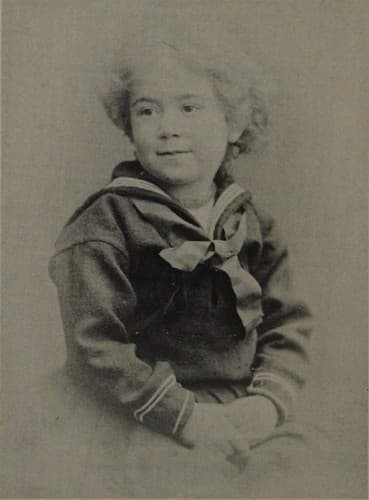
Sir James Matthew Barrie, 1st Baronet, was a Scottish novelist and playwright, best remembered as the creator of Peter Pan. He was born and educated in Scotland and then moved to London, where he wrote several successful novels and plays. There he met the Llewelyn Davies boys, who inspired him to write about a baby boy who has magical adventures in Kensington Gardens, then to write Peter Pan, or The Boy Who Wouldn't Grow Up, a 1904 West End "fairy play" about an ageless boy and an ordinary girl named Wendy who have adventures in the fantasy setting of Neverland.







