“All children, except one, grow up.”
— The very first line of the book, setting the stage for Peter's uniqueness.

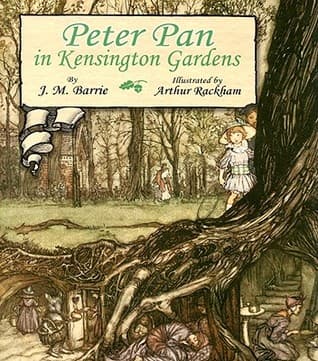
J.M. Barrie (2022)
Genre
Fantasy / Children's / Young Adult
Reading Time
150 min
Key Themes
See below
Sign in to track this book
Before Neverland, Peter Pan was a forgotten baby, living a whimsical, secret life amongst the birds and fairies of London's Kensington Gardens, learning to fly with the help of a mischievous crow and a thimble-sized kiss.
Peter Pan, a seven-day-old baby, feels an urge to fly and escapes from his London nursery window. He lands in Kensington Gardens, a magical park that closes its gates to humans at dusk but opens to fairies, birds, and other magical creatures. Peter, still believing himself to be a bird because he can fly, quickly meets the resident fairies and learns about their customs and the laws of the Gardens. He is a curious and mischievous infant, unburdened by human memories or concerns, and his arrival immediately makes him a focal point in the secret world of the Gardens. He quickly learns the language of the birds, further solidifying his belief in his avian identity.
Peter discovers the Birds' Island, a special sanctuary within the Gardens where all un-hatched human babies reside before being taken by fairies to their human mothers. He is drawn to the island, feeling a kinship with the birds. He builds a nest for himself, showing an instinctive connection to the avian world, and lives among them, mimicking their behaviors and sounds. This period solidifies his identity as a bird-boy, a unique creature neither fully human nor fully bird. He learns the social rules of the bird community, which are often more complex than they appear, and enjoys the freedom of flight and the natural world, unaware of his human origins.
Peter's presence on the Birds' Island eventually brings him into contact with the fairies of Kensington Gardens. They are intrigued and perplexed by this flying human baby. They explain to him that he is not a bird, but a human, and that he should have gone to his mother. This revelation shocks Peter, who has fully embraced his bird identity. The fairies, particularly the wise old fairy, Mab, begin to teach him about the rules of the Gardens, including the strict 'no humans after dark' law, which Peter, as a human, technically violates. However, his unique circumstances and ability to fly grant him a special exemption, making him a bridge between the human and fairy worlds.
One evening, Peter flies near the edge of the Gardens and hears a human mother singing a lullaby to her baby. The melody stirs a deep, unfamiliar longing within him, a sense of something lost or forgotten. This moment is the first time Peter truly confronts his human heritage, not just as a fact, but as an emotional experience. He is confused by these feelings, as he has no memory of a mother or a home. The lullaby represents the pull of the human world, a world he has rejected, yet it evokes a powerful, almost painful nostalgia, hinting at the choice he has made to remain a boy in the Gardens.
Driven by the lullaby and a newfound curiosity about his origins, Peter decides to try and return to his human mother. He flies back to his old nursery window, only to find it barred. His mother has since had another baby, and the window, which she had kept open for a week in hopes of his return, is now shut. This discovery fills Peter with a lasting sorrow. He realizes he is now truly an outsider to the human world, having missed his chance. This moment is important, solidifying his decision to remain in Kensington Gardens forever, never to grow up, and never to fully rejoin the human world.
After his failed attempt to return home, Peter builds a more permanent and elaborate 'Never-Never-Nest' on the Birds' Island. This nest, unlike his earlier, simpler one, signifies his acceptance of his eternal life in Kensington Gardens. It shows his unique status—a human boy living as a bird, but now consciously choosing this existence. He continues to interact with the fairies and birds, solidifying his role as a mischievous yet beloved figure. The nest represents his commitment to his chosen life, a life free from the constraints of human growth and responsibility, but also one marked by a subtle, underlying loneliness.
Peter, still learning the nuances of human and fairy interactions, is given a 'thimble' by a fairy, which is the fairy equivalent of a kiss. He doesn't initially understand its significance but cherishes it. This exchange highlights Peter's innocence and his gradual, often humorous, education in human customs and emotions, as interpreted through the fairy lens. It shows his developing capacity for affection, even if he doesn't fully grasp the concept of a kiss. The 'thimble' becomes a symbol of his unique position, straddling the line between innocent childhood and a growing awareness of emotional connections.
Queen Mab, the chief fairy of Kensington Gardens, grants Peter the special gift of being able to play his pipes, a pan-flute, whenever he wishes. This gift is significant because it allows Peter to create music that can enchant both fairies and animals, further solidifying his role as the spirit and heart of the Gardens. His music is often described as sad and wistful, reflecting his underlying melancholy about his lost human connection, but also joyful and free, embodying his chosen existence. The pipes become an extension of his being, a way for him to express his complex emotions and connect with the magical world around him.
One day, Peter encounters a lost little girl named Maimie Mannering, who has accidentally been locked in Kensington Gardens overnight. Peter, despite his initial mischief, feels a sense of responsibility for her. He builds her a small, elaborate house to shelter her until morning, using discarded materials from the Gardens. This act shows Peter's developing protective instincts and his capacity for kindness, even towards humans he initially views with suspicion. It also highlights his mastery of the Gardens' resources and his ingenuity, showing a glimpse of the resourceful leader he will become in later stories, even if his understanding of human feelings remains somewhat childlike.
Peter, in a display of his fearless and adventurous spirit, manages to ride a giant serpent (implied to be an eel or a similar large water creature) across the Serpentine, the large lake in Kensington Gardens. This daring feat further establishes his reputation among the fairies and animals as a unique and extraordinary being. It shows his connection to the natural world and his ability to interact fearlessly with its wildest inhabitants. This episode underscores his unyielding sense of adventure and his desire for excitement, a core aspect of his character that will persist throughout his stories.
Peter often visits the edge of the Serpentine where human children sail their toy boats during the day. He secretly plays with these boats, sometimes rescuing them from getting stuck, sometimes taking them on imaginary voyages. This interaction reveals Peter's continued fascination with the human world, even though he has chosen to remain apart from it. The toy boats represent a tangible link to the children he can never truly join, a safe way for him to experience aspects of their world without fully entering it. It highlights his eternal childhood and his longing for companionship, often expressed through playful, solitary interactions.
Peter occasionally encounters the 'Lost Souls' of Kensington Gardens – children who were once left in the park and forgotten by their nurses, now existing as ghostly, playful figures. He plays with these children, often leading them in games and adventures. This interaction underscores Peter's role as a leader of lost children and his comfort in a world that exists between reality and fantasy. It also subtly hints at the melancholy in his existence; he is forever a child, and his companions are often those who are similarly detached from the conventional human world, forming a unique, eternal childhood community.
Queen Mab, recognizing Peter's unique status and his importance to the magic of Kensington Gardens, issues a decree that Peter must never again leave the Gardens. This command officially seals Peter's fate, ensuring he will forever remain the boy who never grows up, forever bound to the magical park. While it might seem like a restriction, it also provides him with a defined purpose and a permanent home. This moment confirms his special place in the fairy world and his eternal separation from the human world he once briefly contemplated rejoining, solidifying his identity as Peter Pan of Kensington Gardens.
Peter frequently plays his pipes for the fairies during their nightly dances and gatherings. His music is essential to their revelry and magic, making him an integral part of the fairy community. These scenes emphasize Peter's deep connection to the magical world and his role as its unofficial musician and spirit. The dances are a joyous expression of the Gardens' hidden life, and Peter, with his wistful yet enchanting melodies, is at the heart of it all. It shows his acceptance of his chosen life and his influence on the magical inhabitants of the Gardens, even as a human boy among them.
Peter Pan remains in Kensington Gardens, forever a seven-day-old baby in spirit, though his appearance is that of a small boy. He is the guardian of the Gardens' secrets, the friend of fairies and birds, and the eternal child who chose magic over maturity. He continues to fly, play his pipes, and interact with the edges of the human world through toy boats and lost children. His story in Kensington Gardens establishes the foundational elements of his character: his eternal youth, his connection to nature and magic, his mischievous yet sometimes melancholic nature, and his choice to never grow up, forever existing as a unique being between the human and fairy realms.
The Protagonist
Peter begins as an instinctual, bird-like baby and evolves into a conscious choice-maker, electing to remain a perpetual child in the magical world of Kensington Gardens, accepting his unique identity.
The Supporting
Queen Mab remains a constant, authoritative figure, serving as a catalyst for Peter's understanding of his identity and his place in the Gardens.
The Supporting
Maimie's arc is brief; she is lost, sheltered by Peter, and then safely returned to the human world, serving to illustrate Peter's character.
The Supporting
The birds remain a constant, natural backdrop for Peter's life, representing his chosen affinity with the wild.
The Supporting
The Lost Souls remain static, embodying the consequence of being forgotten and providing Peter with eternal playmates.
The Mentioned
Peter's mother's 'arc' is external to Peter's story, her closing window serving as the definitive moment of Peter's separation from the human world.
The Mentioned
The Serpent has no arc, serving as a momentary challenge and prop for Peter's adventurous display.
The Supporting
The fairies remain a constant, magical community that provides a home and context for Peter's eternal childhood.
This theme explores the freedom and joy of never growing up, as embodied by Peter Pan. He enjoys flight, games, and a life unburdened by adult responsibilities. However, the story also subtly reveals the cost: the loss of human connection, represented by his barred nursery window and his mother moving on. Peter gains eternal youth and magic but sacrifices a family, a home, and the natural progression of life. His wistful pipe-playing and occasional longing for a 'thimble' (kiss) hint at the loneliness in his chosen immortality. The theme suggests that while childhood is magical, growth and human connection are also vital, and Peter's choice is a bittersweet one.
“All children, except one, grow up.”
Peter's journey is about discovering and choosing his identity. He begins believing he is a bird, then learns he is human, but ultimately rejects both conventional identities to form his own unique existence as a boy who lives among fairies and birds. His struggle to understand what he is, and where he belongs, is central to the narrative. The Birds' Island offers him a sense of belonging, as do the fairies, but his 'Great Sorrow' upon finding his window barred solidifies his understanding that he belongs neither fully to the human world nor entirely to the animal one. He creates a new identity, 'Peter Pan of Kensington Gardens,' a bridge between worlds.
“He was not really a bird, as of course he thought he was, but a human baby.”
Kensington Gardens itself is a central character, a space where the magic of nature thrives, contrasting with the structured, grown-up human world just beyond its gates. Peter's choice to live in the Gardens is a rejection of civilization and its rules. The Gardens are a place of freedom, wonder, and enchantment, where fairies dance and animals speak. The closing of the gates at dusk for humans, and their opening for magical creatures, symbolizes the division between these two worlds. Peter embodies the untamed, imaginative spirit of nature, finding his true home and identity within its magical embrace, away from the mundane realities of human society.
“Kensington Gardens is a place where fairies live, and where Peter Pan lives when he is not in Neverland.”
The theme of memory and forgetting is central to Peter's character. As a seven-day-old, he has no memory of his human origins, making his eventual realization of being human a shock. His inability to fully recall his mother, yet feeling a deep longing upon hearing her lullaby, speaks to the persistence of subconscious memory or instinct. The closing of his nursery window symbolizes the human world forgetting him, and his own subsequent choice to forget his human past entirely. This forgetting allows him to remain a child, free from the burdens of the past, but it also underscores the irreversible loss of his original life and family. The 'Lost Souls' further exemplify this theme, as children who were forgotten and now exist outside of time and conventional memory.
“He had quite forgotten that he was a human, and believed himself to be a bird.”
A symbolic portal between the human world and the magical world of Kensington Gardens.
The nursery window serves as a crucial plot device, representing Peter's initial escape from the human world and his last chance to return. When his mother closes it, it becomes a definitive barrier, symbolizing his irreversible choice to remain in Kensington Gardens. It is a physical manifestation of the separation between childhood and adulthood, and between the mundane and the magical. Its closure is the catalyst for Peter's profound sorrow and his ultimate decision to embrace his eternal childhood, making it a powerful symbol of lost opportunity and irrevocable choice.
A magical instrument that allows Peter to communicate and interact with the magical world.
Peter's pipes are a magical pan-flute, gifted to him by Queen Mab. This instrument is not merely a toy but a means of expression and influence. Its music enchants fairies, birds, and animals, allowing Peter to lead dances, soothe creatures, and express his complex emotions – often a mix of joy and wistfulness. The pipes solidify his role as the spirit of Kensington Gardens, a bridge between its various magical inhabitants. They are a manifestation of his innate connection to the natural and mystical world, and a tool for creating shared experiences within the Gardens.
A sanctuary for un-hatched human babies and a symbolic 'nest' for Peter's early life.
The Birds' Island is a special, hidden place within Kensington Gardens where all human babies reside before fairies deliver them to their mothers. For Peter, it serves multiple purposes: it's his first home, reinforcing his belief that he is a bird, and later becomes the site of his more permanent 'Never-Never-Nest.' It is a symbolic incubator for childhood, a place of innocence and waiting. The island represents a liminal state, a place of origin before the definitive journey into the human world, and for Peter, it becomes a chosen retreat, a permanent childhood haven.
A large lake that acts as a boundary and a stage for adventure.
The Serpentine, the large lake in Kensington Gardens, functions as both a physical boundary and a stage for Peter's adventures. It separates different parts of the Gardens and provides a natural barrier. It's where Peter daringly rides the serpent and where he interacts with human children's toy boats. The Serpentine represents the wilder, untamed aspects of the Gardens, full of hidden depths and creatures. It also acts as a subtle point of contact between Peter's magical world and the human world, through the medium of the toy boats, symbolizing his enduring fascination with what lies just beyond his chosen realm.
“All children, except one, grow up.”
— The very first line of the book, setting the stage for Peter's uniqueness.
“He was not very tidy, and he was a little self-important, and he was quite without a conscience.”
— A description of Peter Pan's character from the narrator's perspective.
“When the first baby laughed for the first time, its laugh broke into a thousand pieces and they all went skipping about, and that was the beginning of fairies.”
— Explaining the origin of fairies to a child.
“The great thing about the Gardens is that they are always there, waiting for you.”
— Reflecting on the enduring magic and presence of Kensington Gardens.
“He was a boy, and he must have a mother.”
— Peter Pan's longing for a mother, despite his desire to remain a child.
“To be born is to be wrecked.”
— A more melancholic observation about the human condition and the loss of the pre-birth state.
“Every time you clap your hands, a fairy is born.”
— A common belief associated with fairies, though more prominent in later works, it reflects the spirit here.
“Fairies don't know that they are born of children's laughter. They think they are born of dew drops and moonbeams.”
— Explaining the fairies' unawareness of their true origin.
“It is not in the nature of boys to be in a hurry.”
— A general observation about the unhurried pace of childhood and boys in particular.
“And there he was, the most wonderful and the most terrible of all the boys in the world.”
— A grand description of Peter Pan's unique and complex nature.
“He was just a baby, with an odd little smile on his face, as if he knew something very funny.”
— Describing baby Peter Pan, hinting at his mischievous and knowing nature.
“It is a mistake to think that children are simple because they are small.”
— A profound statement about the complexity and depth of children's inner lives.
“He was so happy he did not know what to do with himself.”
— Describing Peter's pure, unadulterated joy in the Gardens.
Ready to see how well you understood this book? Take our interactive quiz with 10 questions.
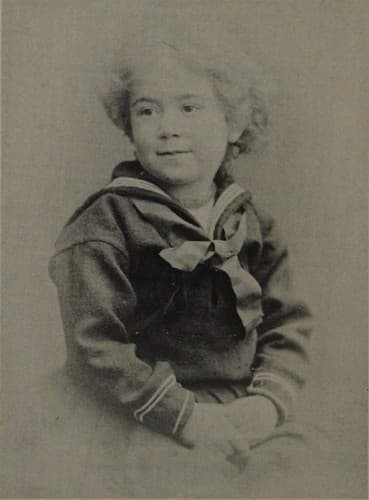
Sir James Matthew Barrie, 1st Baronet, was a Scottish novelist and playwright, best remembered as the creator of Peter Pan. He was born and educated in Scotland and then moved to London, where he wrote several successful novels and plays. There he met the Llewelyn Davies boys, who inspired him to write about a baby boy who has magical adventures in Kensington Gardens, then to write Peter Pan, or The Boy Who Wouldn't Grow Up, a 1904 West End "fairy play" about an ageless boy and an ordinary girl named Wendy who have adventures in the fantasy setting of Neverland.







