“He didn't want to be a boy. He wanted to be a hero, and a hero was something else entirely.”
— Peter's internal struggle with his identity and desire for adventure.

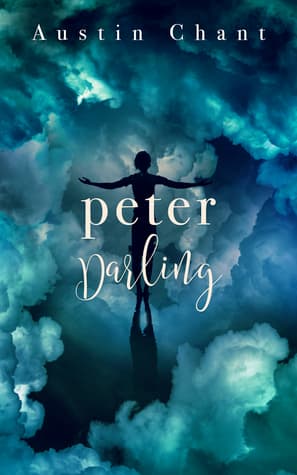
Austin Chant (2017)
Genre
Fantasy / Young Adult / Romance
Reading Time
2-3 hours
Key Themes
See below
Sign in to track this book
Ten years after abandoning Neverland to become Wendy, Peter Darling returns to a war-torn island where the Lost Boys are men, Captain Hook ignites an unexpected desire, and the lines between hero and villain blur as he reclaims his true identity.
Ten years after leaving Neverland, Peter Pan lives as Wendy Darling, a young woman in London. She feels trapped in a life of social obligations and an upcoming, unenthusiastic marriage to Edward, a kind but unremarkable man. Despite her efforts to fit in, Wendy feels a deep unhappiness and a longing for the freedom and identity she once had as Peter. The structured expectations of her society make her feel like an imposter. Her memories of Neverland, though fading, represent a lost self that she desperately misses, fueling her quiet despair.
One evening, a small compass materializes in Wendy's possession, a magical item from Neverland. Its appearance challenges her adult life, a link to her past as Peter Pan. The compass points to Neverland, to the boy she once was. The longing for Neverland, for Peter, becomes overwhelming. The compass's arrival reignites a spark of hope and rebellion, making the decision to return feel like an inevitability, a necessary reclaiming of her true self.
Upon stepping through the portal to Neverland, Wendy undergoes a physical and spiritual transformation. Her adult female form shifts back into the youthful, masculine body of Peter Pan. The island, however, is not as he remembered it. The magic is still present, but a tension now hangs in the air. The Lost Boys, once children, have become young men, hardened by years of conflict. The games Peter once played have become real, deadly wars, forcing Peter to confront a more dangerous and complex version of his past.
Peter is immediately thrown into Neverland's ongoing war. The Lost Boys, now led by the stern but loyal Tootles, are in a brutal struggle against Captain Hook and his pirate crew. The playful skirmishes of Peter's youth have escalated into a genuine, bloody conflict with real casualties. Peter struggles to understand the depth of this change, the loss of innocence that fills the island. He sees the hardened faces of his former playmates, now soldiers, and their grim determination, a stark contrast to the carefree boys he once knew.
During a reconnaissance mission, Peter is ambushed and captured by Captain Hook's pirates. He is brought before Hook, expecting the usual theatrical threats and boasts. Instead, he finds a Captain Hook who is older, more world-weary, and surprisingly perceptive. Hook recognizes Peter, not as a boy, but as the man he has become, and challenges Peter's ideas of their rivalry. The encounter is charged with an unforeseen tension, a strange mix of animosity and an undeniable, unsettling attraction that Peter had never anticipated, forcing him to re-evaluate his old adversary.
While held captive, Peter has intense conversations with Captain Hook. Hook, with a cynical but sharp wit, dismantles Peter's idealized memories of Neverland and his own role in the ongoing war. He reveals that Peter's abandonment and the prolonged nature of the conflict have deeply affected the island and its inhabitants, portraying Peter not as a hero, but as a cause for much of Neverland's current suffering. Hook's words force Peter to confront uncomfortable truths about his own immaturity and the consequences of his past actions, shattering his self-image as the eternal innocent.
Despite their long-standing animosity, Peter and Hook begin to find common ground. Their conversations reveal a mutual weariness with the endless conflict and a desire for something more than constant battle. A fragile, unspoken truce forms between them, driven by a growing, undeniable attraction that complicates their every interaction. They realize that the war has become a cycle, perpetuated by both sides, and that a new approach is needed. This unexpected alliance marks a significant shift, moving them from bitter rivals to hesitant partners, exploring the possibility of a different future for Neverland.
Peter, accompanied by Hook, tries to re-engage with the Lost Boys, hoping to explain his changed perspective and broker a truce. However, the Lost Boys, particularly Tootles, mistrust Hook and resent Peter's long absence and perceived betrayal. They see Peter's return as a disruption and his alliance with Hook as an unforgivable act. Peter struggles to bridge the divide, realizing that his past actions have created deep wounds and that his authority among them has diminished. The boys' refusal to listen highlights the impact of Peter's decade-long absence.
As Peter navigates the complexities of the war and his evolving relationship with Hook, he realizes that true growth needs more than just physical aging. It demands responsibility, empathy, and the willingness to let go of old patterns and identities. He understands that ending the war and finding personal peace will require significant sacrifices, including potentially giving up the eternal boyhood Neverland once offered. The weight of these choices presses upon him, forcing him to confront the difficult reality that the freedom he craves might come at the cost of the very magic that defines Neverland.
Ultimately, Peter and Hook, through their combined efforts and the grudging acceptance of some Lost Boys, manage to negotiate a tentative peace for Neverland. The resolution is not perfect, but it offers a chance for the island to heal. Peter fully embraces his identity as a man, no longer confined by the strictures of either Peter Pan or Wendy Darling. He chooses to stay in Neverland with Hook, accepting their complicated, passionate relationship and the responsibility of building a new future for the island, one where war is not the only option and where growth is embraced rather than feared.
The Protagonist
Peter evolves from a self-centered, identity-conflicted individual into a mature man who accepts his past, embraces his true self, and takes responsibility for his actions, finding love and peace in the process.
The Antagonist/Love Interest
Hook transforms from a one-dimensional villain into a complex, sympathetic character who finds love and a new purpose in ending the war with Peter.
The Supporting
Tootles struggles to reconcile his idealized memories of Peter with the reality of Peter's return, eventually coming to a grudging acceptance of the new path.
The Supporting
Smee remains a steadfast and loyal companion to Hook, adapting to the changing dynamics of Neverland.
The Mentioned
Edward serves as a static representation of the life Peter rejects, without his own significant arc.
The Supporting
The Lost Boys, as a collective, gradually come to terms with Peter's return and the necessity of peace, driven by their leader, Tootles.
The central theme is Peter's journey to understand and embrace his true self, moving beyond societal expectations and gender norms. As Wendy Darling, he feels suffocated and inauthentic, a feeling that intensifies as he realizes his identity as a man. His return to Neverland and transformation back into Peter Pan is a physical reclaiming of his identity. However, true self-discovery goes beyond gender; it involves acknowledging his past actions and growing into a responsible, empathetic individual. The story emphasizes that identity is not fixed by birth or societal roles, but by inner truth and personal evolution, as seen when Peter chooses to stay Peter in Neverland, a man in love with Hook, free from London's constraints.
“He had been Wendy for ten years, and it had been ten years of a slow, quiet death.”
The novel explores the transition from childish escapism to responsible adulthood. Peter initially sees adulthood as the stifling life of Wendy Darling in London, a contrast to the eternal boyhood of Neverland. However, upon his return, he finds that Neverland itself has grown up, with real wars and consequences. His journey involves learning that true adulthood is not about age, but about accepting responsibility for one's actions, understanding their impact on others, and making difficult choices for the greater good. His past selfishness as Peter Pan, which perpetuated the war, is a key element he must overcome to achieve genuine maturity and peace for Neverland.
“Growing up didn't mean becoming Wendy. It meant becoming a man who could take responsibility for what he'd done.”
The dynamic between Peter and Hook evolves from a childhood rivalry into a complex, passionate romance. This transformation shows how old animosities can mask deeper connections and how understanding and empathy can bridge seemingly insurmountable divides. Their love story is built on challenging each other's perceptions, confronting uncomfortable truths, and ultimately seeing past superficial roles to the person beneath. It suggests that love can flourish in unexpected places and that true connection often arises from a shared journey of growth and vulnerability, even with a former enemy.
“He had hated Hook, for a lifetime. Now he wondered if it had been hate at all, or something much more complicated and dangerous.”
The endless war between the Lost Boys and the pirates highlights how prolonged conflict can destroy innocence, harden hearts, and perpetuate cycles of violence. Peter's initial view of the war as a 'game' is shattered by the reality of the Lost Boys' suffering and Hook's weariness. The conflict has become self-sustaining, fueled by past grievances and a lack of communication. The resolution of the war requires both sides to break free from old patterns, forgive past wrongs, and actively work towards a future of peace, demonstrating the destructive power of unresolved animosity.
“The war was a habit, now. A tradition. No one remembered why it started, only that it had to continue.”
A magical artifact that acts as a beacon to Neverland and a catalyst for Peter's return.
The compass serves as a physical manifestation of Neverland's call and Peter's suppressed identity. Its sudden appearance in Wendy's mundane London life acts as the inciting incident, compelling her to confront her past. It doesn't just point the way; it symbolizes the inescapable pull of her true self and the magic she left behind. The compass represents destiny and the inherent longing for authenticity that eventually overrides societal expectations, forcing Peter back to his true home.
The physical change from Wendy Darling to Peter Pan upon entering Neverland.
This magical transformation is a powerful symbol of Peter's gender identity and his true self. It's not just a plot device to get him back to his original form; it visually represents the shedding of a false identity and the reclamation of a deeply ingrained, authentic one. It highlights the idea that Neverland, and by extension, Peter's true self, is a place where he can exist without the constraints of societal gender expectations, a literal manifestation of self-acceptance.
A recurring sound that symbolizes the relentless march of time and the consequences of Peter's past actions.
While not as prominent as in the original story, the 'tick-tock' of the crocodile (or the implied passage of time it represents) serves as a subtle reminder of the consequences of Peter's actions and the fact that time does indeed pass in Neverland, despite his belief in eternal youth. It's a symbolic representation of the inevitability of change and the 'growing up' that Peter initially resisted. For Hook, it represents his mortality and the constant threat that has shaped his existence.
A magical, sentient island that reflects the emotional state and actions of its inhabitants.
Neverland is more than just a setting; it's a character in itself. Its shift from a whimsical playground to a war-torn land reflects the prolonged conflict and Peter's abandonment. The island's magic responds to the emotions and intentions of its inhabitants, particularly Peter and Hook. It acts as a crucible for Peter's growth, forcing him to confront the real-world consequences of his actions and to take responsibility for the land he once claimed to rule, mirroring his internal journey.
“He didn't want to be a boy. He wanted to be a hero, and a hero was something else entirely.”
— Peter's internal struggle with his identity and desire for adventure.
“Being a boy was a performance, and he was tired of the show.”
— Peter reflecting on the expectations and constraints of masculinity.
“He wanted to be loved, not for what he was expected to be, but for what he truly was.”
— Peter's longing for authentic love and acceptance.
“Neverland wasn't a place to grow up. It was a place to be free, and freedom was a kind of magic.”
— Peter's perception of Neverland as an escape from adult responsibilities.
“Sometimes, the bravest thing you can do is to admit what you truly want.”
— A moment of introspection for Peter about his desires.
“He was a pirate, and a pirate didn't care for rules. Not when there was an adventure to be had.”
— Hook embracing his identity and love for adventure.
“Love wasn't a choice you made once, but a thousand choices, every day.”
— A reflection on the nature of enduring love.
“The past wasn't something you could outrun, but you could choose how you carried it.”
— Peter grappling with his past and its influence.
“He never knew he was looking for a home until he found it in the most unexpected place.”
— Peter discovering a sense of belonging with Hook.
“To be seen, truly seen, was a terrifying and wonderful thing.”
— Peter experiencing genuine acceptance and understanding.
“He was no longer just Peter. He was Peter Darling, and the name felt like a promise.”
— Peter embracing his new identity and the significance of the name.
“Sometimes, the greatest adventures aren't about fighting monsters, but about finding yourself.”
— A thematic statement about the nature of Peter's journey.
“He learned that sometimes, the only way to save yourself was to let someone else save you, too.”
— Peter realizing the importance of interdependence and support.
“The world was bigger than he'd ever imagined, and he wanted to see every inch of it, with Hook by his side.”
— Peter's newfound sense of wonder and desire for a future with Hook.
Ready to see how well you understood this book? Take our interactive quiz with 10 questions.







