“The past was the past. The present was the present. And the future was the future. But the three were not separate. They were intertwined, like the roots of a tree.”
— Reflecting on the cyclical nature of history and struggle in Ilmorog.

Ngugi wa Thiongo, Ngũgĩ wa Thiong'o (2005)
Genre
Historical Fiction / Mystery
Reading Time
8-10 hours (estimate for an average reader, given its depth and length)
Key Themes
See below
Sign in to track this book
After a triple murder at a foreign-owned brewery, four suspects in independent Kenya expose post-colonial disillusionment and betrayal, reflecting a nation's cries for justice.
The novel begins with the arrest of four suspects—Munira, Abdulla, Wanja, and Karega—in the small, poor village of Ilmorog. They are accused of murdering three African directors of the foreign-owned Thembi Breweries: Chui, Mzigo, and Kimeria. The police, led by Inspector Godfrey, quickly declare the case solved, but the story soon shows that the truth is more complex. Munira, a disillusioned teacher; Abdulla, a one-legged shopkeeper and former Mau Mau fighter; Wanja, a resilient barmaid and prostitute; and Karega, a fiery young trade unionist, are brought to the police station for questioning. Their lives are connected by the past and the current tragedy in Ilmorog.
Munira, a failed intellectual and outsider, comes to Ilmorog seeking anonymity and purpose after leaving his studies. He takes a teaching job at the rundown Ilmorog Primary School, a symbol of the community's neglect. His early attempts to improve the school meet with apathy and resistance, reflecting his own internal struggles. He tries new teaching methods and discipline, but his idealism is weak. He watches the community decline and struggles with his own feelings of inadequacy, often feeling less important than the more charismatic and dedicated Karega.
Karega, a young, politically aware man, arrives in Ilmorog after being expelled from high school for leading a student strike. He is Munira's former student and quickly becomes a strong presence in the village. Karega is passionate about social justice and mobilizes villagers to demand better conditions, especially regarding water shortages and exploitation by wealthy landowners. His charisma and radical ideas contrast sharply with Munira's more passive approach, creating a rivalry, particularly over Wanja. Karega's presence awakens a sense of purpose within the community.
Wanja, a woman with a difficult past marked by exploitation and loss, returns to Ilmorog. She is pragmatic and resilient. She first runs a small bar and later expands her businesses, including a brothel. She has complex relationships with Munira, Abdulla, and Karega, having been involved with all three at different times. Her business drive, though sometimes seen as progress, also shows the increasing commercialization and moral compromises within the community. Wanja's journey highlights the limited options for women in a patriarchal society, even as she tries for independence.
Ilmorog suffers a severe drought, leading to widespread famine. Local authorities offer no real help, making the villagers' desperation worse. Karega, inspired by past acts of resistance, organizes a large protest march to Nairobi. They demand aid and government attention. Munira, Abdulla, and Wanja join the march with the villagers. This difficult journey brings a sense of shared identity and resistance among the people. It also reveals the deep gap between the ruling elite and the poor. The march gains national attention and briefly brings hope.
After the march, Ilmorog is suddenly 'discovered' and becomes a busy commercial center. This rapid development, however, does not benefit the original inhabitants. Large corporations, including Thembi Breweries, and wealthy individuals like Kimeria, Chui, and Mzigo, come to the village. They buy land and establish businesses. The traditional way of life is destroyed, and villagers are dispossessed and forced into low-paying jobs or prostitution. This 'progress' is a disguised form of neo-colonial exploitation, similar to earlier struggles against colonial powers, but now carried out by a new African elite.
The new Ilmorog brings more disappointment, not prosperity. The directors Chui, Mzigo, and Kimeria, once schoolmates with Munira and Abdulla, represent the corruption and greed of the post-independence elite. They exploit the land and labor of the villagers, turning Ilmorog into a place for their illegal activities, including Thembi Breweries. Wanja, out of economic need, becomes a successful prostitute and madam; her brothel symbolizes the moral decay. Munira becomes more withdrawn and religious, while Karega continues his work as a trade unionist, facing constant repression. Abdulla, a former freedom fighter, feels particularly betrayed by the new order.
The Thembi Breweries, owned by foreign capital but managed by African directors Chui, Mzigo, and Kimeria, becomes the main exploitative institution in the new Ilmorog. It buys local produce at unfair prices, employs villagers in dangerous, low-paying jobs, and floods the market with alcohol, adding to social problems. The brewery's success relies on the suffering of the local population. It symbolizes the new economic colonialism that has taken root in independent Kenya. Karega's attempts to organize workers are met with brutal force, showing the oppressive nature of the new regime.
The novel's climax happens when Thembi Breweries is set on fire during a night of celebration. The fire destroys the factory, and in its ruins, the charred bodies of Chui, Mzigo, and Kimeria are found. This arson and murder leads to the novel's opening scene and the arrests of Munira, Abdulla, Wanja, and Karega. The story strongly suggests that the fire is not just an act of individual revenge, but a symbol of the collective anger and frustration of Ilmorog's oppressed people against the exploitative system and corrupt elite.
During their separate interrogations, the four suspects tell their personal stories and their connections to each other and to the murdered directors. Their accounts, though fragmented and sometimes conflicting, gradually reveal the complex changes in Ilmorog and the deep-seated grievances that led to the tragedy. Munira's resentment, Abdulla's feeling of betrayal, Wanja's hardened practicality, and Karega's revolutionary passion are all exposed. While the police focus on finding one culprit, the story shows that responsibility for the murders is spread across a system of oppression, not just one person.
As the interrogations end, Munira, driven by a mix of religious extremism, personal jealousy, and a twisted sense of justice, confesses to setting the fire. However, the novel implies that the act was not solely his, but the result of the people's collective anger and desperation. While Munira takes the blame, the story strongly criticizes the systemic corruption and exploitation represented by the dead directors and the government. Karega, despite his innocence in the specific act, is involved in the broader revolutionary struggle, and the novel ends with a sense of impending, larger social upheaval.
The Protagonist/Suspect
Munira devolves from a hopeful, if timid, teacher into a bitter, religiously fanatical man, ultimately confessing to the arson.
The Protagonist/Suspect
Karega evolves from a student activist to a committed trade unionist, becoming a symbol of enduring resistance against oppression.
The Protagonist/Suspect
Wanja transforms from a vulnerable young woman into a hardened but successful businesswoman, her resilience reflecting the changing social landscape.
The Protagonist/Suspect
Abdulla remains a symbol of the betrayed revolutionary, carrying the burden of historical injustice.
The Supporting
Godfrey remains largely static, representing the unchanging, bureaucratic arm of the state.
The Antagonist
Kimeria remains a static symbol of corruption, his murder being the catalyst for the investigation.
The Antagonist
Chui remains a static symbol of corruption and intellectual betrayal, his death serving as a consequence of his actions.
The Antagonist
Mzigo remains a static symbol of capitalist exploitation, his death a consequence of the system he represents.
The Supporting
Nganga remains a static figure, a repository of traditional wisdom and a lament for lost values.
The main theme of 'Petals of Blood' is the deep disappointment with Kenya's promises of independence. The novel shows how the hopes for freedom and prosperity, sparked by the Mau Mau struggle, were betrayed by a new African elite. Characters like Abdulla, a former Mau Mau fighter, feel deeply let down. They see the same exploitation and oppression that existed under colonial rule, now done by their own countrymen. Ilmorog's change from a struggling village to a commercial center dominated by Thembi Breweries, where most people are dispossessed and poor, shows this betrayal. The novel argues that the new ruling class, represented by Kimeria, Chui, and Mzigo, simply replaced the white colonialists. They continued exploitation for personal gain, leaving common people poorer and more desperate.
“What has come of our independence? We fought for the land, for freedom, for dignity. But all we got was a change of faces at the top, while the bottom remained as rotten as ever.”
'Petals of Blood' explores class struggle, showing the clear division between the wealthy, land-owning, politically connected elite and the poor, exploited masses. Thembi Breweries symbolizes this exploitation. Foreign money and local greed combine to take resources and labor from villagers, offering little in return but alcohol and despair. Karega's persistent efforts to organize workers and challenge the exploitative system highlight this ongoing conflict. The murder of the three directors, while seemingly personal, is presented as a symbolic outburst of simmering class resentment and the people's desperate fight against systemic economic oppression. The shift from communal land ownership to private property and the rise of a new African business class are central to this theme.
“There are only two kinds of people in this world: those who exploit and those who are exploited.”
'Petals of Blood' examines the complexities of revolution, looking at both past events (like the Mau Mau uprising) and current forms of resistance. The novel asks what true liberation means, suggesting that political independence without economic and social justice is incomplete. Karega embodies ongoing resistance, advocating for collective action and challenging new forms of oppression. The Long March to Nairobi is a strong act of collective protest, temporarily uniting villagers and showing their power. The final act of arson and murder, though ambiguous in who did it, can be seen as a desperate, violent expression of the people's continued struggle against an oppressive system. It signals that the revolution is not over and may need more radical action.
“It is blood that nourishes the tree of freedom. But what kind of freedom is it that only blossoms for a few?”
The moral fabric of society unravels in 'Petals of Blood' as corruption affects every level, from individuals to state institutions. The directors, Kimeria, Chui, and Mzigo, show this decay through their greed, illegal dealings, and exploitation of women. Wanja's transformation into a madam, while a survival strategy, also reflects the widespread moral compromise driven by economic need. Munira's descent into religious extremism and his ultimate act of violence also stem from a deep sense of moral confusion and despair. The novel portrays a society where traditional values are lost, replaced by a ruthless pursuit of wealth and power, leading to widespread social problems like prostitution, alcoholism, and a breakdown of community.
“The money economy had come to Ilmorog, and with it, a new kind of blindness, a blindness to the human cost.”
The novel critically examines the role of education and intellectuals in post-colonial society. Munira, the educated but ineffective teacher, represents the failure of some intellectuals to connect with and empower the masses. His intellectualism leads to cynicism and detachment rather than active involvement. Chui, a former headmaster turned corrupt director, symbolizes the betrayal of educational ideals by those who use their learning for personal gain instead of societal improvement. In contrast, Karega, despite his expulsion, uses his intellect and education to mobilize and enlighten villagers, becoming a true leader. The state's control over education and its suppression of critical thought are also highlighted, suggesting that education can be either a tool of liberation or a means of maintaining oppression.
“Education, if it is to be true education, must be a tool for liberation, not for enslavement.”
The story is framed by the murder investigation, which unfolds through flashbacks and interrogations.
The novel begins with the arrests of the four suspects and the murder investigation, which then serves as a framing device for the entire narrative. The central mystery of 'who killed the directors?' drives the plot, but the actual 'solution' is less important than the unfolding of the characters' intertwined pasts and the social history of Ilmorog. Through the interrogations and flashbacks, the reader gradually pieces together not just the events leading to the murders, but also the broader political and economic context of post-independence Kenya. This structure allows Ngugi to reveal the systemic causes of the crime, rather than focusing solely on individual culpability.
Objects, places, and characters carry deeper metaphorical meanings.
Ngugi employs rich symbolism throughout the novel. Ilmorog itself transforms from a traditional, neglected village into a symbol of neo-colonial exploitation, its 'development' revealing the rot beneath. The Thembi Breweries represents foreign capital, alcoholism, and the economic exploitation of the masses. 'Petals of Blood' in the title symbolizes both the beauty and sacrifice of the struggle for freedom (the blood of martyrs) and the destructive, corrupting nature of the new order (the 'petals' of money-making blooming from the 'blood' of exploitation). Characters also carry symbolic weight: Abdulla as the betrayed freedom fighter, Karega as the enduring revolutionary, and the three directors as the corrupt elite.
The narrative frequently shifts in time and perspective to reveal the characters' histories and the evolution of Ilmorog.
The story is not told linearly but through extensive flashbacks that delve into the personal histories of Munira, Karega, Wanja, and Abdulla, as well as the historical transformation of Ilmorog. These flashbacks are often triggered by the interrogations, allowing each character to present their version of events and their motivations. This device creates a multi-layered narrative, presenting different perspectives on the same events and demonstrating how individual lives are shaped by larger historical and political forces. It also allows the author to build suspense and gradually reveal the complex web of relationships and grievances that lead to the tragic climax.
The story of Ilmorog serves as an allegory for the struggles of post-colonial Kenya and Africa.
The transformation of Ilmorog, its initial neglect, the hope of the Long March, and its subsequent 'development' into a hub of exploitation, functions as an allegory for the broader trajectory of Kenya and many other post-colonial African nations. The characters' struggles and the systemic issues they face—corruption, class struggle, foreign exploitation, and the betrayal of independence ideals—mirror the challenges faced by these nations. The novel uses the specific events in Ilmorog to comment on universal themes of power, justice, and the ongoing struggle for true liberation in the Third World, making the story resonate beyond its immediate setting.
“The past was the past. The present was the present. And the future was the future. But the three were not separate. They were intertwined, like the roots of a tree.”
— Reflecting on the cyclical nature of history and struggle in Ilmorog.
“They had been taught to sing hymns in praise of a God who had given them nothing but poverty and disease.”
— Wanja's bitter reflection on the hypocrisy of colonial religion and its impact on the villagers.
“A man's worth was not in the amount of money he had, but in the amount of good he could do for his people.”
— Munira's early, more idealistic, thoughts on leadership and community.
“Knowledge was power. But power without justice was tyranny.”
— Abdulla's contemplation on the misuse of education and authority by the new African elite.
“The soil of our land is red with the blood of our ancestors. And it will be redder still with the blood of those who betray us.”
— A powerful, almost prophetic, statement about the consequences of betrayal and the fight for freedom.
“The only way to build a new world was to destroy the old one first.”
— Mwihaki's more radical perspective on the necessity of dismantling oppressive structures.
“For true freedom was not merely the absence of chains, but the presence of justice.”
— A core theme of the novel, articulated by various characters, emphasizing the depth of true liberation.
“The future was not a gift. It was a conquest.”
— A reflection on the active struggle required to shape one's destiny and society's future.
“They had exchanged one set of masters for another, black for white, but the chains remained.”
— A critical assessment of post-colonial disillusionment, where the new African rulers replicate colonial oppression.
“The seeds of revolution are sown in the fields of despair.”
— A metaphor for the origins of uprising, born from the deep suffering of the people.
“The greatest betrayal is not to fight for what you believe in.”
— Karega's firm belief in the importance of conviction and action.
“Silence was a weapon. But it could also be a shield, protecting the guilty.”
— Exploring the dual nature of silence in the face of injustice, both as resistance and complicity.
“The past was not dead. It was not even past. It was still alive, breathing down their necks.”
— A vivid portrayal of how historical injustices continue to haunt and influence the present.
“Hope, like a flower, could grow even in the cracks of concrete.”
— Despite the harsh realities, a persistent underlying theme of resilience and the possibility of renewal.
Ready to see how well you understood this book? Take our interactive quiz with 10 questions.
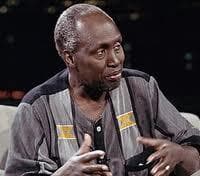
Ngũgĩ wa Thiong'o is a Kenyan author and academic who writes primarily in Gikuyu and who formerly wrote in English. He has been described as having been "considered East Africa's leading novelist". His work includes novels, plays, short stories, and essays, ranging from literary and social criticism to children's literature. He is the founder and editor of the Gikuyu-language journal Mũtĩiri. His short story The Upright Revolution: Or Why Humans Walk Upright, is translated into 100 languages from around the world.
Biography coming soon.