“The young people, nowadays, are not content to live, they want to experience.”
— Poirot observing the younger generation's outlook on life.

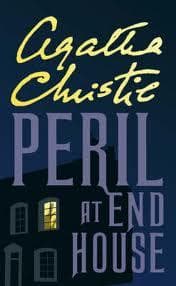
Agatha Christie (1932)
Genre
Thriller / Mystery
Reading Time
360 min
Key Themes
See below
Sign in to track this book
Hercule Poirot's Cornish seaside holiday turns deadly when he uncovers a sinister plot of 'accidents' targeting the reckless mistress of a clifftop mansion, forcing him to unmask a killer before Nick Buckley's luck, and life, run out.
While vacationing in Cornwall with Captain Hastings, Hercule Poirot meets Miss Nick Buckley, the young mistress of End House. Poirot sees a bullet hole in Nick's hat, which she says is from a recent 'accident' while driving. This, with her casual talk of other close calls—a falling picture, a loose boulder, and bad brakes—makes Poirot interested. He believes these are not accidents but attempts on Nick's life. Poirot warns her, but Nick, used to 'bad luck,' is not very worried, though she agrees to be careful.
Poirot, with Hastings, quietly starts to investigate Nick's life. They learn Nick is the last of her family, inheriting End House and a small income, but she is not rich. She has no close family who would gain much from her death. Poirot talks to Nick's housekeeper, Ellen, and her visiting cousin Maggie Buckley. Nick, despite Poirot's warnings, plans a party at End House, inviting friends and relatives. This party, meant to be fun, becomes a focus for Poirot's suspicions, as he thinks the killer might try again during the event.
The party at End House begins, with guests including Nick's friends Freddie Rice and Jim Lazarus, her distant cousin Charles Vyse, and Maggie Buckley. Poirot and Hastings are also there. During fireworks, the lights go out. When they come back on, Maggie Buckley is found dead, shot in the head. The shock turns into a chilling understanding: Maggie was wearing Nick's shawl, and it is clear the killer meant to murder Nick, mistaking Maggie for her in the dark. This event confirms Poirot's belief that Nick is in danger and the killer is one of the guests.
Poirot starts a careful investigation, asking questions of everyone at the party and looking deeper into Nick's business. He finds out Nick had recently made a will, leaving End House to Charles Vyse, and her other assets to Freddie Rice and Jim Lazarus. He also learns about a valuable diamond necklace, the 'Buckley necklace,' reported stolen years ago but possibly still hidden. Romantic relationships also appear: Freddie Rice loves Jim Lazarus, but there are hints of a past relationship between Freddie and Nick. Poirot thinks the motive is either Nick's inheritance or the hidden jewels, and he checks each suspect's alibis and money situations.
As Poirot continues, he learns that a more recent will, made by Nick just before the party, is missing. This new will would have changed the inheritance a lot. He also uncovers Freddie Rice's secret drug addiction to cocaine, which she has been hiding. This addiction gives a possible motive, as Freddie would need money for her habit, and Nick's death would give her an inheritance. Poirot also finds out Nick had been acting strangely in the days before the murder, seeming nervous and secretive, making the mystery of her life and the attempts on it deeper.
Poirot and Hastings talk to Commander Challenger, a former naval officer and friend of Nick's, staying at a nearby hotel. Challenger hints at having important information about Nick's family history or the house, but he is slow to say it all. Soon after their meeting, Challenger is found dead, having seemingly fallen from a cliff. While first called an accident or suicide, Poirot suspects murder, believing Challenger was killed because he knew too much. This second death shows the killer's cruelty and willingness to remove anyone who might expose them, making Poirot's investigation harder and raising the stakes.
After careful looking and connecting clues, Poirot brings all the suspects to End House for a big reveal. He explains that the woman everyone knows as Nick Buckley is not the real Nick. The real Nick Buckley, he says, died of a serious illness years ago. The woman living at End House and having the 'accidents' is, in fact, Maggie Buckley, who took on Nick's identity. This shocking news changes the whole case, as the reason for the murders and who the victim was meant to be are now different.
Poirot explains that the real Nick Buckley had inherited a lot of money from her grandfather, but only when she reached a certain age, and if she was alive. The 'accidents' and Maggie's murder (mistaken for the imposter Nick) were planned to kill the person thought to be the heiress. The killer's goal was for the money to pass to them. The long-lost Buckley diamond necklace, thought stolen, was also a key part of the plan, as its existence was tied to the family's wealth and finding it would strengthen the killer's claim.
Poirot dramatically reveals that Eleanor 'Freddie' Rice is the murderer. Freddie, burdened by her drug addiction and needing money, planned the whole scheme. She knew about the real Nick's death and convinced Maggie Buckley to pretend to be Nick to claim the inheritance, promising Maggie a share. However, Freddie then decided to kill Maggie (the imposter Nick) to inherit all the money herself. She planned the 'accidents' and shot Maggie at the party, mistakenly thinking she was the imposter Nick, whom she meant to kill for the inheritance.
When faced with Poirot's strong evidence, Freddie Rice breaks down and confesses to her crimes. She admits to manipulating Maggie, staging the 'accidents,' and murdering Maggie at the party. She also confesses to killing Commander Challenger because he had found out her plan. The truth about the real Nick Buckley's death and the deception is finally out. The Buckley fortune is safe, and justice is done for Maggie and Commander Challenger. The other characters deal with the shocking news, and End House, once a place of mystery and danger, is finally safe.
The Protagonist
Poirot begins as a vacationer, but quickly becomes the central investigator, meticulously uncovering the truth and exposing the killer.
The Supporting
Hastings observes and reports the unfolding mystery, growing in his understanding of human nature and Poirot's methods.
The Central Figure/Victim
Her initial portrayal as a lucky survivor shifts to that of an unwitting participant in a grand deception, ultimately becoming a tragic victim.
The Victim (posthumous)
Her death is the catalyst for the entire series of events, making her a posthumous central figure.
The Antagonist
Initially appearing as a supportive friend, she is progressively revealed as the calculating and ruthless killer.
The Supporting
He remains largely unchanged, a good-natured individual caught in the web of deceit.
The Supporting
He moves from a potential suspect to an unwitting aide in Poirot's investigation.
The Supporting/Victim
His brief appearance provides a crucial lead, and his subsequent murder highlights the killer's ruthlessness.
The Supporting
She remains a steadfast and observant figure, providing a stable presence amidst the chaos.
The Mentioned
Her role is brief, serving to introduce key characters.
The novel's main theme is the deception of identity, where Maggie Buckley pretends to be the real Nick Buckley. This theme is important because it drives the whole plot, from the 'accidents' to the murders. Poirot's investigation depends on finding this basic lie. The killer's motive is closely linked to who the 'real' heiress is, making identity very important. This deception shows how appearances can trick people and how a hidden truth can be behind a complex criminal plot.
“'The truth, Mademoiselle, is a very curious thing. Sometimes it is very simple. Sometimes it is very complicated. But always, it is the truth.'”
Greed and desperation motivate the killer, Freddie Rice. Her cocaine addiction creates an urgent need for money, pushing her to make and carry out a ruthless plan to get the Buckley inheritance. The chance of a large fortune corrupts her, making her betray her friend, Maggie, and commit murders. This theme explores how needing money can make people go to extreme lengths, showing the destructive power of greed when mixed with addiction and a lack of morals.
“'It is not enough to be rich. One must be able to enjoy one's riches.'”
Throughout the novel, what seems true is always questioned by the real situation. Nick Buckley's carefree outside hides a deadly secret—that she is an imposter. The 'accidents' seem like bad luck but are deliberate murder attempts. Freddie Rice seems like a loyal friend, but is actually the clever killer. Poirot always says one must look past surface appearances to find the truth. This theme shows that first impressions are not always reliable and that careful investigation is needed to understand the true nature of people and events.
“'One must look for the small things, the little discrepancies, the things that do not fit.'”
End House is more than just a setting; it shows the theme of danger and warning. Sitting on cliffs, it symbolizes the unstable nature of Nick's (Maggie's) life and the bad events happening inside its walls and around it. The house's isolated nature helps the killer's plans, and its history is tied to the family money and secrets. The 'peril' is not just a plot point but a feeling, suggesting that danger comes not only from outside but also from the hidden truths within the house itself.
“'There is a feeling about this house, Hastings, a feeling of... peril.'”
The central deception where one character assumes the identity of another.
The imposter identity of Maggie Buckley as Nick Buckley is the pivotal plot device that drives the entire mystery. It creates confusion about the true target of the 'accidents' and the murder, allowing the killer's motives to remain obscured for most of the novel. Poirot's eventual unraveling of this deception fundamentally shifts the entire understanding of the case, revealing the true victim and the killer's intricate plan. This device generates suspense and misdirection, making the reader question everything they initially believed about the characters and their relationships.
A hidden or conditional inheritance serving as the primary motive for murder.
The substantial fortune inherited by the real Nick Buckley, contingent on her surviving to a certain age, serves as the ultimate motive for the series of crimes. This financial incentive drives Freddie Rice's greed and her elaborate scheme to eliminate those who stand between her and the money. The details of the will and the conditions of the inheritance are slowly revealed by Poirot, providing the crucial 'why' behind the murders. It's a classic Christie device, where a large sum of money or property fuels the dark desires of a killer.
A sequence of near-fatal incidents disguised as misfortune.
The initial 'accidents' that befall Nick Buckley (the imposter Maggie) are a key plot device that immediately signals foul play to Poirot. These seemingly random events – a falling picture, a dislodged boulder, faulty brakes, and the bullet hole in her hat – are actually carefully staged attempts on her life. They serve to heighten the sense of danger, introduce the central conflict, and provide Poirot with the initial clues that someone is actively trying to kill 'Nick.' This device creates early suspense and establishes the killer's cunning and ruthlessness.
A specific item of clothing used to mislead the killer about the victim's identity.
During the party at End House, Maggie Buckley wears Nick's distinctive shawl, a detail that proves fatal. This specific item of clothing is a crucial misdirection device, as it causes the killer, Freddie Rice, to mistake Maggie for the imposter Nick in the dark. The shawl directly leads to Maggie's murder, which was intended for 'Nick.' This device cleverly allows the killer to commit the crime while adding another layer of complexity to the investigation, as Poirot must deduce why the 'wrong' person was killed.
“The young people, nowadays, are not content to live, they want to experience.”
— Poirot observing the younger generation's outlook on life.
“It is not the eye that sees, but the brain.”
— Poirot explaining the importance of mental processing over mere observation.
“Everything is simple, if you have patience.”
— Poirot's philosophy on problem-solving.
“One must not jump to conclusions. One must allow the facts to arrange themselves.”
— Poirot's methodical approach to investigation.
“There are times when a lie is not a lie, but merely a polite way of saying something that isn't true.”
— Poirot contemplating the nuances of deception.
“The human heart is an extraordinary thing, Hastings. It can hold so much, and yet sometimes, it holds nothing at all.”
— Poirot reflecting on human emotions and relationships.
“It is the small details, my friend, that are often the most important.”
— Poirot emphasizing the significance of minor clues.
“People are so afraid of being thought out of date.”
— Poirot observing social anxieties.
“It is not enough to be clever. One must also be wise.”
— Poirot distinguishing between intelligence and wisdom.
“There is nothing so dangerous as a half-truth.”
— Poirot discussing the perils of incomplete information.
“The most unlikely people often commit the most unlikely crimes.”
— Poirot's insight into the unexpected nature of criminal behavior.
“It is a mistake to think that because a thing is obvious, it is therefore true.”
— Poirot cautioning against superficial conclusions.
“A man's past is like a shadow, it follows him wherever he goes.”
— Poirot reflecting on the inescapable influence of one's history.
“The truth, my friend, is often stranger than fiction.”
— Poirot remarking on the surprising nature of reality.
Ready to see how well you understood this book? Take our interactive quiz with 10 questions.
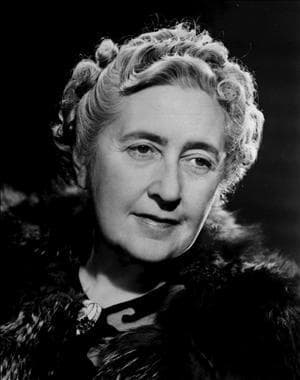
Dame Agatha Mary Clarissa Christie, Lady Mallowan, was an English writer known for her 66 detective novels and 14 short story collections, particularly those revolving around fictional detectives Hercule Poirot and Miss Marple. She also wrote the world's longest-running play, the murder mystery The Mousetrap, which has been performed in the West End since 1952. A writer during the "Golden Age of Detective Fiction", Christie has been called the "Queen of Crime". She also wrote six novels under the pseudonym Mary Westmacott. In 1971, she was made a Dame (DBE) by Queen Elizabeth II for her contributions to literature. Guinness World Records lists Christie as the best-selling fiction writer of all time, her novels having sold more than two billion copies.







