“Perhaps the most important thing I learned was that it is not for me to judge the dead.”
— Peony reflects on her journey through the afterlife and her changing perspective.

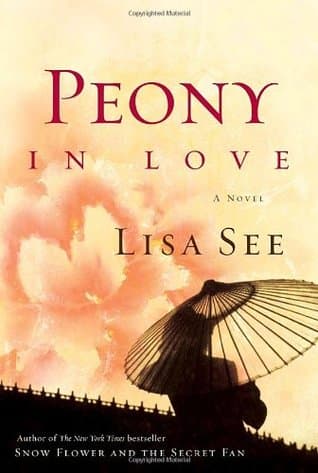
Lisa See (2007)
Genre
Fantasy / Historical Fiction / Romance
Reading Time
300 min
Key Themes
See below
Sign in to track this book
In a world where love is a literal sickness, a scholar's deceased daughter returns as a hungry ghost to haunt her former fiancé, who has married another, all while being tied to the opera 'The Peony Pavilion'.
Peony, a sixteen-year-old girl from a prominent scholar-gentry family in Hangzhou, lives a life of extreme seclusion within the women's quarters of her family's estate. Her world is limited to her mother, her nursemaid, and occasional visits from her grandmother. One day, her father, Scholar Chen, decides to host a performance of 'The Peony Pavilion' for his sixtieth birthday, an opera considered scandalous due to its themes of romantic love and female desire. Peony, along with other women of the household, is allowed to secretly watch the performance. The beauty and passion of the opera deeply affect Peony, awakening desires she never knew she possessed and changing her view of her confined existence.
After seeing 'The Peony Pavilion', Peony begins to compare her own life to that of Du Liniang, the opera's heroine. She becomes consumed by the idea of romantic love. During a secret outing to a garden, a rare event for her, Peony meets a handsome young man, Ren, who is a student of her father's. They share a brief, intense connection, exchanging poems and promises. Without her father's knowledge, Peony and Ren become secretly betrothed, exchanging a scroll painting as a token of their commitment. This secret relationship fills Peony with a joy and purpose previously missing from her life, but also with constant fear of discovery and the societal disapproval it would bring.
The intense emotions from the opera and her secret love for Ren begin to affect Peony. She develops a severe case of 'lovesickness,' a recognized affliction in her time, marked by melancholy, loss of appetite, and physical wasting. She believes her love for Ren is an impossible dream, especially as her father begins to arrange a formal, advantageous marriage for her with a different scholar, Wu. Peony's condition worsens, with vivid dreams and a growing detachment from the world. Despite her family's efforts to cure her with traditional remedies, Peony ultimately dies tragically young and unfulfilled in her earthly desires.
After her death, Peony finds herself trapped, unable to pass into the afterlife. She has become a 'hungry ghost,' bound to the earthly realm by her unfulfilled desires and her lingering attachment to her family and, most importantly, to Ren. As a ghost, she is invisible and intangible to most, but she can observe the living. She witnesses her own funeral rites and her family's grief. Her main torment is her inability to communicate or interact with the living, particularly Ren, and her constant longing for the life she lost and the love she never fully experienced. This new existence is one of deep loneliness and yearning.
As a hungry ghost, Peony observes what happens after her death. Her mother, Mrs. Chen, is consumed by grief and begins to dedicate her life to editing and publishing 'The Peony Pavilion' with women's commentaries, hoping to preserve her daughter's memory and validate her passion. Peony also witnesses the arrival of her former fiancé, Ren, who, after a period of mourning, is forced by his family to marry another woman, Lady Gu. This news devastates Peony, confirming her fears that her love was fleeting and that Ren has moved on, leaving her even more desolate and bound to her ghostly existence by her feelings of betrayal and abandonment.
Ren eventually takes on two more wives: Lady Su and Lady Tan. To Peony's surprise, she discovers that all three of Ren's wives are deeply involved with 'The Peony Pavilion.' Lady Gu, his first wife, is a talented artist who paints scenes from the opera. Lady Su, his second wife, is a scholar who is writing commentaries on the opera, much like Peony's mother. Lady Tan, his third wife, is a performer and singer of the opera. Even more surprising, they become interested in Peony's own tragic story, seeing her as a real-life version of Du Liniang. They begin to hold seances and rituals, attempting to communicate with Peony's spirit, accidentally strengthening her connection to the living world.
Driven by her desire to be acknowledged and her story understood, Peony discovers she can influence the living world in subtle ways. She begins to communicate with Ren's wives, particularly Lady Su, through dreams and by guiding their hands as they write. Lady Su, a sensitive and intelligent woman, becomes Peony's main connection. Through this unique connection, Peony shares her experiences, her love for Ren, and the details of her life and death. This communication gives Peony a sense of purpose and a glimmer of hope that she might finally achieve some peace, even as a ghost. The wives believe they are channeling a true lovesick ghost, validating Peony's existence.
Peony's mother, Mrs. Chen, continues her work on 'The Peony Pavilion' and, through shared interests, connects with Ren's wives. Lady Su, guided by Peony's ghostly influence, reveals her channeled writings about Peony's life. Mrs. Chen recognizes her daughter's voice and story within these writings. Together, these women—the mother, the first wife, the second wife, and the third wife—work to publish a unique edition of 'The Peony Pavilion' that includes Peony's own autobiography, written posthumously through Lady Su, and the women's commentaries. This act of collective authorship ensures Peony's story and spirit are preserved and celebrated, giving her a voice from beyond the grave.
As her story gains recognition, Peony's spiritual power grows. She is eventually able to appear to Ren, confronting him about his apparent betrayal. Ren, who had genuinely loved Peony but was bound by societal expectations and family duty, expresses his remorse and explains his circumstances. This confrontation allows Peony to release some of her resentment and understand the complexities of the living world. Through the love and understanding shown by the living women, especially her mother and Lady Su, Peony begins to find forgiveness and acceptance. Her lingering attachments start to loosen, and her ghostly existence becomes less tormenting.
With her story told, her love acknowledged, and her resentments softened, Peony's spirit finally finds peace. She recognizes that her earthly desires have been fulfilled through the lasting legacy of her story and the collective efforts of the women who loved her and understood her passion. The novel concludes with Peony's spirit preparing to move on from her existence as a hungry ghost. She senses the possibility of rebirth, a new beginning where she might live a life unburdened by the constraints of her previous existence, carrying the wisdom and love she gained into her next incarnation, symbolizing the eternal cycle of life, death, and renewal.
The Protagonist
From a naive, cloistered girl to a lovesick ghost yearning for recognition, Peony eventually finds peace and a path to rebirth through the women who preserve her story.
The Supporting
Initially a passionate lover, Ren becomes a man burdened by duty and loss, eventually finding a measure of forgiveness from Peony's ghost.
The Supporting
From a conventional mother to a radical champion of women's voices and her daughter's literary legacy.
The Supporting
Transforms from a new wife to a spiritual medium, becoming the voice for Peony's posthumous autobiography and a key figure in preserving women's literary heritage.
The Supporting
Remains largely static in his traditional views, but his grief and his wife's actions indirectly lead to the preservation of Peony's story.
The Supporting
Develops from a conventional first wife into an artist who contributes to the collective preservation of Peony's story.
The Supporting
Contributes her artistic talent to the collective effort of understanding and preserving the legacy of 'The Peony Pavilion' and Peony's story.
The Mentioned
Her fictional arc inspires Peony's real-life one, blurring the lines between art and reality, and her story is continually reinterpreted by the characters.
The novel shows how stories, particularly 'The Peony Pavilion,' can cross time and even death, shaping lives and offering comfort. The opera acts as a catalyst for Peony's awakening, but it also becomes a way for her posthumous existence and legacy. The collective effort of Mrs. Chen and Ren's wives to interpret, comment on, and publish the opera, including Peony's own ghost-written autobiography, highlights how art provides a means for women to express themselves and connect across generations, defying the silence imposed by their society. Peony's ultimate peace comes from her story being told.
“A woman's greatest achievement is her reputation. A scholar's greatest achievement is his words.”
The novel details the extreme confinement of women in 17th-century China, especially within the scholar-gentry class. Peony's entire life is spent within the walls of her family's compound, her movements and choices severely restricted. Her only escape is through imagination and, later, through her ghostly existence. Despite these limitations, the women in the story find ways to exert agency: Peony through her secret love and posthumous voice, Mrs. Chen through her publishing endeavors, and Ren's wives through their scholarly and artistic interpretations. They create a 'women's world' of shared passion and support that challenges patriarchal control.
“We are like flowers in a vase; once picked, we wither. But the vase is beautiful, and we are safe inside.”
Romantic love, particularly the intense, spiritual kind depicted in 'The Peony Pavilion,' is a central theme. Peony's lovesickness, a recognized ailment of the time, is both a physical and emotional sign of her unfulfilled desires and the impossibility of her love within societal constraints. The novel explores the deep grief associated with lost love and the lasting nature of attachment, even after death. Peony's journey as a hungry ghost is driven by her yearning for Ren and her lost life, showing how love can bind and torment, but also ultimately lead to resolution and peace.
“A dream of love, and a love of dreams. One can die of it, you know.”
The boundary between the living and the dead is permeable in 'Peony in Love'. Peony's existence as a hungry ghost allows her to observe and subtly influence the living world, blurring the lines between realms. Her story is literally written from beyond the grave, showing that death is not an absolute end but a transformation. The interactions between Peony's spirit and the living women, particularly Lady Su, emphasize a spiritual continuity and the lasting impact of individuals on those who come after them. The novel suggests that true death only occurs when one is forgotten, and conversely, remembrance grants a form of immortality.
“A hungry ghost is a spirit whose desires are so strong that they cannot pass on. They remain, yearning for what they lost.”
Peony's post-mortem existence as a spirit bound by unfulfilled desires.
The concept of the 'hungry ghost' is central to the narrative. Peony's inability to move on after death is directly tied to her unfulfilled earthly desires, particularly her love for Ren and her yearning for a life she never fully lived. This device allows Peony to remain an active protagonist even after her physical death, providing a unique perspective on the living world and enabling the exploration of themes like posthumous agency, remembrance, and the lingering power of unrequited love. It's rooted in Chinese folklore and Buddhist beliefs, grounding the fantasy elements.
The opera within the novel acts as a mirror, catalyst, and subject of commentary.
Tang Xianzu's 'The Peony Pavilion' is not just a backdrop but a character in itself. It serves as a catalyst for Peony's awakening, a mirror to her own experiences, and a shared obsession among the female characters. The novel details the opera's plot, its scandalous reputation, and its profound emotional impact. Furthermore, the act of women writing commentaries on the opera, including Peony's own posthumous writings, creates a meta-narrative, reflecting on the power of storytelling and interpretation within a restrictive society. It blurs the lines between fiction and reality for Peony and the other women.
The use of letters, poems, and ghost-written texts to convey inner lives and advance the plot.
The novel incorporates various forms of written communication, including Peony's secret poems and diary entries, the women's commentaries on 'The Peony Pavilion,' and crucially, Peony's autobiography channeled through Lady Su. These writings provide intimate access to the characters' inner thoughts and emotions, especially Peony's, whose voice would otherwise be silenced by death. This device highlights the importance of literacy and written expression for women in a society where their spoken voices were often suppressed, and it serves as the primary means by which Peony achieves posthumous agency and remembrance.
The segregated female quarters as a space of confinement and covert empowerment.
The 'nei-wei,' or women's inner quarters, is a significant plot device. It represents both Peony's extreme confinement and, paradoxically, a space where women can forge unique bonds, share forbidden knowledge (like 'The Peony Pavilion'), and develop their own culture. While physically restrictive, this segregated world allows for a form of covert empowerment and solidarity among women, enabling them to collectively preserve and interpret stories, defying the patriarchal gaze. Peony's initial experience of love and her later communication with the living women all occur within or in relation to this 'women's world'.
“Perhaps the most important thing I learned was that it is not for me to judge the dead.”
— Peony reflects on her journey through the afterlife and her changing perspective.
“A woman's greatest weapon is her beauty, but her greatest strength is her mind.”
— Peony, as a ghost, observes the women in her family and their struggles.
“The living do not always understand the dead, and the dead do not always understand the living.”
— Peony grapples with her new existence and the disconnect with her earthly family.
“Love is not a story with a beginning and an end, but an endless river.”
— Peony contemplates her enduring love for Ren and how it transcends death.
“To be remembered is to live forever, even if only in the hearts of those who loved you.”
— Peony finds solace in the idea of remembrance after her death.
“Our lives are but a play, and we are the actors, each with our own part to perform.”
— Peony often views life through the lens of opera, a central theme in the book.
“A girl's heart is like a garden, and if she does not tend it, weeds will grow.”
— A wisdom shared by Peony's mother, emphasizing the importance of nurturing one's inner self.
“There are many kinds of hunger, and not all of them can be satisfied with food.”
— Peony, as a hungry ghost, experiences different forms of longing and desire.
“The past is never truly gone; it echoes in the present and shapes the future.”
— Peony observes how her own actions and those of her ancestors continue to influence events.
“Even in death, there are rules, and breaking them can have terrible consequences.”
— Peony learns the strictures of the afterlife and the dangers of defying them.
“A story, once told, takes on a life of its own, independent of its author.”
— Peony reflects on the power of the 'Peony Pavilion' opera and how it influences people.
“To be truly free, one must first be free of one's own desires.”
— Peony grapples with her attachments and the path to spiritual liberation.
“Sometimes, the greatest act of love is to let go.”
— Peony's journey involves learning to release her earthly attachments and accept her fate.
“The world of the living and the world of the dead are not so far apart as we imagine.”
— Peony's experiences as a ghost blur the lines between life and death.
Ready to see how well you understood this book? Take our interactive quiz with 10 questions.
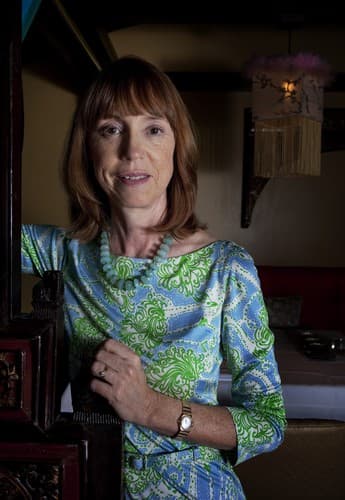
Lisa See is an American writer and novelist. Her books include On Gold Mountain: The One-Hundred-Year Odyssey of My Chinese-American Family (1995), a detailed account of See's family history, and the novels Flower Net (1997), The Interior (1999), Dragon Bones (2003), Snow Flower and the Secret Fan (2005), Peony in Love (2007) and Shanghai Girls (2009), which made it to the 2010 New York Times bestseller list. Both Shanghai Girls and Snow Flower and the Secret Fan received honorable mentions from the Asian/Pacific American Awards for Literature.







