“I didn't know then that the fear of the unknown is often far worse than the unknown itself.”
— Reflecting on childhood fears and the strange events that unfolded.

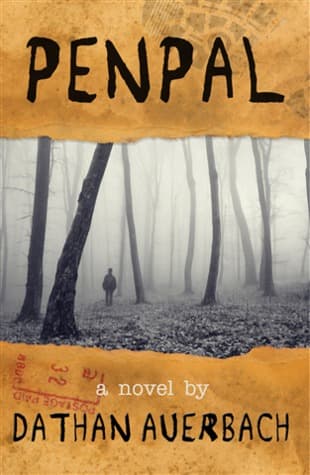
Dathan Auerbach (2012)
Genre
Thriller / Mystery
Reading Time
360 min
Key Themes
See below
Sign in to track this book
A man unearths the fragmented, bizarre memories of his childhood, only to discover they're all threads in a single, terrifying story woven by a persistent, unseen horror.
The narrator, six years old, recalls his first memory: a 'Balloons' game at summer camp where children release balloons with their names and addresses, hoping for a penpal. He gets lost in the woods, disoriented and scared, eventually finding his way back to the main path. Later, during a search for a missing boy named Josh, the narrator discovers one of Josh's shoes in the woods, leading to a frantic but unsuccessful search for the boy himself. Josh is never found, and the incident leaves a lasting, unsettling impression on the narrator, despite his young age. This event is the first in a series of strange occurrences he will later investigate.
After the 'Balloons' event, the narrator receives a response from his penpal. The letters initially seem normal, but soon, the penpal begins sending bizarre 'gifts': a small wooden bird carved from a branch, a flattened penny, and a photograph of the narrator taken without his knowledge. The gifts become increasingly unsettling, including a drawing of his house and a lock of hair that looks suspiciously like his own. The penpal's letters reveal an uncanny knowledge of the narrator's daily activities, making him feel watched and deeply disturbed, a feeling he cannot articulate to his parents.
The narrator's beloved dog, named 'Pancakes,' goes missing from their backyard. The family searches frantically, putting up 'missing' posters. During their search, the narrator's father discovers a crudely dug tunnel beneath a shed in their yard, leading away into the woods. The tunnel is too small for an adult but large enough for a child or a dog. The discovery is perplexing and alarming, suggesting someone had been deliberately digging there. Despite the unsettling find, Pancakes is never located, adding to the growing list of unexplained and distressing events surrounding the narrator's childhood.
The narrator's best friend, Matt, starts experiencing episodes of sleepwalking, often waking up disoriented in strange places. One night, Matt sleepwalks into the narrator's house and takes the narrator's camera. The camera is found later, containing photos of the narrator sleeping, his family, and their house, all taken from unusual angles. Matt insists he has no memory of taking the photos. This incident, combined with the earlier gifts and the missing dog, starts to connect in the narrator's mind, hinting at a persistent, unseen presence observing his life.
As an adult, the narrator, still haunted by the inexplicable events of his childhood, decides to piece together the fragmented memories and incidents. He starts by revisiting old news archives, seeking information about the missing boy, Josh. He also contacts his childhood friends and family members, trying to gather their perspectives and memories, many of which contradict or add disturbing details to his own recollections. This active investigation marks a turning point, as he moves from passive recipient of strange events to an active detective in his own life story, determined to uncover the truth behind the unsettling past.
During their childhood, the narrator and Matt venture deep into the woods near their homes and stumble upon an old, seemingly abandoned cabin. Inside, they find a single, unsettling doll made of sticks and cloth, crudely fashioned. The doll appears to be watching them, and its presence deeply disturbs them. They quickly leave the cabin, but the image of the doll and the eerie atmosphere of the place remain with the narrator. This discovery further solidifies the feeling that something sinister lurks in the woods, connected to the strange occurrences in their lives.
Through his adult investigation, the narrator learns the horrifying truth about the 'Balloons' game. It was a cover, organized by a predator, to identify potential victims. The balloons were tracked by the perpetrator, who then used the addresses to stalk children. The missing boy, Josh, was indeed a victim of this scheme. The narrator realizes that the 'lost' feeling he experienced in the woods was likely the perpetrator's attempt to isolate him. This revelation shatters his understanding of his childhood, revealing a calculated evil rather than random misfortune.
The narrator eventually identifies his stalker as a man who had an obsession with him since childhood. This man, a disturbed individual, saw the narrator as 'his' penpal and believed they had a special, fated connection. He was the one sending the gifts, taking the photos, digging the tunnel, and even stealing Pancakes to 'protect' the narrator. His motivation was a twisted form of love and possessiveness, believing he was a guardian angel, despite the terror he inflicted. He had been present in the narrator's life for years, meticulously observing and manipulating events.
The climax of the story involves the adult narrator being directly confronted by his stalker. The stalker, driven by his delusion, attempts to 'reunite' with the narrator, believing he is finally ready to accept their bond. The confrontation is tense and terrifying, as the narrator realizes the full extent of the stalker's mental instability and the danger he poses. The narrator, using his wits and understanding of the stalker's patterns, manages to escape, but the encounter leaves him deeply traumatized, solidifying the horror of his past and the constant threat he lived under.
In the aftermath of the confrontation and the revelation of the truth, the narrator grapples with the psychological impact of his experiences. He understands that his entire childhood was a carefully orchestrated nightmare, and that he was constantly under threat. The story concludes with the narrator acknowledging that while he has uncovered the truth, the trauma will forever be a part of him. He is left with a deep sense of unease, knowing that the world is not as safe as he once believed, and that the shadows of his past will always linger, shaping his perception of reality.
The Protagonist
From an innocent child unknowingly targeted by a predator, he transforms into a determined adult who uncovers a horrifying truth that reshapes his entire understanding of his life.
The Supporting
From an innocent participant in strange events, he becomes a supportive friend who helps the narrator confront their shared past.
The Antagonist
Remains consistently delusional and obsessive, his actions escalating in intensity as the narrator closes in on the truth.
The Mentioned
Serves as a tragic symbol of the stalker's victims, his disappearance initiating the narrator's first memory of pervasive dread.
The Supporting
Remain largely unchanged, serving as a contrast to the narrator's growing awareness of the hidden dangers around him.
The Supporting
His disappearance is a catalyst for revealing the stalker's direct physical interference in the narrator's life.
The Mentioned
Remain unaware of the sinister purpose of their activities, their role highlighting the stalker's cunning.
The central theme of Penpal is the shattering of childhood innocence. The narrator's earliest memories are tainted by fear, confusion, and the pervasive sense of being watched. The 'Balloons' game, a symbol of innocent childhood fun, is revealed to be a tool for a predator, fundamentally corrupting the idea of safety and trust. The narrator's gradual realization of the horror of his past strips away any remaining illusions of a carefree childhood, forcing him to confront a world far more dangerous and predatory than he ever imagined. This loss is irreversible, leaving him permanently scarred.
“My first memory wasn't of being born or of my parents or anything normal like that. It was of being lost.”
The narrative relies on the fragmented and often distorted nature of childhood memory. The narrator struggles to piece together events, finding inconsistencies and gaps that only make sense in retrospect. He initially misinterprets events, like the 'gifts' or Matt's sleepwalking, as random or benign, only to later realize their sinister connections. This theme shows how children process trauma differently and how memories can be suppressed or altered, only to resurface with a terrifying clarity years later. The act of investigating is also an act of reconstructing a painful, unreliable past.
“It’s funny how memories work. They don’t just happen. We make them. We choose them. We edit them.”
At its core, Penpal is a story about the terrifying reality of obsession and stalking. The unnamed stalker's relentless pursuit of the narrator, driven by a warped sense of love and destiny, is chilling. His meticulous planning, surveillance, and manipulation of events demonstrate the insidious nature of an obsessive mind. The story explores the psychological toll this takes on the victim, who lives under a constant, unseen threat, and the difficulty of escaping such a pervasive presence. The stalker's delusion that he is a 'penpal' highlights the twisted logic of his fixation.
“He didn't want to hurt me. He wanted to keep me. He wanted to be my penpal.”
The book subverts the idea of childhood safety. Summer camp, a backyard, a best friend's house — all typical emblems of a secure upbringing — become sites of terror. The woods, initially a place of adventure, transform into a sinister place. This theme shows how predators can operate undetected within seemingly benign social structures, exploiting trust and innocence. The 'Balloons' game, designed to create connection, is revealed as a mechanism for predation, highlighting the vulnerability of children even in supervised settings and the dark underbelly that can exist beneath a veneer of normalcy.
“The woods were just… there. A constant, dark presence at the edge of everything.”
The narrator's adult journey is a quest for truth and closure regarding the inexplicable horrors of his past. He cannot move forward until he understands 'why' and 'how' these events unfolded. This search involves revisiting traumatic memories, confronting fears, and piecing together disparate clues. While he ultimately uncovers the truth, the narrative suggests that complete closure might be elusive, as the trauma leaves permanent scars. The pursuit of truth, however painful, is presented as essential for understanding oneself and one's place in the world.
“I had to know. I had to understand what had really happened. What had really been done to me.”
The adult narrator recounts his childhood experiences from a mature, investigative perspective.
The entire story is told from the first-person perspective of the unnamed adult narrator, looking back on his childhood. This device allows for a slow reveal of information, as the narrator's adult understanding gradually illuminates the true horror of his youthful memories. It creates suspense by showing the reader events as they happened to a child, with the adult narrator interjecting insights and connections that the child could not make. This retrospective lens also emphasizes the theme of the unreliable nature of memory and the lasting impact of trauma.
The story is presented in a series of seemingly disconnected childhood anecdotes that gradually form a cohesive, terrifying whole.
The book initially presents itself as a collection of separate, unsettling childhood incidents: being lost, the penpal gifts, the missing dog, Matt's sleepwalking. These 'fragments' are pieces of a larger puzzle. As the narrator investigates, he connects these seemingly disparate events, revealing that they are all part of a single, continuous, and horrifying narrative orchestrated by the stalker. This device builds suspense and allows the reader to experience the narrator's own journey of discovery, piecing together the truth alongside him.
A seemingly innocent childhood game that serves as the central mechanism for the predator to identify victims.
The 'Balloons' game is a powerful symbol and plot device. What appears to be a harmless, whimsical activity for children to find penpals is revealed to be a carefully designed trap. The act of releasing a balloon with one's name and address, meant to foster connection, is exploited by the stalker to gather information on potential victims. This device highlights the theme of hidden dangers in seemingly safe environments and the corruption of innocence, becoming a chilling emblem of the predator's cunning and the narrator's earliest brush with true evil.
A physical manifestation of the stalker's pervasive presence and invasion of the narrator's private space.
The discovery of the crudely dug tunnel beneath the narrator's shed is a concrete plot device that signifies the stalker's physical intrusion into the narrator's home and life. It represents the violation of boundaries and the constant, unseen surveillance. The tunnel is too small for an adult, hinting at the stalker's ability to operate in ways that defy normal expectations. It is a tangible piece of evidence that something deeply wrong and personal is happening, confirming the narrator's vague feelings of being watched and intensifying the sense of dread.
The primary means by which the stalker establishes contact and exerts psychological control over the narrator.
The penpal letters and the subsequent 'gifts' are crucial plot devices that establish the stalker's presence and psychological manipulation. They begin innocently but quickly become unsettling, escalating in their invasiveness (e.g., a photo of the narrator sleeping, a lock of hair). These items serve as direct communication from the unseen antagonist, building a sense of dread and confirming the narrator's suspicion that he is being watched. They are tangible proofs of the stalker's obsession and his detailed knowledge of the narrator's life.
“I didn't know then that the fear of the unknown is often far worse than the unknown itself.”
— Reflecting on childhood fears and the strange events that unfolded.
“There are some things that, once seen, can never be unseen.”
— Describing the lasting impact of a disturbing discovery.
“The past isn't dead. It's not even past. It just sits there, waiting for you to find it.”
— Commenting on the lingering presence of past events and their eventual re-emergence.
“Sometimes the most innocent things can hide the darkest secrets.”
— Realizing the sinister nature behind seemingly harmless childhood experiences.
“It’s funny how your mind tries to protect you by distorting the truth, until it can’t anymore.”
— Reflecting on the psychological coping mechanisms and their eventual failure.
“The scariest monsters are the ones that look just like us.”
— Coming to terms with the human element of the horror.
“You can never truly escape your past, no matter how far you run.”
— Understanding the inevitability of confronting past traumas.
“The world is a much stranger place than we give it credit for.”
— A general observation on the bizarre and unsettling nature of reality.
“Every answer only led to more questions, each one darker than the last.”
— Describing the escalating mystery and its unsettling revelations.
“It was just a game, until it wasn't.”
— Realizing the dangerous shift from innocent play to terrifying reality.
“The feeling of being watched never truly goes away, not once you've felt it.”
— Describing the lingering paranoia after a period of surveillance.
“Sometimes, the most terrifying thing is the absence of a motive.”
— Struggling to comprehend the seemingly random and senseless nature of the events.
“The truth has a way of finding you, even when you're not looking for it.”
— Reflecting on the unexpected revelations that uncover the hidden past.
Ready to see how well you understood this book? Take our interactive quiz with 10 questions.

Dathan Auerbach is the author of the acclaimed horror novel "Penpal," which originated as a viral creepypasta story. His work is known for its unsettling atmosphere and slow-burn psychological terror, drawing readers into intricately crafted narratives that explore the darker corners of the human psyche. Auerbach has established himself as a significant voice in modern horror fiction.







