“For the blood of the Pendragon will flow again, and the land shall be reborn.”
— A prophetic statement hinting at Arthur's lineage and destiny.

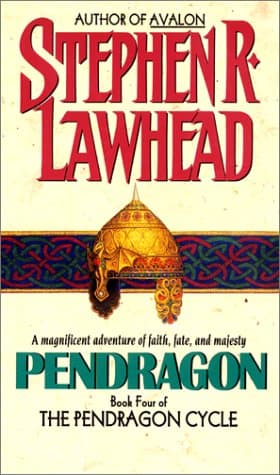
Stephen R. Lawhead (1987)
Genre
Fantasy / Historical Fiction
Reading Time
900 min
Key Themes
See below
Sign in to track this book
Treachery and dark magic threaten his fragile kingdom, forcing the newly crowned Arthur to face a powerful enemy alone and become the legendary Pendragon or lose everything.
After the Battle of Badon Hill, Arthur is formally crowned High King of Britain. Despite this victory, the land is not unified. Many lesser kings and warlords, especially in the north and west, resent Arthur's authority and refuse to acknowledge his rule. His early reign sees constant skirmishes and the threat of open rebellion. Merlin, now Arthur's chief advisor, tries to establish lasting peace, recognizing that military victories alone cannot secure the realm. He senses a deeper, spiritual sickness affecting Britain, one that fuels divisions and invites external threats. Arthur, though young, shows a good understanding of strategy and a desire for justice, but he is often frustrated by the old feuds and the refusal of many to unite. The threat of Saxon incursions, though temporarily stopped, still remains.
Merlin, increasingly troubled by visions and a sense of dread, believes he must go on a spiritual journey to understand the true nature of the threats facing Britain. He senses that the physical battles are only symptoms of a deeper, older evil. Reluctantly, he tells Arthur he must leave, stressing that Arthur must now stand on his own as king. Arthur, though initially dismayed at losing his most trusted counselor, accepts Merlin's decision, understanding the wisdom and necessity behind it. Merlin's quest takes him through mystical places and into his own past, seeking guidance and insight into the spiritual war he believes is being fought for Britain's soul. His absence creates a significant void, forcing Arthur to rely more on his own judgment and the loyalty of his new court.
Soon after Merlin's departure, a deadly plague descends upon Britain, spreading quickly. The 'Red Death' causes immense suffering and chaos, weakening the kingdom politically, economically, and militarily. Villages are emptied, crops rot, and people's morale drops. Arthur faces an unprecedented crisis, far more insidious than any invading army. He works tirelessly to organize relief efforts, establish quarantines, and maintain order, showing compassion and resolve. However, the plague's spread and the devastation challenge his authority and the very structure of his new kingdom. The disease also fuels superstition and fear, with some blaming Arthur or divine wrath, further destabilizing his rule. Many of his loyal companions become sick, and his court suffers heavy losses.
Along with the plague, a more insidious, supernatural threat begins to appear. This enemy, often called the 'Shadow Lord' or simply 'the Enemy,' works through human agents and dark magic to spread discord and despair. It appears to be an ancient evil, seeking to extinguish the hope and order that Arthur represents. Its influence is felt in sudden betrayals, the worsening of old feuds, and unexplained misfortunes that befall Arthur's allies. The Enemy manipulates events and individuals, turning friend against friend and fostering paranoia and distrust. Arthur, without Merlin's direct guidance, struggles to understand this spiritual war, often attributing its effects to human failings, unaware of the deeper, malevolent intelligence at play. The enemy's goal is not just conquest, but the complete spiritual subjugation of Britain.
During this chaotic time, whispers and legends begin to circulate about a powerful artifact, the Holy Grail, said to possess immense healing and spiritual power. Though not directly a quest for the Grail in the traditional sense, Arthur comes to understand that a spiritual solution is needed to combat the spiritual plague afflicting his land and his people. He learns that the Grail is not just a physical object, but a symbol of divine grace and purity, and that its presence or absence deeply impacts the spiritual well-being of the land. The concept of the Grail becomes linked with the hope for Britain's salvation, suggesting that a return to ancient virtues and a spiritual awakening are necessary to repel the encroaching darkness. Arthur begins to see that the true battle is not just for territory, but for the very soul of his kingdom, and that the Grail represents the ultimate counter-force to the Adversary's influence.
The pressures of the plague and the subtle actions of the Adversary take their toll on Arthur's court. Old loyalties are tested, and some of Arthur's trusted companions succumb to fear, ambition, or dark influence. Betrayals occur, weakening his alliances and causing deep personal pain. He experiences the loss of several key figures, either to the plague, treachery, or battle, leaving him increasingly isolated. These losses are not just military setbacks but emotional wounds, forcing Arthur to confront the realities of leadership and the fragility of human loyalty in times of crisis. He grapples with doubt and despair, questioning his own judgment and the possibility of ever truly uniting Britain. Each betrayal and loss reinforces the sense that an unseen enemy is systematically dismantling his kingdom from within, making his task seem almost impossible.
After a long absence, Merlin returns, having completed his spiritual journey. He is greatly changed, bearing a deeper understanding of the ancient forces at play. He reveals to Arthur the true nature of the Adversary—not merely a human foe, but a primordial spiritual evil that seeks to corrupt and destroy all good in Britain. Merlin explains that this darkness has been manipulating events and individuals, fueling the plague and the betrayals, and that it is an entity of immense power, opposed to the very spirit of the land. He stresses that the battle is not just physical, but spiritual, and that Arthur must embody the virtues of a true king—faith, justice, and compassion—to overcome this ultimate evil. His return brings renewed hope and a clearer sense of purpose, providing Arthur with the knowledge and spiritual guidance he desperately needs.
Guided by Merlin's revelations, Arthur understands that he must confront the Adversary directly, not just its human pawns. This confrontation is not a conventional battle but a spiritual and existential struggle. The Adversary, revealed in its true, terrifying form, tries to break Arthur's spirit, tempting him with power, despair, and doubt, and showing him visions of a ruined Britain. Arthur, drawing upon his faith, his sense of duty, and his love for his people, resists these temptations. He embodies the virtues of the Pendragon, standing firm against the spiritual attack. This internal struggle is a profound test of his character and his fitness to rule. His unwavering resolve and commitment to justice become his most potent weapons against the dark influence, showing that true kingship is as much about spiritual strength as it is about military might.
Arthur's triumph over the Adversary, though not a physical battle, has deep and immediate effects on Britain. The lingering shadows of the plague begin to recede, and a sense of hope and renewal spreads across the land. The spiritual sickness that had gripped the kingdom starts to lift, allowing for genuine reconciliation and the strengthening of alliances. The land itself seems to respond, with fertility returning and a sense of peace settling over the ravaged regions. This healing is a direct result of Arthur's commitment to his divine mandate and his embodiment of the virtues of a true king. It means that the spiritual battle has been won, for now, and that Britain has been purged of much of its darkness, allowing Arthur to truly begin the work of building a unified and prosperous kingdom.
With the spiritual threat subdued and the plague receding, Arthur can now focus on consolidating his political power. The lesser kings and warlords, having witnessed the devastation and Arthur's steady leadership, are more willing to acknowledge his authority. He works with Merlin to establish a more unified legal system, enforce justice, and foster cooperation among the different regions. While challenges remain, the groundwork for a stable and prosperous kingdom is laid. Arthur's reign enters a new phase, marked by a renewed sense of purpose and a shared vision for Britain. He is no longer just a warrior king, but a true Pendragon, a spiritual leader who has proven his worth not only on the battlefield but in the face of unseen evils, securing his legendary status and the future of his realm.
The Protagonist
Arthur evolves from a military leader to a spiritual king, learning to confront unseen evils and embody the virtues necessary for true leadership.
The Supporting
Merlin undertakes a personal spiritual journey to gain the knowledge necessary to guide Arthur through the greatest spiritual threat to Britain.
The Antagonist
The Adversary's arc is one of sustained, insidious attack, culminating in a direct spiritual confrontation with Arthur.
The Supporting
Kay's arc is one of enduring loyalty and support, even in the face of overwhelming odds and personal fear.
The Supporting
Guinevere's arc is largely one of steadfast support and embodying the ideal of a queen for a new kingdom.
The Supporting
Urien transitions from a reluctant rival to a crucial, if sometimes challenging, ally for Arthur.
The Mentioned
Her arc is largely one of lurking potential threat, a shadow on the horizon of Arthur's reign.
The novel explores what it means to be a king beyond military skill. Arthur's journey forces him to understand that kingship involves spiritual leadership, compassion, and the ability to inspire unity and hope, especially in times of crisis. His leadership during the plague, his struggle against the spiritual Adversary, and his commitment to justice define his 'Pendragon' status, proving that true power lies in virtue and service to his people. This theme is central to Arthur's development, as he learns to lead not just with a sword, but with his spirit, as seen when he confronts the Adversary alone.
“A king must be more than a warrior; he must be the heart and soul of his people, their shield against the darkness, seen and unseen.”
Lawhead emphasizes that the greatest threats to Britain are not just Saxon invaders or rebellious lords, but a deeper, spiritual sickness and a malevolent supernatural force. Merlin's quest and his revelations to Arthur highlight this distinction. The plague, betrayals, and despair are shown as manifestations of this spiritual battle. Arthur's ultimate victory is not achieved through a conventional battle, but through a spiritual confrontation with the Adversary, showing that the soul of Britain is the ultimate prize, and faith and virtue are the true weapons. This is evident in Merlin's departure to seek spiritual knowledge and Arthur's eventual confrontation with the Shadow Lord.
“The true enemy is not flesh and blood, Arthur, but the ancient darkness that seeks to devour the light in men's hearts and in the very soul of this land.”
A main theme is the constant struggle to unite the different factions of Britain against common enemies. Arthur's early reign is plagued by regional feuds and the refusal of many lords to accept his authority. The plague and the Adversary's manipulations worsen these divisions, threatening to tear the kingdom apart. Arthur's success depends on his ability to forge alliances and inspire a shared vision for Britain. The novel argues that true strength comes from unity, both political and spiritual, and that internal divisions are the greatest weakness, making the land vulnerable to external and supernatural threats. The resistance of kings like Urien exemplifies this struggle.
“A kingdom divided against itself cannot stand, Arthur. The foe without is less dangerous than the treachery within.”
The story is filled with the tension between hope and despair, particularly during the devastating plague and the rise of the Adversary. Arthur and his people face immense suffering, loss, and the temptation to give in to hopelessness. Arthur's leadership, his faith, and his commitment to rebuilding are presented as the embodiment of hope. The Adversary actively tries to instill despair, knowing it weakens the will to fight. The eventual lifting of the plague and the spiritual healing of the land symbolize the triumph of hope over despair, showing the resilience of the human spirit and the power of righteous leadership. This is most evident in the people's reactions to the 'Red Death'.
“Even in the deepest darkness, a single flicker of hope can ignite a flame that banishes the night.”
A devastating epidemic that acts as both a physical and spiritual catalyst.
The 'Red Death' serves multiple functions. On a physical level, it is a catastrophic event that decimates the population, creates chaos, and weakens Arthur's kingdom, making it vulnerable. Spiritually, it acts as a manifestation of the Adversary's influence, spreading despair and testing the faith and resilience of the people and their king. It forces Arthur to confront a crisis unlike any battle, demonstrating his compassion and leadership beyond military might. The plague highlights the fragility of life and the immense challenges Arthur faces, pushing him to seek deeper, spiritual solutions.
A journey of self-discovery and revelation that provides crucial insights.
Merlin's departure and subsequent spiritual quest serve as a narrative device to gain vital information about the true nature of the Adversary. His absence forces Arthur to stand on his own, fostering his growth as a king. Merlin's return with newfound wisdom allows for the exposition of the spiritual warfare theme, providing Arthur (and the reader) with an understanding of the unseen forces at play. This quest elevates the conflict from a purely historical or political struggle to a profound spiritual battle, giving Arthur the knowledge needed for his ultimate confrontation.
A subtle, pervasive evil that manipulates events and individuals.
This device functions as the primary antagonistic force, but its nature is insidious rather than overtly confrontational for much of the novel. It works through whispers, betrayals, and the amplification of existing weaknesses (like the plague). This makes the enemy harder to identify and combat, forcing Arthur to look beyond conventional warfare. It creates an atmosphere of paranoia and distrust, constantly testing the loyalty and faith of Arthur's allies. This subtle manipulation emphasizes the spiritual nature of the conflict and challenges Arthur to develop spiritual discernment and strength.
A symbolic representation of spiritual purity, healing, and divine grace.
While not a physical quest for the Grail in this particular book, the concept of the Holy Grail functions as a powerful symbolic plot device. It represents the ultimate spiritual counter-force to the Adversary's darkness and the healing needed for Britain. Its whispers and legends underscore the idea that a spiritual solution is required for a spiritual problem. It serves as a beacon of hope and a reminder of the divine purpose behind Arthur's reign, guiding his understanding of what it means to be a true Pendragon and to bring spiritual renewal to his land.
“For the blood of the Pendragon will flow again, and the land shall be reborn.”
— A prophetic statement hinting at Arthur's lineage and destiny.
“The old gods die hard, but they die nonetheless.”
— Merlin reflecting on the decline of pagan beliefs in the face of Christianity.
“A king is but a man, and a man is but a breath.”
— Uther Pendragon contemplating mortality and the transient nature of power.
“It is not the sword that makes the king, but the heart that wields it.”
— Merlin advising a young Arthur on the true meaning of leadership.
“To forget one's past is to lose one's future.”
— A general theme about the importance of history and heritage.
“There is no magic, only knowledge not yet understood.”
— Merlin's pragmatic view on what others perceive as magic.
“The greatest battles are not fought on fields of blood, but within the heart.”
— A character reflecting on internal struggles and moral choices.
“Even in the darkest night, a single star can guide the way.”
— A hopeful message during a time of despair or uncertainty.
“Loyalty is a fragile thing, easily broken, rarely mended.”
— A character observing the betrayals and shifting allegiances among lords.
“The land remembers what the men forget.”
— A mystical notion about the enduring memory of the earth and its history.
“Peace is not the absence of war, but the presence of justice.”
— Arthur's philosophy on establishing a lasting and righteous kingdom.
“A man's worth is measured not by what he has, but by what he gives.”
— A teaching emphasizing selflessness and contribution.
“The path to greatness is often paved with sacrifice.”
— Arthur or Merlin reflecting on the costs of their endeavors.
Ready to see how well you understood this book? Take our interactive quiz with 10 questions.







