“It is not the man who is the master of the house, but the woman.”
— Madame Wu reflecting on the true power dynamics within a traditional Chinese household.

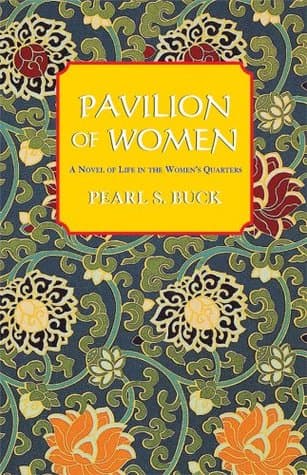
Pearl S. Buck (1900)
Genre
Historical Fiction
Reading Time
620 min
Key Themes
See below
Sign in to track this book
A Chinese matriarch chooses her husband's concubine, unraveling tradition and sparking her own journey of self-discovery and forbidden learning.
On her fortieth birthday, Madame Wu, matriarch of the House of Wu, makes a shocking announcement to her husband, Master Wu. She declares their physical life together, after twenty-four years of marriage, is over. She wants him to take a second wife to fulfill his conjugal needs. This decision, though planned by Madame Wu, shocks the traditional household. Despite the initial uproar and Master Wu's confusion, Madame Wu remains firm. She arranges the selection of a young, uneducated country girl named Chiuming to be Master Wu's new companion. This ensures the family line continues and the household stays stable, while securing Madame Wu's new freedom.
Chiuming, a simple girl from the countryside, arrives at the opulent but rigid House of Wu. She is at first overwhelmed by the grandeur and complex social hierarchy. Madame Wu, with detached elegance, oversees Chiuming's integration, ensuring she learns the household's customs and expectations. However, Chiuming finds it hard to adjust to the sophisticated environment and subtle power dynamics. Her rustic innocence often clashes with the refined manners of the Wu family, especially the other women in the Pavilion of Women. This leads to early misunderstandings and a sense of isolation for the new concubine.
With her marital duties done, Madame Wu retreats to her private quarters. She enjoys the solitude and intellectual freedom she has long wanted. She spends her days reading books previously considered inappropriate for a woman of her status, exploring philosophy, history, and other scholarly works. This period marks a significant personal change for Madame Wu. She expands her mind beyond household management and traditional female roles. Her pursuit of knowledge is a quiet rebellion against the societal expectations that defined her life, allowing her to understand herself and the world more deeply.
Madame Wu's eldest son, the Young Master, begins English lessons with a foreign priest named Brother Andre. Brother Andre, a Jesuit missionary, introduces not only English but also Western philosophy, science, and a different way of thinking into the traditional Chinese household. Madame Wu, initially listening from afar, becomes increasingly interested in Brother Andre's lessons. His progressive ideas and the concept of individual freedom resonate deeply with her. They offer a stark contrast to the rigid societal norms she has always known. This encounter begins a deep intellectual and emotional connection between Madame Wu and the foreign priest.
Madame Wu, overcoming her initial shyness, begins to talk directly with Brother Andre, first through her son's lessons, then in private. Their discussions go beyond language instruction, delving into philosophical and spiritual topics. Brother Andre introduces her to ideas of individual liberty, self-determination, and a God of universal love. These ideas are revolutionary within her traditional Chinese framework. These exchanges challenge Madame Wu's long-held beliefs about duty, family, and personal happiness. Through Brother Andre, she starts to question the foundations of her ordered life and the sacrifices she made for family and tradition.
Despite Madame Wu's efforts to ensure her comfort, Chiuming remains unhappy in the House of Wu. She desires a different kind of love and connection than what Master Wu, an older, reserved man, can offer. Her simple nature finds the grand household's complexities stifling. Eventually, Chiuming falls in love with Kao, a young, spirited servant within the compound. Realizing her true desires lie outside her position, Chiuming decides to leave the House of Wu with Kao. She seeks a life where she can experience genuine, passionate love, despite the scandal it causes.
Chiuming's elopement with a servant shocks the House of Wu. Such an act dishonors the family's reputation and disregards tradition. The other women of the Pavilion of Women demand severe punishment. However, Madame Wu, influenced by her changing understanding of individual freedom and happiness, reacts with unexpected empathy. While she acknowledges the societal implications, she recognizes Chiuming's right to pursue her own desires, even if it defies convention. This reaction further shows Madame Wu's inner change and her growing divergence from rigid traditionalism.
Brother Andre, who has become an essential intellectual and emotional companion for Madame Wu, falls gravely ill. His condition requires his return to his homeland for treatment, leaving Madame Wu with a deep sense of loss. His departure cuts the intellectual lifeline that had invigorated her life and challenged her views. This separation forces Madame Wu to confront her emotional attachment to him and the void his absence creates. It also leaves her to combine the revolutionary ideas he introduced with her own traditional context, without his direct guidance. This marks a critical point in her personal journey.
Years later, Chiuming, now a widow with a young son, returns to the House of Wu. Her life with Kao, though passionate, ended tragically, leaving her destitute. She seeks refuge and help from the household she once defied. This return presents a complex challenge for Madame Wu and the family. While tradition might dictate scorn, Madame Wu, having changed significantly, approaches Chiuming's situation with compassion. She sees the child as a potential heir to Master Wu, providing a practical and honorable reason to bring Chiuming and her son back into the household. This shows her nuanced understanding of both tradition and human need.
In her later years, Madame Wu finds a deep sense of peace and self-acceptance. She successfully navigates the complex demands of tradition, family duty, and her own desire for individual freedom. She integrates Brother Andre's progressive ideas with her Chinese identity, creating a unique philosophy for living. She manages the House of Wu with wisdom and compassion, ensuring its continuity while allowing for greater personal agency for its members. Madame Wu's journey ends with the realization that true happiness is not in rigid rules or their complete abandonment, but in a balance between self and society, tradition and change.
The Protagonist
Madame Wu transforms from a woman bound by tradition and duty into one who achieves personal freedom and intellectual fulfillment, integrating new ideas with her cultural heritage.
The Supporting
Master Wu accepts his wife's unconventional decisions, demonstrating a quiet adaptability to the changes she orchestrates in their lives.
The Supporting
Chiuming seeks true love and personal fulfillment, eventually leaving the Wu household and later returning in need, demonstrating the harsh realities of defying tradition.
The Supporting
Brother Andre serves as a vital intellectual and spiritual guide for Madame Wu, bringing new perspectives that fundamentally alter her understanding of life.
The Supporting
The Young Master represents the next generation, subtly influenced by the changing world his mother embraces.
The Supporting
The Old Lady remains steadfast in her traditional beliefs, serving as a foil to Madame Wu's evolving perspectives.
The Mentioned
Kao provides Chiuming with a chance at passionate love, though their story ends tragically.
The Supporting
Mrs. Kang remains a steadfast and loyal servant, adapting to Madame Wu's changing life with unwavering dedication.
The novel explores Madame Wu's quest for personal freedom and intellectual fulfillment within traditional Chinese society. Her decision to end her marital duties and dedicate herself to reading and learning, rather than remaining solely a wife and mother, is an act of self-liberation. This theme is also seen in Chiuming's similar, though more impulsive, pursuit of love and happiness outside her arranged role, showing different aspects of this human desire. The challenges both women face highlight the societal pressures against individual choice.
“She had made her choice, not because she hated her husband, but because she loved freedom more.”
The conflict between Chinese traditions and Western modernity is a constant theme. The House of Wu reflects this struggle, with Madame Wu bridging the two worlds. Her embrace of Western philosophy through Brother Andre, contrasted with the Old Lady's adherence to ancient customs, shows the tension. The novel explores how individuals navigate these changing cultural landscapes, questioning which traditions are worth keeping and which hinder personal growth and societal progress.
“It was her nature to live by rules. But whose rules? That was the question she had only now begun to ask herself.”
The book examines the many roles of women in patriarchal Chinese society: wife, mother, concubine, household manager, and the expectations for each. Madame Wu's actions challenge these roles, showing a woman's capacity for intellectual depth and leadership beyond domestic duties. Chiuming's story also reflects the limited options for women and their desire for love and agency. The 'Pavilion of Women' symbolizes the confined, yet powerful, sphere given to women, and the novel questions the true nature of female power and happiness within these limits.
“A woman's mind was meant for the ordering of a household and the rearing of children, not for such knowledge as a man might seek.”
The novel explores various forms of love, from the dutiful love between Madame Wu and Master Wu to the passionate love between Chiuming and Kao. It also delves into the intellectual and spiritual love between Madame Wu and Brother Andre, a connection that goes beyond physical and societal norms. By showing these different forms, the book questions societal definitions of love and challenges the idea that romantic or marital love is the only path to fulfillment. It suggests that deep connections can exist in unexpected relationships and add to one's happiness.
“There were many kinds of love, she was discovering, and not all of them were meant to be spoken.”
A physical and symbolic space for the women of the Wu household.
The Pavilion of Women is both a literal section of the Wu compound where the women reside and a powerful symbol of their confined, yet influential, sphere. It represents the traditional separation of genders and the intricate social hierarchy among wives and concubines. Within its walls, women manage the household, raise children, and navigate complex relationships. Symbolically, it embodies the limitations placed upon women in traditional Chinese society, while also highlighting their collective power, resilience, and the internal dynamics of their world, often hidden from men.
A significant turning point that marks Madame Wu's decision for personal change.
Madame Wu's fortieth birthday serves as a crucial plot device, acting as a clear demarcation point for her decision to redefine her life. In Chinese culture, this age often signifies maturity and the culmination of a life stage. By choosing this specific milestone, Madame Wu imbues her decision with a sense of deliberate planning and self-actualization, rather than impulsive rebellion. It signifies a conscious transition from fulfilling societal expectations to pursuing personal fulfillment, making her actions appear measured and profound rather than simply scandalous.
The character of Brother Andre as a catalyst for new ideas and a different worldview.
Brother Andre's status as a foreigner, specifically a Western missionary, is a key plot device. His 'otherness' allows him to introduce radical new ideas – individual freedom, Western philosophy, and Christianity – without being fully bound by Chinese social norms. He serves as an external catalyst, opening Madame Wu's mind to concepts that would be impossible for a Chinese man to articulate within her cultural context. His presence represents the intrusion of a wider world into the insular Wu household, prompting internal and external conflicts and ultimately driving Madame Wu's intellectual and emotional transformation.
A dramatic event that challenges the Wu family's traditions and Madame Wu's evolving views.
Chiuming's elopement with Kao is a pivotal plot device that creates significant conflict and scandal within the Wu household. It is a direct defiance of traditional marital arrangements and family honor. This event forces Madame Wu to confront the practical implications of her own evolving philosophy on individual freedom. While initially shocking, Chiuming's actions ultimately serve to further solidify Madame Wu's compassion and understanding, pushing her further away from rigid adherence to tradition and towards a more nuanced, empathetic worldview, especially when Chiuming later returns.
“It is not the man who is the master of the house, but the woman.”
— Madame Wu reflecting on the true power dynamics within a traditional Chinese household.
“To be truly free, one must first be free of oneself.”
— Madame Wu's philosophical thought on self-liberation and personal growth.
“Love is not a gift, but a growth, and like all growth, it must be tended.”
— Madame Wu's understanding of the nature of love as something requiring effort.
“Happiness is not a station you arrive at, but a manner of traveling.”
— A reflection on the journey of life and finding contentment along the way.
“The greatest prison people live in is the fear of what other people think.”
— Madame Wu observing the societal constraints and judgments faced by women.
“One must learn to live with the impossible, for the impossible is often the only way.”
— Madame Wu's pragmatic approach to dealing with difficult situations.
“A woman's true strength lies not in her beauty, but in her will.”
— A commentary on the inner fortitude and determination of women.
“Change is not a threat, but an opportunity.”
— Madame Wu's progressive view on adapting to new circumstances.
“To understand another, one must first understand oneself.”
— A universal truth about empathy and self-awareness.
“The past is a story we tell ourselves; the future is a story we create.”
— A philosophical take on the influence of past experiences and the power of shaping one's destiny.
“Silence is not always empty; sometimes it is full of answers.”
— Madame Wu's appreciation for quiet contemplation and introspection.
“It is not what we are given, but what we do with what we are given, that defines us.”
— A statement on agency and personal responsibility, regardless of one's starting point.
“The greatest teacher is experience, but a fool learns only from his own.”
— A proverb highlighting the value of learning from others and observing the world.
“Life is a constant choosing, and every choice brings its own consequences.”
— A reflection on the continuous nature of decision-making and its impact.
Ready to see how well you understood this book? Take our interactive quiz with 10 questions.
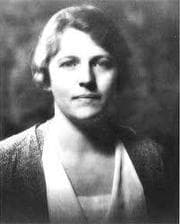
Pearl Comfort Sydenstricker Buck was an American writer and novelist. She is best known for The Good Earth, the best-selling novel in the United States in 1931 and 1932 and which won her the Pulitzer Prize in 1932. In 1938, Buck became the first American woman to win the Nobel Prize in Literature "for her rich and truly epic descriptions of peasant life in China" and for her "masterpieces", two memoir-biographies of her missionary parents.







