“The future is already here – it's just not evenly distributed.”
— Cayce Pollard reflects on the nature of information and progress in the modern world.

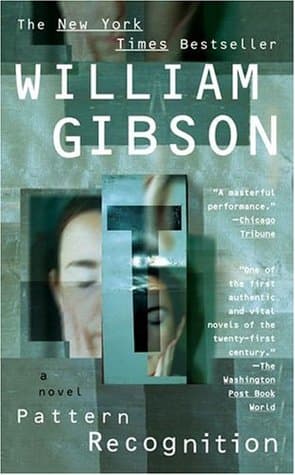
William Gibson (2002)
Genre
Thriller / Mystery / Science Fiction
Reading Time
7-8 hours
Key Themes
See below
Sign in to track this book
Haunted by her father's presumed death on 9/11, a gifted but emotionally numb market-research consultant is drawn into a global mystery surrounding anonymous, cult-inducing internet videos, leading her from London to Tokyo and Russia in a quest that uncovers secrets about the footage and her own past.
Cayce Pollard, a freelance 'coolhunter' with a unique sensitivity to brands and a phobia of logos, is in London for a project. She still deeply grieves the presumed death of her father, Win Pollard, who vanished on 9/11. Her current client, Hubertus Bigend of Blue Ant, an advertising agency, offers her a side project: to find the creator of mysterious, beautiful video clips appearing on the internet, known as 'Flicker.' These clips have a cult following, and Bigend wants to understand their commercial potential. Cayce, interested by the clips' look and the mystery, agrees to take on the assignment, which involves exploring the online communities obsessed with Flicker.
Soon after Cayce accepts Bigend's assignment, her borrowed London apartment is broken into. Nothing is stolen, but her computer has been tampered with, and a file for the Flicker project was accessed. This incident, along with a warning from Damien Pease, one of Bigend's associates, suggests her investigation is attracting unwanted attention and might be more dangerous than she thought. The break-in reminds her of her father's past as a security expert and the threats he might have faced, making Cayce more cautious but also more determined.
Cayce spends time in the online forums for Flicker, watching discussions and theories about the clips. She learns about the subculture that has formed, with its own language and rules. She contacts several key members, especially 'Parkaboy,' a seemingly knowledgeable figure in the community. Through these talks, Cayce starts to understand Flicker's global reach and the strong emotional connection its viewers feel, confirming that the creator, whoever they are, has an extraordinary artistic vision.
Following a lead that suggests the Flicker creator might be linked to someone in Tokyo, Cayce travels to Japan. There, she continues her research, meeting local contacts and exploring the city's tech and art scenes. Her investigation narrows, suggesting the creator might be a reclusive and perhaps troubled person. Tokyo's atmosphere is both exciting and unsettling, as Cayce feels she is getting closer to the mystery's core, but also more exposed to the hidden forces that seem to protect Flicker's anonymity.
The trail leads Cayce to Moscow, a city with its own mysteries and dangers. Here, she meets Stella, a woman who admires Flicker and has a personal connection to its creator. Stella, a complex and somewhat fragile character, becomes an unexpected ally for Cayce. Through Stella, Cayce learns more about the creator's background, their reasons, and the emotional toll making Flicker has taken on them, revealing a story more personal than a simple marketing stunt.
In Moscow, Cayce finally meets Tôru, the reclusive Japanese artist who makes Flicker. Tôru is a sensitive, almost childlike person, burdened by a personal tragedy that is the emotional center of his work. His art is not a planned commercial project but a raw expression of grief and memory. Cayce realizes that Bigend's commercial interest in Flicker completely misses the point of Tôru's creation, which is a personal and healing act, not something to be sold.
As Cayce digs deeper, she uncovers a network of people and groups manipulating Tôru and trying to control his art. These include figures like Voytek, a manipulative art dealer, and others who see Flicker as a source of power or profit. Cayce realizes that her initial assignment from Bigend was only a small part of a larger, more sinister game, where Tôru's vulnerability is being used by those who do not truly appreciate his art.
Throughout her journey, Cayce finds subtle links between her investigation into Flicker and her father, Win Pollard's, past as a security expert. She realizes that some of the shadowy figures manipulating Tôru might have also met her father. These echoes of Win's life, especially his intelligence work and his ability to protect others, deeply affect Cayce, making her feel closer to him even in his absence and strengthening her resolve to protect Tôru.
A key moment happens when Cayce learns the truth about her father's death on 9/11. She finds out that Win Pollard was not just a victim but was on a secret mission related to a rogue intelligence operation. His final actions were an attempt to prevent a greater disaster, sacrificing himself. This discovery gives Cayce a deep sense of closure, changing her grief into a deeper understanding of her father's character and his commitment to justice and protection.
With the truth about Tôru's creation and her father's past revealed, Cayce acts decisively. She works with Stella and others who care about Tôru to protect him from Voytek's manipulative schemes and other exploiters. Her goal is not to sell Flicker, but to keep Tôru safe and preserve his art. She understands that Flicker's true value is its authenticity and the emotional connection it creates, not its potential for profit or control.
By the end, Cayce helps Tôru escape from those who would use him, leaving him with people who appreciate his art without trying to control it. The journey has allowed Cayce to process her grief for her father and accept his complex legacy. She returns to London, her understanding of the world, brands, and human connection changed. She finds a new purpose, no longer just a 'coolhunter' but someone with a stronger ethical compass, ready to navigate the complexities of information and influence.
The Protagonist
Cayce transitions from a grief-stricken, detached observer to an active participant who confronts personal trauma and finds purpose in protecting artistic integrity.
The Supporting/Mentioned
Though deceased, Win's character arc is revealed posthumously, showing his final act as one of sacrifice and ethical resolve.
The Antagonist/Supporting
Bigend remains largely unchanged, serving as a constant reminder of the commercial world's desire to commodify art.
The Supporting
Tôru moves from being a manipulated, isolated artist to finding a measure of protection and understanding through Cayce and Stella.
The Supporting
Stella evolves from an isolated fan to an active participant in protecting Tôru and his artistic legacy.
The Supporting
Pease's arc is minor, serving mainly to guide Cayce and highlight the dangers of her mission.
The Supporting
Parkaboy remains a consistent online presence, representing the broader Flicker fan base.
The Antagonist
Voytek's arc is one of consistent villainy, ultimately thwarted in his attempts to exploit Tôru.
The novel is rooted in Cayce Pollard's unresolved grief over her father, Win Pollard, who disappeared on 9/11. Her emotional numbness and detachment come from this loss. The search for Flicker becomes a subconscious search for connection and meaning after trauma. The reveal of Tôru's own grief as Flicker's origin creates a strong parallel, suggesting art as a way to process and express unbearable loss. This theme is central to Cayce's personal journey, as her understanding of her father's true fate brings peace and closure, allowing her to move forward.
“She was a 'coolhunter,' but the cool was her own, a kind of internal permafrost, a protection.”
A core conflict in the novel is the tension between real artistic creation and its possible use by commercial interests. Tôru's Flicker videos come from raw, genuine grief and are made without commercial intent. However, Hubertus Bigend and others like Voytek immediately see their commercial potential, trying to 'brand' or 'monetize' this pure expression. Cayce, despite her job as a 'coolhunter,' ultimately protects authenticity, working to shield Tôru from those who would sell his pain. This theme criticizes the modern marketing world's constant desire for 'cool' and its tendency to strip art of its original meaning.
“Bigend wasn't interested in art, Cayce knew. He was interested in the effect of art.”
The internet is both the way Flicker spreads and Cayce's main tool for investigation. The novel explores how information moves, how online communities form around shared interests (like Flicker's fans), and how these digital connections can lead to real-world interactions. It shows the power and vulnerability of online information, from anonymous art to hacked personal data. Cayce's ability to navigate these digital spaces, often through subtle clues and intuition, highlights the changing relationship between humans and technology in forming meaning and identity.
“The internet was a vast, chaotic, and largely uncurated library of everything.”
Cayce's unique talent is her ability to recognize patterns – in trends, data, and human behavior – often intuitively, beyond logic. This 'pattern recognition' is central to her work and her investigation into Flicker. She senses connections and meanings others miss, whether subtle shifts in brand appeal or the emotional current of Tôru's videos. The novel suggests that intuition and sensitivity to non-obvious patterns are key tools for navigating a complex, information-filled world, contrasting with purely analytical or profit-driven approaches.
“She was less a hunter than a medium, one who received signals from the collective unconscious of the marketplace.”
The mysterious 'Flicker' videos that drive the plot forward.
The 'Flicker' videos serve as the primary MacGuffin in 'Pattern Recognition.' While they possess genuine artistic merit and emotional depth, their initial function is to propel Cayce's investigation. Hubertus Bigend hires Cayce to find their creator, setting the entire plot in motion. The true nature and meaning of Flicker are revealed gradually, but its initial mystery is the engine that drives Cayce from London to Tokyo and Moscow, introducing her to various characters and dangers. The MacGuffin evolves from a simple plot device into something deeply meaningful as the story progresses.
Cayce's perception, filtered through her grief and unique sensibilities, shapes the reader's understanding.
While not a classic unreliable narrator, Cayce's perspective is heavily colored by her grief for her father and her unique sensory perceptions (like her logo allergy). This subtly shapes the reader's understanding of events and characters. Her emotional detachment initially keeps the reader at arm's length, and her intuitive leaps often precede logical explanations. The reader experiences the world through her highly subjective lens, particularly regarding brands and the emotional impact of art, making her interpretation of events a key aspect of the narrative experience.
The historical event serves as both a personal trauma and a backdrop for a changing global landscape.
The events of September 11, 2001, serve as a profound symbolic backdrop and a personal catalyst for Cayce's journey. Her father's disappearance on that day is the source of her deep, unresolved grief. Beyond the personal, 9/11 symbolizes a shift in global consciousness, a loss of innocence, and the emergence of new forms of threat and uncertainty. It grounds the novel in a specific historical moment, linking personal trauma to broader societal anxieties and the shadowy world of intelligence and global networks that her father inhabited, giving her quest a greater resonance.
Win Pollard, though deceased, acts as an absent mentor, guiding Cayce through his past teachings.
Win Pollard, Cayce's deceased father, functions as an absent mentor figure. His past experiences as an intelligence operative and his practical advice on navigating dangerous situations are frequently recalled by Cayce. These memories serve as a guide for her as she encounters unexpected threats and deceptive individuals. His legacy informs her understanding of power, surveillance, and the importance of ethical action, even from beyond the grave. He provides her with a moral compass and a set of practical skills crucial for her survival and success.
“The future is already here – it's just not evenly distributed.”
— Cayce Pollard reflects on the nature of information and progress in the modern world.
“She was a sensitive, but not in any way that anyone she'd ever met understood.”
— Describing Cayce's unique allergy to brands and logos.
“All of Cayce's professional experience had convinced her that the most interesting things were never for sale.”
— Cayce's philosophy regarding authentic creativity and commercialism.
“The web was a vast, unedited, and frequently inaccurate repository of human knowledge and delusion.”
— A general observation about the nature of the internet and information.
“What she was looking for was an absence. A gap. A hole.”
— Cayce's quest to find the creator of the mysterious 'footage'.
“Her brain was a pattern-recognition machine.”
— A direct description of Cayce's primary mental ability.
“It was as though the world, having been stripped of the future, had also been stripped of its past.”
— Cayce's feeling of temporal displacement and loss after 9/11.
“The past, after all, is a foreign country. They do things differently there.”
— Cayce contemplating the distance from her own past and the past of others.
“Somewhere between the raw data and the pattern, the signal and the noise, was the truth.”
— Cayce's analytical process in trying to decipher information.
“She moved through the city like a ghost, her senses tuned to frequencies that most people never registered.”
— Describing Cayce's detached yet hyper-aware experience of her surroundings.
“The thing was, the internet had no memory. Or rather, it had all the memory, but no hierarchy of relevance.”
— Reflecting on the overwhelming and undifferentiated nature of online information.
“She was a diviner of invisible currents, a dowser of the Zeitgeist.”
— Another way of characterizing Cayce's unique ability to sense cultural trends and undercurrents.
“The truth was not always elegant, nor was it always simple.”
— A general reflection on the complexity and often messy nature of reality.
“Brands were an attempt to control the future, to own a piece of it, however small.”
— Cayce's perspective on the commercial drive behind branding.
Ready to see how well you understood this book? Take our interactive quiz with 10 questions.
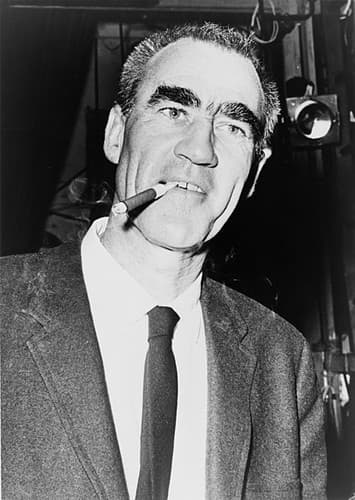
William Ford Gibson is an American-Canadian speculative fiction writer and essayist widely credited with pioneering the science fiction subgenre known as cyberpunk. Beginning his writing career in the late 1970s, his early works were noir, near-future stories that explored the effects of technology, cybernetics, and computer networks on humans—a "combination of lowlife and high tech"—and helped to create an iconography for the information age before the ubiquity of the Internet in the 1990s. Gibson coined the term "cyberspace" for "widespread, interconnected digital technology" in his short story "Burning Chrome" (1982), and later popularized the concept in his acclaimed debut novel Neuromancer (1984). These early works of Gibson's have been credited with "renovating" science fiction literature in the 1980s.







