“The difference between a patriot and a traitor is a matter of dates.”
— Reflection on the shifting nature of loyalty and political allegiance.

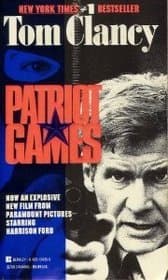
Tom Clancy (1987)
Genre
Thriller / Mystery
Reading Time
1200 min
Key Themes
See below
Sign in to track this book
When a vacationing CIA analyst thwarts a terrorist attack on the British Royal Family, he unwittingly drags his own family into the crosshairs of a vengeful and ruthless IRA splinter group.
While on vacation in London with his wife Cathy and daughter Sally, former Marine and CIA analyst Jack Ryan sees a terrorist attack on the Prince and Princess of Wales and their infant son. Ryan acts immediately, tackling one terrorist and fighting another, Kevin O'Donnell. During the fight, Ryan is shot in the shoulder, but his actions save the royal family. The terrorists, members of the Ulster Liberation Army (ULA), are either killed or caught, though O'Donnell escapes. Ryan recovers in a British hospital, where he is praised as a hero and given the Royal Victorian Order by Queen Elizabeth II. His bravery, however, makes him and his family targets of the ULA.
After the failed London attack, the surviving ULA members, led by Kevin O'Donnell, gather again. Sean Miller, whose younger brother Jack Ryan killed during the incident, wants revenge. Miller, a determined operative, convinces O'Donnell to target not only the British Royal Family but also Jack Ryan and his family. He believes that hurting Ryan personally will send a stronger message. They start carefully planning their next actions, getting information and supplies, and finding weak points in the security around both the royals and the Ryans. They are driven by a deep hatred for the British government and anyone who opposes them.
Jack Ryan is called to testify at the trial of Sean Miller, one of the terrorists caught during the London attack. Ryan's detailed testimony, saying Miller was the one who tried to shoot the Princess of Wales, helps convict Miller. During the trial, Miller makes veiled threats against Ryan and his family. Miller is sentenced to life in prison, but his ULA comrades, especially Kevin O'Donnell, start a plan to free him. British and American intelligence agencies become aware of the ULA's increasing threats, leading to more security for Ryan and his family, who have returned to their home in Annapolis, Maryland.
The ULA carries out a complex and violent escape for Sean Miller while he is being moved between prisons in England. The operation involves a planned ambush, using explosives and a trained team. Several guards are killed in the breakout, and Miller, now free, immediately rejoins O'Donnell's group. His escape shocks British and American intelligence, confirming their worries about the ULA's resolve and skill. With Miller back, the threat to Jack Ryan and the Royal Family becomes even more immediate and serious, as Miller now personally wants revenge on Ryan.
The ULA, having tracked Jack Ryan's movements, attacks his family directly in the United States. While Jack, Cathy, and Sally are driving on a highway, a ULA team ambushes their car. The attack is sudden, with automatic weapons fire. Ryan, though surprised, reacts quickly, using his driving skills to avoid immediate danger and protect his family. However, his daughter Sally is badly injured in the attack, getting a gunshot wound, and Cathy is also hurt. The ambush leaves the Ryans traumatized and shows how serious the ULA's vendetta is, leading to a large FBI investigation and more protection.
Sally Ryan has surgery and begins a slow, hard recovery from her gunshot wound. The experience deeply affects Jack and Cathy, making Jack even more determined to protect his family. He gets closely involved with the FBI's investigation, using his intelligence background to help understand ULA methods and reasons. The attack on his family changes Ryan from an academic analyst into a man driven by a personal goal. He starts training more, preparing for future fights, knowing that the ULA will not stop until they achieve their goals, and that his family remains their main target.
After the attack on the Ryan family, the CIA and FBI start a joint, high-priority operation to stop the ULA. Jack Ryan, now working more closely with the CIA, gives useful information about the group's thinking and ways of operating. Dan Murray, an FBI agent, becomes a key helper. The agencies combine resources, sharing information with their British counterparts, and start a careful process of tracking ULA members, their money, and their support networks. The investigation crosses continents, showing the ULA's international connections and the depth of their extreme beliefs, as the hunt for O'Donnell and Miller gets stronger.
The Prince and Princess of Wales, thankful for Ryan's bravery, decide to visit the Ryan family in Annapolis, Maryland, as part of a goodwill tour. Despite strong security, this visit gives the ULA a good chance to attack both their main targets at the same time. O'Donnell and Miller, having carefully planned a complex operation, enter the area with their remaining operatives. The royal visit becomes a high-stakes magnet for the terrorists, setting up a big fight, as security forces try to predict and stop the ULA's every move, unaware of how dangerous it really is.
The ULA, led by Kevin O'Donnell and Sean Miller, starts their final, big attack on the Ryan estate, Peregrine Cliff, during the royal visit. They use multiple boats to approach the secluded property from the water, getting past the first security. A fierce gunfight breaks out between the terrorists and the combined forces of the Secret Service, FBI, and local police. Jack Ryan, armed and ready, actively helps defend his home and family, fighting the terrorists directly. The battle is chaotic and violent, with injuries on both sides, as the ULA tries to reach the Prince, Princess, and the Ryans.
During the chaotic attack, Jack Ryan faces both Sean Miller and Kevin O'Donnell. In a desperate fight, Ryan kills O'Donnell. Miller, angry and trapped, takes the Prince and Princess of Wales hostage, trying to escape by boat. Ryan chases him. On the water, a final, intense fight happens. Ryan, using his quick thinking and fighting skills, disarms and kills Sean Miller, ending the direct threat to the royals and his family. The remaining ULA operatives are either killed or captured, ending their violence against the Ryans and the British monarchy.
The Protagonist
Transforms from an academic analyst into a hardened protector of his family, willing to kill to defend them.
The Supporting
Endures extreme trauma with resilience, becoming a stronger, more protective mother and wife.
The Supporting
Suffers grievous injury and recovers, symbolizing the innocent victims of terrorism and strengthening her parents' resolve.
The Antagonist
Escapes prison and relentlessly pursues revenge, ultimately dying in his final attempt.
The Antagonist
Leads the ULA in escalating attacks, ultimately killed by Jack Ryan.
The Supporting
Remains a target of the ULA, but his appreciation for Ryan grows.
The Supporting
Endures multiple terrorist threats, forming a bond of gratitude with the Ryans.
The Supporting
Becomes a crucial ally to Ryan, dedicating himself to protecting the family and dismantling the ULA.
The Supporting
Supports Ryan throughout the crisis, demonstrating trust in his abilities and insights.
The novel shows how a selfless act of heroism can change an ordinary person's life forever, making them and their loved ones targets. Jack Ryan's quick action in London, while praised, immediately brings the ULA's vengeful anger. The later attacks on his family, especially Sally's injury, show the great personal cost of his bravery, forcing him to face violence not as an idea but as a direct threat to his most important relationships. This theme shows that heroism often has unexpected and painful results.
“He saved the Prince of Wales, for God's sake, and now they're trying to kill his baby.”
Revenge is a main force in 'Patriot Games,' especially for the bad guy, Sean Miller. His brother's death by Jack Ryan's hands starts a single, all-consuming desire for payback that goes beyond the ULA's larger political goals. This personal vendetta makes the conflict more than just ideological terrorism; it becomes deeply personal for both sides. The cycle of violence, started by the ULA's attack and fueled by Miller's loss, shows how individual acts of violence can turn into a relentless, destructive search for 'justice' or 'vengeance,' no matter who gets hurt.
“You killed my brother. Now I'm going to kill your family.”
The Ryan family is both Jack's biggest weakness and his greatest strength. The ULA clearly targets Cathy and Sally, using Jack's love for them to cause the most pain and psychological suffering. Sally's serious injury is a turning point, changing Jack's academic resolve into a primal, protective rage. Conversely, the strong support and love within the Ryan family, and their bond with the Prince and Princess, provide the emotional foundation that helps them endure the terror and fight back. This shows how family ties can be a strong reason to survive and resist.
“He would not let them touch his family again.”
'Patriot Games' explores the many sides of terrorism, showing it as both ideologically driven and deeply personal. The ULA's political aims against the British monarchy give the initial background, but the story quickly moves to the more raw, revenge-driven reasons of individuals like Sean Miller. The book illustrates the terrorists' efficient ruthlessness, their willingness to target innocent people, and their ability to sustain hatred. It also shows the difficulties faced by intelligence agencies in fighting such a fast-moving and fanatical threat, showing the widespread and destructive power of extreme violence.
“These people don't care about rules. They just want to make a point.”
Transforms a political conflict into a deeply personal one.
While the initial attack is politically motivated, Sean Miller's brother's death at Jack Ryan's hands immediately transforms the conflict into a personal vendetta. This device elevates the stakes, making the ULA's subsequent actions less about abstract political goals and more about Miller's relentless, murderous quest for revenge against Ryan and his family. It ensures that the reader is emotionally invested in the outcome, as the threat directly targets the protagonist's most vulnerable point—his loved ones—rather than just a national symbol.
Emphasizes the human cost and moral depravity of the antagonists.
The injury of Sally Ryan serves as a crucial plot device. Her innocence and vulnerability highlight the moral bankruptcy of the ULA and the indiscriminate nature of their violence. Her suffering galvanizes Jack Ryan's resolve, transforming his fight from one of duty to one of fierce, paternal protection. This device elicits strong empathy from the reader and underscores the true horror of terrorism, which indiscriminately targets the most defenseless, thereby justifying Ryan's extreme measures to protect his family.
Puts an academic into a direct combat role.
Jack Ryan, initially an academic and analyst, is a 'fish out of water' when thrust into direct combat. This device highlights his extraordinary courage and resourcefulness. While he has Marine training, his primary role is intellectual. His sudden shift to a hands-on combatant, actively defending his family and engaging terrorists, creates tension and demonstrates his adaptability and latent heroism. It allows the narrative to explore how an ordinary, intelligent man can rise to extraordinary circumstances when his loved ones are threatened.
Raises the international stakes and expands the scope of the threat.
The involvement of the British Royal Family immediately elevates the global stakes of the terrorist threat. Ryan's act of saving them draws international attention and gratitude, but also the ire of a powerful terrorist organization. The royal connection ensures that the conflict is not just a personal one for Ryan, but also a matter of international security and diplomatic concern, justifying the extensive resources and collaboration between American and British intelligence agencies. Their visit to the Ryans also provides the perfect convergence point for the climactic attack.
“The difference between a patriot and a traitor is a matter of dates.”
— Reflection on the shifting nature of loyalty and political allegiance.
“You don't have to be a hero to do what's right.”
— Encouraging ordinary people to act with courage in difficult situations.
“Terrorism is a weapon of the weak, but it is a weapon that can strike anywhere.”
— Analysis of terrorism as a tactic used by those without conventional power.
“The world is a dangerous place, not because of those who do evil, but because of those who look on and do nothing.”
— Critique of inaction in the face of injustice or violence.
“Sometimes the only way to win is to refuse to play the game.”
— Strategic advice on avoiding conflict or manipulation.
“Fear is the mind-killer. But courage is the heart's answer.”
— Personal reflection on overcoming fear through inner strength.
“In war, truth is the first casualty.”
— Commentary on how conflict distorts reality and information.
“A man's character is his fate.”
— Philosophical observation on how personal traits determine outcomes.
“The price of freedom is eternal vigilance.”
— Warning about the constant need to protect liberty from threats.
“History is written by the victors, but it is lived by the survivors.”
— Perspective on how experiences differ from recorded narratives.
“Justice delayed is justice denied.”
— Argument for timely action in legal or moral matters.
“The strongest chains are those we forge ourselves.”
— Insight into self-imposed limitations or psychological barriers.
“In the end, we will remember not the words of our enemies, but the silence of our friends.”
— Reflection on betrayal or lack of support from allies.
“Courage is not the absence of fear, but the triumph over it.”
— Definition of courage as overcoming fear rather than lacking it.
“The only thing necessary for the triumph of evil is for good men to do nothing.”
— Call to action against wrongdoing, emphasizing moral responsibility.
Ready to see how well you understood this book? Take our interactive quiz with 10 questions.

Biography coming soon.







