BookBrief
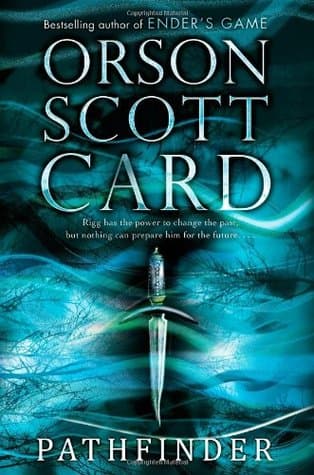
Pathfinder cover
Archivist's Choice

Pathfinder

Orson Scott Card (2010)

Genre

Fantasy / Science Fiction / Young Adult

Reading Time

16 hours 24 min

Key Themes

See below

Track Your Reading

Sign in to track this book

A young man with the rare gift to trace and change the past must navigate a dangerous future where he is both a foretold king and a hunted target, forcing him to uncover his own hidden origins before time itself destroys him.

Synopsis

Rigg, a young man who can see people's past 'paths,' lives a quiet life with his father. After his father dies, Rigg learns a shocking truth: his father was not his biological parent, and Rigg can do more than see the past; he can change it. This discovery sends Rigg on a perilous journey with his adopted sister Param and a mysterious boy named Loaf, as they search for the legendary Wall of Knowledge. They meet the Ramaj, a species that can manipulate time, and learn about a devastating 'Time War' that broke their world's original timeline. Rigg's abilities make him central to the conflict between the Timers, who want to restore the original timeline, and those who benefit from the altered present. He learns he is a 'Pathfinder,' a rare person who can navigate and mend fractured timelines. Rigg must face powerful enemies, including his supposed biological father Umbo, and make a choice that will decide the fate of humanity and time, attempting a final, risky restoration of the timeline.
Reading time
16 hours 24 min
Difficulty
Medium
Pacing
Variable
Mood
Intriguing, Epic, Mysterious, Thought-provoking
✓ Read this if...
You enjoy complex time-travel narratives, intricate world-building, and a young protagonist with immense, world-altering powers.
✗ Skip this if...
You prefer simpler plots without extensive lore or find time-travel paradoxes confusing.

Plot Summary

The Death of Father and Rigg's Discovery

Rigg lives a quiet life with his father, learning survival skills and how to 'read' the paths of living things, seeing where they have been. When his father dies unexpectedly, Rigg is heartbroken. Before his death, Father gives Rigg a coded map and instructions to find his sister, Param, and a man named Loaf. Rigg also learns that his father was not his biological parent, and his true origins are a mystery connected to a place called 'Gard.' This discovery shatters Rigg's understanding of his life and sends him on an unexpected journey, forcing him to rely on his developing pathfinding talent and his father's mysterious guidance.

Journey to Loaf and Meeting Param

Following his father's map, Rigg travels through difficult terrain, using his pathfinding ability to avoid dangers and track his way. He eventually finds Loaf, a man living in a hidden settlement. Loaf reveals more about Rigg's past, confirming Rigg is from Gard and has unusual abilities. Here, Rigg also meets Param, his long-lost sister, who has a similar, but different, pathfinding ability. Param is initially cautious but eventually accepts Rigg, and together they begin to uncover the complex details of their shared history and the secrets their father kept.

The Nature of Pathfinding and Time Bending

Loaf and Param help Rigg understand the full extent of his pathfinding ability. Rigg can not only see the past paths of objects and people but also change them, essentially bending time. This discovery is both exciting and frightening, as Rigg grapples with the ethical implications of altering history. Param, on the other hand, can see future paths. They learn that their unique talents are not just for observing but are active forces that can reshape reality. This discovery becomes central to their quest, as they realize their powers are connected to a much larger conflict.

Encountering the Ramaj and the Wall of Knowledge

Rigg and Param encounter the Ramaj, a secretive and powerful group who are also pathfinders, but with different goals and methods. The Ramaj are both a threat and a source of information. They learn about the 'Wall of Knowledge,' a mystical place said to hold the complete history of their people and the origins of their powers. This Wall becomes their main destination, as they believe it holds the answers to who they are, why they have these abilities, and what their future holds. The journey to the Wall is dangerous, as various groups seek to control or destroy it.

Arrival at the Wall and Meeting the Ancients

After a dangerous journey, Rigg and Param finally reach the legendary Wall of Knowledge. It is not just a physical structure but a center of information and power. There, they meet the 'Ancients,' beings with vast knowledge about Gard's history and the true nature of the pathfinders. The Ancients reveal that Gard is not a planet but a colony ship, and that the pathfinders are descendants of its original crew, tasked with maintaining a stable timeline. This revelation shifts their understanding of their world from fantasy to science fiction, giving their powers a technological origin.

The Original Sin and the Time Wars

The Ancients explain the 'Original Sin' – a disaster in Gard's past where a pathfinder misused their abilities, creating a different timeline and causing widespread chaos. This led to the 'Time Wars,' an ongoing conflict between factions of pathfinders trying to either restore the original timeline or exploit the fractured ones for their own benefit. Rigg discovers that his father was deeply involved in this conflict, and that Rigg himself is a critical point, with the potential to either heal or further destabilize the timeline. This knowledge places a huge responsibility on Rigg.

Rigg's Unique Role and the Convergence Point

Rigg learns he is a 'Convergence Point,' a rare person whose unique pathfinding ability allows him to not just see and change individual paths, but to potentially unify different timelines. This makes him incredibly powerful and a target for all groups involved in the Time Wars. One group, led by the ruthless Umbo, wants to control Rigg for their own purposes, while another, the 'Timers,' want to guide him toward restoring the original timeline. Rigg's struggle to understand and control this power becomes central, as he realizes his very existence is key to the universe's fate.

Confrontation with Umbo and the Enemy

Umbo, a powerful and manipulative pathfinder, confronts Rigg and Param. Umbo believes Rigg's power can be used to create a new, 'perfect' timeline under his control. He tries to trick or force Rigg into joining him, using both persuasion and aggression. This confrontation tests Rigg's determination and his understanding of his own abilities. Param, with her ability to see future paths, helps Rigg navigate Umbo's schemes. The encounter is a tense battle of wits and powers, where Rigg must not only defend himself but also protect the integrity of the timelines.

The Timers and the Plan for Restoration

Rigg and Param eventually join the 'Timers,' a group dedicated to undoing the Original Sin and restoring the original, stable timeline. The Timers, led by individuals who have devoted their lives to this cause, explain the complex mechanics of time travel and the immense risks of trying to fix the past. Together, they create a plan that uses Rigg's unique ability as a Convergence Point. This plan is dangerous and requires precise execution, as any mistake could lead to more temporal chaos or even the complete destruction of their reality.

The Final Attempt to Restore the Timeline

Rigg, guided by the Timers and supported by Param, undertakes the mission to restore the fractured timeline. This involves a journey back to the moment of the Original Sin, a critical point where he must use his Convergence Point ability to weave the divergent paths back into a single thread. The process is incredibly demanding, both physically and mentally, as Rigg experiences echoes of countless alternate realities. He faces deep personal sacrifices and moral dilemmas, understanding that his actions will fundamentally change the existence of everyone, including himself and his loved ones.

The Resolution and Lingering Questions

Rigg successfully merges the timelines, bringing some order back to reality. The world is subtly but deeply changed, with some events and people existing differently or not at all. While the immediate danger of temporal collapse is avoided, the act of restoration leaves lingering questions about identity, memory, and the true nature of existence. Rigg, though successful, carries the heavy weight of his actions and the knowledge of what could have been. The ending suggests that while a major conflict is resolved, a pathfinder's journey is never truly over, hinting at future challenges and discoveries.

Principal Figures

Rigg

The Protagonist

Rigg transforms from an ignorant boy into a powerful, responsible time-bender who makes world-altering decisions.

Param

The Supporting

Param evolves from a solitary, cautious individual into a trusted ally and integral partner in Rigg's mission.

Father

The Supporting/Mentioned

His arc is presented retrospectively, revealing his past as a protector and key player in the temporal conflict.

Loaf

The Supporting

Loaf remains a consistent source of wisdom and support, facilitating Rigg's understanding of his powers and purpose.

Umbo

The Antagonist

Umbo's arc is one of escalating ambition and conflict, culminating in his efforts to control Rigg's power.

The Ancients

The Supporting

The Ancients primarily serve as static sources of exposition and ancient wisdom, revealing the foundational truths of their world.

The Timers

The Supporting

The Timers serve as a guiding force, providing Rigg with the necessary knowledge and support to complete his mission.

Themes & Insights

Identity and Destiny

Rigg's journey is about finding out who he is and what his purpose is. He first believes he is a simple boy, but after his father's death and later revelations, he learns he is a pathfinder, a 'Convergence Point' with the power to reshape reality. This theme explores how one's origins and abilities can define their future, even if it is a future they did not choose. Rigg constantly deals with the responsibility of his powers and the expectations placed on him, questioning if he can truly make his own way or if he is simply fulfilling a predetermined role, as seen when he learns about Gard's true nature as a ship and his family line.

Your father kept you ignorant, Rigg, but he kept you safe. Now the time for safety is over, and the time for knowledge has begun.

Loaf

The Burden of Power and Choice

The pathfinders' ability to manipulate time brings immense power, but also a heavy burden of responsibility and ethical issues. Rigg, in particular, must deal with the results of changing the past, understanding that altering one event can affect countless lives and potentially erase entire realities. The story explores the moral complexities of having such power, as characters like Umbo try to use it for selfish reasons, while Rigg and the Timers aim to use it for restoration. Every decision Rigg makes about using his pathfinding ability carries moral weight, such as when he considers reversing a death.

To see the path is one thing. To change it... that is a power few can wield without destroying themselves, or everyone else.

An Ancient

The Nature of Time and Reality

The book explores complex philosophical questions about the nature of time. Is time linear, or are there multiple, different timelines? Can the past truly be changed, or just observed? The idea of 'Gard' as a colony ship blurs the lines between fantasy and science fiction, suggesting their 'magical' abilities have a technological origin. The 'Original Sin' and the 'Time Wars' show how fragile reality is and how easily it can be broken, making readers question what is real and what is just a temporary construction. The entire journey to the Wall of Knowledge is a quest to understand these basic principles.

Every choice creates a path. Every path, a reality. And some paths... they lead to broken worlds.

Param

Family and Legacy

Rigg's quest begins with the death of his adoptive father and the search for his biological sister, Param. The theme explores different kinds of family – the one he grew up in, and the one he discovers through shared blood and power. His father's legacy, both the knowledge and the secrets he shared, greatly shapes Rigg's journey. The bond between Rigg and Param, formed through shared heritage and unique abilities, becomes a key part of their strength. The story suggests that legacy is not just about inheritance, but about the ongoing impact of past generations on the present and future, as Rigg's ancestors' actions dictate his current mission.

You are not alone, Rigg. You have a sister. And together, you will find your way.

Loaf

Plot Devices & Literary Techniques

Pathfinding Ability

The unique power to see and manipulate the past and future paths of people and objects.

The pathfinding ability is the central plot device. Rigg can see the past paths of all things, while Param can see future paths. This power not only drives the narrative by allowing them to track, avoid dangers, and uncover secrets, but also introduces the core conflict of time manipulation. Rigg's unique capacity as a 'Convergence Point' to unify divergent timelines makes this ability the most powerful force in the story, determining the fate of entire realities. It's both a tool for survival and a source of immense responsibility and moral dilemmas.

The Map and Cryptic Instructions

A mysterious map and verbal instructions left by Rigg's father, guiding his initial journey.

Rigg's father leaves him a cryptic map and a set of instructions before his death. This device acts as the initial catalyst for Rigg's journey, propelling him out of his isolated life and into the wider world. The map and instructions are more than just directions; they are a puzzle that Rigg must solve, slowly revealing the secrets of his past and the true nature of his world. They represent the father's foresight and his attempt to guide Rigg even after his death, ensuring Rigg fulfills his destiny by leading him to key figures like Loaf and Param.

The Wall of Knowledge

A legendary repository of information about Gard, the pathfinders, and the history of the Time Wars.

The Wall of Knowledge serves as a crucial information hub and a narrative goal. It is the destination Rigg and Param seek to understand their origins and the truth about their powers. Upon reaching it, they gain access to the collective history and wisdom of the Ancients, revealing that Gard is a colony ship and that the pathfinders' abilities have a scientific, rather than magical, origin. This device provides essential exposition, shifting the genre and raising the stakes by explaining the 'Original Sin' and the ongoing 'Time Wars', giving context to their entire mission.

Gard (The Colony Ship)

The true nature of their world, revealed to be a massive, ancient colony ship.

The revelation that 'Gard' is not a planet but an ancient colony ship is a major plot twist and a significant plot device. It recontextualizes the entire world-building, shifting the genre from pure fantasy to a blend of fantasy and science fiction. This discovery explains the technological basis for the pathfinders' abilities and the existence of the 'Time Wars,' which are internal conflicts within the ship's temporal systems. It raises questions about their true origins and the purpose of their existence, profoundly impacting Rigg's understanding of his identity and destiny.

Critical analysis

Notable Quotes

It was never the right time to do the right thing. It was always the wrong time to do the right thing. It was always the wrong time to do the right thing, because the cost was always too high.

Rigg reflects on the difficulty of making moral choices.

The past is not a prison. The past is a foundation. On it, we build the future.

Param encourages a character to learn from history rather than be bound by it.

Knowing what you are is only half the battle. Knowing what you can become is the other half.

A mentor figure advises a young character about self-discovery and potential.

Memory is a funny thing. It can be a gift, or it can be a curse. Sometimes, it's both.

Someone contemplates the nature of memory and its dual impact.

The greatest journeys are not about finding new lands, but about seeing with new eyes.

A philosophical reflection on the true nature of exploration and discovery.

Fear is a tool. It can be used to protect you, or it can be used to control you.

Rigg considers the different ways fear can manifest and be utilized.

Sometimes the only way to save someone is to let them go.

A difficult truth is acknowledged about protecting loved ones.

A lie can travel halfway around the world while the truth is still putting on its shoes.

A character laments the speed and spread of misinformation.

The world isn't always fair, but it's always interesting.

A character finds a silver lining in the unpredictable nature of life.

We are all connected, like threads in a tapestry. Pull one, and the whole thing shifts.

A metaphor for the interconnectedness of all beings and events.

Even in the darkest night, there are stars. You just have to look up.

A message of hope and resilience in times of despair.

The greatest power is not the ability to destroy, but the ability to create.

A reflection on the true nature of strength and its application.

Every choice you make echoes through time.

A character is reminded of the far-reaching impact of their decisions.

You can't change the past, but you can change how you remember it.

A nuanced perspective on dealing with past events and their emotional weight.

Quiz

Test Your Knowledge

Ready to see how well you understood this book? Take our interactive quiz with 10 questions.

10
Questions
~5
Minutes
?
Best Score

Key Questions (FAQ)

Rigg possesses the extraordinary ability to see the 'paths' of every living creature, tracing their past movements and experiences. This talent initially manifests as a visual overlay, allowing him to perceive where a person or animal has been and what they have done, often aiding his father in tracking and understanding their surroundings.

About the author

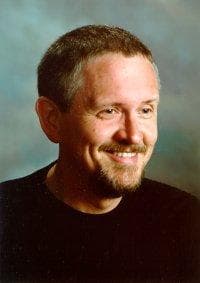
Orson Scott Card

Orson Scott Card is an American writer known best for his science fiction works. He is the first and only person to win both a Hugo Award and a Nebula Award in consecutive years, winning both awards for both his novel Ender's Game (1985) and its sequel Speaker for the Dead (1986). A feature film adaptation of Ender's Game, which Card co-produced, was released in 2013. Card also wrote the Locus Fantasy Award-winning series The Tales of Alvin Maker (1987–2003).