“No ideas but in things.”
— The famous programmatic statement of Williams's objectivist poetics.

William Carlos Williams (1988)
Genre
Literary Fiction
Reading Time
300 min
Key Themes
See below
Sign in to track this book
William Carlos Williams's "Paterson" explores the city's history, the poet's life, and imagination's power, following the Passaic River from source to sea.
The epic begins with Dr. Paterson, who is both a man and the city of Paterson, New Jersey. He wakes up, thinking about the Passaic River and the Great Falls, which are the city's geographical and symbolic center. Dr. Paterson reflects on the city's history, its industrial past, and the lives of its people. He sees himself as holding these experiences, a living example of the city's shared memory. The poem immediately sets its fragmented, associative style, mixing observations, historical documents, letters, and bits of conversation, all seen through Dr. Paterson's mind as he tries to understand and express the 'beautiful thing' that is the city.
Dr. Paterson continues exploring the city, focusing on the Passaic Falls' raw power and destructive potential. He contrasts this natural force with the knowledge in the city's library, a place where history and individual stories are kept, though often in pieces. He looks into historical accounts, including those of early explorers and indigenous people, and considers the difficulty of truly capturing a place and its people through language. The library becomes a symbol for the poet's mind, a large collection of different information he tries to combine into a clear story.
A large part of the poem includes letters from various women, notably 'C.' (Cress) and Phyllis. These letters show personal struggles, unfulfilled desires, and difficulties in communication and understanding in relationships. 'C.' expresses her intellectual and emotional needs, often feeling misunderstood by Dr. Paterson, who represents a male, dominant view. Phyllis, another letter writer, also shares her feelings and experiences. These letters highlight the repeated theme of language failing to fully convey meaning and the isolation of individuals, even in close connections. Dr. Paterson tries to respond to these voices, recognizing his own limits and the complexities of human interaction.
The story shifts to observe Paterson's industrial scene, focusing on factories, the working class, and the machines that define much of the city's identity. Dr. Paterson thinks about the workers' lives, their labor's repetitive nature, and the economic forces that shape their existence. He considers the industrial process's beauty and harshness, seeing it as both a source of life and destruction. This section includes more direct observations of the urban environment, the sounds, smells, and sights of a city built on industry, further connecting the man with Paterson's physical and social makeup.
Throughout the poem, Dr. Paterson wants to find and express the 'beautiful thing'—an elusive truth, meaning, or unifying idea he believes is at the heart of the city's seemingly chaotic existence. This search involves sifting through daily life's details, historical records, and personal stories. He questions what poetry is and its ability to capture reality. The poem's fragmented structure reflects this ongoing struggle as he tries to assemble different elements into a whole, always aware of language's limits and his subject's complexity.
Dr. Paterson observes a street preacher giving a sermon to a diverse crowd in the city. This scene brings out the city's religious and spiritual aspects, as well as the different voices and views that exist within it. The preacher's strong statements are contrasted with the onlookers' reactions, from indifference to engagement. This section further emphasizes the many experiences and beliefs that make up the city, and the poet's challenge to include such a wide range of human expression in his work. It highlights that the city is a living thing made of countless individual stories.
As the poem moves through its first four books, the story metaphorically follows the Passaic River from its source above the falls towards its eventual entry into the sea. This geographical path mirrors Dr. Paterson's journey of understanding and his attempt to combine the city's different parts. The river symbolizes the flow of time, history, and individual lives, all moving towards a final, though perhaps unclear, destination. The sea represents a form of dissolving or joining, a return to a larger, undifferentiated whole, suggesting a type of resolution or acceptance of the city's complexities.
Book Five, published years after the first four, offers a new look and perspective. Dr. Paterson, now older, reflects on imagination and art's lasting power, even as he considers age, death, and the changing world. He attends an art exhibition, finding new inspiration in creative acts. This book emphasizes the human spirit's triumph and the artist's ability to change reality through language and vision. It suggests that while the physical city may change and people may die, the imaginative life, the act of creation, continues and offers a profound form of immortality and meaning.
The end of Book Five strengthens the main role of language and memory in creating meaning. Dr. Paterson, having gone through the city's complex history and his own inner world, confirms the poet's important role in giving voice to the voiceless, in finding order among fragments. He acknowledges the ongoing struggle but asserts the creative act's ultimate necessity and power. The poem ends not with a final answer, but with a sense of lasting engagement, suggesting that the search for understanding and the act of poetic creation are continuous processes, essential to human experience.
The Protagonist
Dr. Paterson evolves from a seeker of a unified 'beautiful thing' to an acceptor of fragmentation, ultimately affirming the enduring power of the imagination and the creative act.
The Supporting
Her arc is primarily seen through her letters, revealing her consistent struggle for self-expression and connection, without a clear resolution within the poem.
The Supporting
Like Cress, her arc is primarily expressed through her letters, showing ongoing personal struggles.
The Mentioned/Symbolic
Its arc is geographical, from source to sea, symbolizing the journey of life, history, and the poem itself.
The Mentioned/Symbolic
Remains a powerful, unchanging force, symbolizing the enduring aspects of nature and history.
The Supporting/Collective
Collectively represent the ongoing life and struggles of the city, without a singular arc.
This main theme explores how individual consciousness is deeply connected with a place's shared identity. Dr. Paterson is not just a resident of Paterson, New Jersey, but embodies the city itself—its history, industry, natural features, and the lives of its people. The poem blurs the lines between inner thought and outer reality, suggesting that a place greatly shapes the individual, and in turn, the individual's perception and expression shape the place's identity. This is clear from the first lines, where the city is personified and the man becomes a holder of its experiences, constantly sifting through its 'detritus' to find meaning.
“Paterson lies in the valley under the Passaic Falls its spent waters / forming the outline of his back.”
A driving force in the poem is Dr. Paterson's constant search to find and express a 'beautiful thing'—an elusive truth, a unifying idea, or a clear meaning among modern life's chaos and fragmentation. This search often fails because language cannot fully capture reality and because individuals are inherently disconnected. The poem's own fragmented structure, including different materials like letters, historical documents, and observations, reflects this struggle. Ultimately, the 'beautiful thing' may not be a single answer but the ongoing process of seeking, the act of creation itself, as suggested by imagination's triumph in Book Five.
“No ideas but in things.”
The poem constantly deals with language's limits in conveying true meaning and allowing real understanding. The repeated theme of unanswered or misunderstood letters, especially from Cress, highlights communication's inherent difficulties. Dr. Paterson himself struggles to find the 'words' to sum up the city's vastness. However, paradoxically, the poem itself shows language's power—its ability to create, connect, and preserve. It explores how language, despite its flaws, is the main tool humans use to order their world, share experiences, and achieve a form of immortality through art.
“A man in himself is a city, beginning, seeking, achieving and concluding his life in ways which the various aspects of a city may embody—if imaginatively conceived—any city, all the details of which may be made to voice his intimate convictions.”
This theme explores the tension between nature and human industry. The Passaic Falls' raw power is repeatedly contrasted with the factories and machines that define Paterson's economy. The poem examines how humanity tries to control and change nature for its own purposes, often with both creative and destructive results. This duality is central to the city's character, as it owes its existence and success to the very natural force it tried to master. The river itself is a constant reminder of nature's lasting power, even as the city builds on and around it.
“The river is a flood of tears, a flood of tears, a flood of tears / from the eyes of a man, from the eyes of a woman, from the eyes of a child.”
Paterson is deeply concerned with collecting and interpreting history and memory. Dr. Paterson acts as a chronicler, sifting through historical documents, newspaper clippings, personal letters, and his own observations to build a varied understanding of the city's past. The poem suggests that history is not a straight story but a complex, often fragmented, collection of individual and shared experiences. It questions how memory is kept, distorted, and reinterpreted over time, and how the past continues to shape the present identity of both the city and the individual.
“History begins for us with murder and enslavement, not with discovery.”
The assembly of disparate texts and observations to create a mosaic of meaning.
Williams employs a collage technique, weaving together seemingly unrelated materials such as historical documents, newspaper clippings, personal letters, overheard conversations, and lyrical observations. This juxtaposition of different voices, styles, and periods creates a fragmented yet rich tapestry of the city. It mirrors the fragmented nature of modern experience and the way a mind processes information. The reader is invited to make connections between these disparate elements, much like Dr. Paterson attempts to find coherence in the 'detritus' of the city, forcing an active engagement with the text to construct meaning.
A unified consciousness that embodies both the poet and the city.
The use of Dr. Paterson as the central persona is a crucial device. He is not merely a character but a composite figure: a physician, a poet, and literally the city of Paterson itself. This allows Williams to explore the intricate relationship between the individual and their environment, blurring the lines between subjective experience and objective reality. The persona provides a consistent lens through which the diverse elements of the poem are filtered, giving a sense of coherence to the otherwise fragmented narrative and allowing for deep philosophical and historical reflection from an embodied perspective.
The river's flow dictates the poem's progression and thematic development.
The Passaic River serves as the primary structural and thematic metaphor for the entire poem. Its course, from the Great Falls to its entrance into the sea, dictates the progression of the original four books. This geographical journey mirrors Dr. Paterson's internal exploration of the city's history, its people, and his own consciousness. The river symbolizes the flow of time, the continuous stream of human experience, and the search for resolution or understanding. It provides a natural, organic framework for the poem's otherwise fragmented content, grounding the abstract in the tangible.
Direct incorporation of personal correspondence to reveal individual struggles and communication failures.
The extensive inclusion of personal letters, particularly from women like 'C.' (Cress) and Phyllis, is a significant plot device. These letters provide intimate, unfiltered glimpses into individual lives, desires, and frustrations. They serve to humanize the collective 'city' by bringing specific voices to the forefront. More importantly, they highlight the theme of the failure of language and communication, as the correspondents often express feelings of being misunderstood or unheard, and Dr. Paterson struggles with how to adequately respond. This device adds emotional depth and a sense of realism to the poem's broader philosophical concerns.
“No ideas but in things.”
— The famous programmatic statement of Williams's objectivist poetics.
“—Say it, no ideas but in things— / nothing but the things themselves / when the mind will be a sieve through which / new understanding can percolate.”
— An elaboration on the central dictum, emphasizing the direct engagement with the world.
“A man in himself is a city, beginning, seeking, achieving and concluding his life in ways which the various aspects of a city may embody.”
— The fundamental metaphor of the poem, equating the man Paterson with the city of Paterson.
“The city / an old woman, / whose hair / is the rain / and whose eyes / are the puddles / and whose mouth / is the river.”
— A vivid personification of the city of Paterson, blending natural elements with urban imagery.
“The great mass of the unwritten, of the unrecaptured, of the unrecorded / waiting to be written.”
— Reflecting on the vastness of human experience and detail that remains outside of formal record, awaiting the poet's attention.
“The stream / flows / over the rocks / that are in its way.”
— A simple, yet profound observation of nature's persistence and adaptability, mirroring human struggle.
“It is difficult / to get the news from poems / yet men die miserably every day / for lack / of what is found there.”
— A powerful statement on the vital, often unacknowledged, role of poetry in human life, despite its perceived impracticality.
“The river, / the river, / the river / pours over the rocks / and falls, / and falls.”
— Repetitive and rhythmic description of the Great Falls of the Passaic River, a central image of the poem.
“We know nothing and can know nothing / but what passes through the senses.”
— Reinforcing the empiricist and materialist foundation of Williams's philosophy and poetics.
“The flower / is as much / a part of the city / as the street / itself.”
— Emphasizing the interconnectedness of natural and man-made elements within the urban environment.
“The world / is not a world / until it is written.”
— Suggests that language and art are essential for giving form and meaning to reality.
“The mind / is a kind of / city, / always / building, / always / tearing down, / always / rebuilding.”
— Extending the man-as-city metaphor to the dynamic and ceaseless activity of the human mind.
“The light / is in the things / and not in the eye.”
— A reversal of conventional perception, asserting that inherent qualities of objects reveal themselves, rather than being solely projected by the observer.
“The poem / a field / of action.”
— Portrays the poem not as a static object but as a dynamic space where meaning is generated and explored.
Ready to see how well you understood this book? Take our interactive quiz with 10 questions.
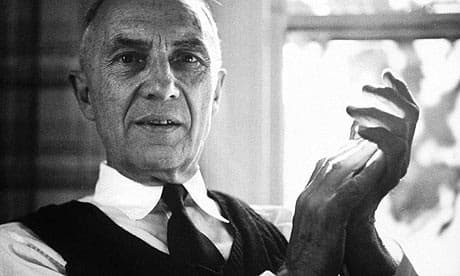
William Carlos Williams was an American poet, writer, and physician closely associated with modernism and imagism.







