BookBrief
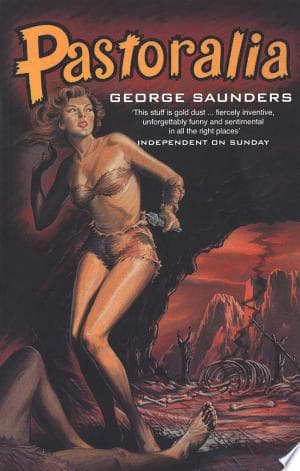
Pastoralia cover
Archivist's Choice

Pastoralia

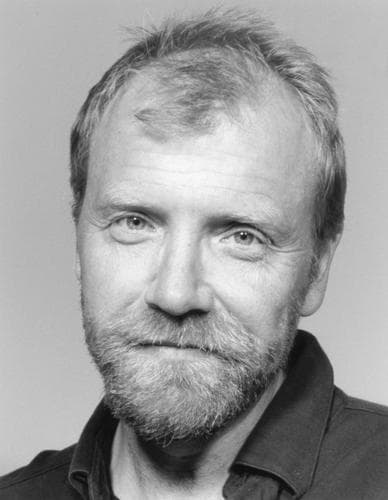
George Saunders (2013)

Genre

Literary Fiction / Science Fiction

Reading Time

288 min

Key Themes

See below

Track Your Reading

Sign in to track this book

At a failing theme park, a caveman performer faces corporate reviews, self-help gurus, and the absurd demands of modern life.

Synopsis

Kyle, a caveman performer at the theme park Pastoralia, struggles to keep his "authenticity" despite ridiculous corporate demands. He and his cavewoman partner, Janet, are always watched, with management sending memos about proper grunting, foraging, and how to act like a caveman. Kyle tries to follow the rules, afraid of losing his job, while Janet often breaks character, leading to trouble. His son's illness and growing money problems stress Kyle, who gets a bad performance review and a threat of replacement. When a new, aggressively "authentic" caveman, Jim, replaces Janet, Kyle must choose: follow the park's dehumanizing rules or support his former partner. After a vivid dream, Kyle makes a defiant choice, rejecting the corporate absurdity for an uncertain future.
Reading time
288 min
Difficulty
Medium
Pacing
Moderate
Mood
Satirical, Darkly Humorous, Absurdist, Poignant, Thought-provoking
✓ Read this if...
You enjoy satirical literary fiction that blends dark humor with poignant social commentary on corporate culture and the dehumanizing aspects of modern work.
✗ Skip this if...
You prefer straightforward narratives without elements of the absurd or allegorical undertones, or if you dislike stories that highlight the bleakness of corporate life.

Plot Summary

The Caveman Exhibit and the Memo

Kyle, a 'caveman' performer at Pastoralia theme park, struggles to maintain his primitive role alongside his 'cavewoman' partner, Janet. Their job requires grunting, making fires, and eating raw goat, while avoiding modern behaviors. His supervisor, Jim, constantly pushes Kyle about his 'numbers' — his adherence to the caveman role and audience perception. A new, stricter memo threatens termination for any deviation, especially for Janet, who often speaks and complains. Kyle, despite his own frustrations, feels he must report Janet's mistakes to protect his job, creating an immediate ethical problem.

Janet's Struggles and Kyle's Internal Conflict

Janet continues to struggle with the caveman exhibit's demands, often breaking character to complain or ask for modern comforts. She secretly uses a cell phone and frequently expresses dissatisfaction with the raw goat meat and facilities. Kyle, pressured by Jim's constant monitoring and job loss threats, finds himself in a difficult position. He sympathizes with Janet but also fears for his family's financial stability. He begins to meticulously document Janet's mistakes, agonizing over each entry, knowing his reports could lead to her dismissal, while also offering her subtle, unhelpful advice.

The Performance Review and Jim's Pressure

Jim conducts a performance review with Kyle, emphasizing 'authenticity' and the park's stricter policies. He praises Kyle but subtly manipulates him, suggesting Kyle's job security depends on Janet's compliance. Jim gives Kyle a more detailed form for reporting Janet's infractions, making it easier to document her every slip-up. This interaction shows the dehumanizing nature of their employment, where personal relationships are sacrificed for corporate metrics. Kyle feels trapped between his conscience and his desperate need to keep his job as management's demands become more unreasonable.

The Son's Illness and Financial Strain

Kyle's son, Adam, falls ill, needing expensive medication and doctor visits. This new financial burden increases Kyle's anxiety about losing his job and his family's future. He feels immense guilt about not providing better for them, given his meager wages and absurd working conditions. The illness adds stress to his unstable situation, making him more vulnerable to Jim's pressure to report Janet. Kyle's thoughts reveal his deep love for his family and his fear of failing them, which drives his increasingly difficult decisions about his colleague.

Janet's Desperation and Kyle's Guilt

Janet's health declines due to the poor diet and stress. She becomes more withdrawn and less able to maintain her primitive persona, making her more susceptible to Jim's scrutiny. Kyle sees her decline and feels growing guilt. He tries to offer small kindnesses, like sharing his food, but continues to file reports, driven by fear. The absurdity of their shared situation — two people forced to act as cave dwellers while their modern lives crumble — becomes more poignant, showing the dehumanizing impact of their work. Kyle begins to question the morality of his actions and the system that forces them.

The New 'Authenticity' Policy and the Replacement

The park introduces a new 'authenticity' policy requiring performers to undergo more rigorous evaluations and follow stricter primitive behaviors. Jim informs Kyle that Janet's performance is unacceptable, and she will be replaced by a new, more 'authentic' cavewoman. Kyle is present during Janet's dismissal, witnessing her quiet despair. He feels a deep sense of shame and responsibility, knowing his reports contributed to her fate. This moment marks a turning point for Kyle as he grapples with the consequences of his self-preservation and the moral cost of his compliance within Pastoralia's ruthless corporate structure.

Kyle's New Partner and Mounting Pressure

Kyle's new partner, a young, overly enthusiastic woman, is a zealous adherent to the caveman persona, embracing raw goat and grunting with genuine fervor. Her extreme commitment makes Kyle's more nuanced performance seem less 'authentic.' Jim begins to subtly criticize Kyle's performance, implying he isn't keeping up with his new partner's dedication. This shift creates new anxiety for Kyle, who realizes even compliance doesn't guarantee security. He is now the one being scrutinized, making him understand Janet's precarious position even more acutely.

The Dream and Kyle's Realization

Kyle has a vivid and disturbing dream where he sees himself as both a caveman and a modern man, constantly shifting identities, unable to find a stable sense of self. In the dream, an unseen corporate entity judges him and finds him lacking. This dream helps Kyle realize how much his job has eroded his identity and moral compass. He questions the value of self-preservation at the expense of his dignity and others' well-being, especially Janet. The dream highlights the psychological toll of his work.

The Final Memo and Kyle's Choice

Kyle receives a final, highly critical memo from Jim, outlining his own deficiencies in maintaining the caveman persona. The memo is full of corporate jargon and passive-aggressive threats, making it clear his job is now on the line. This ultimate pressure point forces Kyle to confront his complicity and the systemic exploitation he has endured. He realizes that no amount of reporting or self-sacrifice will ever be enough to truly secure his position in a system designed to keep employees perpetually insecure and interchangeable. He faces a profound choice: continue to conform or reclaim some semblance of his dignity.

Kyle's Act of Defiance and Uncertain Future

In a quiet act of defiance, Kyle subtly breaks character during his performance, perhaps by speaking a modern word or refusing a directive. The exact nature of his defiance is ambiguous, but it signifies his rejection of the dehumanizing system. He understands this act will likely lead to his termination. As the story ends, Kyle has an uncertain future, but also a sense of reclaimed autonomy and moral integrity. He has chosen to prioritize his self-respect over Pastoralia's illusory security, suggesting a glimmer of hope for a future where he might find a more authentic way of living and providing for his family.

Principal Figures

Kyle

The Protagonist

Kyle starts as a compliant, fearful employee, gradually becoming more aware of the dehumanizing nature of his work and his complicity, leading to a small but significant act of defiance.

Janet

The Supporting

Janet begins as a defiant but struggling employee and is eventually broken by the system, leading to her dismissal.

Jim

The Antagonist

Jim remains a consistent antagonist, representing the unyielding corporate pressure throughout the story.

Adam

The Mentioned

Adam's illness exacerbates Kyle's desperation, indirectly pushing him towards his final decision.

New Cavewoman

The Supporting

Her arrival immediately raises the bar for 'authenticity,' placing Kyle in renewed jeopardy.

Themes & Insights

Dehumanization of Labor

The story shows how modern work environments can strip individuals of their dignity, identity, and humanity. Kyle and Janet must regress to a primitive state, denying their intellect and basic human needs for 'authenticity' and profit. Their lives become about metrics and reviews, where their worth depends on conforming to an absurd role. The raw goat diet, grunting, and ban on English show how the company erodes their humanity, turning them into interchangeable parts. This theme drives Kyle's internal conflict as he struggles to keep his sense of self amidst oppressive demands.

“The company preferred that we use the word 'authenticity' rather than 'realism,' as 'realism' suggested that we were not, in fact, real.”

Narrator (Kyle's internal monologue)

The Absurdity of Corporate Culture

Saunders satirizes the illogical and often nonsensical demands of modern corporate life. The entire caveman exhibit is absurd, yet management treats its rules and evaluations with utmost seriousness. Memos filled with corporate jargon, performance reviews based on grunting and eating raw meat, and constant pressure to be 'authentic' highlight the ridiculousness of a system that prioritizes abstract metrics over common sense and human well-being. Jim, with his detached adherence to these policies, embodies this absurdity, making the reader question the logic behind many real-world corporate practices. The story uses hyperbole to expose the underlying ridiculousness of many modern workplaces.

“Just remember, Kyle: the customer expects authenticity. The customer is paying good money to see two authentic cave dwellers. Not two people in costume who just happen to be in a cave.”

Jim

Moral Compromise and Self-Preservation

Kyle's struggle is about the moral compromises people make for self-preservation, especially when facing economic insecurity. He is constantly torn between his sympathy for Janet and his desperate need to keep his job to support his family. His agonizing decision to report Janet's mistakes results directly from the system forcing employees to police each other. This theme explores the psychological cost of such compromises, showing how fear can lead individuals to act against their better judgment and contribute to others' suffering. Kyle's journey involves realizing the cost of these compromises.

“It was hard to report her. But it was harder not to. Because if I didn't, it might be me.”

Narrator (Kyle's internal monologue)

The Illusory Nature of Security

The story shows that even complete compliance and self-sacrifice do not guarantee job security in a ruthless corporate environment. Kyle's efforts to be the 'perfect' caveman and his willingness to report Janet ultimately do not protect him from scrutiny. The arrival of the New Cavewoman, who is even more 'authentic,' immediately puts Kyle's own job at risk. This highlights the instability of employment and the constant pressure to perform, suggesting that security is often an illusion perpetuated by management to keep employees in line. The system is designed to keep workers perpetually insecure and interchangeable, never truly safe from dismissal.

“The memo was clear: you could be the most authentic caveman in the world, but if someone else came along who was more authentic, you were out.”

Narrator (Kyle's internal monologue)

Identity and Self-Worth in a Consumerist Society

The story explores how identity and self-worth become linked to jobs and consumer status in modern society. Kyle's sense of self is constantly under attack as he must shed his modern identity for a primitive one, yet his ability to provide for his family (a modern concern) is tied to this absurd performance. His job dictates his actions, diet, language, and ultimately his sense of value. The pressure to 'perform' and be 'authentic' for the customer blurs the lines between his true self and his marketable persona, raising questions about what it means to be a human being in a system that values only utility and performance.

“Who was I, really? Was I a caveman, or was I a guy who just happened to be playing a caveman?”

Narrator (Kyle's internal monologue)

Plot Devices & Literary Techniques

Satire and Dark Humor

Exaggeration and irony to critique corporate culture.

Saunders employs satire and dark humor to highlight the absurdities and dehumanizing aspects of modern corporate life. The premise of the 'caveman' exhibit itself is a satirical exaggeration, and the detailed, serious corporate memos about 'authenticity' and 'primitive' behavior create a darkly comedic contrast with the characters' real-world struggles. This device allows the author to critique the capitalist system and its impact on individuals without resorting to didacticism, instead making the reader laugh uncomfortably while recognizing the truths embedded in the exaggeration.

Internal Monologue

Kyle's thoughts reveal his moral and psychological struggles.

The story is heavily reliant on Kyle's extensive internal monologue. This device provides direct access to his anxieties, moral dilemmas, and rationalizations. It allows the reader to understand the profound psychological toll of his job, his love for his family, and his internal conflict between self-preservation and empathy. The monologue often switches between his corporate-speak justifications and his genuine human feelings, highlighting the mental gymnastics he performs to cope with his situation and revealing his gradual awakening.

Symbolism of the Cave

Represents isolation, regression, and the illusion of safety.

The cave in which Kyle and Janet work serves as a powerful symbol. It represents their forced regression to a primitive state, their isolation from the modern world, and the psychological confinement imposed by their jobs. While it's a 'shelter,' it's also a prison. It symbolizes the limited options available to them and the darkness of their professional lives. The cave also suggests an illusion of safety, as despite being 'sheltered' within it, they are still vulnerable to the external pressures of the corporate world.

Corporate Jargon

Emphasizes the dehumanizing and illogical nature of the workplace.

The frequent use of corporate jargon in Jim's dialogue and the various memos serves to underscore the dehumanizing and often nonsensical nature of the corporate environment. Terms like 'authenticity,' 'metrics,' 'synergy,' and 'performance enhancement' are applied to the absurd context of caveman behavior, highlighting the detachment and illogic of the system. This jargon creates a barrier between the workers' human experience and the company's demands, reinforcing the idea that employees are viewed as resources rather than individuals.

Critical analysis

Notable Quotes

For a long time I was happy, I think, to be a caveman. It was a good job. I liked the work. But then, as you know, things changed.

The narrator, a caveman performer, reflects on the initial contentment with his unusual job before the pressures mounted.

It was a condition of my employment that I maintain my caveman persona at all times, even during breaks.

Highlighting the extreme dedication and immersion required for the narrator's performance role.

The problem with being a caveman is that, eventually, you're going to get replaced by a better caveman.

A cynical observation about the disposable nature of labor and the constant threat of obsolescence.

I often wondered if the people watching us, the customers, ever thought about what it was like to be us. To be the thing they were looking at.

The narrator ponders the empathy, or lack thereof, from the audience observing his and Janet's performance.

Sometimes I felt like I was less of a caveman and more of a symbol of what they wanted a caveman to be.

The narrator feels the pressure to conform to an idealized, rather than authentic, image of his character.

We were supposed to be primitive, yes, but also entertaining. And educational. It was a lot to ask of a caveman.

Describing the multifaceted and often contradictory demands placed on the performers.

The world was full of people trying to be something they weren't, just to keep their jobs.

A broader commentary on the societal pressure to adapt and compromise one's identity for economic survival.

My son, he thought I was a real caveman. And I didn't want to disabuse him of that. Not yet.

The narrator's poignant desire to maintain his son's innocent belief in his 'job' despite its absurdity.

It’s hard to be a good employee when you’re constantly being reminded that you’re not good enough.

Reflecting on the demoralizing effect of constant criticism and performance reviews.

I had a feeling, deep down, that we were all just waiting for the axe to fall.

The pervasive sense of insecurity and impending job loss felt by the characters.

The thing about rules is, they're always changing. And if you don't keep up, you're out.

A bleak observation about the arbitrary and ever-shifting nature of corporate regulations.

We had to make it look like we were living in the past, but also, subtly, hint at the future.

Describing the complex and paradoxical demands of the caveman exhibit's narrative.

Sometimes, I wished I could just grunt and be done with it. No explanations. No justifications.

A moment of weariness and longing for the simplicity that his 'primitive' persona ironically lacks.

The world was full of people who were good at pretending. And I was one of them.

A self-aware admission of the pervasive nature of performance and facade in modern life.

Quiz

Test Your Knowledge

Ready to see how well you understood this book? Take our interactive quiz with 10 questions.

10
Questions
~5
Minutes
?
Best Score

Key Questions (FAQ)

'Pastoralia' centers on Janet and Al, who work as 'cavepeople' at a failing theme park exhibit. Their job requires them to grunt and act primitive, with speaking resulting in fines, while corporate constantly threatens their employment and pushes them to meet increasingly absurd performance metrics.

About the author

George Saunders

George Saunders is an American writer of short stories, essays, novellas, children's books, and novels. His writing has appeared in The New Yorker, Harper's, McSweeney's, and GQ. He also contributed a weekly column, American Psyche, to The Guardian's weekend magazine between 2006 and 2008.