“Nancy Drew was a detective, not because she wore a badge, but because she had an insatiable curiosity and a keen eye for detail.”
— General description of Nancy's character and motivation.

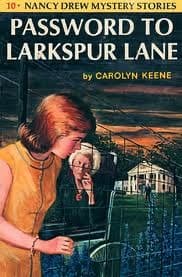
Carolyn Keene (1933)
Genre
Children's / Mystery / Young Adult
Reading Time
192 min
Key Themes
See below
Sign in to track this book
When a cryptic message arrives via carrier pigeon, Nancy Drew is propelled into a shadowy mystery surrounding a sinister retreat and the secrets it holds.
Nancy Drew is at home when a carrier pigeon lands on her windowsill, carrying a tiny capsule with a coded message. The message, a series of numbers and letters, sparks Nancy's curiosity. With help from her housekeeper Hannah Gruen, Nancy deciphers part of the message, which mentions 'Larkspur Lane' and a 'rest home' holding a 'prisoner.' The urgency of the message immediately tells Nancy a new mystery awaits. She decides to investigate, worried someone is being held captive unfairly.
Soon after the pigeon incident, Nancy's boyfriend, Ned Nickerson, arrives with troubling news. His Aunt Kitty Blair has disappeared. Ned explains that Aunt Kitty had recently visited a 'rest home' for a short stay, but now no one at the facility will give information about her or let Ned speak with her. This raises Nancy's suspicions, especially with the pigeon's message about a 'rest home' and a 'prisoner.' Nancy realizes Aunt Kitty's disappearance is likely linked to the coded message and the activities at Larkspur Lane.
To investigate the 'rest home' on Larkspur Lane, Nancy decides to go undercover. She asks her cousin, Bess Marvin, to pose as a patient with her. They create a story about needing rest, hoping to learn how the facility operates. Upon arrival, they meet the strict Miss Crabtree, the head nurse, and the mysterious Dr. Smeede, the supposed owner. The atmosphere is unsettling, with strict rules, quiet voices, and a general unease among the other 'patients,' confirming Nancy's initial suspicions that something is wrong.
Inside the Larkspur Lane 'rest home,' Nancy and Bess notice several strange things. Patients seem unusually quiet, almost drugged, and their communication is limited. They find secret passages and hidden compartments in the old mansion, suggesting past intrigue or a way for illegal activities to happen unnoticed. Nancy's sharp eye spots subtle clues, like the unusual furniture and faint sounds from behind walls, which strengthen her belief that the 'rest home' is a cover for something more sinister than a place of healing. They begin to search for clues about Aunt Kitty and the 'prisoner.'
By searching and following faint sounds, Nancy uncovers a hidden room in the mansion. Inside, she finds an elderly woman, Miss Lavinia, clearly held against her will. Miss Lavinia is frail and disoriented but gives Nancy bits of information, hinting at a larger scheme involving stolen inheritances and the forced confinement of wealthy people. Nancy realizes Miss Lavinia is the 'prisoner' from the pigeon's message. Nancy is determined to free Miss Lavinia and expose the true nature of the Larkspur Lane 'rest home' and its owners.
Nancy's investigation shows that Dr. Smeede and Miss Crabtree are not real medical professionals but criminals. They run the 'rest home' as a facade to imprison wealthy elderly people, control their money, and steal their inheritances. They use methods like manipulation and possibly sedatives to keep their 'patients' compliant and isolated. Nancy realizes Aunt Kitty Blair is likely another victim, and her disappearance is directly linked to their activities. The 'rest home' is a trap designed to exploit the vulnerable.
Nancy learns that the carrier pigeons are not random but a key part of the prisoners' desperate attempts to communicate. Miss Lavinia, and possibly other captives, had secretly trained and released these pigeons with coded messages, hoping someone would find them and understand their plea for help. The pigeon that landed on Nancy's windowsill was one such attempt. This shows the captives' ingenuity and courage and gives a deeper understanding of the first clue that drew Nancy into the mystery.
As Nancy gathers more evidence and confirms Aunt Kitty's presence, she and Bess try to help Miss Lavinia and Aunt Kitty escape. This is dangerous, as Dr. Smeede and Miss Crabtree are watchful and suspicious. Nancy uses her quick thinking to create diversions and navigate the secret passages, but they are almost caught many times. The tension grows as they try to move the frail women through the hidden parts of the mansion, knowing discovery could mean their own imprisonment or worse.
Having sent a coded message to Ned Nickerson from inside the 'rest home,' Nancy alerts him to the place's true nature and the urgent situation. Ned, understanding the danger, quickly contacts the authorities. The police, with Nancy's information, raid the Larkspur Lane 'rest home.' A dramatic confrontation follows, leading to the rescue of Aunt Kitty Blair, Miss Lavinia, and several other elderly captives. Dr. Smeede and Miss Crabtree are arrested, their criminal operation ended, and their victims freed.
After the villains are arrested, Nancy helps authorities unravel the inheritance scheme by Dr. Smeede and Miss Crabtree. She provides key details and evidence that expose how the criminals manipulated documents, forged wills, and took money from their wealthy captives. With Nancy's help, the police and legal teams recover much of the stolen money and return it to the rightful owners or their heirs. The mystery ends with justice served and the victims' fortunes restored, strengthening Nancy's reputation as a detective.
The Protagonist
Nancy's initial curiosity evolves into a deep commitment to justice as she uncovers the full extent of the villains' cruelty, solidifying her resolve to protect the vulnerable.
The Supporting
Bess overcomes her initial fears to bravely assist Nancy in a dangerous undercover operation, demonstrating her underlying courage and loyalty.
The Supporting
Ned's concern for his aunt propels him into action, allowing him to play a crucial role in the final rescue, showcasing his steadfast devotion and capability.
The Antagonist
Dr. Smeede maintains his villainous nature throughout, ultimately exposed and defeated by Nancy.
The Antagonist
Miss Crabtree remains a rigid and cruel figure, ultimately facing justice alongside Dr. Smeede.
The Supporting
Miss Kitty transitions from a missing person to a rescued victim, her plight highlighting the villainy of the antagonists.
The Supporting
Miss Lavinia moves from a desperate captive to a key informant, playing a vital role in her own rescue and the exposure of the criminals.
The Supporting
Hannah remains a steadfast and supportive figure, representing the comforting 'home' aspect of Nancy's life.
The main theme is Nancy's commitment to justice for those who cannot defend themselves, especially the elderly. The 'rest home' preys on isolated, wealthy seniors, using their age and situation. Nancy's resolve to rescue Miss Kitty Blair, Miss Lavinia, and the other captives, and to restore their stolen inheritances, shows the importance of protecting vulnerable people from exploitation. Her actions embody the idea that everyone, regardless of age or perceived weakness, deserves dignity and protection.
“"Nancy felt a surge of indignation. To prey upon the helpless elderly was one of the cruelest crimes imaginable."”
This theme is clear in Dr. Smeede and Miss Crabtree, who use elaborate lies for their crimes. They create a convincing facade of a real 'rest home' to hide their true intentions of imprisonment and fraud. The entire operation relies on manipulating appearances, isolating victims, and controlling information. Nancy's challenge is not just to find the victims but to see through the lies and expose the truth hidden beneath a respectable front. The coded messages and secret passages further highlight the hidden nature of the antagonists' plan.
““The building seemed so peaceful from the outside, but Nancy knew a dark secret lurked within its walls.””
Both Nancy and the captives show great resourcefulness. Nancy's ability to decipher the coded message, go undercover, find secret passages, and send a message to Ned shows her sharp mind and quick thinking. Equally important is the ingenuity of Miss Lavinia and other captives, who, despite their confinement, manage to train and release carrier pigeons with coded pleas for help. This theme celebrates the human ability to find solutions and resist oppression, even in the worst situations, showing that small acts of defiance can lead to big breakthroughs.
““It was an ingenious plan, born of desperation, and Nancy knew she had to honor the courage of whoever had sent it.””
Nancy's success in solving the mystery depends on the loyalty and support of her friends and family. Bess Marvin, despite her fears, bravely goes undercover with Nancy, providing important help. Ned Nickerson's belief in Nancy and his quick action in alerting the police are essential to the rescue. Hannah Gruen's support at home and Carson Drew's legal background, though less direct in this adventure, are always a foundation. This theme shows that even the smartest detective needs a strong support system to overcome big challenges and highlights the strength in teamwork and trust.
““Nancy knew she could always count on Bess, even when things looked bleak. That kind of loyalty was priceless.””
A cryptic note delivered by a carrier pigeon that initiates the mystery.
The coded message, delivered by a carrier pigeon to Nancy's windowsill, serves as the inciting incident for the entire plot. It's a classic mystery trope that immediately establishes an air of intrigue and urgency. Its cryptic nature requires Nancy's deductive skills to decipher, drawing the reader into the puzzle from the outset. This device not only kickstarts the investigation but also reveals the desperation of the captives and provides the first crucial clue to the location and nature of the 'rest home.'
Nancy and Bess pose as patients to infiltrate the 'rest home.'
The decision for Nancy and Bess to go undercover as patients is a key plot device that allows them direct access to the antagonists and their operations. This creates immediate tension and danger, as they are constantly at risk of exposure. It enables them to observe the strange goings-on firsthand, discover secret passages, and interact with the other captives, gathering vital information that would be impossible to obtain from the outside. The undercover element adds suspense and opportunities for close calls and clever maneuvering.
Architectural features within the mansion used for concealment and escape.
The presence of secret passages and hidden rooms within the Larkspur Lane mansion is a classic mystery plot device. These architectural features serve multiple purposes: they are used by the villains to conceal their illicit activities and imprison their victims, and they are later utilized by Nancy to move stealthily, gather evidence, and plan the escape of the captives. These hidden elements add to the suspense, create opportunities for discovery, and enhance the sense of an old, mysterious house with a dark past, making the 'rest home' feel like a labyrinthine trap.
A seemingly benevolent institution used to mask criminal activities.
The 'rest home' itself functions as a major plot device, a deceptive facade behind which the true criminal enterprise operates. It allows Dr. Smeede and Miss Crabtree to isolate their victims under the guise of care, making their disappearance seem legitimate and preventing outside interference. This device highlights the theme of deception and underscores the villains' cunning. Nancy's challenge is to peel back this respectable layer to reveal the sinister truth, making the setting itself an integral part of the mystery and its resolution.
“Nancy Drew was a detective, not because she wore a badge, but because she had an insatiable curiosity and a keen eye for detail.”
— General description of Nancy's character and motivation.
“The old mansion, shrouded in shadows and whispered tales, held secrets that only a determined mind could unearth.”
— Describing the setting of the mystery, Larkspur Lane.
“Nancy knew that sometimes the most obvious clues were the ones people overlooked.”
— Nancy reflecting on her investigative approach.
“A password, a hidden message, and a secret society – the pieces of the puzzle were slowly falling into place.”
— Nancy piecing together the central elements of the mystery.
“She had learned long ago that fear was a poor companion when trying to solve a mystery.”
— Nancy's mindset when facing danger or uncertainty.
“The truth, no matter how convoluted, always had a way of revealing itself in the end.”
— Nancy's belief in the ultimate triumph of truth.
“Bess and George, as always, were ready for adventure, even if it meant a little danger.”
— Describing Nancy's friends and their willingness to help.
“It wasn't just about finding the missing person; it was about understanding why they vanished.”
— Nancy's deeper goal beyond simply solving the immediate problem.
“The silence of the old house was more telling than any shouted accusation.”
— Nancy interpreting the atmosphere and lack of sound in a key location.
“Sometimes, the greatest deceptions were hidden behind the most innocent facades.”
— Nancy's realization about the nature of the antagonists.
“Nancy knew that patience was a virtue, especially when dealing with stubborn facts and elusive suspects.”
— Nancy's approach to the slow and careful process of investigation.
“The cryptic message, when finally deciphered, opened up a whole new avenue of inquiry.”
— The impact of a solved puzzle on the direction of the investigation.
“No matter how dark the secret, Nancy was determined to bring it into the light.”
— Nancy's unwavering commitment to uncovering the truth.
“The thrill of the chase was always accompanied by the satisfaction of seeing justice served.”
— Nancy reflecting on the rewards of her detective work.
Ready to see how well you understood this book? Take our interactive quiz with 10 questions.

Carolyn Keene is the pseudonym for the authors of the Nancy Drew Mystery Stories series. Under this pen name, numerous authors have penned over 170 books since 1930, captivating young readers with thrilling mysteries and adventures. The series, including notable titles like "The Secret of Red Gate Farm" and "Mystery of Crocodile Island," has become a cultural phenomenon, selling millions of copies worldwide and inspiring adaptations across various media.

Dan Gemeinhart
4.5

Kate O'Hearn
4.4

Jeanne Birdsall
4.4

Jen Wang
4.4

Wendelin Van Draanen
4.3

John Marsden
4.3

Chris Van Allsburg
4.3

Jennifer A. Nielsen
4.2