“Truth is a slippery thing, Maisie. It changes shape depending on who's holding it.”
— Maurice Blanche advising Maisie Dobbs on the nature of truth in investigations.

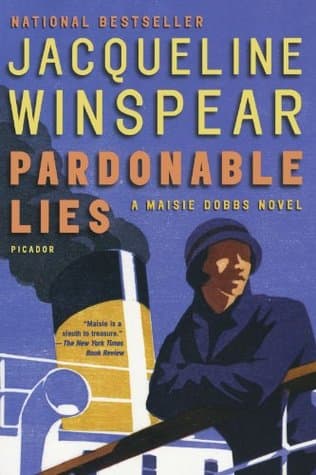
Jacqueline Winspear (2005)
Genre
Historical Fiction / Mystery
Reading Time
450 min
Key Themes
See below
Sign in to track this book
After WWI, investigator Maisie Dobbs goes to French battlefields, confronting her past and solving a spiritualist's deception about a missing aviator, all while questioning her sanity and her mentor's judgment.
The novel starts with Maisie Dobbs, an investigator, taking a new case from Sir Cecil Lawton. His wife, Agnes, recently died, but not before he promised to find out what happened to their son, Ralph, an aviator supposedly killed in World War I. Agnes never believed Ralph was truly dead and had spent years talking to mediums, convinced he was still alive. Sir Cecil, though doubtful, is bound by his promise to his deceased wife. Maisie, with her assistant Billy Beale, starts by looking at the official records of Ralph Lawton's death, which say he crashed and died in France in 1917. This initial research quickly finds inconsistencies and no clear proof about the recovery of his body, sending Maisie to uncover a long-hidden secret.
Maisie looks deeper into the military records about Ralph Lawton's supposed death. She finds the official accounts surprisingly unclear and lacking the usual detail for such a well-known case, especially since Ralph was a celebrated pilot. Her investigation leads her to question the truth of the reported crash site and the identification of the remains. During this early stage, Maisie meets her old college friend, Priscilla Evernden, who was a VAD nurse in France during the war. Priscilla says her own brother, Joe, who also served in the Royal Flying Corps, was a close friend of Ralph Lawton. Joe was reported missing around the same time as Ralph, adding a personal connection to Maisie's inquiry. Priscilla shares her own doubts about Joe's disappearance.
To investigate Ralph Lawton's disappearance, Maisie travels to France, near the Somme battlefields where Ralph's plane was reportedly shot down. This trip is hard for Maisie, as it makes her return to the place where she was a nurse during the war and experienced trauma, including the death of her fiancé, Simon. The physical journey is also a psychological one, as Maisie deals with flashbacks and her past. She is with her mentor, Maurice Blanche, who supports her but also encourages her to face her grief. When she arrives, Maisie starts to examine the area and interview local villagers and former military personnel who might have seen the events of 1917.
Maisie's investigation in France takes her to the small village of Étaples, near the reported crash site. She interviews elderly residents, many of whom remember the war and the constant air battles. One witness, an elderly woman named Madame Dubois, gives important, but incomplete, information. Madame Dubois remembers seeing a plane crash, but her description of the event and the location is slightly different from the official reports. She also mentions a second, smaller plane that seemed to be watching the crash, a detail that was never recorded. Maisie realizes that the official story might have been changed or simplified. The villagers' memories, though sometimes vague, suggest a more complex situation than the simple accident described in the military files, hinting at a possible cover-up or a hidden truth.
Through research of old military documents and talks with former RFC officers, Maisie finds out that Ralph Lawton was not just a pilot; he was in sensitive aerial reconnaissance missions. Also, she learns that Ralph had been suspected by British intelligence. There were worries that he might be a German sympathizer or even a spy, because of his German ancestry on his mother's side and some unusual behaviors. This information changes how his disappearance is seen, suggesting it might have been more than a simple accident. The idea of espionage or a planned defection starts to seem like a possible explanation for his reported death, making Maisie's understanding of the case more complicated.
Back in England, Maisie talks to Priscilla Evernden again, who, after hearing Maisie's findings, finally shares a personal secret. Priscilla says her brother, Joe, had told her about his growing unhappiness with the war and his wish to leave it. Joe and Ralph Lawton, both skilled pilots and close friends, had talked about a desperate plan to fake their deaths and disappear, finding safety in a neutral country. Joe had expressed his moral conflict and the great psychological burden the war was putting on him. This confession from Priscilla gives a strong reason for Ralph's disappearance, suggesting he may not have been a spy but someone trying to find peace. It also explains the problems in the crash reports and the lack of a body, as it was a carefully planned deception.
Maisie puts the evidence together: Ralph Lawton and Joe Evernden, wanting to escape the war's brutality, planned to fake Ralph's death. They planned a staged crash, with Joe flying a second plane to help Ralph escape. However, the plan went wrong. During the staged crash, Joe's plane was either hit by anti-aircraft fire or had a mechanical problem, leading to his actual death. Ralph, seeing his friend's sacrifice, then successfully disappeared, taking on a new identity and fleeing to a neutral country, likely Switzerland, as they had discussed. The body found at the crash site, identified as Ralph's, was actually Joe's, deliberately misidentified to help Ralph escape. This sad discovery explains the inconsistencies and the long-held mystery, showing a deep act of friendship and sacrifice.
After returning to England, Maisie tells her mentor, Maurice Blanche, what she found. To her surprise, Maurice says he knew the truth all along. Ralph Lawton had approached him years ago, after the faked death, and Maurice had helped him start his new life. Maurice, a compassionate man and former intelligence operative, believed he was helping Ralph, protecting him from the consequences of desertion and the war's trauma. He saw Ralph's act as a way to survive, a 'pardonable lie.' This information deeply bothers Maisie. She deals with the ethical questions of Maurice's actions and the conflict between justice, truth, and compassion. Her trust in her mentor is shaken, as she questions his morals and the limits of their professional relationship.
Maisie prepares to give her final report to Sir Cecil Lawton. She understands how much this truth will affect him and his wife's memory. She carefully explains that Ralph is alive but chose to disappear, and that Joe Evernden, Priscilla's brother, was the one who died in the staged crash. The news is devastating for Sir Cecil, who has to accept that his son, believed dead, is a deserter who let another man die in his place. Maisie leaves the final decision to Sir Cecil: whether to expose Ralph's deception, which would ruin his son's new life and bring scandal to the family, or to continue to protect the 'pardonable lie' for his deceased wife's peace and his family's reputation. This decision weighs heavily on him.
After much thought, Sir Cecil Lawton decides to keep the story of Ralph's death. He understands the implications for his family and his wife's memory, and he chooses to preserve the peace Agnes found in her last days, believing Ralph was just missing. He also wants to protect Ralph's new life, no matter how morally complex it is. Maisie accepts his decision, recognizing the complexities of grief and the subjective nature of truth. The case leaves a lasting mark on Maisie, making her confront her own war trauma and the meaning of sacrifice. She starts a deeper healing process, finding some peace in understanding why such 'pardonable lies' are told and the lasting impact of war on people's lives.
The Protagonist
Maisie confronts and begins to process her deep-seated war trauma by revisiting the battlefields and accepting the complexities of truth and sacrifice.
The Supporting
Maurice's moral ambiguity is revealed, testing Maisie's trust and highlighting the complexities of his past actions.
The Supporting
Billy continues to be a steadfast and supportive presence, offering practical assistance and emotional grounding to Maisie.
The Client/Supporting
Sir Cecil moves from skepticism to a painful acceptance of the truth, ultimately choosing to protect his family's reputation and his deceased wife's memory.
The Mentioned
Her post-mortem influence drives the plot, leading to the revelation of a long-held secret.
The Antagonist/Central Figure
Ralph's character arc is revealed posthumously, from celebrated pilot to calculated deserter, whose choice had tragic consequences.
The Supporting
Priscilla moves from quiet grief to revealing a painful family secret, aiding Maisie's investigation and finding some measure of closure.
The Supporting
Joe's posthumous arc reveals his profound sacrifice and the heartbreaking cost of his loyalty and desperation during wartime.
The Supporting
Madame Dubois serves as a witness, providing key details that unravel the official narrative of Ralph Lawton's crash.
This theme is throughout the novel, showing how WWI continues to affect lives years after the fighting stopped. Maisie herself is deeply scarred by her time as a nurse, and going back to France brings back painful memories. Billy Beale suffers from shell shock, and Priscilla Evernden grieves the loss of three brothers. The plot centers on Ralph Lawton, a man so traumatized by the war that he faked his own death to escape it. The novel shows how the psychological wounds of war are often as deep and lasting as the physical ones, affecting people, families, and society long after the fighting ends.
“The war was over, they said. But in the quiet corners of the mind, in the nightmares, in the empty chairs at the dinner table, it was never truly over.”
The main mystery of 'Pardonable Lies' is about a planned deception – Ralph Lawton faking his death. The novel looks at different kinds of truth and lies: official military reports that hide reality, a mother's strong belief against all evidence, and 'pardonable lies' told out of kindness or desperation. Maurice Blanche's choice to protect Ralph challenges Maisie's belief in absolute truth, making her think about the ethics of revealing a painful reality versus keeping a comforting illusion. The story asks if some lies, from extreme situations, can be justified.
“Sometimes, Maisie, the truth is not what people need. Sometimes, it is a burden too heavy to bear.”
The novel shows the impact of unresolved grief, especially for those who lost loved ones in the war without a body or clear answers. Agnes Lawton's long torment and her desperate search for Ralph illustrate this. Sir Cecil's mission is driven by his wish to bring his deceased wife peace. Maisie's own trip back to France makes her face her grief for Simon. The story explores how closure, or the lack of it, can shape lives, and how people deal with loss when the full truth is not known, showing the human need to understand and accept the fate of those they loved.
“The hardest part of loss, Maisie knew, was not the death itself, but the lingering questions, the 'what ifs' that haunted the living.”
Loyalty is a central theme, especially in the friendship between Ralph Lawton and Joe Evernden. Joe's sacrifice, giving his life to help Ralph escape the war, shows their strong bond. Maurice Blanche's long-standing loyalty to Ralph, protecting his secret for years, also shows this theme, though with complex moral questions. Maisie's loyalty to her clients and her commitment to finding the truth, even when it is hard, drives her investigation. The novel shows how loyalty can appear in different ways, from self-sacrifice to protecting a difficult secret, often at a great personal cost.
“Some friendships, Maisie reflected, were forged in the deepest fires, demanding a loyalty that transcended even life itself.”
The novel explores class differences in England after WWI. Ralph Lawton comes from a wealthy background, which gives him certain advantages and affects how his disappearance is handled by the military. Maisie, despite her working-class beginnings, has risen through education and talent, yet she navigates a world still marked by social ranks. Billy Beale's working-class view and his struggles with shell shock contrast with the more privileged characters. These differences show how social standing could affect one's wartime experience, how their actions were seen, and the resources available to them after the conflict.
“Even in death, some lives carried more weight, demanded more answers, than others.”
The narrative draws on official records, personal testimonies, and Maisie's own flashbacks to reconstruct events.
The novel frequently shifts between official historical documents (military records, letters) and personal, often fragmented, memories of characters like Madame Dubois and Priscilla Evernden. Crucially, Maisie's own vivid flashbacks to her time as a nurse in France interweave with her present investigation. This device not only helps to piece together the complex truth of Ralph Lawton's disappearance but also emphasizes the subjective and often unreliable nature of memory, especially concerning traumatic events. It allows the reader to experience the emotional weight of the past alongside Maisie, reinforcing the theme of war's enduring trauma.
A physical journey that mirrors Maisie's internal psychological journey.
Maisie's physical journey to the battlefields of France serves as a powerful plot device. It is not merely a means to gather evidence but a metaphorical return to the site of her deepest trauma. This forces her to confront her unresolved grief for Simon and the horrors she witnessed. The desolate landscape and lingering atmosphere of war trigger her flashbacks, making the external investigation an internal process of healing and self-discovery. The journey is essential for both plot progression and character development, as Maisie cannot fully understand the 'pardonable lie' without revisiting the environment that created such desperate measures.
A central ethical question that drives the plot's resolution and character conflict.
The concept of a 'pardonable lie' is not just the book's title but a significant plot device. It presents a profound moral dilemma for Maisie and the reader. The lie (Ralph's faked death) is born out of extreme desperation and results in the tragic sacrifice of another. Maurice Blanche's complicity in maintaining this lie further complicates the ethical landscape. This device forces Maisie to weigh absolute truth against compassion, the law against personal survival, and the impact of revealing a painful truth versus allowing a comforting, albeit false, narrative to persist. It shapes the final decision of Sir Cecil and Maisie's own understanding of justice and human nature.
Initially a red herring, it highlights the desperate search for answers in post-war society.
Agnes Lawton's obsession with mediums and spiritualists, a common phenomenon in the post-WWI era, serves as an initial red herring in the investigation. While Maisie quickly dismisses the mediums' claims, their presence highlights the widespread grief and the desperate measures people took to connect with lost loved ones when official answers were insufficient. This device grounds the story in the historical context of the 1920s, reflecting a societal coping mechanism for mass casualties and unresolved loss. It underscores the emotional vacuum that Maisie's investigation ultimately seeks to fill with tangible, albeit painful, truth.
“Truth is a slippery thing, Maisie. It changes shape depending on who's holding it.”
— Maurice Blanche advising Maisie Dobbs on the nature of truth in investigations.
“The past is never dead. It's not even past.”
— Reflection on how World War I's trauma continues to haunt characters.
“A lie told often enough becomes the truth.”
— Commentary on how wartime propaganda and personal deceptions shape reality.
“We are all broken by something. We have to decide if we'll be defined by it or if we'll define ourselves in spite of it.”
— Maisie contemplating resilience after wartime losses.
“Sometimes the most pardonable lies are the ones we tell ourselves.”
— Maisie reflecting on self-deception and survival mechanisms.
“War leaves its mark not just on the land, but on the soul.”
— Observation about the psychological scars of World War I.
“In seeking answers for others, we often find questions for ourselves.”
— Maisie realizing how her investigations lead to personal introspection.
“Memory is a fickle friend. It holds what it wants and discards the rest.”
— Discussion about how characters selectively remember wartime experiences.
“The line between justice and vengeance is often drawn in shifting sand.”
— Moral dilemma faced during an investigation into wartime wrongs.
“Courage isn't the absence of fear, but the determination to move forward despite it.”
— Maisie encouraging a character facing post-war challenges.
“Every secret has its keeper, and every keeper has their price.”
— Observation about the hidden truths uncovered in the mystery.
“We mourn not just for those we lost, but for the people we might have been.”
— Reflection on how war alters personal destinies and identities.
“The heart has its reasons which reason knows nothing of.”
— Reference to Pascal during a discussion of emotional motivations.
“Some wounds never fully heal. We just learn to walk with the limp.”
— Metaphor for living with psychological trauma after the war.
Ready to see how well you understood this book? Take our interactive quiz with 10 questions.

Biography coming soon.







