“I used to think that there was something called a ‘skate rat’ and that they were all the same. But it’s not true. Everybody is different.”
— Alex reflecting on the diverse group of skaters at Paranoid Park.

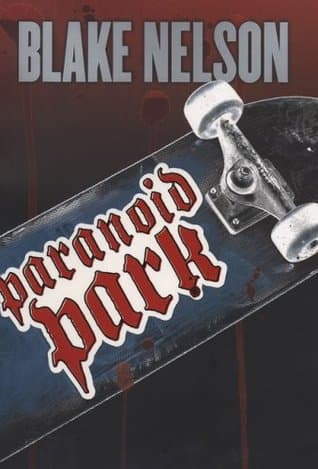
Blake Nelson (2006)
Genre
Thriller / Mystery / Young Adult
Reading Time
180 min
Key Themes
See below
Sign in to track this book
Haunted by an accidental death and the silent weight of his secret, a teenage skateboarder grapples with confessing or escaping the chilling consequences of a night at Paranoid Park.
The story begins with the narrator, a high school skateboarder, in his room, starting to write about a traumatic event from the previous summer. He explains he is writing it down because he feels he must record what happened. He mentions an incident at Paranoid Park, a skate spot known for an older, tougher crowd, which his friend Jared often urged him to visit. The narrator describes himself as quiet and observant, struggling with a secret, setting a serious, confessional tone.
The narrator tells how his friend Jared, a more rebellious skateboarder, kept pushing him to go to Paranoid Park. The park was known for its rougher feel and the older skaters who gathered there. The narrator was hesitant, feeling out of place among the 'street kids' and 'punkers.' Despite his doubts and unease about the park's reputation, he eventually gave in to Jared, wanting to fit in and try something new. This decision leads to the fateful night.
One night, after leaving Paranoid Park, the narrator and Jared decide to skateboard along the nearby train tracks. As they ride, two security guards confront them. One guard, large and aggressive, targets Jared, who quickly runs away. The narrator is left alone with the more intimidating guard, feeling fear and panic. The situation quickly goes from a trespassing warning to a physical fight, changing the narrator's life in moments.
During the confrontation, the security guard grabs the narrator. In terror, the narrator swings his skateboard, hitting the guard's head. The guard falls onto the train tracks just as a train approaches. The narrator, in shock, runs away, leaving his skateboard. He runs through the night, overwhelmed by what he has done, the train's horn echoing his guilt and fear. He goes home, trying to process the killing.
At home, the narrator immediately tries to hide what happened. He washes his clothes and shoes and gets rid of anything that might connect him to the scene, throwing his skateboard into the river. He tries to act normal, avoiding eye contact with his parents and keeping his routines. But his internal struggle is immense. He constantly thinks about the event, dealing with the fact that he killed someone and the terrifying chance of being found out.
News of the security guard's death quickly spreads, becoming a main topic for students and adults. The police start an investigation, questioning people and looking for clues. Flyers are posted, and local news reports discuss the death. The narrator is constantly tense, listening to every conversation, checking every newspaper, and watching every news report for any mention of the crime. The growing investigation increases his guilt and paranoia.
The narrator's secret affects his relationships. He struggles to connect with his girlfriend, Jennifer, who notices his quietness but thinks it is typical teenage angst or their recent breakup. He avoids Jared, the only other person there that night, fearing Jared might say something or that their shared experience could lead to them being discovered. His parents, focused on their own lives and separation, do not see his deep suffering, letting him retreat further into isolation.
The investigation gets more serious when Detective Lu, a calm police officer, comes to the narrator's high school. She specifically asks skaters about Paranoid Park and that night. The narrator is questioned, along with many friends. He stays calm, sticking to a lie and pretending to know nothing. The experience is terrifying, but he avoids suspicion, though the encounter leaves him more shaken and afraid of being caught.
The constant pressure of his secret and the ongoing investigation weigh on the narrator. He feels intense guilt, has nightmares, and feels very isolated. He thinks about confessing, even writing a letter about the event. He considers leaving it in a public place but decides against it. The fear of consequences, shame, and the disruption to his family is too much. He struggles with the moral question, torn between wanting catharsis and wanting to protect himself.
As the story ends, the narrator finishes writing his account. He thinks about the summer, how his life changed, and the lasting weight of his secret. The investigation eventually slows down, and he seems to have avoided legal trouble. But the experience has changed him forever. He is left with deep guilt and isolation, knowing a truth no one else does. He understands that while he may never be caught, he will always live with the memory of that night and the moral weight of his actions, a silent prisoner of his own conscience.
The Protagonist
He transforms from a relatively innocent teenager into a guilt-ridden individual, forever marked by his secret, learning to live with the profound consequences of his actions.
The Supporting
He remains relatively unchanged, continuing his rebellious lifestyle, unaware of the profound impact his actions had on his friend.
The Supporting
She serves as a mirror for the narrator's changing demeanor, eventually becoming an ex-girlfriend due to his inability to connect with her after the trauma.
The Supporting
She diligently pursues the case, narrowing down her focus to the skateboarding community, but ultimately does not solve the crime.
The Mentioned
His death is the inciting incident, and he serves as a constant, unseen presence through the narrator's guilt.
The Supporting
She remains largely unchanged, serving as a backdrop to the narrator's internal drama, unaware of his secret.
The Supporting
He remains largely unchanged, serving as a distant figure in the narrator's life.
The main theme of 'Paranoid Park' is the heavy burden of guilt and the results of an accidental act. The narrator's thoughts focus on his struggle to deal with causing a man's death, even if it was in self-defense. This guilt shows as paranoia, isolation, and constantly replaying the event, affecting his relationships and how he sees the world. The book shows how someone can avoid legal punishment for a crime but never escape the psychological and moral effects, making the narrator live with a self-imposed punishment.
“What I did was terrible. What I did was terrible. What I did was terrible. And I felt like a terrible person.”
The narrator's secret makes him very isolated. He cannot tell his friends, girlfriend, or family, leading to deep loneliness. The story shows how carrying such a heavy secret creates a barrier between him and everyone else, making real connection impossible. Even when with people, he feels completely alone, trapped in his mind. This theme highlights the psychological cost of secrecy and how it can separate someone from their support system, even when that system does not know the real reason for the distance.
“I felt like I was acting all the time. Like I was in a play, and everyone else was just watching me.”
The book looks at the complex moral problem the narrator faces: confessing and facing legal consequences, or living with the secret. The killing was accidental and in self-defense, blurring the lines between right and wrong. The story makes the reader think about justice and morality, especially when a bad outcome comes from a moment of terror. The narrator's struggle to justify his actions, or at least understand them, shows the grey areas of human behavior and how hard it is to make absolute moral judgments in extreme situations.
“Should I tell? Should I not tell? It was all I could think about.”
The story shows how the narrator quickly loses his innocence. Before the incident, he was a typical, thoughtful teenager. The accidental death shatters his youthful view, replacing it with a grim understanding of death, consequences, and the ability for violence, even unintentional. His experiences at Paranoid Park, a place linked to rebellious youth, hint at this loss. The story shows how one traumatic event can change someone's view of themselves and the world, forcing a premature encounter with life's darker parts.
“That night, I felt like I stopped being a kid.”
The entire story is told as a direct, internal confession from the protagonist.
The novel is structured as a first-person narrative, presented as the protagonist writing down his story. This 'confessional' style allows for deep psychological insight into the narrator's guilt, paranoia, and internal struggles. The reader is privy to his unfiltered thoughts, anxieties, and moral dilemmas, creating a strong sense of intimacy and immediacy. This device emphasizes the narrator's isolation, as he is writing for himself, unable to share his burden with anyone else in his life. It also builds suspense as the reader anticipates the revelation of the full truth.
The plot unfolds through fragmented memories and shifts in time.
While the core event is a single night, the narrative is not strictly linear. The narrator frequently shifts between recounting the events of 'that night' and his current state of mind, jumping back and forth through time. This fragmented structure mirrors the protagonist's fractured mental state and his obsessive replaying of the traumatic memory. It also serves to build suspense, as details are revealed gradually, piece by piece, reflecting how he processes and grapples with the truth over time rather than a straightforward recounting of facts.
The skate park symbolizes danger, transgression, and the loss of innocence.
Paranoid Park is more than just a location; it functions as a powerful symbol. It represents a liminal space, a place where the narrator crosses from his safe, mundane life into a world of danger, rebellion, and ultimately, tragedy. The park's name itself evokes the paranoia that consumes the protagonist after the incident. It symbolizes the allure of forbidden experiences and the consequences that can arise from venturing into unknown, riskier territories, acting as a crucible for the narrator's transformation.
The skateboard transforms from a tool of freedom to an instrument of death.
Initially, the skateboard symbolizes freedom, self-expression, and a connection to youth culture for the narrator. However, in the pivotal moment, it transforms into a weapon, an instrument of accidental death. This shift highlights the abrupt loss of innocence and the unforeseen consequences of everyday objects in extreme circumstances. The narrator's subsequent disposal of the skateboard into the river symbolizes his attempt to sever ties with the event and his former self, but also his inability to truly escape the memory of what it became.
“I used to think that there was something called a ‘skate rat’ and that they were all the same. But it’s not true. Everybody is different.”
— Alex reflecting on the diverse group of skaters at Paranoid Park.
“When you’re a kid, you think you’re invincible. You think you can get away with anything.”
— Alex's internal monologue about youthful arrogance and the consequences of actions.
“The worst part wasn’t the blood, or the fear, or the cold. It was the silence.”
— Alex recalling the immediate aftermath of the accidental killing.
“I started writing this down because I wanted to remember everything. And because I wanted to forget it.”
— Alex explaining his motivation for journaling the events.
“It’s funny how one stupid decision can change your whole life.”
— Alex contemplating the ripple effect of his actions.
“Paranoid Park was a place where you could be yourself, or at least a version of yourself you wanted to be.”
— Describing the allure and freedom of Paranoid Park for skaters.
“I don’t know why I did it. I just reacted.”
— Alex struggling to understand his own impulsive actions.
“The secret was like a weight in my stomach, growing heavier every day.”
— Alex describing the psychological burden of keeping his secret.
“Sometimes you just have to keep going, even when you don’t know where you’re going.”
— Alex's reflection on resilience and uncertainty.
“You can’t outrun your past, no matter how fast you skate.”
— Alex realizing the inescapable nature of his actions.
“The detective looked at me like he knew everything, even though he didn't.”
— Alex's paranoia during an interrogation.
“I wanted to confess, to scream it out, but the words just wouldn't come.”
— Alex's internal struggle with the desire to confess and the inability to do so.
“It was a mistake, a terrible, horrible mistake, and I would have to live with it forever.”
— Alex accepting the permanence of his tragic error.
“Paranoid Park was more than just a skate park; it was a state of mind.”
— Alex reflecting on the symbolic significance of the park.
“The truth felt like a loose tooth, something I wanted to get rid of but was scared to touch.”
— Alex's metaphor for the painful and difficult truth he carries.
Ready to see how well you understood this book? Take our interactive quiz with 10 questions.







