“The love that moves the sun and the other stars.”
— The final line of the entire Divine Comedy, summarizing the ultimate force of the universe.

Dante Alighieri (1595)
Genre
Fantasy / Spirituality / Philosophy
Reading Time
1200 min
Key Themes
See below
Sign in to track this book
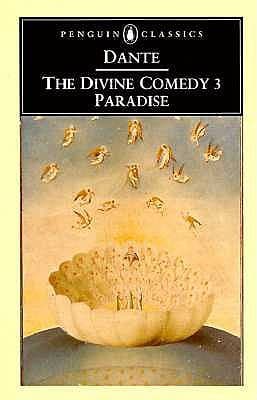
Dante, guided by Beatrice, journeys through Heaven's spheres, grappling with divine love, free will, and God's universe in a quest for spiritual understanding.
After leaving Purgatory, Dante, guided by Beatrice, rises to the Empyrean. The first celestial sphere they reach is the Moon, known for its changing light. Dante initially believes this is due to different densities. Beatrice explains the true nature of celestial order and divine will. They meet souls who, through no fault of their own, were forced to break monastic vows, such as Piccarda Donati, a nun abducted from her convent, and Empress Constance, forced into marriage. Piccarda explains that their happiness in a lower sphere of Heaven comes from their complete acceptance of God's will. She stresses that true happiness means desiring only what God grants.
The travelers ascend to Mercury, which is brighter and moves faster than the Moon. This sphere holds souls who, though good, sought earthly fame and honor, which slightly lessened their charity. Here, Dante meets the Roman Emperor Justinian, who tells the history of the Roman Empire and the meaning of the Imperial Eagle, tracing its divine authority from Aeneas to Charlemagne. Justinian also criticizes the Guelphs and Ghibellines for misusing the imperial symbol. He highlights God's plan for humanity and the importance of justice, while Beatrice further explains free will and divine justice in relation to human actions.
In the intensely glowing sphere of Venus, Dante meets souls deeply moved by earthly love, sometimes excessively, but who ultimately directed their love toward God. Among them are Cunizza da Romano, known for her passionate life, who expresses joy in her divine place despite her past, and Folquet de Marseille, a troubadour who became a Cistercian abbot. Folquet points out Rahab and discusses Florence's corrupt state and the clergy's greed, especially the Pope's focus on earthly wealth over spiritual guidance. Beatrice clarifies divine love and its various forms, explaining how even earthly love can lead to divine love if properly guided.
The fourth sphere, the Sun, contains the great Doctors of the Church and those who enlightened the world with wisdom. Here, Dante is encircled by two rings of twelve glowing spirits. The first circle includes St. Thomas Aquinas, who introduces his companions, such as Albertus Magnus, Gratian, Peter Lombard, Solomon, and Dionysius the Areopagite. Aquinas praises St. Francis and criticizes corruption within the Dominican order. The second circle is led by St. Bonaventure, who praises St. Dominic and, in turn, criticizes the Franciscan order, showing how different spiritual paths coexist in Heaven. They discuss deep theological questions, including creation and Solomon's wisdom.
Ascending to the red sphere of Mars, Dante sees a magnificent cross formed by the souls of warrior saints, glowing with intense light and singing. This is the sphere of those who fought for faith and died as martyrs. From this cross, Dante's ancestor, Cacciaguida, a crusader knight, descends and speaks to him. Cacciaguida describes Florence's noble and virtuous past, comparing it to its current moral decay and divisions. He foretells Dante's exile from Florence and encourages him to bravely tell the truth about his journey and what he has seen in the afterlife, despite the coming difficulties. This meeting strengthens Dante's resolve and understanding of his prophetic task.
In the brilliant white sphere of Jupiter, the souls of just rulers arrange themselves into letters, forming the Latin phrase 'DILIGITE IUSTITIAM QUI IUDICATIS TERRAM' ('Love justice, ye that judge the earth'). After forming the 'M' for Monarchy, the souls then come together into the shape of an imperial eagle, which speaks with a single voice, representing the collective wisdom and justice of the righteous. The Eagle condemns corrupt rulers and expresses a desire for true justice on Earth. It questions the limits of human understanding regarding divine justice, especially concerning those born in non-Christian lands, stressing that God's ways are beyond human comprehension but faith and good works are important.
The ascent continues to the golden sphere of Saturn, home to contemplative souls who dedicated their lives to prayer and meditation. Here, Dante sees a golden ladder ascending into the Empyrean, symbolizing the contemplative path. Among these silent, intensely glowing souls is St. Peter Damian, who speaks of the fleeting nature of earthly honors and the Church's corrupt state, criticizing the luxurious lives of prelates compared to the simple lives of earlier saints. He also discusses the deep mystery of divine predestination, emphasizing the limits of human reason in understanding God's ultimate plan, and the importance of humility before divine will.
In the sphere of the Fixed Stars, Dante and Beatrice arrive at the constellation of Gemini, Dante's birth sign. Here, he is tested on the three theological virtues: Faith, Hope, and Charity. St. Peter questions him on Faith, St. James on Hope, and St. John on Charity. Dante explains his understanding of each virtue, passing the tests with Beatrice's encouragement. After this, Dante sees the glorious Triumph of Christ and the Virgin Mary, a dazzling display of light and joy. St. Peter warns him about corruption within the Papacy, particularly concerning Boniface VIII, and the need for Church reform.
From the Fixed Stars, Dante and Beatrice ascend to the Primum Mobile, the fastest-moving sphere, which gives motion to all other spheres. This sphere is defined not by stars but by God's direct presence of love and power. Here, Dante sees a point of intense light surrounded by nine revolving rings of fire, representing the angelic hierarchies: Seraphim, Cherubim, Thrones, Dominions, Virtues, Powers, Principalities, Archangels, and Angels. Beatrice explains the order and function of these angelic choirs, how divine love moves them, and how they govern the celestial spheres, revealing the complex structure of the cosmos and its spiritual governance.
Finally, Dante enters the Empyrean, God's abode and all the blessed, which is pure intellectual light and love, beyond time and space. Here, Beatrice transforms into her ultimate radiant form, and St. Bernard of Clairvaux becomes Dante's guide, as Beatrice returns to her seat in the Celestial Rose. Dante sees the vast, multi-tiered Celestial Rose, made of countless blessed souls, arranged in concentric circles. He sees Mary, the Queen of Heaven, surrounded by angels and saints. St. Bernard, a mystic devoted to the Virgin Mary, guides Dante's contemplation, preparing him for the ultimate vision of God.
With St. Bernard's guidance and Mary's help, Dante's vision clarifies, allowing him to see God's ultimate mystery. He sees the Divine Light, a single point containing all creation. Within this light, he discerns three distinct circles of equal size, yet different in color, representing the Holy Trinity. He then sees, within one of these circles, a human form, symbolizing Christ's Incarnation. Dante struggles to fully grasp how human and divine natures unite, but in a moment of grace, his intellect gains complete understanding, though he cannot put it into words. His will is now perfectly aligned with God's love, completing his journey.
The Protagonist
Dante transforms from a bewildered seeker to a divinely enlightened visionary, having his will perfectly aligned with God's love.
The Spiritual Guide
Beatrice evolves from a human beloved to a fully realized embodiment of divine wisdom, leading Dante to the threshold of God's presence.
The Final Guide
St. Bernard facilitates Dante's final spiritual leap, moving him beyond intellectual understanding to direct mystical vision.
The Supporting
Piccarda exemplifies the serene acceptance of divine will, demonstrating that true happiness is independent of one's celestial rank.
The Supporting
Justinian, having achieved earthly fame, demonstrates how such ambition can be redeemed and aligned with divine purpose.
The Supporting
Cacciaguida provides Dante with a sense of ancestral pride and confirms his divinely appointed task as a truth-teller.
The Supporting
Aquinas, a paragon of intellectual and spiritual wisdom, guides Dante through complex theological concepts, showing the harmony of faith and reason.
The Supporting
St. Peter Damian provides a stark contrast between divine simplicity and earthly corruption, affirming the value of contemplative life.
The Mentioned
Mary represents the apex of divine grace and intercession, enabling Dante's ultimate spiritual achievement.
The entire journey through Paradiso is driven by and ends with the understanding and experience of Divine Love. Beatrice, as Dante's guide, shows this love; her beauty and radiance grow with each sphere, reflecting God's increasing presence. The souls in Heaven are not just content, but actively joyful in their love for God and His will, regardless of their celestial rank, as shown by Piccarda Donati in the Moon. Dante's ability to ascend and see the divine light comes directly from God's grace, ending in his final vision where his will perfectly aligns with the love that moves the sun and other stars.
“The Love that moves the sun and the other stars.”
Throughout Paradiso, Dante tries to understand God's justice, especially how individuals are placed in specific spheres and how divine will works in the world. Beatrice explains in detail, such as why souls like Piccarda are content in lower spheres, and how free will interacts with predestination. The discussion with the Imperial Eagle in Jupiter explores the mystery of divine justice concerning those born without knowledge of Christ, emphasizing that God's ways are beyond human understanding but always right. This theme explores the harmony and order of the universe under God's perfect rule, even when it seems confusing to human understanding.
“Eternal Providence has so disposed, that deep within its counsel lies concealed all finite mind has power to apprehend.”
Even in Heaven, the souls often speak of the moral decay and corruption on Earth, especially within the Church and political institutions. Folquet de Marseille in Venus criticizes the Papacy's greed, focusing on earthly wealth over spiritual guidance. St. Peter Damian in Saturn criticizes the luxurious lives of prelates, contrasting them with the simple lives of earlier saints. Cacciaguida in Mars foretells Dante's exile due to Florentine divisions and corruption, urging him to speak truth to power. This theme highlights Dante's political and religious criticisms, suggesting that humanity's departure from divine order leads to chaos and injustice, and reinforces his prophetic task.
“Your Rome, that made the world good, used to have two suns; these made two paths, the world's and God's, appear. Now one has quenched the other.”
Dante's journey is both intellectual and spiritual. He constantly asks Beatrice and the blessed souls about theological doctrines, how the cosmos works, and the nature of salvation. The sphere of the Sun, with wise theologians like St. Thomas Aquinas and St. Bonaventure, explicitly celebrates intellectual and spiritual wisdom. Beatrice's explanations cover complex topics from the influence of the stars to the nature of angelic hierarchies. This theme stresses the value of seeking truth through both faith and reason, ending in Dante's ultimate intellectual and spiritual understanding of the Divine Light.
“O Light eternal, that alone abidest in Thyself, alone dost understand Thyself, and by Thyself art understood and understanding, lovest and smilest on Thyself!”
The climax of Paradiso is Dante's achievement of the Beatific Vision, the direct, unmediated sight of God. This theme explores mystical experience, where human intellect and language cannot describe the divine. Dante's vision moves from seeing the Trinity's unity to understanding the Incarnation, a moment of deep spiritual ecstasy and ultimate comprehension. This experience goes beyond earthly knowledge, representing the spiritual journey's ultimate goal—a perfect union of the soul with God, where the individual will fully aligns with divine love.
“My mind, quite overcome, was there in ecstasy. But like a flash, a light struck my intelligence, and then my will was granted what it wished.”
Beatrice embodies divine wisdom, theology, and grace, guiding Dante through Heaven.
Beatrice's role extends beyond a loved woman; she is a complex allegory for divine wisdom, theology, and God's grace. Her increasing radiance and beauty with each celestial sphere symbolize the intensifying presence of God's love and truth. She serves as the primary expositor of theological doctrines, cosmology, and divine justice, translating the ineffable into comprehensible terms for Dante. Her guidance is essential for Dante's intellectual and spiritual ascent, demonstrating that human reason, when illuminated by divine revelation, can approach the mysteries of God, ultimately preparing him for the direct vision of the Divine.
The nine concentric spheres of Heaven, each representing a different aspect of divine influence and housing specific types of blessed souls.
Dante employs the Ptolemaic model of the universe, with Earth at the center and nine concentric celestial spheres revolving around it, culminating in the Empyrean. Each sphere—Moon, Mercury, Venus, Sun, Mars, Jupiter, Saturn, Fixed Stars, and Primum Mobile—is associated with specific virtues, types of blessed souls, and angelic hierarchies. This structure provides a systematic framework for Dante's spiritual education, allowing for a gradual ascent in understanding and proximity to God. The movement, light, and symbolic inhabitants of each sphere contribute to the narrative's progression and its theological exposition, creating a hierarchical and ordered vision of the cosmos.
Light is the primary visual and symbolic representation of God, divine love, and spiritual understanding.
Throughout Paradiso, light is the pervasive and most significant metaphor for divinity. As Dante ascends through the spheres, the light intensifies, symbolizing the increasing proximity to God and the clarity of spiritual understanding. The souls in Heaven are themselves luminous, glowing with varying degrees of light that reflect their charity and grace. The ultimate vision of God in the Empyrean is described as pure, intellectual light, which contains all creation. Light not only serves as a visual element but also as a direct manifestation of God's presence, love, and the illuminating power of truth, culminating in the dazzling, inexpressible Beatific Vision.
The blessed souls, particularly Cacciaguida, prophesy Dante's future exile and his divinely appointed mission to reveal the truths of his journey.
Several souls in Paradiso, most notably Dante's ancestor Cacciaguida, deliver prophecies regarding Dante's impending exile from Florence and the hardships he will face. More importantly, these prophecies validate his divinely appointed mission: to write the Commedia and reveal the truths of the afterlife to humanity. This device serves to underscore the epic's historical context, elevate Dante's personal suffering to a universal spiritual significance, and imbue his narrative with prophetic authority, emphasizing the importance of his work as a moral and spiritual guide for his contemporaries and future generations.
“The love that moves the sun and the other stars.”
— The final line of the entire Divine Comedy, summarizing the ultimate force of the universe.
“In His will is our peace.”
— Spoken by Piccarda Donati in the Heaven of the Moon, explaining the blessedness of conforming to God's will.
“O grace abounding, wherein I presumed to fix my gaze on the Eternal Light so long that I consumed my sight therein!”
— Dante's awe and wonder at directly perceiving God in the Empyrean.
“From this point on, my vision was too great for language to recall.”
— Dante's struggle to describe the ineffable vision of God, emphasizing its transcendence.
“For the mind, which gazes on the truth, has no power to err.”
— Spoken in the Heaven of the Sun, discussing the intellect's capacity to perceive truth.
“The greater the perfection, the greater the feeling, whether for good or ill.”
— From the Heaven of Mercury, explaining how the capacity for feeling intensifies with spiritual development.
“Look to the height of your desire, for you are now so near the ultimate salvation that you should have clear eyes.”
— Beatrice's encouragement to Dante as they approach the Empyrean, urging him to focus on God.
“He who would truly know, must learn to fly with the wings of desire.”
— A metaphor for the need for spiritual longing and aspiration to achieve divine knowledge.
“Never did the sun more quickly rise and set than did the turning of my mind from one thing to another.”
— Dante describing the rapid succession of new visions and understanding in the higher heavens.
“To turn one's back on Him whose will is all, is to refuse the light.”
— A warning about the consequence of rejecting God's will, equating it with spiritual darkness.
“The glory of Him who moves all things penetrates and shines throughout the universe in one part more and in another less.”
— The opening lines of Paradiso, establishing the omnipresence of God's glory.
“The nature of the universe, which holds its peace when it is at one with God.”
— From the Heaven of Saturn, reflecting on the cosmic harmony achieved through alignment with the divine.
“O eternal light, that alone resides in self, alone understands self, and by self understood, self-understanding, loves and smiles!”
— Dante's direct address to God, emphasizing the Trinity and God's self-sufficient love.
“And my desire and will were turning already, like a wheel in even motion, by the love that moves the sun and the other stars.”
— The penultimate lines, showing Dante's will perfectly aligned with divine love.
Ready to see how well you understood this book? Take our interactive quiz with 10 questions.
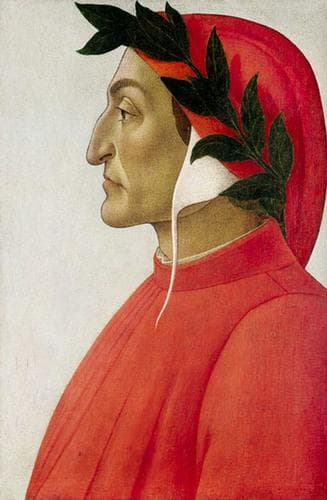
Dante Alighieri, most likely baptized Durante di Alighiero degli Alighieri and often referred to as Dante, was an Italian poet, writer and philosopher. His Divine Comedy, originally called Comedìa and later christened Divina by Giovanni Boccaccio, is widely considered one of the most important poems of the Middle Ages and the greatest literary work in the Italian language.







