BookBrief
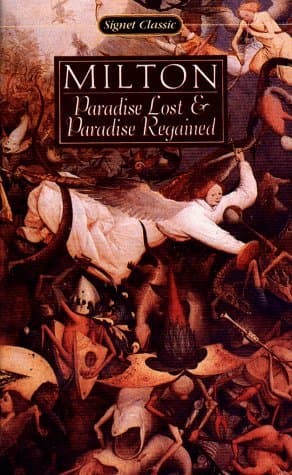
Paradise Lost and Paradise Regained cover
Archivist's Choice

Paradise Lost and Paradise Regained

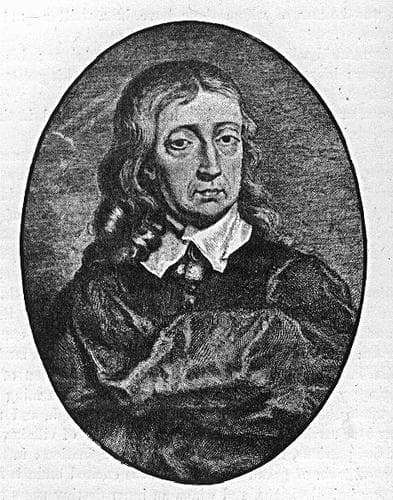
John Milton (1667)

Genre

Fantasy / Spirituality / Philosophy

Reading Time

1200 min

Key Themes

See below

Track Your Reading

Sign in to track this book

In an epic battle across Heaven, Hell, and Earth, Satan's vengeful rebellion against God ensnares Adam and Eve in a tragic story of temptation, fall, and the cost of their human love.

Synopsis

John Milton's "Paradise Lost" and "Paradise Regained" tell the biblical epic of humanity's fall and redemption. "Paradise Lost" starts with Satan's rebellion in Heaven and his banishment to Hell. Driven by pride and a desire for revenge, Satan and his fallen angels build Pandemonium and plan to corrupt God's newest creation: humanity. Satan travels to Earth, where Adam and Eve live in innocence in the Garden of Eden. Despite warnings from the archangel Raphael, Eve is tempted by Satan (disguised as a serpent) and eats from the Tree of Knowledge. Adam, out of love for Eve, chooses to share her fate and also eats the forbidden fruit. Their disobedience brings sin and death into the world, leading to their expulsion from Paradise, but God offers a promise of future redemption through the Son. "Paradise Regained" then focuses on Christ's temptation in the wilderness, presenting him as the "second Adam." Satan tries to tempt Christ with comforts, power, and glory, but Christ resists each temptation through his faith and knowledge of scripture. Unlike Adam, Christ triumphs over Satan, showing humanity's capacity for righteousness and paving the way for salvation.
Reading time
1200 min
Difficulty
Hard
Pacing
Slow
Mood
Epic, Philosophical, Grand, Meditative, Theological
✓ Read this if...
You are interested in epic poetry, biblical narratives, theological debates, or the origins of Western literary archetypes, and enjoy challenging, dense prose.
✗ Skip this if...
You prefer modern, fast-paced narratives, are averse to religious themes, or find archaic language and complex sentence structures daunting.

Plot Summary

The Fall of Satan and His Rebellion

The epic opens with Satan and his legions of fallen angels awakening in the fiery abyss of Hell, having been defeated in a celestial war against God. Satan, once a prominent archangel named Lucifer, is filled with pride and a strong will to defy God. He gathers his dejected followers, including Beelzebub, Moloch, Belial, and Mammon, reminding them of their former glory and urging them to continue their rebellion, not through direct combat, but through 'guile and fraud.' They decide to build Pandemonium, a grand palace in Hell, to serve as their capital and council chamber, where they will plan their next move against God.

Pandemonium and the Grand Council

Inside the newly built Pandemonium, the fallen angels hold a grand council. Different demons suggest various strategies: Moloch advocates for open warfare, despite their recent defeat; Belial argues for inaction, fearing more punishment; Mammon suggests focusing on building a kingdom in Hell, separate from Heaven. Satan, however, through his persuasive words, guides the debate toward a more subtle plan: to target God's newly created world and its inhabitants, humankind. He learns of a prophecy about a new creation and proposes to corrupt it, thereby harming God's perfect design and asserting their own power through destruction.

Satan's Journey to Earth

Satan volunteers to make the dangerous journey alone through Chaos, the void separating Hell from Heaven and the new creation. He encounters Sin, his daughter who sprang from his head, and Death, his son, born of his union with Sin. Sin and Death guard the gates of Hell and build a bridge connecting Hell to Earth after Satan's successful journey, allowing future access for the fallen angels. Satan's journey is hard, full of dangers and the vast, shapeless expanse of Chaos, but his resolve to get revenge on God drives his relentless passage toward the human world.

God's Foreknowledge and the Son's Sacrifice

Meanwhile, in Heaven, God observes Satan's progress and foresees the coming Fall of Man. He laments humanity's future sin but emphasizes that their fall will be due to their own free will, not divine predetermination. God declares that justice demands a sacrifice to make up for humanity's sin, and only a being of infinite worth can pay the price. The Son of God, filled with love and compassion, volunteers to descend to Earth, take on human form, and offer himself as the ultimate sacrifice, thereby redeeming mankind and upholding divine justice and mercy.

Paradise Described and Raphael's Warning

Satan arrives on Earth, disguised as a lesser angel, and marvels at the beauty of Paradise, the Garden of Eden. He finds Adam and Eve, the first humans, living in innocence, tending to the garden and enjoying a harmonious relationship with each other and their Creator. God, in His mercy, sends the archangel Raphael to Eden to warn Adam and Eve about Satan's presence and his evil intent. Raphael recounts the story of Satan's rebellion in Heaven, explaining the importance of obedience to God's single command: not to eat from the Tree of Knowledge of Good and Evil, which is in the center of the Garden.

The Temptation of Eve

Satan, observing Adam and Eve's innocent life, plans to separate them, believing Eve to be more vulnerable. He finds Eve alone, after she convinced Adam to let her work separately in the garden. Disguised as a serpent, Satan approaches Eve and, using flattery and deceptive arguments, questions God's reasons for forbidding the fruit. He claims that God fears humanity becoming His equals and that eating the fruit will grant them divine knowledge. Eve, swayed by the serpent's words and the allure of forbidden wisdom, gives in to the temptation.

The Fall of Adam

After eating the forbidden fruit, Eve, initially feeling a surge of new, though false, knowledge and power, rushes to find Adam. She presents him with the fruit, describing its supposed benefits and urging him to partake. Adam, horrified by her sin, is torn between his love for Eve and his loyalty to God. Despite knowing the dire consequences, his overwhelming love for Eve and the fear of being separated from her in their fallen state leads him to consciously choose to eat the fruit. This act seals humanity's fate, bringing sin and death into the world.

Immediate Consequences and Shame

Immediately after eating the fruit, Adam and Eve's eyes are opened, but not to divine knowledge. Instead, they experience shame, guilt, and a loss of their innocent nakedness. They quickly make fig leaves to cover themselves. Their pure love is replaced by lust, and their harmonious relationship turns into mutual blame. They hear God walking in the Garden and try to hide, a stark contrast to their previous joyful communion with Him. Their perfect peace is shattered, and they realize the error of their disobedience.

God's Judgment and the Promise of Redemption

God confronts Adam and Eve in the Garden. Adam blames Eve, and Eve blames the serpent. God pronounces judgment upon them: Adam will work the earth, Eve will experience pain in childbirth and be subject to her husband, and the serpent will crawl on its belly and be cursed. However, amidst this judgment, God also offers a glimmer of hope: He prophesies that the seed of the woman will bruise the serpent's head, foreshadowing the future coming of the Son as the Redeemer. This prophecy introduces the idea of divine grace and the ultimate triumph over sin and death.

Vision of the Future and Expulsion from Paradise

The archangel Michael is sent to escort Adam and Eve out of Paradise. Before their departure, Michael grants Adam a vision of future human history, including the consequences of their sin: murder (Cain and Abel), war, disease, and the eventual Great Flood. However, he also reveals the lineage leading to the Messiah, the Son of God, who will ultimately redeem humanity. This vision gives Adam a broader understanding of God's plan and the hope for salvation. Finally, Adam and Eve are cast out of the Garden of Eden, which is then guarded by a flaming sword, marking the end of their innocent life.

Paradise Regained: The Temptation of Christ

After his baptism by John the Baptist, Jesus Christ is led by the Spirit into the wilderness, where he fasts for forty days and forty nights. Satan, recognizing Christ as the Son of God and the prophesied 'seed of the woman' who will bruise his head, sees an opportunity to thwart God's plan for humanity's redemption. He resolves to tempt Christ, hoping to make him fall as Adam did, thereby proving humanity's inherent weakness and God's plan flawed. Satan believes that if he can corrupt Christ, he can maintain his dominion over mankind.

First Temptation: Bread from Stones

Satan first approaches Christ disguised as an old man, pretending concern for his long fasting. He challenges Christ to prove his divinity by turning stones into bread, appealing to his physical hunger and suggesting that a true Son of God would not suffer such basic human needs. Christ, however, rejects Satan's temptation, quoting scripture: 'Man lives not by bread alone, but by every word that proceeds from the mouth of God.' He shows his faith and spiritual resolve, choosing obedience to God over immediate satisfaction of bodily desires.

Second Temptation: Worldly Power and Glory

Satan then takes Christ to a high mountain, showing him all the kingdoms and glories of the world. He offers Christ immediate worldly power and rule over these empires, promising to make him a great earthly king, if Christ will only bow down and worship him. This temptation challenges Christ's divine mission and his understanding of true kingship. Christ again resists, proclaiming that only God is to be worshipped, and that his kingdom is not of this world, but a spiritual one, to be established through suffering and sacrifice, not through worldly conquest or compromise with evil.

Third Temptation: The Pinnacle of the Temple

Finally, Satan takes Christ to the pinnacle of the Temple in Jerusalem and tempts him to cast himself down, citing scripture that angels would bear him up, thus proving his divine protection and forcing God to intervene. This is a subtle and dangerous temptation, appealing to presumption and a misuse of faith. Christ, however, refuses to put God to the test, quoting, 'Thou shalt not tempt the Lord thy God.' He shows humility and trust in God's will, refusing to seek spectacle or force divine intervention for personal glory or to satisfy Satan's challenge.

Christ's Victory and Return

Having failed in all his attempts, Satan is defeated and humiliated. Angels descend to care for Christ, bringing him food and celebrating his victory. Christ's obedience, humility, and faith contrast sharply with Adam's fall, showing how humanity, through divine grace and rightly exercised free will, can overcome temptation. Christ's triumph in the wilderness symbolizes the 'Paradise Regained' – not a return to a physical Eden, but the restoration of humanity's spiritual relationship with God through the perfect example and future sacrifice of the Son. He returns to his mother, having successfully withstood the ultimate test.

Principal Figures

Satan

The Antagonist

Satan's arc is one of consistent degradation and increasing isolation, as his initial grandeur in rebellion gives way to petty malice and ultimate defeat, particularly against Christ.

God (The Father)

The Protagonist/Divine Authority

God's character remains constant as the embodiment of perfect justice and mercy, His divine plan unfolding despite defiance.

The Son (Jesus Christ)

The Protagonist/Redeemer

The Son's arc highlights his pre-ordained role as humanity's redeemer, culminating in his perfect victory over temptation, setting the path for salvation.

Adam

The Protagonist

Adam moves from innocent bliss and rational superiority to a state of fallen regret, ultimately finding hope and a deeper understanding of God's grace and his own role in a fallen world.

Eve

The Protagonist

Eve experiences a transition from innocent beauty to a state of deceived vulnerability, ultimately finding strength in shared suffering and hope with Adam.

Raphael

The Supporting

Raphael's arc is limited to his mission as a divine messenger, fulfilling his duty to warn and instruct.

Michael

The Supporting

Michael's role transitions from a warrior of divine justice to a compassionate guide, revealing future hope.

Beelzebub

The Supporting

Beelzebub's arc is static, serving as a steadfast, albeit equally fallen, supporter of Satan's rebellion.

Sin

The Supporting

Sin's role is to embody the expanding corruption and consequences of Satan's actions, culminating in her and Death's dominion over Earth after the Fall.

Death

The Supporting

Death's arc mirrors Sin's, expanding his dominion as a direct consequence of the Fall, becoming a constant presence in the human world.

Themes & Insights

Free Will vs. Predestination

A central theological debate, Milton explores humanity's free will in choosing obedience or disobedience to God. While God is all-knowing and foresees the Fall, He consistently states that Adam and Eve are free to choose, and their sin is not predetermined. Satan, conversely, often blames his fate on God, refusing to acknowledge his own choices. The Son's voluntary sacrifice further highlights the power of choice, as he freely chooses to redeem humanity. This theme is clear in God's pronouncements to the Son in Book III and Raphael's warnings to Adam in Books V-VIII, emphasizing that reason and choice are God's greatest gifts, making true obedience meaningful.

For so I formed them free, and free they must remain, / Till they enthrall themselves: I else must change / Thir nature, and revoke the high decree / Unchangeable, eternal, which ordained / Thir freedom, they themselves ordained thir fall.

God (Book III)

Obedience and Disobedience

The entire epic is about obedience to divine law. Satan's initial rebellion comes from his disobedience to God's authority and his refusal to accept the Son's exaltation. Adam and Eve's fall is a direct result of their single act of disobedience concerning the Tree of Knowledge. Milton contrasts this with the perfect obedience of the Son, who willingly submits to the Father's will even unto death. The consequences of disobedience are catastrophic, leading to suffering, death, and expulsion, while obedience is presented as the path to true freedom and harmony with the divine order. 'Paradise Regained' specifically shows Christ's perfect obedience in resisting temptation.

Of Man's First Disobedience, and the Fruit / Of that Forbidden Tree, whose mortal taste / Brought Death into the World, and all our woe, / With loss of Eden, till one greater Man / Restore us, and regain the blissful Seat.

Narrator (Book I)

Pride and Humility

Pride is the root of all evil in the poem. Satan's overwhelming pride, his refusal to humble himself before God and the Son, leads to his rebellion and damnation. He seeks to be 'equal to the most High' and resents any form of subservience. This contrasts with the Son's humility, who, despite his divine equality with the Father, willingly humbles himself to become human and suffer for mankind. Adam and Eve's fall is also subtly influenced by a desire for knowledge (a form of intellectual pride) and Eve's vanity when flattered by Satan. Christ's humility in 'Paradise Regained,' refusing to seek worldly glory or test God, directly counters Satan's pride.

Better to reign in Hell than serve in Heav'n.

Satan (Book I)

The Nature of Good and Evil

Milton explores evil not as an independent force, but as a perversion or absence of good. Satan initially presents evil as a heroic struggle for liberty, but his actions consistently show its destructive and self-defeating nature. Good, conversely, is associated with order, reason, love, and obedience to God. The temptation in Eden reveals how evil can pretend to be good (e.g., the promise of knowledge). The poem ultimately affirms that true good is found in harmony with God's will and that evil, while powerful in its destructive capacity, is ultimately subordinate to divine power and destined for defeat, as seen in Christ's triumph.

Evil into the mind of God or Man / May come and go, so unapproved, and leave / No spot or blame behind: Which gives him stronger proof / That he can freely choose, and still remain / His own firm master, not a slave to sense.

Raphael (Book V)

Redemption and Divine Grace

Despite the tragic Fall of Man, the poem is ultimately one of hope and divine grace. God, in His infinite mercy, immediately provides a path to redemption through the Son's voluntary sacrifice. This promise is repeated throughout, from God's initial pronouncements in Heaven to Michael's prophetic visions for Adam. 'Paradise Regained' explicitly fulfills this theme, showing the Son's triumph over temptation as the first step in humanity's restoration. It shows that while humanity has fallen, they are not forsaken, and a greater 'Paradise' – a spiritual one – is attainable through faith and the Redeemer.

And I will place within them as a guide / My umpire Conscience, whom if they will hear, / Light after light, undoubtedly will lead them / From call to call, to perfect bliss.

God (Book III)

Love and Lust

Milton contrasts the pure, innocent love between Adam and Eve before the Fall with the debased, lustful passion that arises after their sin. Their original love is characterized by mutual respect, shared intellect, and spiritual harmony. After eating the fruit, their eyes are opened to lust and shame, leading to blame and discord. This transformation illustrates how sin corrupts even the most sacred human bonds. The Son's divine love, however, is presented as the ultimate, selfless form of love, willing to sacrifice all for the sake of others, providing a stark contrast to the corrupted human form.

So to the nuptial Bow'r I led her blushing like the Morn, / All Heav'n, and happy Constellations on / The Bridal day, with friendly Twinkling Star / Sent forth thir light, from the pure limits of the East, / And Hymen all his Lamps about him burn'd.

Adam (Book VIII)

Plot Devices & Literary Techniques

Epic Simile

Extended comparisons used to elevate the subject matter and provide vivid imagery.

Milton frequently employs lengthy, elaborate similes, often drawing from classical literature, mythology, and natural phenomena, to describe characters, scenes, and actions. For example, Satan's shield is compared to the moon, and his spear to a mast. These similes not only enhance the grand scale of the narrative but also deepen the reader's understanding of the characters' power, emotions, or the vastness of the settings, making the abstract concepts of Heaven and Hell more tangible. They serve to elevate the English language to the level of classical epic poetry.

In Medias Res

The narrative begins in the middle of the action, with crucial backstory revealed later.

Milton opens 'Paradise Lost' with Satan and his fallen angels already in Hell, having been defeated in the war against God. The reader is immediately thrust into the aftermath of the celestial conflict. The events leading up to this point – Satan's rebellion, the war in Heaven, and the creation of Earth – are later recounted through flashbacks, primarily by Raphael to Adam. This technique creates immediate dramatic tension and allows Milton to reveal information strategically, building suspense and providing context as the story progresses.

Divine Machinery

The direct intervention of gods or supernatural beings in the plot.

The plot is heavily driven by the actions and decisions of divine and supernatural beings. God directly orchestrates events, sends angels like Raphael and Michael to interact with humans, and foresees the future. Satan and his demons actively plot and execute the temptation of Eve. This device highlights the epic's theological framework, emphasizing the cosmic struggle between good and evil, and the direct influence of Heaven and Hell on human destiny. It underscores the idea that human actions are part of a larger, divine plan and cosmic conflict.

Foreshadowing and Prophecy

Hints of future events and explicit divine predictions.

The poem uses both subtle foreshadowing and explicit prophecy to guide the narrative and reinforce its theological message. God's foreknowledge of the Fall and the Son's promise of redemption in Book III foreshadow the entire course of human history and salvation. Michael's visions to Adam in Book XII explicitly detail future events, including the coming of Christ. This device not only builds anticipation but also reassures the reader of God's ultimate control and the eventual triumph of good, even amidst tragedy, reinforcing the themes of divine providence and grace.

Allusion

References to classical mythology, history, and other literary works.

Milton extensively alludes to Greek and Roman mythology, history, and biblical texts. For instance, the descriptions of the fallen angels often echo classical deities, and the infernal council draws parallels to ancient senates. These allusions enrich the poem's texture, demonstrating Milton's vast erudition and connecting his Christian epic to the broader Western literary tradition. They also invite readers to consider the parallels and contrasts between pagan and Christian narratives of heroism, fate, and divine power, adding layers of meaning to the text.

Critical analysis

Notable Quotes

Of Man's first disobedience, and the fruit Of that forbidden tree, whose mortal taste Brought death into the World, and all our woe, With loss of Eden, till one greater Man Restore us, and regain the blissful seat, Sing, Heavenly Muse!

The opening lines of Paradise Lost, stating the epic's theme.

The mind is its own place, and in itself Can make a Heav'n of Hell, a Hell of Heav'n.

Satan's declaration after being cast into Hell, reflecting on his inner state.

Better to reign in Hell than serve in Heav'n.

Satan's defiant motto, preferring absolute rule in a desolate place over subservience.

All is not lost; th' unconquerable Will, And study of revenge, immortal hate, And courage never to submit or yield.

Satan rallying his fallen angels, asserting their enduring spirit despite defeat.

Awake, arise, or be for ever fall'n!

Satan's rallying cry to his legions in Hell.

Long is the way And hard, that out of Hell leads up to Light.

Satan contemplating the difficult journey from Hell to the world above.

And from the terror of that fiery world Receive him, and in himself possess him whole.

God the Father speaking of the Son's willingness to sacrifice himself for mankind.

The Arch-fiend, in whom envy and revenge, Brooding, had hatch'd infernal stratagem.

Description of Satan's malevolent intentions towards humanity.

For know, that in the Soul Are many lesser Faculties that serve Reason as chief.

Raphael explaining the hierarchy of human faculties to Adam.

He for God only, she for God in him.

Raphael describing the hierarchical relationship between Adam and Eve.

Solitude sometimes is best society, And short retirement urges sweet return.

Adam speaking to Eve about the nature of companionship and solitude.

To stand or fall, Free in thine own arbitrament it lies.

God's angel reminding Adam of his free will before the Fall.

Henceforth I learn that to obey is best, And love with fear the only God, to walk As in his presence, ever to observe His providence, and on him sole depend.

Adam's realization and repentance after the Fall, accepting God's will.

The World was all before them, where to choose Their place of rest, and Providence their guide: They hand in hand, with wandering steps and slow, Through Eden took their solitary way.

The final lines of Paradise Lost, as Adam and Eve leave Eden.

Who best Can suffer, best can do; best reign, who first Well hath obey'd; who first can best bend, best govern.

Jesus's reflection on true strength and leadership in Paradise Regained, contrasting with Satan's view.

Quiz

Test Your Knowledge

Ready to see how well you understood this book? Take our interactive quiz with 10 questions.

10
Questions
~5
Minutes
?
Best Score

Key Questions (FAQ)

The central conflict revolves around Satan's rebellion against God and his subsequent plot to corrupt humanity, specifically Adam and Eve, out of envy and a desire for revenge. This cosmic struggle pits divine authority and order against demonic pride and chaos, ultimately determining the fate of mankind.

About the author

John Milton

John Milton was an English poet and intellectual. His 1667 epic poem Paradise Lost, written in blank verse and including over ten chapters, was written in a time of immense religious flux and political upheaval. It addressed the fall of man, including the temptation of Adam and Eve by the fallen angel Satan and God's expulsion of them from the Garden of Eden. Paradise Lost elevated Milton's reputation as one of history's greatest poets. He also served as a civil servant for the Commonwealth of England under its Council of State and later under Oliver Cromwell.