“The world was not going to be run by good chaps, but by the bad chaps who were going to smash it up.”
— Christopher Tietjens's pessimistic view of society before the war.

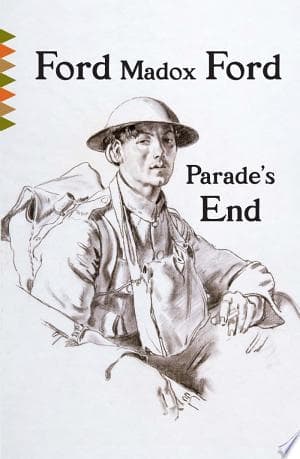
Ford Madox Ford (2012)
Genre
Historical Fiction
Reading Time
1800 min
Key Themes
See below
Sign in to track this book
During the Great War, an English aristocrat's world breaks apart, making him face his failing marriage, changing morals, and a society lost to the trenches.
The novel begins in 1912, introducing Christopher Tietjens, a principled English aristocrat and government statistician. His marriage to the manipulative Sylvia Satterthwaite causes constant trouble and public scandal, especially regarding their son, Michael. Despite Sylvia's open infidelity, Christopher, bound by his moral code, refuses to divorce her or publicly admit her wrongs. While traveling, he meets Valentine Wannop, a young, intelligent suffragette and pacifist. Their intellectual connection starts immediately, hinting at an emotional bond that contrasts with his difficult marriage. This meeting sets up Christopher's internal conflict and the coming war.
Sylvia, tired of Christopher's calm and her inability to make him angry or divorce her, increases her psychological attacks. She shows off her affairs, spreads rumors about him, and tries to ruin his professional reputation. Christopher, however, stays calm, internalizing the pain. His adherence to his gentlemanly code, which says he must protect his wife's reputation even at his own cost, only frustrates Sylvia more. This period shows Christopher's strong sense of duty and his adherence to an outdated moral framework, even as social conventions begin to break, hinting at the changes the war will bring.
As the Great War nears, Christopher's professional life becomes tied to Sylvia's actions. Her brother, General Campion, tries to use his influence against Christopher, who some in aristocratic circles see as an eccentric. Despite these pressures, Christopher's intelligence is recognized, and he is given important statistical work for the war effort. At the same time, his connection with Valentine Wannop grows. Their meetings, though innocent, hold unspoken emotion and mutual respect. Valentine represents a modern, progressive spirit, a contrast to Sylvia's destructive traditionalism. Christopher finds comfort and intellectual companionship with Valentine, a refuge from his marriage and the coming global conflict.
Wanting to escape his home life, feeling a sense of duty, and perhaps a subconscious wish for death, Christopher volunteers for active service. He leaves his position in the War Office and goes to the Western Front as an officer. This decision gets different reactions; Sylvia sees it as another escape, while Valentine understands his desire for a clean break. Christopher's experiences in the trenches are brutal. He sees the horror of modern warfare, the breakdown of social order, and the erosion of traditional values. His rigid moral code is tested by survival, camaraderie, and the constant threat of death, further separating him from his pre-war world.
Life in the trenches is hard for Christopher. He endures shelling, gas attacks, and constant death, seeing men around him break down. Despite the chaos, he keeps his calm and sense of duty, earning his men's respect. He deals with military bureaucracy and the disconnect between front-line sacrifices and perceived indifference at home. His experiences remove his pre-war innocence and strengthen his disappointment with the old order. He is wounded multiple times, physically and mentally, and suffers from shell shock, though he tries to hide it. His time at the front changes how he sees himself and the world.
During his short leaves from the front, Christopher returns to England, a changed man. He finds the home front largely unaware of the war's true horrors, and his familiar social fabric is unraveling. He meets Sylvia, who continues her manipulative games, trying to control him again, but her efforts now seem empty against his experiences. More importantly, he reconnects with Valentine Wannop, whose genuine concern offers a contrast to Sylvia's cruelty. Their bond deepens, and their unspoken love becomes more clear, representing a possible future free from his past. These moments of connection give Christopher fragile hope amidst the war's despair.
As the Great War ends, Christopher, now affected by shell shock and physical injuries, leaves the army. The world he returns to is different; the old aristocratic order is crumbling, and traditional values are questioned. He wants to cut ties with his past, especially his marriage to Sylvia. He finally admits his love for Valentine Wannop and seeks to build a life with her, despite social stigma and the financial ruin his principled stand against Sylvia has brought. They move to a small cottage in the countryside, showing their attempt to create a new, simpler existence based on mutual respect and affection, free from the Edwardian era's hypocrisies.
Even after the war, Sylvia refuses to let Christopher go. She appears at the cottage he shares with Valentine, attempting a final manipulation to reclaim him and ruin his new life. She uses their son, Michael, and tries to appeal to Christopher's sense of duty. However, Christopher, hardened by the war and strengthened by his love for Valentine, finally breaks free from her psychological hold. He rejects her, asserting his right to happiness and a life free from her torment. This confrontation marks a moment of liberation for Christopher, as he sheds the last of his past obligations and commits to his future with Valentine, embracing a new kind of morality and freedom.
Christopher and Valentine settle into their unconventional life in the countryside, living together without legal marriage, a radical choice then. They face financial hardship and social exclusion, but find contentment in their intellectual companionship and shared values. Christopher, despite his aristocratic background, embraces a simpler existence, working and finding peace away from London society. Their relationship is built on honesty, mutual respect, and a progressive outlook, a departure from pre-war social norms. This period shows Christopher's complete break from his past and his embrace of a new future, symbolizing broader societal shifts in post-war England.
The novel ends with Christopher and Valentine having built a strong and loving partnership. They have endured much personal and societal change, and while their future is uncertain and their lifestyle unconventional, they face it together. Christopher, though bearing war scars, has found peace and purpose with Valentine. The old world of inherited wealth, rigid social codes, and moral hypocrisy has ended for him, replaced by a more authentic, if challenging, existence. Their relationship, built on affection and shared ideals, shows the possibility of finding love and meaning amidst a shattered world, embodying hope for a new moral and social order in post-Great War Britain.
The Protagonist
Christopher transforms from a stoic, duty-bound victim of social convention to a liberated individual who sacrifices his social standing for authentic love and personal integrity.
The Antagonist
Sylvia remains largely static, unable to escape her destructive patterns, though her influence over Christopher wanes as he finds liberation.
The Supporting
Valentine develops from an idealistic young woman to a resilient partner who embraces an unconventional life with Christopher.
The Supporting
Mark serves as a foil to Christopher, largely remaining a steadfast figure of the old order, though he is affected by the war's changes.
The Supporting
General Campion's character remains largely static, representing the unyielding forces of the old establishment.
The Supporting
Mrs. Wannop remains a consistent source of intellectual and emotional support for Valentine.
The Mentioned
Michael's character remains largely undeveloped as he is a child, serving more as a plot device.
The Supporting
Edith Ethel remains a consistent figure in the social landscape, providing context and commentary.
The novel shows the breakdown of the Edwardian aristocracy's social hierarchy and moral codes during the Great War. Christopher Tietjens, the 'last Tory,' embodies values like duty and honor, even when they cause him suffering. The war, however, reveals the hypocrisy of these old ways, shown by Sylvia's destructive behavior and the general's inability to adapt. Christopher's eventual choice to leave his social standing for an authentic life with Valentine means the old order must end for a more honest, modern world. The novel highlights how the war sped up this societal change.
“''The world,'' Christopher thought, ''has changed its rules. One must change with them, or perish.''”
Christopher's journey is one of self-discovery, forced by his marriage and war trauma. Initially defined by his status and old moral code, he gradually sheds these external layers to find his true self. His experiences in the trenches remove his illusions, while his love for Valentine Wannop offers him a path to authenticity. By the novel's end, he rejects the public persona and inherited duties that once suffocated him, choosing instead a life based on genuine connection and personal integrity, forming an identity independent of societal expectations. This change is central to the story.
“''He had, in effect, to shed his skin; he had to re-become a naked man.''”
The novel explores love, duty, and betrayal, mainly through Christopher's relationships. His marriage to Sylvia is a cycle of betrayal, yet Christopher stays bound by a sense of duty, refusing to publicly condemn her. This duty, however, prevents him from pursuing genuine love. His growing relationship with Valentine Wannop represents a different kind of love—one based on mutual respect, intellectual companionship, and honesty—that challenges his ingrained sense of duty. The war further complicates these themes, as duty to country clashes with personal desires, and betrayal takes on new meanings in human suffering and societal collapse. Ultimately, Christopher chooses love and authenticity over a destructive sense of duty.
“''One had to stand by one's word. It was the only way for a gentleman.''”
Ford Madox Ford details the psychological impact of the Great War, especially on Christopher Tietjens. The constant bombardment, threat of death, and breakdown of social order in the trenches leave Christopher with severe shell shock and disillusionment. The war shatters his ideas of honor, replacing them with the reality of suffering. His struggle to adjust to a home front that seems unaware of the horrors he endured shows the deep psychological gap between soldiers and civilians, emphasizing the lasting trauma that reshaped a generation.
“''The whole world was a series of explosions, of flashes, of whizzing fragments.''”
The conflict between modernity and tradition is a theme, shown by the clash between Christopher's old moral code and the changing world around him. Christopher, with his Edwardian gentlemanly ideals, struggles against modern sensibilities represented by Valentine Wannop's progressive views and the war's societal upheaval. The novel shows how old traditions, while once noble, become stifling in a new era. Christopher's eventual embrace of an unconventional life with Valentine means a shift towards modernity, where personal integrity and genuine connection are more important than outdated social conventions and inherited status, marking a clear 'end of parade' for the old ways.
“''The War had changed everything. It had abolished all the old certainties, all the old decencies.''”
Allows deep insight into Christopher's complex internal world.
Ford Madox Ford frequently employs stream of consciousness and extensive interior monologues, particularly for Christopher Tietjens. This technique plunges the reader directly into Christopher's thoughts, allowing for a deep exploration of his intricate moral code, his suffering, his intellectual prowess, and his struggles with duty and desire. It reveals the vast chasm between his private thoughts and his public, stoic demeanor, highlighting his isolation and the psychological toll of his circumstances. This device also serves to convey the fragmented and often chaotic nature of his perception, especially during and after his experiences in the trenches, mirroring the psychological impact of war.
Disrupts chronological order to deepen character and thematic understanding.
The narrative structure of 'Parade's End' is not strictly chronological. Ford frequently uses flashbacks and shifts in time, particularly in the earlier parts of the novel, to gradually reveal past events and the complex history of Christopher's marriage and his relationship with Sylvia. This non-linear approach mirrors the fragmented nature of memory and perception, particularly for a character like Christopher who is constantly re-evaluating his past. It allows for a more nuanced understanding of character motivations and the slow erosion of the pre-war world, building suspense and thematic depth by unveiling information at strategic points rather than in a straightforward sequence.
Christopher represents the ideals and eventual obsolescence of the English gentleman.
Christopher Tietjens is a potent symbol of the 'Tory Gentleman' and the anachronistic ideals of the Edwardian era. His unwavering adherence to duty, honor, and public decorum, even when it leads to personal ruin, embodies the best and worst aspects of this dying class. His intellectual brilliance combined with his social awkwardness and moral rigidity make him a walking anachronism. His eventual 'break' from these traditions and his choice of an authentic life with Valentine symbolizes the necessary demise of the old social order and the birth of a new, more honest, albeit less outwardly 'gentlemanly,' world in post-Great War Britain. He is the 'last' of his kind, paving the way for something new.
The war acts as an external force driving internal and societal change.
The Great War is not merely a backdrop but a fundamental plot device that acts as a catalyst for profound personal and societal transformation. For Christopher, the horrors of the trenches strip away his illusions, accelerating his disillusionment with the old order and forcing him to confront his true desires. For English society, the war irrevocably shatters the rigid class system, moral hypocrisy, and established traditions. It serves as a crucible, forging new identities and relationships (like Christopher and Valentine's unconventional pairing) and exposing the fragility of the pre-war 'parade.' The war effectively marks the 'end' of an era and the beginning of a different, more uncertain future.
Symbolizes the decaying grandeur and burden of the old aristocratic order.
Grosvenor House, the ancestral Tietjens estate, functions as a powerful symbol throughout the novel. Initially representing the family's inherited wealth, status, and the weight of tradition, it gradually comes to embody the decaying grandeur and the immense burden of the old aristocratic order. Christopher's internal struggles are often tied to his obligations to the estate, and its eventual state of neglect and the financial difficulties associated with it reflect the broader decline of his class. It is a physical manifestation of the past that Christopher must ultimately shed to find his freedom, a place he can no longer truly inhabit or afford in the new world.
“The world was not going to be run by good chaps, but by the bad chaps who were going to smash it up.”
— Christopher Tietjens's pessimistic view of society before the war.
“It was the end of a whole era, of a whole world. And nobody knew it. They couldn't know it. They were too busy being themselves.”
— Reflecting on the profound societal changes brought by World War I.
“For the whole point of life, after all, was to make a good job of it. And you couldn't make a good job of it if you were continually trying to make a good job of something else.”
— Christopher's internal struggle with duty and personal desires.
“One had to go on doing one's job, however unpleasant. That was the only thing.”
— Christopher's steadfast commitment to his responsibilities amidst personal turmoil.
“The public school system was a device for producing gentlemen. But it was not a device for producing human beings.”
— A critique of the rigid British class and educational system.
“It was all a question of sticking it out. The longer you stuck it out, the more likely you were to win.”
— Christopher's philosophy on perseverance during difficult times.
“The world was a place of facts, and facts were things that could be verified.”
— Christopher's empirical and rational approach to understanding the world.
“He seemed to have been born too late for the world he loved and too early for the world that was coming.”
— Describing Christopher Tietjens's anachronistic nature and his discomfort with modernity.
“War was not a thing of heroism, but a thing of mud, blood, and endless waiting.”
— A stark portrayal of the grim realities of trench warfare.
“The only thing that mattered was to keep one's head, and to go on doing one's work.”
— Christopher's mantra for coping with chaos and personal distress.
“He had the feeling that he was perpetually in the wrong, and that it was his own fault.”
— Christopher's constant sense of guilt and self-blame, often undeserved.
“It was a world of masks, where everyone pretended to be something they were not.”
— A commentary on the superficiality and hypocrisy of Edwardian society.
“The queer thing about it was that he did not mind. He was beyond minding.”
— Christopher's emotional detachment and weariness after prolonged suffering.
“He thought the world had better be run by intelligent people, not by the sentimental.”
— Christopher's preference for rational governance over emotional decision-making.
Ready to see how well you understood this book? Take our interactive quiz with 10 questions.
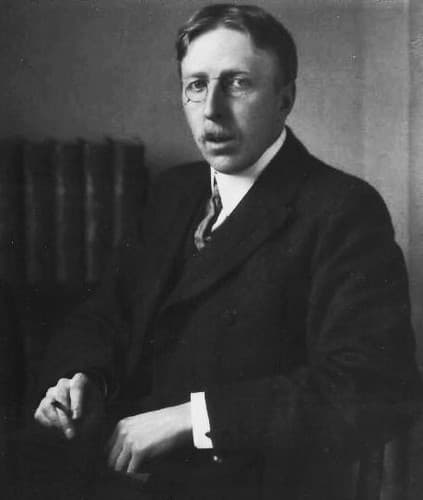
Ford Madox Ford was an English novelist, poet, critic and editor whose journals The English Review and The Transatlantic Review were important in the development of early 20th-century English and American literature.







