“The parade is not a line of people moving forward; it is a circle, always returning to where it began.”
— Narrator reflects on the cyclical nature of life and events in the town.

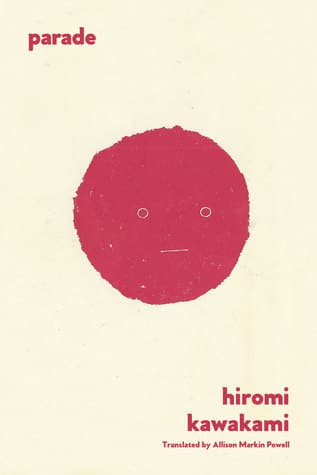
Genre
Literary Fiction / Fantasy
Reading Time
45 min
Key Themes
See below
Sign in to track this book
On a summer afternoon, a woman's life with her former teacher changes when two mischievous tengu from her childhood suddenly reappear, blurring the lines between memory and reality.
The novella starts with Tsukiko and her former high school teacher, Sensei, eating somen noodles on a summer afternoon. Their conversation is relaxed, showing their comfortable relationship. Sensei asks Tsukiko to tell him a story from 'long ago.' Tsukiko agrees to tell about an unusual childhood experience. This sets the narrative's intimate, reflective tone, presenting the fantastical events as a memory shared between two people with a deep bond.
Tsukiko begins her story, describing how, as a young girl, she woke to find two strange creatures in her room. These beings had human bodies, long noses, and wings, identifying them as tengu from Japanese folklore. One had a pale red face, the other a dark red face, and they were arguing quietly. Their sudden appearance changed the ordinary feel of Tsukiko's childhood home, adding a fantastical element. Tsukiko, surprised, accepted their presence with a child's curiosity.
After first appearing, the tengu stayed. They followed young Tsukiko everywhere – to school, the park, even the bathroom. Others mostly did not see or hear them; they existed only in Tsukiko's mind. Their constant presence annoyed her but also gave her a strange companionship. They continued their quiet arguments, and their long noses sometimes appeared from behind corners, a subtle reminder of them. Tsukiko's family, however, never noticed these companions.
Tsukiko tells about the tengu's odd habits. They ate a lot, especially unattended food, often stealing from her plate or the kitchen. They also played tricks, sometimes hiding Tsukiko's things or causing small disturbances that she alone blamed on them. Despite being supernatural, their actions were often ordinary, making them part of Tsukiko's daily life. The pale red tengu was usually calmer, while the dark red tengu was more prone to mischief and louder arguments, showing their different personalities.
Tsukiko eventually found a unique way to interact with the tengu. She learned to understand their gestures, murmurs, and even their 'scents' as ways of communicating. She sometimes talked to them, though they rarely responded in a way others would understand. This unspoken understanding deepened her connection to them, making them more than just strange apparitions; they became active, if unusual, participants in her solitary world. Her acceptance of them grew, moving from surprise to a quiet, almost family-like, coexistence.
The tengu's presence subtly affected Tsukiko's social interactions. Her friends did not know about the creatures, but Tsukiko's unique perspective, shaped by her constant companions, sometimes made her seem distracted or odd to others. The tengu occasionally offered silent 'advice' or reactions to her friends' conversations, influencing Tsukiko's thoughts. Their influence changed her view of the world, making her more aware of unseen forces and unspoken parts of human interaction. This made her feel both part of and slightly outside of ordinary life.
One day, the two tengu disappeared from Tsukiko's life without warning. This absence was unsettling, leaving a void where their constant presence had been. Tsukiko felt a sense of loss. However, they reappeared later, as mysteriously as they had vanished. This pattern of disappearance and reappearance added to their mysterious nature, showing their temporary and unpredictable connection to Tsukiko's reality and that they existed on their own terms.
Tsukiko, with the tengu, saw a 'parade' of other mythical creatures – kappa, oni, and other yokai – marching through the streets, completely unseen by humans. This vision confirmed that the tengu were not alone but part of a larger, hidden world of supernatural beings living alongside human society. The parade was a spectacle visible only to Tsukiko, further showing her unique perception and her role as a link between the ordinary and the fantastic.
Tsukiko finished her childhood story, leaving Sensei to think about her words. Sensei listened closely, sometimes asking thoughtful questions that aimed to understand her story's depth. He did not question the literal truth of her account but its meaning. His reaction highlights the novella's look at memory, perception, and the subjective nature of reality. The story is presented not just as a childhood fantasy, but as a personal experience that shaped Tsukiko, regardless of whether the tengu were 'real' in a conventional way.
The novella ends returning to the present, with Tsukiko and Sensei finishing their somen. While the tengu are part of Tsukiko's past, the story suggests that the unseen world, or at least the ability to see it, still subtly affects Tsukiko. Sensei's quiet understanding and their closeness imply that he, too, is open to such possibilities, or at least to Tsukiko's rich inner life. The story ends with quiet thought, hinting at the lasting presence of mystery and the subjective nature of truth in their shared lives.
The Protagonist
From a child who passively accepts the inexplicable to an adult who thoughtfully reflects on its impact on her life.
The Supporting
Remains a consistent, understanding presence, his arc is more about his role in eliciting Tsukiko's story.
The Supporting
Remains a consistent, enigmatic presence, embodying the unchanging aspect of the supernatural.
The Supporting
Remains a consistent, enigmatic presence, embodying the unchanging aspect of the supernatural.
The Mentioned
No significant arc; a static background figure.
The Mentioned
No significant arc; a static background figure.
The Mentioned
No significant arc; static background figures.
The Mentioned
No arc; symbolic figures.
The Mentioned
No arc; symbolic figures.
The novella explores the subjective nature of reality through Tsukiko's perception. No one else sees the tengu or the parade, but they are real to her, shaping her childhood and worldview. The story asks what 'truth' means – is it only what everyone agrees on, or can individual experiences be valid? Sensei's non-judgmental listening shows that reality can be personal and not always provable by external standards, making Tsukiko's story valid regardless of its fantastical elements.
““I wasn’t alive long ago,” Tsukiko says, “but should I tell you a story from when I was little?” “Please do,” Sensei replies.”
A main theme is the coexistence of the ordinary and the supernatural. The tengu and the parade of other yokai represent a hidden world that exists alongside human society, mostly unseen. This theme suggests there are forces and beings beyond human perception, subtly influencing or simply sharing space with us. Kawakami presents these supernatural elements not as scary or overtly magical, but as an integrated, if unusual, part of life, accessible to those with a particular sensitivity, like young Tsukiko. It gives everyday life a quiet sense of wonder and mystery.
“One day, when I was little, I awakened to find something with a pale red face and something with a dark red face in my room, arguing with each other.”
The entire story is Tsukiko telling a childhood memory to Sensei. This shows how memory shapes identity and how storytelling processes and shares personal history. The 'truth' of her memory is less important than its impact and the act of sharing it. Sensei's request for 'a story from long ago' highlights the value of narrative, whether fantastical or factual, as a way to connect and understand each other. The novella suggests that our past, especially our unique experiences, defines who we become and how we relate to the world.
““Tell me a story from long ago,” Sensei says.”
Tsukiko's childhood, while not explicitly lonely, includes the private companionship of the tengu. These unseen beings become her constant companions, influencing her perceptions and providing a unique interaction others cannot access. This theme explores solitude – not necessarily loneliness, but a state where one's inner world can be filled with unique figures and experiences. The tengu offer a peculiar companionship that shapes Tsukiko's inner world, making her experiences different from those of her peers and family.
“They attached themselves to me and began to follow me everywhere.”
The adult Tsukiko's conversation with Sensei frames the childhood story.
The novella employs a frame narrative, where the present-day interaction between adult Tsukiko and Sensei sharing somen serves as the outer frame for Tsukiko's recounted childhood story about the tengu. This device allows for a reflective tone, as the adult Tsukiko processes her past experiences through the act of narration. It also emphasizes the theme of memory and storytelling, as the 'story from long ago' is given weight and context by the intimate, understanding audience of Sensei.
Tsukiko's childhood experiences are presented as her unique, unverified reality.
Tsukiko's narration, particularly of her childhood encounters with the tengu, can be considered subjective or 'unreliable' in the sense that her experiences are not corroborated by any other character. The reader is entirely dependent on Tsukiko's perspective, which is presented as deeply personal and unverified by external reality. This device brilliantly reinforces the theme of perception and reality, forcing the reader to accept Tsukiko's truth on its own terms, rather than questioning the literal existence of the tengu. It highlights the power of individual experience and internal reality.
Traditional Japanese folklore elements are integrated into a contemporary setting.
The direct inclusion of tengu and other yokai (kappa, oni) from Japanese folklore serves as a primary plot device. These mythical creatures are not merely decorative but are integral to Tsukiko's lived experience. By integrating these fantastical beings into a seemingly ordinary childhood, Kawakami blurs the lines between myth and reality, suggesting that the ancient spirits of folklore still exist, perhaps just beyond the veil of everyday perception. Their presence anchors the story in a rich cultural tradition while simultaneously making the fantastic feel oddly mundane.
The sharing of simple food symbolizes intimacy and shared experience.
The act of Tsukiko and Sensei preparing and eating somen noodles together is a subtle but significant symbolic device. Somen, a light, summery dish, represents simplicity, comfort, and the quiet intimacy of their relationship. The shared meal creates a setting of domestic peace and trust, making it a safe space for Tsukiko to recount her extraordinary childhood memories. Food, in this context, facilitates connection and provides a grounding, sensory anchor for the fantastical narrative that unfolds.
“The parade is not a line of people moving forward; it is a circle, always returning to where it began.”
— Narrator reflects on the cyclical nature of life and events in the town.
“In this town, the extraordinary walks hand in hand with the ordinary, and no one finds it strange.”
— Describing the magical realism of the setting where fantastical elements blend seamlessly with daily life.
“We are all just passing through, like clouds in the sky, leaving only shadows behind.”
— A character contemplates transience and impermanence during a quiet moment.
“The river does not ask why it flows; it simply moves, and in moving, it finds its purpose.”
— Metaphor used to discuss acceptance and the natural course of existence.
“Sometimes, the most profound truths are hidden in the silence between words.”
— Reflection on communication and the unspoken elements of human interaction.
“To remember is to weave a tapestry of moments, each thread a fragment of what once was.”
— Narrator muses on the nature of memory and its construction.
“In the parade, everyone wears a mask, but beneath it, we are all searching for the same thing: connection.”
— Observation about the characters' desires during the town's parade.
“The moon does not shine for us; it simply is, and in its being, it illuminates our darkness.”
— Philosophical thought on existence and the role of natural elements.
“A single step can change the course of the parade, yet no one notices until the pattern shifts.”
— Comment on small actions leading to significant, often unnoticed, changes.
“We are all stories waiting to be told, and in the telling, we become real.”
— Reflection on storytelling and the construction of identity.
“The wind carries whispers of the past, but only those who listen can hear them.”
— Description of how history and memories permeate the town.
“In the heart of the parade, there is a stillness that speaks louder than any drum.”
— Paradoxical observation about finding quietude within chaos.
“To lose oneself in the crowd is to find a different kind of solitude.”
— Character's experience of anonymity and introspection during the parade.
“The colors of the parade fade with time, but the emotions they evoke remain vivid.”
— Nostalgic reflection on how memories outlast sensory details.
Ready to see how well you understood this book? Take our interactive quiz with 10 questions.
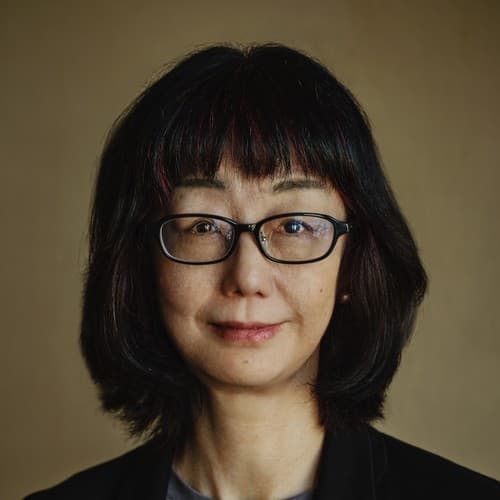
Biography coming soon.







