“Litwo! Ojczyzno moja! ty jesteś jak zdrowie. Ile cię trzeba cenić, ten tylko się dowie, Kto cię stracił.”
— Opening lines of the epic poem, an invocation to Lithuania.

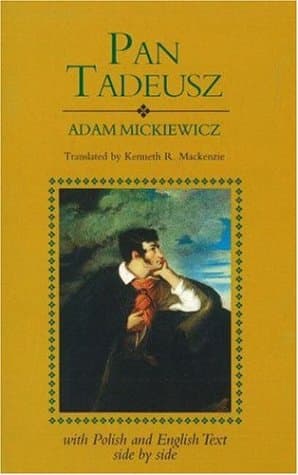
Adam Mickiewicz (1949)
Genre
Historical Fiction
Reading Time
1200 min
Key Themes
See below
Sign in to track this book
In 1811 Lithuania, a passionate feud between two old families sets off a romantic saga, reflecting a nation about to face Napoleonic conflict.
Tadeusz Soplica, a young Polish nobleman, returns to his family home in Soplicowo, Lithuania, after finishing his education in Vilnius. He immediately sees the poor condition of the Soplica castle, now occupied by Gerwazy Rębajło, the Horeszko family's steward. In his room, he meets a young woman he first thinks is Zosia, the orphaned granddaughter of the late Count Horeszko. This meeting is brief and confusing, as the woman quickly leaves. Tadeusz is struck by her beauty, sparking his romantic interest. His uncle, Judge Soplica, welcomes him, and Tadeusz starts to get used to his childhood home again, unaware of the deep feuds and political issues present.
A large bear hunt is arranged, bringing together local gentry, including the Soplicas, the Horeszkos (represented by the Young Count), and other important people. The hunt is a traditional event, showing old Polish customs and the noblemen's bravery. During the hunt, a dangerous bear charges, putting Tadeusz in danger. He is saved by Father Robak, a mysterious monk who recently arrived in Soplicowo and seems to have great strength and knowledge. The hunt also shows the growing tension between the Soplica and Horeszko families, with Gerwazy, the Horeszko steward, openly showing his dislike for the Soplicas and their claim to the castle.
The Soplica-Horeszko feud is about who owns the ruined Horeszko castle. The Horeszko family, represented by the Young Count and strongly supported by Gerwazy, believes the Soplicas illegally got the castle after the death of the last Horeszko castellan, Jacek Horeszko, by Jacek Soplica (Father Robak). Judge Soplica argues that his brother, Jacek, was legally entitled to the castle due to a legal agreement. This dispute grows, leading to open threats between the two families. Gerwazy, wanting revenge for his former master, encourages the Young Count to take the castle by force, making the conflict worse.
Tadeusz feels more and more attracted to Telimena, a sophisticated older woman who is Zosia's guardian and a distant relative. Telimena, knowing Tadeusz likes her, subtly encourages him, even though she also flirts with the Young Count. However, the real Zosia, a young, innocent girl, eventually appears among the gentry. Tadeusz realizes his initial mistake and is captivated by Zosia's genuine beauty and modesty, leading to a complex love triangle. Telimena, seeing Tadeusz's changed attention, becomes jealous and tries to control the situation, showing the social pressures and romantic problems within the gentry.
Amidst the local feuds, Russian soldiers, led by Major Płut, arrive in Soplicowo. They claim to maintain order but mainly assert Russian power over the Lithuanian gentry. Their presence increases patriotic feelings and anti-Russian sentiment among the Poles. During a tense gathering, Major Płut tries to show his dominance and insult the Polish gentry. Father Robak, who has been quietly supporting Polish independence and a future uprising with Napoleon, steps in. He skillfully disarms Płut and humiliates the Russian soldiers, preventing a larger fight and showing his hidden fighting skills and strategic thinking, hinting at his true identity and mission.
Prompted by Gerwazy's strong calls for revenge and the promise of Russian support, the Young Count organizes a 'Zajazd,' a traditional Polish gentry muster, to forcibly take the Horeszko castle from the Soplicas. The Zajazd involves many armed gentry, supported by Russian soldiers, who march on Soplicowo. A violent clash happens between the two families and their allies. This chaotic battle shows the deep hatred and breakdown of order among the gentry, made more complex by the Russian forces directly involved in an internal Polish dispute, showing the unstable political situation.
During the chaos of the Zajazd, Father Robak is badly wounded. On his deathbed, he finally tells Judge Soplica and Gerwazy his true identity: he is Jacek Soplica, the disgraced brother of the Judge, thought to be dead. He confesses his past, especially killing Count Horeszko, Zosia's grandfather, years ago. He explains he acted in rage after Horeszko refused his daughter's hand in marriage and humiliated him. Robak also reveals his long efforts to make up for his past, including working as a secret agent for Polish independence, organizing an uprising against the Russians in anticipation of Napoleon's arrival.
After hearing Jacek Soplica's full confession and his decades of atonement and patriotic service, Gerwazy Rębajło, the loyal Horeszko steward, is deeply moved. Despite his lifelong hatred for Jacek and his strong desire for revenge, Gerwazy forgives him. This forgiveness is important, as it signals a possible end to the bitter, generations-long feud between the Soplica and Horeszko families. The reconciliation between the two former enemies, helped by Jacek's dying wish for unity, sets the stage for peace and cooperation among the gentry, which is important for the coming national struggle.
News arrives that Napoleon's Grand Army has crossed the Niemen River, invading Russia. This event sparks hope among the Polish gentry for national liberation. The local Poles, including the Soplicas, the Horeszkos (now united for independence), and their allies, rebel against the Russian forces. They join the French army as it moves through Lithuania, eager to fight for the return of the Polish-Lithuanian Commonwealth. This period marks a shift from internal feuds to a unified national struggle, with the gentry showing their patriotism and willingness to sacrifice for their homeland.
Following the national uprising and the temporary expulsion of the Russians, Tadeusz and Zosia are officially engaged. Their union symbolizes the reconciliation of the Soplica and Horeszko families and the mending of past divisions. The wedding is a grand event, reflecting traditional Polish customs and the joyful spirit of the gentry, now united in their patriotism. This engagement represents not just a romantic resolution but also a symbolic hope for Poland's future — a future built on unity, forgiveness, and a shared national identity, even as the ultimate outcome of Napoleon's campaign and Polish independence remains uncertain.
The Protagonist
Tadeusz matures from a somewhat naive young man into a responsible and patriotic member of the gentry, ready to embrace his role in the national struggle and establish a new family line.
The Mysterious figure/Deuteragonist
Jacek transforms from a proud, vengeful nobleman into a humble, selfless patriot who achieves redemption through decades of service and ultimately receives forgiveness for his past sins.
The Supporting
The Judge maintains his traditional values but eventually comes to terms with the need for reconciliation and unity in the face of national struggle.
The Supporting/Antagonist (initially)
Gerwazy's lifelong quest for vengeance gradually gives way to understanding and forgiveness, culminating in his reconciliation with Jacek Soplica for the sake of national unity.
The Love Interest
Zosia grows into a graceful young woman, becoming the object of Tadeusz's true affection and a symbol of reconciliation.
The Supporting
Telimena navigates her romantic entanglements, eventually stepping aside for Zosia and accepting her role in the community.
The Supporting/Antagonist (initially)
The Young Count moves from being a somewhat naive and easily manipulated nobleman to a more focused patriot, uniting with his former adversaries for the national cause.
The Antagonist
Płut remains a static antagonist, serving as a symbol of Russian oppression and ultimately suffering humiliation.
The poem explores Polish national identity, especially when Poland was not an independent state. It celebrates Polish customs, traditions, language, and the natural beauty of the Lithuanian landscape, historically part of the Polish-Lithuanian Commonwealth. Characters like Father Robak show strong patriotism, sacrificing personal life for the nation. The expectation of Napoleon's arrival and the uprising highlight the desire for national liberation and belief in a restored Poland. The poem is a nostalgic tribute to a lost homeland and a call for unity among Poles.
“O Lithuania, my country, thou art like health; How much thou shouldst be prized, he only can discover Who has lost thee.”
The story's core is the resolution of the long feud between the Soplica and Horeszko families. This theme is most powerfully seen in Father Robak's confession and Gerwazy's eventual forgiveness. The reconciliation is not just personal but also symbolizes the need for national unity among Poles, overcoming past grievances to face a common enemy (Russia). The engagement of Tadeusz and Zosia further strengthens this theme, representing the merging of two formerly warring families into a single, hopeful future for the nation.
“For years I hated you, but now I see... God has forgiven you, and so do I.”
The poem celebrates gentry life but also shows its decline. The ruined castle, the petty quarrels, and the gentry's sometimes impractical adherence to tradition (like the Zajazd) suggest a fading era. The arrival of Russian forces and the need for outside help (Napoleon) highlight the gentry's inability to fully protect themselves or their nation independently. The shift towards a more unified, less individualistic patriotism, seen in Father Robak's efforts, signals a necessary change away from the purely aristocratic, self-serving aspects of the old gentry.
“Such customs have long since passed away, like the old gentry's glory, like their wars.”
The Lithuanian landscape is more than a setting; it has deep emotional and symbolic meaning. Mickiewicz vividly describes the forests, fields, lakes, and changing seasons, creating an idyllic vision of the homeland. This idealized nature provides comfort, beauty, and national pride, contrasting sharply with the political unrest. Descriptions of hunts, mushroom gathering, and daily life connect the characters deeply to their natural surroundings, showing a harmonious existence with the land that is essentially Polish.
“The sun was setting, crimson and clear, Painting the meadows gold, the woods a fiery sphere.”
Jacek Soplica's change into Father Robak is the central story of atonement. His youthful sin of murder haunts him, leading him to a life of penance and selfless service to his nation. His secret work as a patriot and his eventual confession are his ways of seeking redemption, not just from God, but from those he wronged. His ultimate forgiveness by Gerwazy shows the completion of his redemptive journey, highlighting the possibility of overcoming past mistakes through humility and dedicated action.
“I served my country, not for glory, but for penance, for my sin.”
A long-standing conflict between the Soplica and Horeszko families.
The feud between the Soplica and Horeszko families, stemming from Jacek Soplica's murder of Count Horeszko and the subsequent dispute over the castle, serves as the primary external conflict driving the initial plot. It creates tension, dictates character relationships, and provides the backdrop for the 'Zajazd' (gentry muster). This device is crucial for exploring themes of vengeance, honor, and ultimately, reconciliation, as its resolution is necessary for the gentry to unite against the Russian invaders.
Tadeusz initially confuses Telimena for Zosia, creating romantic confusion.
Tadeusz's initial encounter with Telimena, whom he believes to be Zosia, is a classic romantic plot device. It introduces an element of humor and misdirection, setting up a love triangle and highlighting Tadeusz's youthful impulsiveness. This device allows for the gradual reveal of Zosia's true character and beauty, making Tadeusz's eventual realization and devotion to her more impactful. It also serves to differentiate Telimena's more worldly charm from Zosia's innocent appeal.
An enigmatic monk whose true identity and mission are gradually revealed.
Father Robak's character functions as a mysterious stranger, whose true identity and purpose are slowly unveiled throughout the narrative. His unusual strength, knowledge of local affairs, and subtle political machinations pique the reader's curiosity and provide a sense of underlying intrigue. This device allows Mickiewicz to introduce a pivotal character who bridges the past (Jacek Soplica's sins) with the present (the feud) and the future (the national uprising), making his eventual confession a powerful turning point in the story.
Repeated hints and discussions about Napoleon's impending invasion.
Throughout the poem, there are numerous mentions and discussions among the gentry about Napoleon Bonaparte and the possibility of his army liberating Poland from Russian rule. This constant foreshadowing builds anticipation and provides a larger historical context for the local conflicts. It elevates the personal feuds to a national level, reminding the reader of the Poles' desperate hope for independence and linking their individual destinies to the grand sweep of European history. This device culminates in the actual arrival of the French forces and the subsequent uprising.
“Litwo! Ojczyzno moja! ty jesteś jak zdrowie. Ile cię trzeba cenić, ten tylko się dowie, Kto cię stracił.”
— Opening lines of the epic poem, an invocation to Lithuania.
“Grzeczność nie jest nauką łatwą ani małą. Niełatwą, bo nie na tym kończy się, jak nogą zgrabnie wierzgnąć, albo ukłonić się ładnie, albo pięknie wymówić komplement, ale na tym, żeby drugiemu sprawić przyjemność.”
— Judge Soplica's discourse on true politeness and etiquette.
“W Soplicowie zawsze grzeczne obyczaje, w Soplicowie nigdy nudno, zawsze wesoło, zawsze pełno gości, i na ucztach, i na zabawach, i na polowaniu.”
— Description of the lively and hospitable atmosphere at the Soplica estate.
“Słońce już zachodzi, a krew zranionego niedźwiedzia jeszcze dymi w mroku leśnym. Zewsząd już słychać krzyki, psy szczekają, trąby grają.”
— Aftermath of the bear hunt, describing the excitement and chaos.
“Młodzieniec wpadł w otchłań, z której nie ma już wyjścia. Kochał i był kochany, ale los go rozłączył.”
— Reflecting on Tadeusz's initial despair over his perceived lost love, Zosia.
“Ksiądz Robak, choć był księdzem, nie zapomniał nigdy, że był szlachcicem.”
— Narrator's observation on Father Robak's dual identity and past.
“Prawdziwa miłość jest jak róża, która kwitnie tylko raz w życiu.”
— General reflection on the nature of profound, singular love.
“Biada temu, kto w czas wojny nie ma miecza w ręku.”
— A warning about the necessity of being prepared for conflict, particularly relevant to the Napoleonic era.
“Ostatni zajazd na Litwie!”
— A recurring phrase emphasizing the end of an era for the gentry's traditional 'zajazd' (armed foray/raid).
“Kto raz zdradził, zawsze zdradzi.”
— A proverb reflecting on the nature of betrayal and trust.
“Szlachcic polski, choćby biedny, zawsze jest panem.”
— Highlighting the inherent pride and status of the Polish gentry, regardless of wealth.
“Wszystko idzie ku dobremu, co się źle zaczyna.”
— A hopeful sentiment, suggesting that initial difficulties can lead to positive outcomes.
“Takie były zabawy, spory i bitwy w owych czasach, w kraju szczęśliwym, gdzie wszystko było domowe i swojskie.”
— Narrator's nostalgic summary of the customs and events in Soplicowo, reflecting on a bygone era.
“Soplicowo! gniezdo polskiej szlachty, gdzie zawsze gościnnie witano przybyszów.”
— A concise description of Soplicowo as a welcoming bastion of Polish gentry culture.
Ready to see how well you understood this book? Take our interactive quiz with 10 questions.
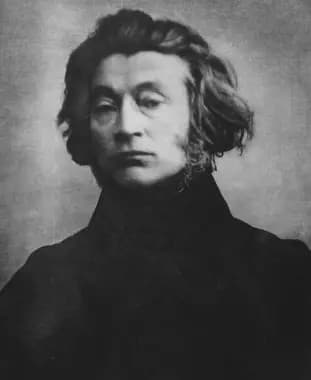
Adam Mickiewicz was a towering figure of Polish Romantic literature, best known for his epic national poem "Pan Tadeusz." A prolific poet, dramatist, and essayist, he is considered one of the "Three Bards" of Polish literature. His works deeply influenced Polish national consciousness and continue to be celebrated for their lyrical beauty and patriotic fervor.







