“O, how my Heart went pit-a-pat, and what a shiverings ran all over me!”
— Pamela describes her anxiety and physical reactions to Mr. B's advances.

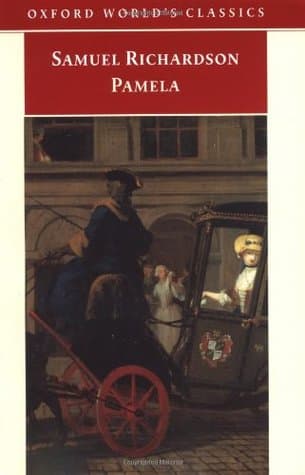
Samuel Richardson (1740)
Genre
Historical Fiction / Romance
Reading Time
15-20 hours
Key Themes
See below
Sign in to track this book
A virtuous servant girl skillfully resists her master's seduction attempts, turning her experience into an early novel about class, power, and personal integrity.
Pamela Andrews, a beautiful and virtuous seventeen-year-old maidservant, is distressed by the death of her kind mistress, Lady B. Having been taken into Lady B's household at age twelve and educated, Pamela worries about her future. Her mistress's son, the wealthy Mr. B, at first promises to keep her employed and provide for her. However, his kind manner soon changes as he begins making inappropriate advances, giving her money and fine clothes, and trying to kiss her. Pamela, deeply religious and committed to preserving her virtue, writes detailed letters to her poor but honest parents, John and Elizabeth Andrews, describing her growing worries and the uncomfortable situations with Mr. B.
Mr. B increases his pursuit of Pamela. He sends away other servants and creates situations where Pamela is alone with him. During one such encounter in the summer-house, he tries to embrace her forcefully and makes it clear he wants her as a mistress, not a wife. Pamela, horrified, resists his advances with all her might, crying out and pleading for him to respect her honor. She threatens to leave his service, despite her love for Lady B and gratitude for her education. Her firm resistance surprises and frustrates Mr. B, who is not used to being denied, and he begins to plan more cunning ways to subdue her.
Despite Pamela's pleas and her parents' concern, Mr. B fires her, supposedly for being too difficult. However, his real intention is to intercept her on her way home and force her to submit. He tells his housekeeper, Mrs. Jervis, to prepare Pamela for her departure, but Mrs. Jervis, though appearing sympathetic, is secretly working with Mr. B. She drugs Pamela, and while Pamela is unconscious, Mr. B tries to assault her, only stopping when Pamela cries out in her sleep. Pamela barely escapes further harm, but her trust in Mrs. Jervis is broken. She realizes the full extent of Mr. B's deception and her isolated situation.
Instead of being sent home, Pamela is forcibly taken to Mr. B's remote estate in Lincolnshire, far from her parents and any possible help. There, she is placed under the strict watch of Mrs. Jewkes, a rough and intimidating woman who acts as Mr. B's jailer and accomplice. Mrs. Jewkes constantly monitors Pamela, stops her from sending letters, and even shares a bed with her to ensure she cannot escape. Pamela falls into despair, constantly fearing for her safety and praying for help. She tries to escape multiple times, even considering drowning herself, but her strong moral compass and religious faith prevent her from taking her own life.
Mr. B eventually arrives at the Lincolnshire estate, much to Pamela's terror. He renews his attempts to seduce her, offering her a life of luxury and financial security if she will become his mistress. He tries to convince her that marriage is beneath him and that her low birth makes her unsuitable. Pamela, however, remains firm in her refusal, repeating her commitment to virtue and her belief that her honor is more valuable than any worldly possessions. She appeals to his conscience and his sense of gentlemanly conduct, but Mr. B, blinded by his desires and pride, continues to see her resistance as a challenge to be overcome rather than a genuine moral stance.
In a particularly cruel act, Mr. B stages what Pamela later calls the 'Bedford Scheme.' He pretends to prepare for a marriage ceremony, even having a minister present and wedding clothes laid out. Pamela, cautiously hopeful, believes her virtue will finally be rewarded. However, at the last moment, Mr. B reveals it was all a trick designed to test her and break her spirit, declaring he never intended to marry her. This deception plunges Pamela into deep despair, making her question Mr. B's character even more and strengthening her resolve to escape, even if it means risking her life.
Pamela's repeated, heartfelt rejections and her near-fatal escape attempt, where she almost drowns herself in a pond, finally begin to affect Mr. B. He sees her genuine distress and unwavering moral strength. He starts to read her journal and letters, which show her pure heart, deep faith, and true affection for him despite his cruel treatment. This exposure to her inner thoughts gradually breaks down his pride and lust, leading him to realize the true value of her virtue. He begins to see her not just as an object of desire, but as a woman of deep worth.
After a period of reflection and genuine regret, Mr. B finally proposes honorable marriage to Pamela. He confesses his past wrongs and expresses admiration for her virtue, acknowledging that she has taught him a lesson. Pamela, still cautious due to his previous deceptions, initially hesitates and seeks further assurances of his sincerity. She consults with her parents through letters, who advise her to be careful but ultimately support her decision if she believes his change of heart is real. Convinced by his continued kindness and evident sincerity, Pamela accepts his proposal, marking a triumphant moment for her virtue and perseverance.
Pamela and Mr. B marry in a private ceremony, much to the displeasure of Mr. B's aristocratic sister, Lady Davers, who is shocked by her brother's decision to marry a servant. Pamela, now Mrs. B, faces the difficult task of adapting to her new role as a lady and gaining acceptance from society, especially Mr. B's family and peers. She maintains her humility, kindness, and devotion to her husband, showing that her rise in social status has not corrupted her character. Her gentle manner and unwavering virtue slowly begin to win over those who initially scorned her, including some of Mr. B's more open-minded acquaintances.
Lady Davers, furious about her brother's 'misalliance,' arrives unannounced at the estate and confronts Pamela with a flood of insults and scorn. She refuses to acknowledge Pamela as her sister-in-law, calling her a 'beggarly hussy' and a 'creature.' Pamela, though deeply hurt, responds with remarkable dignity, humility, and unwavering respect, refusing to be provoked. She defends her honor and her husband's choice with calm reason and steady virtue. Her gentle yet firm demeanor, combined with Mr. B's strong defense of his wife, eventually begins to soften Lady Davers's heart, who is surprised by Pamela's grace under pressure.
Through Pamela's consistent display of virtue, humility, and intelligence, along with Mr. B's unwavering support and love for his wife, Lady Davers eventually softens. She acknowledges Pamela's true worth, admitting that her brother has chosen well. The reconciliation with Lady Davers is a turning point, signaling broader acceptance of Pamela into upper society. Pamela continues to write to her parents, sharing her successes and challenges, and remains devoted to her family. Her story shows the ability of virtue to overcome social barriers and prejudice.
As Mrs. B, Pamela proves to be an excellent wife, mistress of the household, and later, a mother. She manages the estate with care and kindness, looks after the servants, and continues her charitable work. She maintains her piety and continues her education, becoming an intellectual companion to Mr. B. Her story ends with her firmly established in her new life, having successfully handled the challenges of social mobility and personal integrity. She represents the ideal of a virtuous woman whose inner worth goes beyond her humble origins, offering moral lessons to her husband, her household, and the reader.
The Protagonist
Pamela transforms from a vulnerable, pursued servant into a respected lady, demonstrating that inner virtue can elevate one beyond social constraints and that moral steadfastness leads to true happiness.
The Antagonist/Love Interest
Mr. B undergoes a significant transformation from a predatory rake to a genuinely reformed and loving husband, learning humility and respect for virtue through Pamela's steadfast resistance.
The Supporting
They remain steadfast in their moral principles, witnessing their daughter's triumph and eventually enjoying the benefits of her elevated status while maintaining their humility.
The Supporting
She begins as a protector, then becomes a reluctant betrayer, eventually returning to a position of respect and loyalty after Pamela's marriage, showing the influence of power.
The Supporting
She remains a static character, a loyal but morally bankrupt servant who eventually serves Pamela after her marriage, highlighting the shift in power dynamics.
The Supporting
Lady Davers moves from fierce opposition and disdain to grudging respect and eventual acceptance of Pamela, demonstrating the power of virtue to overcome social prejudice.
The Supporting
Mr. Williams serves as a temporary moral ally and potential alternative for Pamela, his presence underscoring her commitment to true affection.
The Mentioned
His character serves as a background figure, illustrating the societal structure and Mr. B's local influence.
A main theme of 'Pamela' is the victory of virtue, especially female chastity, over temptation and hardship. Pamela's firm commitment to her honor, despite constant pressure, confinement, and threats, is ultimately rewarded with a socially beneficial marriage and a life of respect. Her steadfastness shows that moral integrity is more valuable than wealth or social standing. This theme is clear in Pamela's constant refusal of Mr. B's dishonorable proposals and her eventual marriage, which is presented as divine approval for her purity, as seen when Mr. B finally proposes honorable marriage after her near-fatal escape attempt.
“''O, my dear Parents, what a world is this! What will become of me! I am now at the end of my hopes, I fear: a poor, weak, helpless girl!''”
The novel explores the strict class structures of 18th-century England and the rare possibility of upward social mobility through virtue. Pamela, a low-born servant, rises above her social status through her exceptional moral character and intelligence. Her marriage to Mr. B challenges established norms, causing anger among the aristocracy, especially Lady Davers. The story suggests that true nobility comes not from birthright but from moral conduct and personal merit. Pamela's journey from servant to lady illustrates the conflict between inherited status and earned virtue, ultimately favoring the latter.
“''And what, after all, is the difference between us, that I should be thus insulted, and you thus triumph? Only this, that I am a Servant, and you are my Master's Sister.''”
'Pamela' examines power dynamics, particularly concerning gender and class. Mr. B, a wealthy, aristocratic landowner, holds great power over Pamela, his employee, using his authority, wealth, and social influence to confine, coerce, and intimidate her. The novel highlights the vulnerability of women and the lower classes to such abuse. Pamela's fight against Mr. B's predatory behavior is a direct challenge to the corrupting nature of unchecked power. Her resistance is a strong statement against the exploitation of the weak by the strong, and Mr. B's eventual reform shows that power can be used honorably.
“''How easy it is for the rich and great to oppress the poor and friendless!''”
The novel's epistolary format (told through letters and a journal) is a key element, offering direct access to Pamela's thoughts, feelings, and moral struggles. This narrative technique allows for a deep look into her psychological state, fears, hopes, and her reasons for unwavering resistance. It creates a sense of immediacy and authenticity, making her character vivid and relatable. Through her detailed internal monologues, the reader gains a deep understanding of her inner world, stressing the importance of individual consciousness and the subjective experience of virtue and suffering.
“''I will write my heart to you, and that will be a great ease to my mind.''”
Pamela's education, provided by Lady B, distinguishes her from other servants and enables her to express her thoughts and defend her honor. Her intelligence and literacy are clear in her sophisticated letters and journal entries. Even after her marriage, she continues to read, learn, and improve herself, embracing her role as a lady by managing the household effectively and engaging in intellectual discussions with Mr. B. This theme emphasizes the value of education not just for social advancement, but for personal growth, moral strength, and becoming a virtuous, capable individual, regardless of one's initial social standing.
“''I bless God, I have a good Education, and can read and write; and that's more than half the world can say, I believe.''”
The novel is told entirely through letters and journal entries written by Pamela.
The epistolary format is the primary narrative device, allowing for a deeply subjective and immediate portrayal of Pamela's experiences. It provides direct access to her thoughts, fears, and moral deliberations, enhancing psychological realism and fostering reader empathy. The letters also serve as a mechanism for Pamela to document Mr. B's actions, creating a record that eventually influences his change of heart. This device also allows for moral instruction, as Pamela's reflections often contain virtuous lessons, positioning her as a moral exemplar to her parents and, by extension, the reader.
Pamela's writings serve as tangible evidence of her virtue and Mr. B's actions.
Pamela's journal and letters function not only as her personal narrative but also as crucial evidence. They detail Mr. B's every attempt to seduce her, her steadfast resistance, and her pure intentions. When Mr. B eventually reads these writings, they become the catalyst for his reform, allowing him to see himself through Pamela's eyes and recognize her true moral worth. This device transforms her private thoughts into public testimony, validating her character and forcing Mr. B to confront his own behavior, thus driving the plot towards its resolution.
The narrative centers on a virtuous woman enduring repeated threats to her chastity.
This trope is fundamental to 'Pamela,' depicting the heroine as a paragon of virtue who is constantly imperiled by a predatory male figure. Her distress is heightened by her isolation, her low social status, and the overwhelming power of her tormentor. The sustained nature of her persecution emphasizes her unwavering moral strength and creates suspense as readers anticipate whether her virtue will be compromised or ultimately rewarded. This device serves to highlight the moral stakes of the narrative and the ultimate triumph of good over evil, aligning with the didactic aims of the novel.
A male character, initially immoral and predatory, undergoes a moral transformation.
The 'rake reformed' is a classic literary device, exemplified by Mr. B. He begins as a libertine who believes he can force or trick Pamela into becoming his mistress. However, through Pamela's unwavering virtue, resilience, and the moral lessons embedded in her writings, he undergoes a profound change of heart. His transformation from a predator to a loving, repentant husband is crucial for the novel's happy ending and its moral message, demonstrating that even the most corrupt individuals can be redeemed through the power of true virtue and self-reflection.
“O, how my Heart went pit-a-pat, and what a shiverings ran all over me!”
— Pamela describes her anxiety and physical reactions to Mr. B's advances.
“I will do nothing to forfeit my virtue.”
— Pamela's unwavering commitment to her moral principles despite pressure.
“For, after all, what is it that makes a Gentleman, but his actions?”
— Pamela reflects on the true meaning of gentility, emphasizing behavior over birth.
“My soul is too high for my condition, and I am not ashamed to own it.”
— Pamela asserts her inherent worth and dignity, despite her low social status.
“I am but a poor servant-girl, but I am honest.”
— Pamela's humble yet firm declaration of her integrity.
“He that would marry a good wife, and a good fortune, must find them both in the same person.”
— A pragmatic view on marriage, combining love and financial considerations.
“I hope I shall be enabled to bear with honour, what I cannot avoid with safety.”
— Pamela's resolve to maintain her honor even in dangerous situations.
“Oh, what a poor, weak, silly thing is woman!”
— Pamela's lament about the vulnerability and societal position of women.
“To be good, is to be happy.”
— A simple yet profound philosophical statement on the connection between virtue and happiness.
“My dear parents, never shall your Pamela forget the lessons of virtue you have taught her.”
— Pamela reaffirms her commitment to her parents' moral teachings.
“He thought, no doubt, that I, a poor, helpless, unbefriended maiden, was an easy prey.”
— Pamela reflecting on Mr. B's initial assumptions about her vulnerability.
“The greatest trial of a man's character is not in his prosperity, but in his adversity.”
— A general observation on character development and testing through hardship.
“I am as much above the base arts of my sex, as I am below the dignity of his.”
— Pamela asserting her moral superiority over manipulative women, despite her lower social standing.
“Let me rather die, than be guilty of so much baseness.”
— Pamela's extreme resolve to protect her virtue, even at the cost of her life.
Ready to see how well you understood this book? Take our interactive quiz with 10 questions.
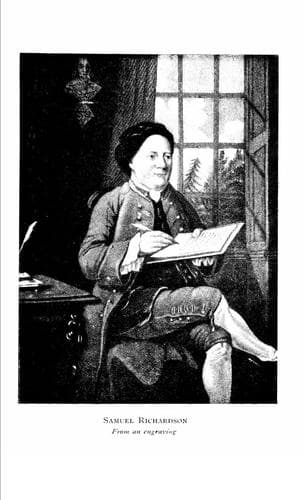
Samuel Richardson was an English writer and printer known for three epistolary novels: Pamela; or, Virtue Rewarded (1740), Clarissa: Or the History of a Young Lady (1748) and The History of Sir Charles Grandison (1753). He printed almost 500 works, including journals and magazines, working periodically with the London bookseller Andrew Millar. Richardson had been apprenticed to a printer, whose daughter he eventually married. He lost her along with their six children, but remarried and had six more children, of which four daughters reached adulthood, leaving no male heirs to continue the print shop. As it ran down, he wrote his first novel at the age of 51 and joined the admired writers of his day. Leading acquaintances included Samuel Johnson and Sarah Fielding, the physician and Behmenist George Cheyne, and the theologian and writer William Law, whose books he printed. At Law's request, Richardson printed some poems by John Byrom. In literature, he rivalled Henry Fielding; the two responded to each other's literary styles.







