“I was the shadow of the waxwing slain by the false azure in the windowpane; I was the smudge of ashen fluff—and I lived on, brainless but with human eyes.”
— John Shade's poem, Canto One, reflecting on a bird hitting a window.

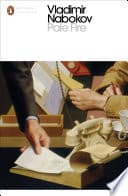
Vladimir Nabokov (2012)
Genre
Literary Fiction
Reading Time
6-8 hours
Key Themes
See below
Sign in to track this book
A reclusive scholar's increasingly unhinged annotations on his deceased neighbor's 999-line poem unveil a tale of mistaken identity, exile, and the tricky nature of interpretation.
The novel begins with an eager and somewhat boastful foreword by Charles Kinbote, who presents himself as the close friend and neighbor of the recently deceased American poet, John Shade. Kinbote explains that he is editing and annotating Shade's final, unfinished 999-line poem, also called 'Pale Fire,' which appears in full right after the foreword. Kinbote claims to be the only person truly able to understand and interpret Shade's work, suggesting that the poem contains veiled references to his own life and a hidden message that only he can figure out. He immediately establishes his odd and unreliable narrative voice, hinting at a deeper, more personal connection to the poem than a mere editor might have.
John Shade's poem 'Pale Fire' is a long, autobiographical work in four cantos, totaling 999 lines. It covers various parts of Shade's life: his childhood, his marriage to Sybil, his academic career, his experiences with nature, his thoughts on death and an afterlife, and most notably, the sad suicide of his daughter, Hazel. The poem is written in a clear, easy-to-read style, using rhyming couplets, and explores themes of art, reality, and the search for meaning. While seemingly a straightforward personal story, Kinbote later selectively reinterprets and distorts the poem's lines in his extensive commentary.
Kinbote's commentary begins, supposedly to explain Shade's poem. However, from the very first note on Canto One, he strays far from literary analysis, instead using Shade's lines as starting points to tell his own elaborate personal history. He introduces himself as the exiled King Charles II of Zembla, a fictional European country, and describes his dramatic escape from a revolution planned by the 'Extremists.' Kinbote insists that Shade, despite appearing to write about his own life, was actually channeling Kinbote's experiences, and that the poem is a thinly veiled story of Zemblan royalty and political plotting. He claims that Shade sought him out specifically to hear his story.
Continuing his digressions, Kinbote uses Shade's descriptions of nature and home life to add more details about his past as King Charles II of Zembla. He recounts his early life, his marriage to Queen Disa, and the political unrest that led to his overthrow. Kinbote increasingly portrays himself as a very important figure, constantly pursued by an assassin named Gradus (Jakob Gradus, also known as Jack Gray), sent by the Zemblan 'Extremists' to kill him. He maintains that Shade was deeply interested in these stories and that many lines in the poem, especially those referring to 'distant lands' or 'a king,' are direct allusions to Zembla and Kinbote's royal identity.
Kinbote's commentary on Canto Three increases his story about Gradus, the assassin. He carefully tracks Gradus's journey across Europe and America, giving detailed, often fantastic, accounts of his movements and methods. Kinbote believes Gradus's real target is himself, the exiled King Charles II, and that Gradus's arrival in New Wye, where Shade and Kinbote live, is not a coincidence. He interprets Shade's lines about fate, death, and the random nature of existence as direct reflections of Kinbote's own dangerous situation. He also mixes this with more personal stories about his interactions with Shade, often showing Shade as a reluctant but captivated listener to his Zemblan tales.
When Shade's poem talks about the sad suicide of his daughter, Hazel, Kinbote acknowledges the event but immediately reinterprets it to fit his own story. He suggests that Hazel's 'ugliness' and social exclusion were subtly linked to Zembla's fate, or that her death somehow mirrors his kingdom's downfall. He even guesses that Shade's grief was made worse by his worry for Kinbote's safety or Zembla's fate. This section shows Kinbote's inability to truly empathize with Shade's personal suffering, instead consistently turning the focus back to himself and his imagined royal struggles, further showing his self-absorption and psychological instability.
Kinbote recounts his 'friendship' with John Shade, showing himself as Shade's closest confidant and inspiration. He describes how he bought the house next to Shade, visited him often, and frequently tried to influence the poem's content, urging him to write about Zembla. He recalls their walks, conversations, and Shade's apparent interest in his stories. However, the reader gradually understands that Kinbote's 'friendship' was mostly one-sided and intrusive, with Shade often trying to politely avoid Kinbote's constant presence and attempts to control his creative process. Kinbote's descriptions reveal his deep loneliness and his desperate need for connection and validation.
In his final notes, Kinbote details the circumstances of John Shade's death. He claims that on the day Shade finished his 999-line poem, he was shot and killed by Gradus, the Zemblan assassin. However, Kinbote insists that Gradus's real target was not Shade, but Kinbote himself, the exiled King Charles II, who was wearing a white academic gown similar to Shade's. Shade was simply in the wrong place at the wrong time, caught in the crossfire of a Zemblan political vendetta. This dramatic climax is presented entirely through Kinbote's unreliable perspective, reinforcing his delusion that his life is the main drama around which all other events revolve.
Shade's poem famously ends one line short of its intended 1000 lines. Kinbote spends a lot of his commentary guessing what the final, unwritten line would have been. He offers several possibilities, all of which, predictably, relate to Zembla, his own identity, or the assassin Gradus. He believes that Shade was about to explicitly reveal the Zemblan connection, thereby proving Kinbote's entire interpretation right. This obsession with the missing line shows Kinbote's desperate need for outside validation of his fantastical narrative and his belief that Shade's art was inherently about him.
Kinbote recounts that Gradus, after mistakenly killing Shade, was himself caught and later died while trying to escape custody (or, in another version, by falling down stairs). Kinbote then describes his flight from New Wye, taking Shade's manuscript with him. He retreats to a remote cabin in a mountainous area, supposedly to finish his editorial work alone. This act of physically removing himself and the manuscript from New Wye further isolates Kinbote and allows him to fully immerse himself in his delusions, free from the reality of the academic community that would undoubtedly question his interpretations.
In the concluding notes, Kinbote's psychological state becomes clear. He deals with the implications of Shade's death, his own loneliness, and the truth of his Zemblan story. While occasionally hinting that his entire story is made up, he quickly dismisses such thoughts, holding onto his identity as King Charles II. He reveals his plans to keep writing, perhaps under a different name, and hints at a cycle of reincarnation, suggesting that he may reappear in another form. The final notes confirm the reader's understanding that Kinbote is a deeply disturbed individual, using his elaborate fantasy as a shield against a harsh and isolating reality.
The Protagonist/Unreliable Narrator
Kinbote's arc is one of increasing isolation and deepening delusion, as he retreats further into his fantasy world after Shade's death, using the poem as a vessel for his own fabricated reality.
The Central Figure/Poet
Shade's 'arc' is largely presented through his finished poem, showing his journey through life, grief, and artistic creation, culminating in his tragic, accidental death.
The Supporting
Sybil's arc remains relatively stable, embodying steadfast loyalty and a clear-eyed perspective in contrast to Kinbote's fantasy.
The Supporting/Tragic Figure
Hazel's arc is tragic and complete within the poem, from her difficult life to her suicide, which profoundly shapes her father's art.
The Antagonist/Imagined Threat
Gradus's 'arc' is dictated by Kinbote's narrative, culminating in his accidental killing of Shade and his own subsequent demise.
The Mentioned
Disa's 'arc' is static, existing solely within Kinbote's recounted Zemblan history.
The Mentioned
Their 'arc' is historical within Kinbote's delusion, having already achieved their goal of overthrowing him.
The novel explores how people build their own realities, often differing from objective truth. Kinbote's elaborate Zemblan fantasy, detailed in his notes, completely overrides the reality of John Shade's life and poem. He genuinely believes his delusions, showing how subjective perception can change or replace shared reality. The reader constantly questions what is 'real' – Shade's grounded poem or Kinbote's fantastical interpretation. This theme is clear in Kinbote's insistence that Shade's lines like 'a king, a web, a wretch, an insect' directly refer to him and Zembla, despite clear evidence otherwise, highlighting how interpretation can be subjective and self-serving.
“''I am not a poet. I am a poet's editor. I am a poet's reader. I am a poet's commentator. I am a poet's friend.'”
Nabokov examines the connection between an artist's creation and how it is received, especially the possibility of misunderstanding and appropriation. John Shade's poem is a sincere, autobiographical work, yet Kinbote's commentary completely takes over its meaning, twisting it to serve his own story. This shows the power of the interpreter to reshape or even destroy the original intent of a work of art. The novel suggests that once a work is released, its meaning can become fluid and subject to the biases and psychological states of its audience, as seen in Kinbote's re-reading of every mention of 'king' or 'exile' in Shade's poem as a direct reference to himself.
“''How many things are there which a poet cannot mention without our immediately perceiving a second, more personal meaning?''”
Kinbote's character is a study in psychological delusion and self-centeredness. His entire world revolves around his imagined identity as King Charles II of Zembla, so much so that he believes the universe conspires to confirm his fantasy. He cannot see any event or person outside his own self-important narrative. This theme is clear in his inability to truly mourn or understand Shade's grief over Hazel; instead, he immediately tries to connect it to his own Zemblan struggles. His isolation is both a cause and consequence of his madness, as his delusions push away any chance of real human connection.
“''It is the mind that makes the body rich; and as the sun breaks through the darkest clouds, so honor peereth in the meanest habit.''”
Both Shade and Kinbote seek identity and meaning, though in very different ways. Shade seeks meaning through his art, thinking about his life, family, and philosophical questions about existence and an afterlife. His poem tries to find patterns and comfort in life's randomness and death. Kinbote, on the other hand, builds a grand, fictional identity to escape a mundane, lonely, and perhaps painful reality. His Zemblan narrative is his desperate attempt to give his life significance and to affirm his existence against perceived insignificance. His constant search for a 'secret message' in Shade's poem is his way of seeking outside validation for his made-up self.
“''Life is a message. I am the messenger. The message is: there is no message.''”
While often overshadowed by Kinbote's showy delusions, the theme of loss and grief is central to John Shade's poem. The most moving example is his deep and lasting sorrow over his daughter Hazel's suicide. Shade's poem explores the pain of this loss, his attempts to understand it, and his philosophical struggle to find meaning in suffering. This genuine grief provides a sharp emotional anchor to the novel, contrasting with Kinbote's self-centered interpretations and his inability to truly empathize with Shade's pain, as he tries to reframe Hazel's death to suit his own narrative.
“''I was the shadow of the waxwing slain / By the false azure in the windowpane; / I was the smudge of ashen fluff—and I / Lived on, flew on, in some new butterfly.''”
Charles Kinbote's perspective is deeply skewed by his delusions.
The novel is entirely filtered through the lens of Charles Kinbote, an intensely unreliable narrator. His mental instability and self-aggrandizing delusions mean that his account of events, his 'friendship' with Shade, and especially his interpretation of 'Pale Fire' cannot be trusted. The reader must constantly sift through his commentary, discerning the kernels of truth from the vast expanse of his fantasy. This device creates a profound sense of irony and ambiguity, forcing the reader to actively participate in constructing the 'true' story, which often exists in the gaps and contradictions of Kinbote's narrative.
A poem contained within a scholarly commentary, which itself becomes a personal narrative.
The novel employs a complex frame story structure. At its core is John Shade's 999-line poem, 'Pale Fire.' This poem is then presented within Kinbote's extensive, chapter-by-chapter commentary. However, the commentary quickly overtakes the poem, transforming into Kinbote's own autobiographical narrative about his life as the exiled King of Zembla. This layering of narratives allows Nabokov to explore multiple perspectives and levels of reality, making the book a meditation on interpretation itself. The poem is the 'frame' that Kinbote then fills with his own, entirely different, story.
The novel self-consciously draws attention to its own artificiality and construction.
Pale Fire is a highly metafictional work. It is a novel about a poem, about editing, about interpretation, and about the act of storytelling itself. The novel constantly reminds the reader that they are reading a constructed text, particularly through Kinbote's self-aware (though deluded) discussions of his editorial process, his relationship with the author, and his attempts to shape the narrative. This device blurs the lines between author, editor, and reader, inviting reflection on the nature of literary creation, criticism, and the elusive quality of truth in narrative. The novel essentially comments on its own existence as a literary artifact.
Extensive allusions and references to other texts, both real and imagined.
The novel is rich in intertextual references, both overt and subtle. It directly references Shakespeare ('pale fire' from *Timon of Athens*), and Kinbote frequently alludes to a vast, imagined body of Zemblan literature, history, and mythology. These references serve multiple purposes: they add layers of intellectual playfulness, enhance the illusion of Kinbote's fabricated world, and invite the reader to consider the ways in which texts speak to and influence one another. The interplay between Shade's grounded poetic voice and Kinbote's fantastical allusions further highlights the clash of realities within the novel.
“I was the shadow of the waxwing slain by the false azure in the windowpane; I was the smudge of ashen fluff—and I lived on, brainless but with human eyes.”
— John Shade's poem, Canto One, reflecting on a bird hitting a window.
“My God, what a beautiful world. It's a pity, though, that we have to die.”
— A casual observation by John Shade, highlighting a central theme.
“It is the fate of the man who looks too long at the Gorgon to become a stone himself.”
— Charles Kinbote's commentary, reflecting his own obsession.
“For better or worse, I am the only one who can make myself understood, and I am the only one who cares.”
— Kinbote's assertion of his unique understanding of Shade's work.
“The only way to get rid of a temptation is to yield to it.”
— A philosophical musing, often attributed to Oscar Wilde but echoed in the novel's themes.
“Oh, had I been a gaudy butterfly, I would have flown to you, my love, and died upon your hand.”
— A line from John Shade's poem, expressing romantic longing and fragility.
“God, I hate these people who are so busy explaining the obvious.”
— Kinbote's frustration with perceived intellectual inferiority.
“And when I speak of a genius, I mean a person who has the capacity for the highest forms of creative thought.”
— Kinbote's definition of genius, applied to himself and Shade.
“I confess I do not believe in time.”
— A philosophical statement by Kinbote, hinting at his subjective reality.
“The color of the sky, that night, was an unearthly blue, a blue that made one think of something inexpressibly remote and cold.”
— A descriptive passage, showcasing Nabokov's vivid imagery.
“It is not the business of the artist to be a reporter.”
— A statement on the nature of art, contrasting with literal interpretation.
“Let us be realistic. The world is a place of suffering, and we are all condemned to it.”
— A pessimistic reflection within Kinbote's commentary.
“The game of worlds is being played now, and we are the pieces.”
— A metaphysical musing, suggesting a grander, hidden design.
“I have often wondered if the world is not a dream, and we are the dreamers.”
— A solipsistic thought, central to Kinbote's unreliable narration.
“One day, when all the world is but a memory, I shall still be here, a ghost among the ruins.”
— A poignant and self-aggrandizing statement by Kinbote about his enduring legacy.
Ready to see how well you understood this book? Take our interactive quiz with 10 questions.
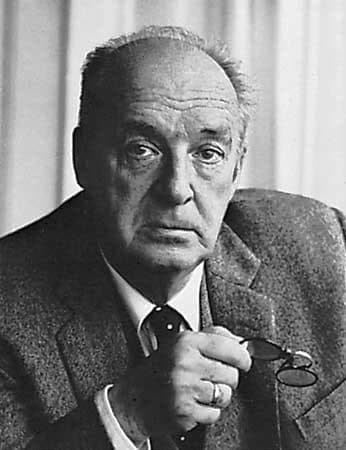
Vladimir Vladimirovich Nabokov, also known by the pen name Vladimir Sirin, was an expatriate Russian and Russian-American novelist, poet, translator, and entomologist. Born in Imperial Russia in 1899, Nabokov wrote his first nine novels in Russian (1926–1938) while living in Berlin, where he met his wife. He achieved international acclaim and prominence after moving to the United States, where he began writing in English. Nabokov became an American citizen in 1945 and lived mostly on the East Coast before returning to Europe in 1961, where he settled in Montreux, Switzerland.







