“Perhaps a crown is not for me.”
— Miri contemplates her future and her role in the kingdom of Danland.

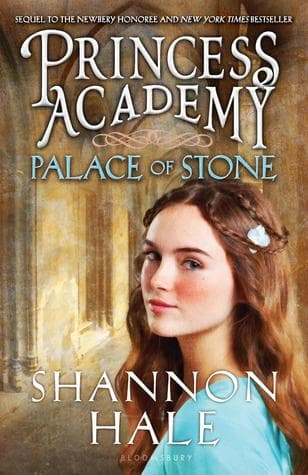
Shannon Hale (2012)
Genre
Fantasy / Children's / Young Adult / Romance
Reading Time
360 min
Key Themes
See below
Sign in to track this book
Miri, new to the city, juggles royal duties, a blossoming romance, and the unsettling revolutionary talk of her sophisticated new friends.
Miri Larendaughter and the other Princess Academy girls, including Peder, travel from Mount Eskel to the capital city of Asland. They are there to help Princess Britta prepare for her wedding to Prince Steffan, and to serve as companions. Miri is excited to attend school at the Queen's Castle, a chance she did not have on the mountain. She looks forward to learning and experiencing city life, though she misses her family and the comfort of Mount Eskel. The city's busy streets and grand buildings are very different from her home, making her feel both wonder and a little apprehension.
Miri enrolls in the Queen's Castle school, where she meets sophisticated students from various noble families. She quickly befriends Timon, a charismatic and intelligent young man, and Astrid, a sharp and independent girl. These new friendships introduce Miri to ideas and perspectives new to her. They discuss politics, philosophy, and social inequalities in Danland, topics that both fascinate and challenge Miri's understanding of her kingdom. Timon, in particular, seems to influence her, introducing her to revolutionary ideas and questioning the current system.
As Miri spends more time with Timon and Astrid, she realizes their discussions about social justice are not just academic. They are part of a secret group, the 'Stonecrafters,' who are actively planning a revolution to overthrow the monarchy and establish a more democratic government. This discovery troubles Miri. She understands their complaints and their desire for a fairer society, having experienced poverty herself, but she is also loyal to Princess Britta and the royal family. The Stonecrafters' plans, which include potential violence, force Miri to face a moral dilemma between her new ideals and her existing loyalties.
While navigating her new school life and the revolutionary talk, Miri continues helping Princess Britta with her wedding preparations. Britta, still somewhat insecure, relies on Miri's calm manner and practical advice. Miri observes the complex court politics and the concerns of the nobility, which further complicate her view of the Stonecrafters' arguments. She starts to notice clues and overhear conversations that suggest the Stonecrafters' growing influence, even within the palace. The pressure increases as the wedding day approaches, with the knowledge that the revolution could start at any moment, potentially endangering Britta and the entire kingdom.
Peder, who had returned to Mount Eskel for a time, comes back to Asland. His presence reawakens Miri's feelings for him, adding another layer to her already complex emotional state. She finds herself torn between her deep affection for Peder, who represents the comfort and values of her home, and her growing connection with Timon, who embodies the exciting and dangerous ideals of change. This romantic dilemma mirrors her larger conflict between loyalty to the crown and sympathy for the revolution. Peder, unaware of the full extent of Miri's involvement with the Stonecrafters, senses her distraction and the growing distance between them.
Miri learns more about the Stonecrafters' plans, discovering they intend to use Britta's wedding day as the start of their uprising. Their goal is to capture the royal family and force them to step down, establishing a republic. Miri is horrified by the potential for violence and the disruption it would cause. She struggles with the morality of their methods, even as she understands the injustices they want to fix. The realization that her friends are willing to take such drastic measures forces Miri to make a difficult choice: whether to betray her friends to protect the monarchy or to stand by their ideals, even if it means risking chaos.
After much thought, Miri decides she cannot let the revolution unfold violently. She realizes that while the Stonecrafters' goals might be good, their methods are too dangerous. She resolves to warn the royal family, but she must do so without directly harming her friends or causing widespread panic. Using her 'quarry-speech' ability, a way of communicating with stone learned at the Princess Academy, Miri finds a subtle way to convey the danger. She begins leaving coded messages within the palace's stone walls, hoping to alert the right people without revealing too much.
Britta's wedding day arrives, full of tension and anticipation. As the ceremony begins, the Stonecrafters launch their revolution. The city becomes chaotic as their supporters rise up, trying to take control of the palace and the royal family. Miri's subtle warnings had been partly understood, leading to some increased security, but the scale of the uprising still surprises many. Miri is caught in the middle of the events, seeing firsthand the violence and fear she had tried to prevent. She must now actively work to protect Britta and the innocent, even as her friends are on the opposing side.
During the uprising, Miri uses her intelligence and quick thinking to navigate the conflict. She confronts Timon and Astrid, trying to reason with them and calm the situation. She also uses her quarry-speech ability to guide the guards and help protect the royal family and innocent citizens. Miri's actions are important in preventing more bloodshed and restoring some order to the chaotic situation. She shows great bravery and a clear moral compass, proving that true change does not always require violent revolution but can be achieved through negotiation and understanding.
The revolution is eventually stopped, but not without significant disruption. The royal family is safe, and the Stonecrafters' leaders, including Timon and Astrid, are arrested. However, the events force the monarchy to acknowledge the people's valid complaints. Through Miri's mediation and public outcry, a compromise is reached, promising reforms and a more representative government. Miri's role in preventing a civil war is recognized, solidifying her position. She chooses to remain in Asland, embracing her path as a scholar and advisor, strengthening her relationship with Peder, and committing to working towards a more just Danland from within the system.
The Protagonist
Miri evolves from a naive mountain girl to a politically aware young woman who uses her intelligence and unique abilities to prevent a revolution and advocate for peaceful reform.
The Supporting
Peder learns to trust Miri's judgment and embrace her evolving role, even if it takes her away from Mount Eskel, ultimately strengthening their bond.
The Supporting
Britta grows in confidence as a future queen, facing the threat of revolution and learning the importance of listening to her people.
The Antagonist/Supporting
Timon's rigid idealism is challenged by Miri's actions, leading him to confront the consequences of violent revolution.
The Supporting
Astrid's commitment to the revolution is tested by Miri's intervention, forcing her to re-evaluate the effectiveness of their chosen path.
The Supporting
Steffan is forced to confront the discontent within his kingdom, prompting him to consider reforms for his future reign.
The Supporting
They continue to support Britta and Miri, adapting to their new roles in the city.
This theme is central to Miri's journey in Asland. She is torn between her loyalty to Princess Britta and the royal family, and her growing understanding of the social injustices that drive the Stonecrafters' revolutionary ideas. Miri sees the validity of the revolutionaries' desire for a fairer society, having experienced poverty on Mount Eskel, but she struggles with their proposed violent methods. Her internal conflict reflects the larger societal struggle, showing the difficult choices individuals face when confronted with systemic inequality. This is clear when she discovers Timon's revolutionary plans and must decide whether to protect her friend or the kingdom.
““Was it right to tear down what was, even if what was, was wrong? Was it right to rebuild with violence, even if the new foundation promised to be better?””
The novel explores different forms of governance and the responsibilities of those in power. The monarchy, represented by Britta and Steffan, is largely benevolent but somewhat unaware of the common people's struggles. The Stonecrafters, on the other hand, advocate for a more democratic republic, believing it will lead to greater equality. Miri's experiences in both Mount Eskel and Asland allow her to examine these systems, questioning whether a monarchy can truly serve its people or if revolution is the only path to justice. The book suggests that genuine reform and compromise, rather than overthrow, can lead to lasting change.
““A kingdom could not be held together by stone, but by the hearts of its people.””
Miri's move from Mount Eskel to Asland forces her to confront her changing identity. She is no longer just a quarry-girl but a student, a royal advisor, and someone exposed to radical political ideas. She grapples with whether her 'home' is still Mount Eskel with Peder, or if her place is now in the bustling city, contributing to its future. Her relationships with Peder and Timon further complicate this, as each represents a different potential path for her life. This theme is explored as Miri finds her voice and purpose not just as a loyal subject or a revolutionary, but as an independent thinker committed to a better future for her kingdom.
““She was no longer just Miri of Mount Eskel. She was Miri of Asland, Miri of the Queen’s Castle, Miri who understood the tremors beneath the surface of the world.””
Miri's romantic entanglements reflect her larger internal conflicts. Her love for Peder represents the comfort, familiarity, and stability of her past and her home. Her growing connection with Timon, however, symbolizes the excitement, challenge, and dangerous appeal of new ideas and a different future. She must choose not only between two boys but between two very different ways of life and sets of values. This theme shows how personal relationships can mirror and influence broader ideological struggles, forcing Miri to understand what truly matters to her.
““Perhaps love wasn’t a thing to be chosen, but a thing to be acknowledged, like the coming of spring.””
Miri's unique ability to communicate and empathize with stone.
Quarry-speech, a skill Miri honed at the Princess Academy, allows her to 'listen' to the stone and understand its feelings or memories. In 'Palace of Stone,' this ability becomes a crucial plot device. Miri uses it not only to gather information by sensing the 'mood' of the palace walls but also to subtly transmit warnings to the royal family without directly implicating herself or her friends. It serves as a metaphor for deep empathy and understanding, allowing Miri to connect with the very foundations of her world and influence events in a non-violent, unique way. It highlights her special connection to her mountain heritage.
A clandestine group planning a revolution against the monarchy.
The Stonecrafters serve as the primary source of conflict and political tension in the narrative. This secret society, led by Timon and Astrid, represents the growing discontent among the populace and the desire for radical change. Their existence and plans force Miri to confront complex moral and ethical dilemmas. The society acts as a catalyst for Miri's political awakening and her active role in shaping the future of Danland. It introduces themes of justice, rebellion, and the potential for violence in the pursuit of ideals, driving much of the plot's suspense and action.
Princess Britta's marriage to Prince Steffan, serving as a focal point and deadline.
Britta's wedding is more than just a ceremonial event; it acts as a critical plot device that provides a clear timeline and escalating tension. It is the catalyst for the Princess Academy girls' move to Asland and serves as the planned moment for the Stonecrafters' revolution. The impending wedding creates a sense of urgency for Miri, as she races against time to prevent bloodshed. It also symbolizes the continuity of the monarchy, making it a symbolic target for the revolutionaries and a moment of vulnerability for the royal family, around which the entire climax of the story revolves.
“Perhaps a crown is not for me.”
— Miri contemplates her future and her role in the kingdom of Danland.
“A queen rules a country, but a princess rules a heart.”
— Miri reflects on the different kinds of power and influence.
“Sometimes the right thing is the hardest thing.”
— Miri faces a difficult decision with significant consequences.
“Every person has a part to play, no matter how small.”
— Miri realizes the importance of all citizens in the political landscape.
“Peace is not the absence of war, but the presence of justice.”
— Miri's political philosophy on how to maintain true stability.
“To love is to give of yourself, even when it hurts.”
— Miri understands the demanding nature of true love and commitment.
“A true leader listens more than they speak.”
— Miri learns a crucial lesson about effective governance.
“The greatest strength is often found in quiet persistence.”
— Miri observes how change can be achieved through steady effort.
“You cannot truly know someone until you understand their fears.”
— Miri gains insight into the motivations of those around her.
“There are many kinds of courage, and not all of them involve swords.”
— Miri recognizes the bravery in diplomacy and difficult choices.
“Sometimes, the best way to help is to step aside and let others lead.”
— Miri learns humility and the value of empowering others.
“Hope is a powerful thing, a whisper in the dark that can become a roar.”
— Miri reflects on the enduring power of hope amidst political turmoil.
“A promise made is a debt unpaid.”
— Miri emphasizes the importance of integrity and keeping one's word.
“The world is not always what it seems; look deeper.”
— Miri's growing awareness of political complexities and hidden motives.
Ready to see how well you understood this book? Take our interactive quiz with 10 questions.

Biography coming soon.







