“Everything we are is at risk.”
— Cotter Martin's internal thoughts about the stakes of the game.

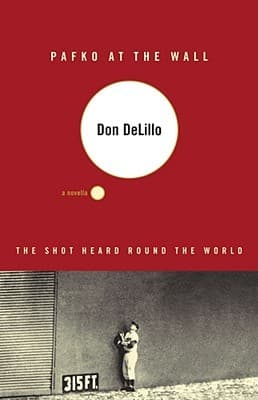
Don DeLillo (2001)
Genre
Historical Fiction
Reading Time
90 min
Key Themes
See below
Sign in to track this book
Don DeLillo dissects the cultural and political effects of Bobby Thomson's 1951 'Shot Heard Round the World,' connecting the fates of characters from Jackie Gleason to J. Edgar Hoover at the Polo Grounds.
The story begins on October 3, 1951, at the Polo Grounds in New York City. The New York Giants and the Brooklyn Dodgers prepare for the deciding third game of their National League pennant playoff. The stadium is full of anticipation, with fans, vendors, and many public figures. Don DeLillo describes the scene, including the smells of hot dogs and beer, the crowd's roar, and the autumn light. The story introduces a sense of shared experience, with various characters heading to their seats, each with their own hopes and worries for the historic game.
J. Edgar Hoover, the director of the FBI, arrives at the Polo Grounds with his associate Clyde Tolson. Hoover is shown as a powerful man, obsessed with control and appearances. He is there to enjoy the game, but his presence soon takes on a darker tone. He expects a secret message that will greatly affect the Cold War. His interaction with Frank Sinatra, also present, shows Hoover's wish to seem authoritative and connected to celebrities, even as he deals with national security. The coming news of Soviet atomic testing strongly contrasts with the immediate drama of the baseball game.
The story moves through the stands, showing many characters beyond Hoover. Comedian Jackie Gleason teases restaurateur Toots Shor in Leo Durocher's box seats, their talk adding to the event's atmosphere. Russ Hodges, the Giants' radio announcer, prepares for his broadcast, his voice already a character. DeLillo also focuses on anonymous fans, showing their hopes, superstitions, and passion for the game. This range of attendees—from the powerful to the everyday citizen—shows the wide appeal and cultural importance of the baseball playoff, creating a small picture of American society in the early 1950s.
The game starts, and the tension is high. The Giants, managed by Leo Durocher, and the Dodgers, led by Charlie Dressen, are in a fierce contest. The early innings are a pitcher's duel, with both teams struggling to score. The story follows the game's flow, detailing key plays, missed chances, and the growing pressure on the players. Russ Hodges's radio commentary provides a running soundtrack, his voice capturing the excitement and worries of the moment. The crowd's reactions, their cheers and groans, are clearly shown, emphasizing the shared emotional investment in every pitch and hit. The game is more than just a sport; it is a high-stakes drama reflecting national worries.
During the baseball drama, J. Edgar Hoover gets the important intelligence he expects. His aide, Clyde Tolson, quietly tells him that the Soviet Union has successfully tested an atomic bomb. This news breaks Hoover's calm and casts a dark shadow over the festive ballpark. The news of Soviet nuclear ability means a big increase in the Cold War, a moment of national danger. DeLillo puts the immediate, contained drama of the baseball game next to the overwhelming, global threat of atomic warfare, showing how personal and historical events connect and disconnect at the same time.
As the game goes into the ninth inning, the tension peaks. The Dodgers score, taking a lead and putting the Giants in a bad spot. The crowd's despair is clear, and the Giants seem likely to lose. Russ Hodges's commentary shows the growing worry, his voice revealing the hopes and fears of Giants fans. The story focuses on the individual players, their expressions of pressure and resolve, as they face what seems like an impossible challenge. The weight of the moment, the end of a long season, hangs over the Polo Grounds.
With the Giants down by two runs in the bottom of the ninth, and two men on base, Bobby Thomson comes to the plate. The atmosphere is electric, charged with desperate hope and coming resignation. The crowd holds its breath, knowing this could be the Giants' last at-bat of the season. DeLillo describes the anticipation, the silence in the stadium, broken only by the crowd's murmurs and the radio broadcast. Thomson's focus, pitcher Ralph Branca's resolve, and everyone's shared worry come together at this moment, setting the stage for an unforgettable ending.
Bobby Thomson hits Ralph Branca's pitch. The sound of the bat echoes through the stadium, and the ball flies towards the left-field wall. For a moment, the Polo Grounds holds its breath, watching the ball's path. Then, it clears the fence—a three-run home run. Russ Hodges's call, "The Giants win the pennant! The Giants win the pennant!" comes from the radio, capturing the sheer joy of the moment. The stadium explodes in a happy noise, a wave of happiness washing over the fans and players. This single swing makes the game a legend, a moment of pure victory.
In the chaos after Thomson's home run, the story explores the immediate reactions of the characters. The Giants players celebrate wildly, mobbing Thomson at home plate. Fans run onto the field in happy disorder. Russ Hodges, his voice hoarse, continues his excited broadcast. J. Edgar Hoover, having seen the national joy, thinks about the contrast between the game's thrill and the grim reality of the atomic age. The event helps DeLillo examine themes of shared experience, the connection of personal and historical stories, and how triumph is brief against larger, more threatening global events.
The story ends by emphasizing the lasting impact of "The Shot Heard 'Round the World." DeLillo considers how this baseball moment became part of the nation's memory, a symbol of hope and excitement during a time of growing international worry. The story shows how sport can unite a culture, even as it acknowledges the darker parts of the Cold War and the threat of nuclear destruction that shadowed the era. The event, though on a baseball field, goes beyond its immediate setting, becoming a legendary moment in American history, forever linking a sporting win with the larger events of the 20th century.
The Supporting
Hoover begins as a man expecting significant news and ends, having received it, with a chilling understanding of the world's peril, juxtaposed against the triviality of a game.
The Protagonist/Central Figure
Thomson's arc culminates in a single, defining moment of triumph that cements his place in sports history.
The Supporting
Hodges's character arc is defined by his escalating excitement and the ultimate, iconic delivery of his famous call.
The Supporting
Gleason's role is largely static, serving as a vibrant observer and a symbol of mid-century celebrity culture.
The Supporting
Shor's arc is limited to his role as a celebrity observer, contributing to the story's vibrant historical setting.
The Mentioned/Supporting
Sinatra's role is primarily symbolic, representing celebrity and its intersection with power.
The Supporting
Branca's arc peaks in the moment of his defining failure, forever linked to Thomson's success.
The Supporting
Tolson's arc is consistent, remaining Hoover's steadfast and discreet assistant.
The novella puts the public spectacle of the baseball game, a moment of national joy, next to the private worries and historical events happening at the same time. J. Edgar Hoover hearing about the Soviet atomic bomb during the game is a main example. This contrast shows how big historical changes (the Cold War) can happen at the same time as seemingly small, but deeply felt, cultural moments (a baseball pennant race). It shows how lived experience is broken and has many layers. The 'Shot Heard 'Round the World' becomes a personal memory for millions, but also a small part of a much larger, more threatening global story.
“What does a man remember? What does he choose to forget? A home run. A bomb. He carries them both.”
DeLillo explores how shared events, especially sports, can create a strong sense of community and national identity. Everyone at the Polo Grounds, from celebrities like Jackie Gleason to anonymous fans, is united in anticipation, despair, and joy over the Giants' win. Russ Hodges's radio call, heard across the country, makes this shared experience bigger, making millions feel part of the moment. This theme shows how sport can unite people, almost like a ritual, where individual feelings combine into one big wave of shared emotion, creating a lasting cultural memory that goes beyond individual lives.
“A sound that was both human and animal, an animal that was human, a sound that was the city itself, the people, the mass, the roar.”
The novella explores how important events, especially in sports, become part of American myth and identity. Bobby Thomson's home run is more than just a game; it is 'The Shot Heard 'Round the World,' a legendary moment in national memory. DeLillo examines how such events become iconic, shaping shared memory and providing a story for future generations. The story explores the desire for heroes and defining moments, especially during a time of increasing global uncertainty, suggesting that these myths offer cultural unity and comfort.
“It was a moment that would live forever, a myth unfolding in real time.”
DeLillo plays with the idea of time, stretching moments of strong anticipation and then shortening the time after the home run. The story often changes perspective, letting readers experience the event through different characters' eyes, each with their own internal clock and memory. The story also explores how certain events become unforgettable in shared memory, blurring the lines between personal memory and shared historical story. The 'Shot' is not just an event, but a memory that shapes how people remember the entire era, often overshadowing other, more serious, events of the time.
“Time stopped, then spun, then collapsed into a roar.”
Contrasting the baseball game with the Cold War's anxieties.
DeLillo masterfully employs juxtaposition by setting the intense, joyous drama of the Giants-Dodgers pennant game against the chilling backdrop of the Cold War and the news of Soviet atomic testing. This device highlights the inherent absurdity and profundity of human experience, where moments of national celebration can coexist with existential threats. The baseball game, a symbol of American innocence and entertainment, is constantly undercut by Hoover's secret knowledge, creating a powerful tension that resonates throughout the narrative and emphasizes the complex layers of history unfolding simultaneously.
Narrative voice capturing the shared experience of the crowd.
The novella utilizes an omniscient narrative perspective that often dips into the collective consciousness of the crowd at the Polo Grounds. Instead of focusing on a single protagonist, DeLillo shifts between various individuals—celebrities, officials, and anonymous fans—to paint a comprehensive picture of the shared emotional landscape. This device allows him to explore the unifying power of a major event, demonstrating how individual experiences merge into a collective identity and how a crowd can become a character in itself, embodying the hopes, fears, and ultimate ecstasy of a nation.
Using real historical figures and events as symbolic anchors.
DeLillo extensively uses historical allusions, featuring real-life figures like J. Edgar Hoover, Jackie Gleason, Frank Sinatra, and Russ Hodges. These figures are not just characters but symbolic representations of different facets of 1950s America: power, entertainment, and public discourse. The 'Shot Heard 'Round the World' itself becomes a powerful symbol—not just of a baseball triumph, but of a fleeting moment of national unity and joy amidst the looming shadow of the atomic age, encapsulating a specific cultural and historical turning point.
Vivid descriptions to immerse the reader in the Polo Grounds.
The narrative is rich with sensory details that create an immersive atmosphere of the Polo Grounds on that October day. DeLillo describes the smells of beer and hot dogs, the sounds of the crowd's roar, the specific quality of the autumn light, and the feel of the tension in the air. This meticulous attention to sensory input allows the reader to vividly experience the setting and the emotions of the moment, making the historical event feel immediate and palpable. It grounds the more abstract themes in a concrete, visceral reality.
“Everything we are is at risk.”
— Cotter Martin's internal thoughts about the stakes of the game.
“It was the time of the bomb, the time of the bomb in the mind.”
— Reflecting on the pervasive fear and anxiety of the Cold War era.
“Every game is a life, and every life is a game.”
— A philosophical observation about the intertwining of baseball and existence.
“The past was a dream, the future was a dream. Only the present was real.”
— Cotter Martin's focus on the immediacy of the game.
“This was the meaning of history, the deep narrative. Not the events themselves, but the way they were lived, the way they entered the mind.”
— A character's reflection on the subjective experience of historical events.
“All that was sacred was being remade, or unmade.”
— A sense of societal upheaval and changing values in the post-war period.
“He wanted to know what it felt like to be inside the event, not just watching.”
— Cotter Martin's desire for immersion in the baseball game.
“The ball had a destiny, and the destiny was now.”
— Focus on the pivotal moment of Bobby Thomson's home run.
“It was the sound of the future, the coming sound of things.”
— Referring to the noise and energy of the crowd and the larger historical moment.
“The world was made of numbers, and the numbers were made of fear.”
— A character's cynical view of statistics and the underlying anxieties of the age.
“Every swing of the bat was a gesture against the void.”
— A poetic interpretation of the meaning of baseball.
“We're all just trying to connect the dots, even when there are no dots.”
— A reflection on human attempts to find meaning and patterns.
“The city was a system, a vast, intricate network of desires and discontents.”
— Describing New York City as a complex organism.
“He felt the weight of history in his hands, in the simple act of holding the ticket.”
— Cotter Martin's awareness of the historical significance of the game he's about to witness.
Ready to see how well you understood this book? Take our interactive quiz with 10 questions.
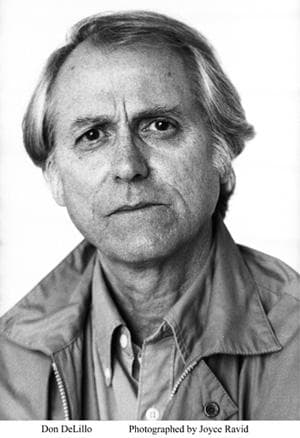
Donald Richard DeLillo is an American novelist, short story writer, playwright, screenwriter and essayist. His works have covered subjects as diverse as television, nuclear war, the complexities of language, art, mathematics, politics, economics, and baseball.