BookBrief
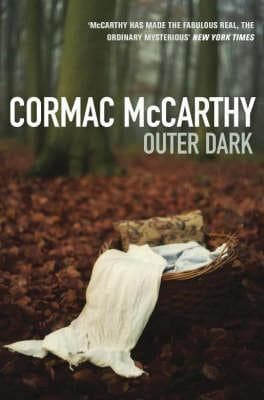
Outer Dark cover
Archivist's Choice

Outer Dark

Cormac McCarthy (1968)

Genre

Literary Fiction

Reading Time

250 min

Key Themes

See below

Track Your Reading

Sign in to track this book

After a woman's incestuous brother abandons their infant son, she searches for him through a world of evil, leading to a grim end for everyone.

Synopsis

Rinthy Holme has a child with her brother Culla. Culla, ashamed, leaves the baby in the woods and tells Rinthy the baby died. Rinthy discovers his lie and starts a dangerous journey through the desolate Appalachian mountains to find her son. Culla also leaves, wandering the same wilderness, haunted by what he did. As they both travel, three evil strangers follow them. A kind shoemaker and his wife find and adopt the infant, giving him a brief time of safety. Rinthy suffers greatly, meeting many morally complex people and facing the wild's harshness. Culla becomes more paranoid and hopeless. The strangers get closer to both siblings, and their cruelty grows. Rinthy finds her son with the shoemaker, but the strangers arrive, murder the shoemaker, and take the child. Rinthy is devastated. Culla eventually returns to the area of the tragedy, facing the terrible results of his first act, leading to a dark and final resolution.
Reading time
250 min
Difficulty
Hard
Pacing
Slow
Mood
Bleak, Desolate, Haunting, Primal, Apocalyptic
✓ Read this if...
You appreciate sparse, poetic prose, bleak existential themes, and a raw, unflinching exploration of human depravity and suffering against a desolate natural backdrop.
✗ Skip this if...
You prefer clear moral resolutions, fast-paced plots, or stories with a strong sense of hope and redemption.

Plot Summary

A Secret Birth and a Desperate Act

In a remote Appalachian cabin, Rinthy Holme gives birth to her brother Culla's child, who has a clubfoot. Overwhelmed by the incest and the child's deformity, Culla secretly takes the baby into the woods. He leaves the newborn under a tree, expecting it to die, then tells Rinthy the baby was stillborn and he buried it. Rinthy, suspicious, questions him, sensing a lie in his answers. She is upset by the loss and Culla's strange behavior.

Rinthy's Search Begins

Believing her child is alive, Rinthy asks Culla for more details about the burial. Her questions lead Culla to admit he left the child in the woods. Devastated and angry, Rinthy decides to find her son. Despite being weak from childbirth and Culla's warnings about the outside world, she leaves the cabin alone with only a few things, determined to retrace Culla's steps and find the infant.

Culla's Flee and a Fateful Encounter

Fearing Rinthy's anger and the results of his actions, Culla also leaves the cabin, going deeper into the wilderness. He becomes a wanderer, moving through the desolate and often dangerous landscape. He has a series of unsettling meetings with isolated and often desperate people. He sees men digging for treasure, meets a traveling preacher, and experiences the harshness of survival in a savage world. These meetings show his growing isolation and the moral decay around him.

The Infant's Survival and Adoption

By chance, a passing tinker finds the infant Culla left, still alive. The tinker, seeing the child's clubfoot, feels sorry for the baby and carries it with him. He eventually brings the child to a small settlement where a childless shoemaker and his wife adopt the infant, naming him John. They do not know the child's true parents or the tragic way he was abandoned. The shoemaker believes the child is a gift from God, despite his deformity, and loves him as his own.

Rinthy's Perilous Journey

Rinthy's journey is hard and dangerous. She walks, enduring hunger, cold, and constant threats. Her resolve to find her son is strong, even as she becomes disoriented and sick. She meets many indifferent or hostile strangers who offer little help or information. Her health worsens, and she experiences moments of confusion, blurring reality with her desperate hope. She meets a hog drover who gives her some food but little comfort or direction.

The Appearance of the Dark Strangers

As Culla and Rinthy wander, three mysterious and terrifying figures appear, moving through the same area. These men are dark, silent, and deeply disturbing. They are a force of random violence and cruelty, leaving destruction, murder, and fear. Their reasons are never explained; they seem to be a primal force of destruction. Their presence casts a long shadow, hinting at coming doom and chaos for anyone they encounter.

Culla's Growing Desperation

Culla's travels take him to various settlements and isolated homes, but he finds no peace. People often view him with suspicion because of his vagrant look and evasive nature. He works odd jobs, always moving, trying to escape his past. He sees violence and sometimes takes part in it, always on the edge. He is accused of theft, barely avoids being lynched, and is increasingly aware of the widespread darkness that seems to follow him. His inner turmoil shows as growing despair and fatalism.

Rinthy's Fading Hope and a Vague Lead

Rinthy's body and mind continue to decline. She is thin and feverish, barely able to keep going. Amidst her suffering, she hears a faint rumor from a peddler or traveler about a child with a clubfoot who was found and taken in by a shoemaker. This vague information, though unconfirmed, reignites a spark of hope in her, giving her a renewed sense of purpose and direction for her search. She holds onto this fragile clue, pushing herself despite her severe weakness.

The Tinker's Fate and the Strangers' Proximity

The tinker who found Rinthy's baby continues his travels. He eventually meets the three dark strangers, who murder him without clear reason, taking his few belongings. This act of pointless violence shows the widespread evil that has come to the land and the random nature of their brutality. The strangers are now actively moving through the same territory as Rinthy and Culla, their paths heading towards a violent climax, bringing them closer to the child.

Rinthy's Arrival and the Child's Discovery

Following the faint rumors, Rinthy finally finds the shoemaker's isolated cabin. Through a window, she sees the child with the clubfoot, her son, being cared for by the shoemaker and his wife. A deep mix of relief, exhaustion, and maternal love washes over her. However, her moment of discovery is broken by the ominous arrival of the three dark strangers at the shoemaker's door. Their presence means immediate danger, threatening the home's fragile peace and the child's safety, setting the stage for a tragic confrontation.

The Shoemaker's Stand and the Strangers' Cruelty

The shoemaker, fiercely protective of the child, tries to defend his home and family from the intruders. He bravely faces the three dark strangers, but their ruthless violence overpowers him. The strangers murder the shoemaker and his wife. Rinthy, hidden outside, sees the terrible events, unable to help. The child, her son, is now vulnerable and alone after the senseless killing, as the strangers prepare to leave.

Culla's Return and the Final Act

As the dark strangers finish their brutal work and get ready to leave, Culla, drawn by an unknown force or fate, arrives at the shoemaker's cabin. He sees the bloodshed and the strangers. The child, now an orphan, is taken by the strangers. Culla, seeing the full horror of his original act of abandonment and the violence it caused, is frozen. The strangers, having completed their dark purpose, leave with the child, vanishing into the darkness, leaving Culla to witness the devastating results of his choices. The child is lost forever.

Principal Figures

Culla Holme

The Protagonist/Antagonist

Culla begins as a man attempting to escape responsibility for his actions, only to be relentlessly pursued by the consequences, culminating in a silent, desolate realization of his fate.

Rinthy Holme

The Protagonist

Rinthy transforms from a victim of circumstance into a relentless, almost mythic figure of maternal devotion, relentlessly pursuing her child against all odds.

The Child (John)

The Supporting

The child's brief existence moves from abandonment to a fleeting period of nurture, only to be tragically consumed by the pervasive violence of the world.

The Tinker

The Supporting

The tinker's arc is brief but pivotal, serving as the unexpected rescuer of the child before falling victim to the novel's pervasive violence.

The Shoemaker

The Supporting

The shoemaker's arc is one of simple goodness and a fleeting experience of fatherhood, culminating in his tragic sacrifice to protect his adopted son.

The Three Dark Strangers

The Antagonist

The strangers are a static force of malevolence, their presence consistently escalating the violence and despair throughout the narrative.

The Hog Drover

The Supporting

The hog drover's arc is minimal, serving primarily as a brief, fleeting encounter that underscores Rinthy's desperation and the general lack of aid she receives.

The Preacher

The Mentioned

The preacher's arc is static, serving as a symbolic representation of corrupted faith and societal decay.

Themes & Insights

The Nature of Evil and Violence

A main theme is the widespread, often pointless nature of evil. The three dark strangers show an unexplained, primal evil that moves through the land, causing random violence and death. Their actions are not for gain or revenge but seem to be an inherent force of destruction. This theme is also seen in Culla's initial act of abandonment, which starts a series of tragic events, suggesting that human cruelty can be as devastating as external, unexplained evil. The novel portrays a world where evil is not unusual but a natural part of existence, inescapable and often without reason.

What would you do with a man like that? Would you hang him? Would you burn him? Would you turn him loose to wander the outer dark?

Narrator or a character discussing Culla's fate

Guilt, Consequence, and Atonement

Culla's journey is a constant pursuit by the results of abandoning his child. His guilt, though mostly unsaid, shows in his aimless wandering, his inability to find peace, and the dangers he meets. Rinthy's search, driven by love, is also a form of penance for the incest, seeking to reclaim and protect the innocent life that resulted. The novel suggests that some wrongs cannot be escaped or forgiven but must be carried as a constant burden, leading to a fatalistic view of personal responsibility and destiny. The final scene leaves Culla to see the ultimate, terrible outcome of his actions.

He knew that he was a man of sorrow and that he would be a man of sorrow until the day he died.

Narrator about Culla

Maternal Love and Sacrifice

Rinthy's character shows the deep and lasting power of a mother's love. Despite her physical weakness, the journey's dangers, and her bleak situation, her resolve to find her son never lessens. Her constant search shows the self-sacrificing nature of a mother's bond. She endures starvation, sickness, and constant threats, driven only by the hope of finding her child. This theme contrasts sharply with Culla's abandonment and the common cruelty in the world, standing as a sign of lasting human connection amid despair.

She would find him, she knew. She would find him if it took her all the days of her life.

Narrator about Rinthy

The Desolation of the American South

The setting acts as a character itself, showing a desolate, post-apocalyptic, or pre-modern American South. The landscape is harsh, unforgiving, and has few isolated, often desperate people. Towns are rare, and the wilderness is both a refuge and a source of constant danger. This desolation reflects the moral and spiritual decay of the characters and their society. The lack of organized authority or community adds to the widespread lawlessness and individual isolation, showing a world stripped of civilizing influences.

The country was raw and without order, a place of hardscrabble and wildness, where men lived as they could.

Narrator

Fate vs. Free Will

The story explores how much characters control their lives versus being subject to an indifferent or evil fate. Culla's initial act of abandonment starts a series of events that seem destined to end in tragedy. His wandering is less a choice and more a desperate flight that eventually returns to his original sin. The random violence of the dark strangers further emphasizes that life is often controlled by forces beyond human power. While Rinthy actively pursues her goal, even her strong will cannot prevent her child's tragic fate, suggesting a powerful, almost cosmic inevitability.

He wondered what road he would travel and if he would ever find an end to it.

Culla

Plot Devices & Literary Techniques

The Journey/Wanderer Motif

Both Culla and Rinthy embark on separate, aimless journeys through a brutal landscape.

The entire novel is structured around the parallel, yet distinct, journeys of Culla and Rinthy. Culla's journey is one of flight, an attempt to escape the consequences of his actions, but it becomes an aimless wandering, a metaphor for his spiritual lostness. Rinthy's journey, in contrast, is a purposeful quest, driven by an unwavering maternal instinct. These journeys through a desolate, often violent landscape serve to expose the raw, unforgiving nature of the world and to strip the characters bare, revealing their essential humanity (or lack thereof) in extreme circumstances. The lack of specific geographical markers enhances the allegorical quality of their wanderings.

The Dark Strangers (Apostles of the Outer Dark)

Three enigmatic figures embodying senseless evil and chaos.

The three dark strangers function as a symbolic representation of pure, unadulterated evil. They are not characters in the traditional sense, lacking dialogue, motivation, or backstory. Instead, they are a force, an almost supernatural manifestation of the 'outer dark' – a cosmic, indifferent malevolence that plagues the land. Their presence escalates the sense of dread and inevitability, acting as agents of fate who bring destruction and chaos to those they encounter. They are a constant, looming threat, making the world feel inherently hostile and devoid of justice, ensuring the tragic conclusion of the plot.

The Clubfoot

The infant's deformity, symbolizing his otherness and the 'mark' of his origins.

The child's clubfoot is a significant symbol. It immediately marks him as different, deformed, and an outcast. It serves as a physical manifestation of the incestuous union that produced him and Culla's reason for abandoning him. For Rinthy, it becomes the identifying characteristic she clings to in her search. The deformity sets the child apart, making him vulnerable and drawing the attention of both compassionate figures (the tinker, the shoemaker) and ultimately, the dark strangers. It symbolizes the inescapable 'mark' of his origins and the inherent imperfections of life in this brutal world.

Biblical Allusions

Subtle references to biblical narratives, particularly Cain and Abel and the Fall.

McCarthy subtly weaves in biblical allusions throughout the text. The story of Culla and Rinthy, with its themes of incest, abandonment, and wandering, echoes elements of the Fall from Eden and the story of Cain, who is marked and condemned to wander the earth after murdering his brother. The 'outer dark' itself is a phrase with biblical connotations, referring to a place of weeping and gnashing of teeth. These allusions lend a mythic, timeless quality to the narrative, framing the characters' struggles within a larger, archetypal framework of sin, judgment, and exile, without explicitly endorsing religious dogma.

Critical analysis

Notable Quotes

He looked at a world of incredible loveliness. Old distaff Celt's blood in some back chamber of his brain moved him to discourse with the birches, with the oaks. A cool wind had sprung up. The sun shone.

Culla Holme observes the natural world while wandering.

The man who believes that the secrets of the world are forever hidden lives in mystery and fear. Superstition will drag him down. The rain will erode the deeds of his life. But that man who sets himself the task of singling out the thread of order from the tapestry will by the decision alone have taken charge of the world and it is only by such taking charge that he will effect a way to dictate the terms of his own fate.

A philosophical reflection on human agency and understanding.

He saw for a brief moment the absolute truth of the world. The cold relentless circling of the intestate earth. Darkness implacable. The blind dogs of the sun in their running. The crushing black vacuum of the universe.

Culla experiences a bleak, cosmic vision.

They rode on. The country did not change. The sun sat in the west like a molten ingot and the land lay in a dark and bloody haze.

Describing the journey through a desolate landscape.

He had divested himself of the little world of fathers and mothers and the will of gods, and he was alone in the dark of the wood.

Culla reflects on his isolation and abandonment.

The night was filled with stars. He could see them through the trees. They seemed to be moving. He watched them. They were not moving.

A moment of disorientation and perception in the wilderness.

He had not known that terror could be a kind of love.

A cryptic insight into the characters' emotions.

The road descended through a pine wood and came out upon a barren plain. A wind was blowing and it was cold.

Describing the harsh, unforgiving environment.

He saw that the world was a tale told by a idiot. A tale full of sound and fury, signifying nothing.

An allusion to Shakespeare, reflecting on meaninglessness.

In the morning the sun rose blood red and the land lay in a silence so profound it seemed the earth had died in the night.

A vivid, ominous description of dawn.

He had come to see that the only thing that mattered was the will to see it through.

Culla's realization about perseverance.

The dark was falling and the stars were coming out. They were like holes in the fabric of the night.

A poetic observation of the night sky.

He thought that in the world's heart there was a coldness that no fire could ever warm.

A reflection on the inherent coldness of existence.

The road went on. It seemed to have no end. It was the only thing that was real.

Emphasizing the endless, tangible nature of the journey.

Quiz

Test Your Knowledge

Ready to see how well you understood this book? Take our interactive quiz with 10 questions.

10
Questions
~5
Minutes
?
Best Score

Key Questions (FAQ)

'Outer Dark' follows siblings Culla and Rinthy Holme in a bleak, unnamed Appalachian setting. After Rinthy gives birth to their incestuous son, Culla abandons the baby in the woods and tells Rinthy it died. When she discovers the lie, she sets out to find her child, while Culla wanders separately, both encountering a trio of terrifying strangers who bring violence and an apocalyptic atmosphere to the countryside.

About the author

Cormac McCarthy

Cormac McCarthy was an American writer who authored twelve novels, two plays, five screenplays, and three short stories, spanning the Western and postapocalyptic genres. He was known for his graphic depictions of violence and his unique writing style, recognizable by a sparse use of punctuation and attribution. McCarthy is widely regarded as one of the greatest American novelists.