“In the wilderness, you're either predator or prey. There's no in-between.”
— Joe Pickett reflecting on the harsh realities of nature during a dangerous hunt.

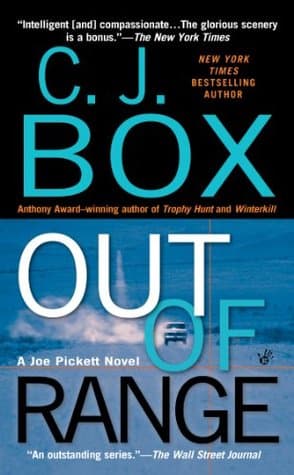
Sign in to track this book
Game warden Joe Pickett investigates the suspicious death of a friend in the Tetons, uncovering corruption that makes him a target.
Game warden Joe Pickett is at his mother-in-law Missy's wedding to rancher Bud Barnum in Cheyenne when he gets a call from Governor Rulon. Joe's friend and fellow game warden, Will Jensen, has apparently died by suicide in his district near Jackson, Wyoming. The news is a shock, as Will was known for his strong character. Governor Rulon asks Joe to temporarily take over Will's district in Jackson Hole, a contrast to Joe's familiar Saddlestring. Joe's wife, Marybeth, is upset by the sudden change, given their financial struggles and Missy's recent wedding. Despite his doubts, Joe agrees, feeling a sense of duty to his friend and the job.
Joe, Marybeth, and their daughters, Sheridan and Lucy, arrive in Jackson, a town that feels unfamiliar and overdeveloped compared to Saddlestring. Joe moves into Will Jensen's cabin, which is surprisingly neat. He reviews the official report of Will's death, which states Will shot himself in the head with his service revolver after an argument with environmental activist Stewart McVeigh. However, Joe finds issues: Will's revolver was in his non-dominant hand, and there is no suicide note, which is unlike Will. He meets with Sheriff’s Deputy Reed and Sheriff Barnum (no relation to Bud), who seem ready to close the case. Joe's instincts tell him that Will's death is not as simple as it seems.
As Joe looks deeper, he learns that Will had reportedly changed his personality, becoming volatile and aggressive. He discovers that Will was having an affair with a local woman named Carol and was secretly involved with a radical environmental group called the 'Friends of the Earth' (FOTE). This group, led by the militant Stewart McVeigh, is known for its extreme actions against development. Joe also finds evidence that Will had been investigating illegal activities related to a proposed ski resort development, suggesting he might have found something dangerous. These facts complicate the official suicide story and raise more questions about Will's last days.
Joe attends a FOTE meeting, pretending to be a curious local. He sees Stewart McVeigh's strong influence over his followers and the group's anti-development stance, especially against the new ski resort project. Joe confronts McVeigh about Will's involvement and his death. McVeigh is evasive and hostile, but Joe gathers that Will had become deeply involved with FOTE, seemingly adopting their radical views. This interaction confirms Joe's belief that Will's death is connected to his activities with the group and the growing tensions in the valley over land use. The encounter also puts Joe on McVeigh's radar, making him a target.
Joe's investigation starts causing problems. He receives anonymous threats and warnings to drop the case. His patrol vehicle is damaged, and he finds a dead deer on his doorstep as a message. Meanwhile, Marybeth and the girls struggle to adjust to life in Jackson. Sheridan is drawn to the local youth culture and the environmental movement, causing tension with Joe. Marybeth, worried for their safety, urges Joe to stop the investigation. However, Joe's commitment to finding the truth about Will's death only grows because of these intimidation tactics; he is sure someone is trying to silence him.
Joe discovers that the proposed ski resort development, led by a wealthy group, is central to the conflict. Will Jensen had been actively investigating illegal land deals, permits, and financial problems connected to the project. Joe learns that the resort developers were working with some local officials to push the project through, bypassing environmental rules. This corruption had created a tense situation, putting developers against environmentalists, with Will caught in the middle. Joe realizes that Will's 'suicide' could be a cover-up for something much larger and more sinister related to this multi-million dollar venture.
Joe tracks McVeigh to a FOTE protest at the proposed ski resort site. During a tense confrontation, Joe exposes McVeigh's hypocrisy, showing that McVeigh himself is secretly profiting from the development he publicly opposes. McVeigh, it turns out, was buying land next to the proposed resort, expecting a large increase in value once the project was approved. He was using FOTE to drive down land prices for his own gain, while also positioning himself to benefit from the development. Will Jensen had discovered this plan and was preparing to expose McVeigh, which led to his death.
Joe finally puts the truth together: Will Jensen was murdered by Stewart McVeigh, not because Will was going to expose McVeigh's environmental profiteering, but because Will had discovered that McVeigh was secretly working with the ski resort developers. McVeigh was acting as an agent provocateur, creating extremist opposition to the resort. This allowed the developers to portray environmentalists as dangerous radicals and gain public support for their project. Will was killed to prevent him from exposing this scheme. The 'suicide' was staged by McVeigh and his co-conspirators, who included corrupt local officials and members of the development group, to silence Will and discredit his findings.
The climax happens during a tense standoff in the mountains. Joe, with the help of a few loyal allies, corners McVeigh and his accomplices. A violent confrontation follows, during which Joe is in great danger. He manages to expose the full extent of the conspiracy, including the involvement of corrupt Sheriff Barnum and other powerful figures. McVeigh is arrested, and the evidence Joe has gathered leads to the arrests of those involved in Will's murder and the wider corruption scheme. The ski resort project is stopped, and the truth about Will Jensen's integrity is finally revealed, clearing his name and bringing some peace to Joe and his family.
With the case resolved and justice served, Joe and his family prepare to leave Jackson. The experience has been difficult, leaving Joe shaken but determined. Marybeth and the girls are relieved to return to the simpler life of Saddlestring, though the events in Jackson have changed them. Joe thinks about the complexities of power, greed, and environmentalism he encountered in the Teton district. While he is glad to be back in his familiar territory, the memory of Will Jensen and the dark side of human nature he uncovered in Jackson will stay with him, strengthening his commitment to his duties as a game warden and his moral beliefs.
The Protagonist
Joe evolves from a man reluctantly accepting a temporary assignment to a determined investigator who bravely uncovers a vast conspiracy, solidifying his resolve and commitment to justice.
The Supporting
Marybeth initially resists the move to Jackson and the dangers it brings, but ultimately reinforces her unwavering support for Joe, despite her fears.
The Mentioned/Catalyst
His character arc is revealed posthumously, transforming from a seemingly troubled individual who committed suicide to a courageous investigator murdered for his discoveries.
The Antagonist
McVeigh's true nature is slowly unmasked, revealing him as a hypocritical, murderous schemer rather than the environmental hero he pretends to be.
The Supporting
Sheridan navigates the complexities of adolescence and environmental politics, learning to discern truth from manipulation and solidifying her own moral compass.
The Supporting
Lucy largely remains a constant, providing an anchor of innocence amidst the turmoil.
The Supporting/Antagonist
His character arc moves from seemingly indifferent authority figure to a revealed participant in corruption, ultimately facing justice.
The Supporting
Carol moves from a frightened, secretive witness to a courageous informant, helping Joe piece together the truth about Will.
The Supporting
Governor Rulon maintains his role as Joe's distant but supportive superior, trusting Joe's judgment and integrity.
The novel explores how power and wealth corrupt individuals and institutions, especially within local government and profitable development projects. The proposed ski resort in Jackson is a focal point, showing how powerful developers work with corrupt officials like Sheriff Barnum to bypass rules and silence opposition. Stewart McVeigh, the supposed environmentalist, also shows this theme, using his influence over FOTE for personal financial gain. This demonstrates that corruption is not limited to traditional power structures but can affect any movement.
““Money makes a lot of things disappear, Joe. Especially around here.””
A main conflict in the book is the clash between radical environmental activism and unchecked economic development in the Wyoming wilderness. Jackson Hole, with its natural beauty and growing tourism, becomes a battleground. The novel shows the complex reasons behind both sides: real concern for nature versus the desire for profit. It also highlights the extreme actions used by groups like FOTE and the hypocrisy of some 'environmentalists' who use the movement for personal gain, blurring the lines between noble cause and self-interest. Will Jensen's death is a direct result of this conflict.
““Some people here think the only good tree is a dead tree. Others think a single nail driven into a lodgepole is a crime against humanity.””
Joe Pickett shows integrity, always trying to do what is right, even when it puts him and his family in danger. His commitment to finding the truth about Will Jensen's death, despite intimidation and official resistance, highlights his strong moral beliefs. The story suggests that true justice often requires personal sacrifice and a refusal to compromise one's principles, especially when facing powerful, corrupt forces. Will Jensen, after his death, also represents this theme, having died for his integrity in trying to expose the conspiracy.
““Some things just aren’t right, Marybeth. And when you see them, you have to do something.””
The entire plot centers on figuring out truth from layers of deception. Will Jensen's 'suicide' is the first lie, hidden by a fabricated story and staged evidence. Joe must navigate misinformation, hidden motives, and outright lies told by powerful figures and manipulative individuals like Stewart McVeigh. The book shows how easily truth can be twisted or hidden when money and influence are involved, and how hard it is to uncover it when those in power actively try to hide it. Joe's persistent questioning and observations are key to uncovering these layers of deceit.
““Nothing is what it seems in Jackson Hole, Joe. Nothing.””
Will Jensen's apparent suicide serves as the primary deceptive plot point.
The initial premise of Will Jensen's suicide is a classic red herring, designed to mislead both Joe Pickett and the reader. The official story, complete with seemingly credible details, is presented as fact, but Joe's immediate suspicions and his discovery of inconsistencies (like the gun in the wrong hand, lack of a note) quickly unravel this deception. This device effectively sets up the central mystery, forcing Joe to look beyond the surface and compelling the narrative forward as he uncovers the layers of the true murder and conspiracy.
Joe Pickett's relocation to the unfamiliar, affluent Jackson Hole.
Joe Pickett, a down-to-earth game warden from the rural Saddlestring, is placed in the sophisticated, politically charged, and affluent environment of Jackson Hole. This 'fish-out-of-water' scenario highlights the cultural and class differences between Joe's simple, principled world and the complex, often corrupt world of the wealthy elite and radical activists. It allows Joe to observe the dynamics of Jackson with an outsider's fresh perspective, noticing things locals might overlook, while also creating personal challenges for him and his family as they try to adapt to a vastly different lifestyle.
Will Jensen, though deceased, drives the entire plot.
Will Jensen, the deceased game warden, acts as a powerful catalyst for the entire story. Although he is never seen alive, his presence is felt throughout the novel as Joe investigates his past, his secrets, and the true circumstances of his death. The revelations about Will's character – his affair, his involvement with FOTE, and his ultimate discovery of the conspiracy – are crucial to unlocking the mystery. His absence creates a void that Joe is compelled to fill with truth, ensuring that Will's integrity is posthumously restored and justice is served on his behalf.
The 'Friends of the Earth' group is used to conceal ulterior motives.
The environmental extremist group, 'Friends of the Earth' (FOTE), led by Stewart McVeigh, is presented as a passionate, albeit radical, organization. However, it functions as a critical plot device to mask the true intentions of its leader and other conspirators. The group's public activism and militant stance are exploited to manipulate public opinion and create diversions, allowing McVeigh to secretly profit from the very development he publicly opposes. This device highlights the theme of deception and how noble causes can be co-opted for personal gain, complicating the moral landscape for Joe Pickett.
“In the wilderness, you're either predator or prey. There's no in-between.”
— Joe Pickett reflecting on the harsh realities of nature during a dangerous hunt.
“Sometimes the only way to find the truth is to get lost first.”
— Joe contemplating the investigation that leads him into remote areas.
“A man's character is tested not by his successes, but by how he handles being out of range.”
— Nate Romanowski advising Joe about resilience in isolated situations.
“The mountains don't care about your plans. They have their own.”
— Description of the unpredictable and imposing landscape in the story.
“Justice isn't always found in a courtroom. Sometimes it's waiting in the trees.”
— Joe realizing that legal systems may fail in remote settings.
“Fear is a compass. It points to what you need to face.”
— Joe's internal monologue as he confronts threats in the wild.
“In the silence of the forest, every sound tells a story.”
— Observations during a tense, quiet moment in the wilderness.
“Trust is a fragile thing, easily broken when you're miles from help.”
— Reflecting on relationships and alliances under pressure.
“The line between hunter and hunted is thinner than you think.”
— During a chase scene where roles become blurred.
“Some secrets are buried so deep, only the land remembers.”
— Hinting at hidden truths tied to the remote setting.
“Courage isn't the absence of fear. It's moving forward despite it.”
— Joe motivating himself to continue a perilous journey.
“In the end, we're all just trying to find our way back home.”
— A reflective moment on the characters' motivations and journeys.
“The wild doesn't forgive mistakes. It just writes them in blood.”
— A stark warning about the consequences of errors in nature.
Ready to see how well you understood this book? Take our interactive quiz with 10 questions.
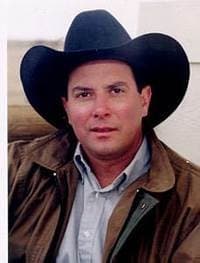
C.J. Box is a New York Times bestselling author of crime fiction, particularly known for his Joe Pickett series. His novels, such as 'Out of Range' and 'Force of Nature,' are celebrated for their gripping plots and vivid portrayals of the American West. Box's work often explores themes of conservation, law enforcement, and the rugged landscape he calls home.







