“The wind carried the scent of pine and something else, something wild and untamed. It was the smell of a new beginning.”
— Sarah's first impressions of the frontier.

Genre
Children's / Historical Fiction / Young Adult
Reading Time
90-120 min
Key Themes
See below
Sign in to track this book
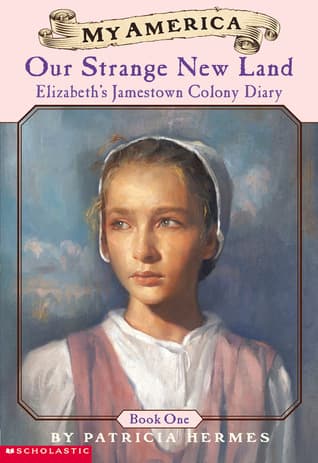
Nine-year-old Elizabeth Baker writes in her diary about her new life in the Jamestown colony, from making friends with Native Americans to exploring the forests, for her twin brother in England.
Elizabeth 'Lizzie' Baker, a nine-year-old, arrives in Jamestown, Virginia, in 1609 on a ship carrying the first women and children to the colony. She is happy to be on dry land after a long trip and immediately starts writing her thoughts in a diary for her twin brother, Caleb, who stayed in England because of his weak lungs. Lizzie is amazed by the many forests and the possibilities of this new land. She quickly makes friends with other children, including a boy named Samuel, and starts to get used to the hard but exciting life in the new colony. She is curious about the native Powhatan people.
Lizzie quickly settles into Jamestown, seeing the simple wooden houses and the busy activity. She becomes good friends with Samuel, a boy her age who is also new to the colony, and Ann, another young girl. They explore the areas right around the fort, always watched by adults. Lizzie is especially interested in the Powhatan Indians, watching them from a distance as they interact with the colonists, sometimes trading. She writes down her first thoughts about their clothes, customs, and how they move quietly through the forests, which is very different from the English settlers.
As weeks pass, Lizzie learns more about the Powhatan Indians from her parents and other colonists. She sees how they trade, exchanging English goods like beads and tools for important things like corn, furs, and animal skins. Lizzie is impressed by the Powhatan's cleverness and their deep understanding of the land. She even has a few careful, supervised meetings with Powhatan children, though language makes deep talks difficult. These interactions make her more curious and respectful of their way of life, which she notes in her diary for Caleb.
Out of curiosity, Lizzie, Samuel, and Ann often find ways to leave the immediate area of the Jamestown fort. On one trip, they go deeper into the surrounding woods than they usually can. They find a hidden stream and are amazed by the different plants and animals. This adventure brings them close to a small Powhatan village, letting Lizzie see their daily lives – women tending fires, men making tools, and children playing. They stay hidden, and the experience is both exciting and a bit scary, making Lizzie understand more about the two different worlds in Virginia.
As autumn turns into a cold winter, the first good feelings in Jamestown start to fade. Food supplies quickly decrease, and the colonists face more hunger and sickness. Lizzie writes about the growing problems in her diary, noting the sad mood and the fight to survive. The relationship with the Powhatan Indians becomes more difficult as both groups compete for limited resources. Trading happens less often and with more suspicion. Lizzie sees the suffering firsthand, which is a sharp contrast to her earlier happy entries, making her deeply aware of how fragile their new life is.
During the growing tension and lack of food, Lizzie has a moving meeting with a Powhatan girl near the edge of the fort. Even with the language barrier, they share a few gestures and a moment of shared curiosity. Lizzie gives the girl a small, special trinket, and in return, gets a well-made basket. This small act of kindness and mutual respect stands out against the background of increasing hostility. Lizzie thinks about this interaction in her diary, seeing it as a small hope for understanding between their peoples, even as the larger conflict grows.
The winter of 1609-1610 is known as the 'Starving Time,' a period of great suffering for the Jamestown colonists. Lizzie's diary entries become sadder and shorter, showing the harsh reality. She writes about the deaths of many settlers, including some of her friends, due to hunger, disease, and fights with the Powhatan. The colony is much smaller than it was. Lizzie herself experiences hunger and fear, and the once exciting new land now feels dangerous and unforgiving. Her entries show a deep sense of loss and the struggle to keep hope.
As the hard winter finally ends, the arrival of spring brings a desperate but much-needed sense of relief. More importantly, supply ships arrive from England, bringing food, new settlers, and tools. Lizzie notes the immediate change in mood; the surviving colonists, though weak, are filled with a new desire to rebuild. While the memory of the 'Starving Time' remains, the fresh supplies and the promise of warmer weather offer hope. Lizzie's diary entries show this fragile optimism, focusing on planting and fixing the fort, looking forward instead of dwelling on the past.
After going through the hardest time in Jamestown's history, Lizzie has grown up a lot. Her diary entries still show her young spirit but also a deeper understanding of life in the new world. She continues to observe daily life in the colony, the efforts to grow crops, and the ongoing, though careful, interactions with the Powhatan. Lizzie sees the harsh realities but also the lasting potential of Virginia. She ends her diary with a hopeful, yet realistic, view, showing her strength and her continued effort to write about her strange new land for Caleb, knowing that the future, though uncertain, is theirs to build.
The Protagonist
Lizzie transforms from an innocent, wide-eyed newcomer into a resilient survivor, gaining a deeper understanding of life's complexities and the harsh realities of the New World.
The Mentioned
Caleb's character does not have an arc, as he is only mentioned, but his existence highlights Lizzie's emotional journey and purpose.
The Supporting
Samuel, like Lizzie, endures the hardships of Jamestown, maturing through shared experiences of survival.
The Supporting
Ann experiences the same struggles as other children in Jamestown, growing more resilient through adversity.
The Supporting
The Powhatan's role in the story reflects the shifting dynamic between indigenous populations and European settlers, from initial curiosity to increasing conflict.
The Supporting
Lizzie's parents endure the trials of Jamestown, demonstrating resilience and commitment to their new home and family.
The story explores how people adjust, both physically and mentally, as the English colonists, especially Lizzie, get used to the harsh realities of the New World. Lizzie's first wonder turns into a practical understanding of survival, as seen during the 'Starving Time' when she sees great suffering and loss. Her ability to keep writing in her diary, find happy moments, and hold onto hope during despair (e.g., her entries about planting in spring after winter's destruction) shows her toughness and the human ability to adjust to extreme situations.
“It is a strange new land, Caleb, and sometimes a hard one. But it is ours now, and we will make it grow.”
The novel shows the meeting between the English settlers and the native Powhatan people. Lizzie's diary entries record her first interest, careful observations, and later, the growing tensions and misunderstandings between the two groups. Scenes of trading, her glimpse into a Powhatan village, and the conflicts highlight the very different ways of thinking, customs, and relationships with the land. The brief, meaningful connection Lizzie shares with a Powhatan girl shows the possibility for understanding that is often hidden by fear and competition.
“Their ways are so different from ours, Caleb. But sometimes, when I watch them, I wonder if they know something we do not about living in this wild place.”
The harsh 'Starving Time' is a main part of the story, making Lizzie and the other colonists face great loss – of life, of innocence, and of early dreams. Lizzie's diary entries become sadder as she writes about deaths and widespread hunger. Yet, even with such destruction, the idea of survival shines through. The colonists' decision to rebuild, plant crops, and wait for new supplies shows their will to live and stay, showing a spirit of enduring against great odds.
“So many are gone, Caleb. It is a quiet place now. But the sun still rises, and we still breathe. We will not give up.”
Lizzie's journey shows the two sides of the New World – a place of great promise and great danger. At first, she is charmed by the many forests, rich resources, and the excitement of a new start, representing the dream of opportunity that brought many to Jamestown. However, this promise is quickly met with the harsh realities of unfamiliar wilderness, disease, lack of food, and conflict with native groups. Her experiences show how the 'new land' offers both endless possibilities and life-threatening problems, requiring constant watchfulness and sacrifice.
“It is a beautiful land, Caleb, but it can be cruel too. Like a fierce mother, giving and taking away.”
The entire story is told through Lizzie's personal diary entries.
This device provides an intimate and immediate perspective on the events in Jamestown. It allows the reader to experience the colony's early years through the eyes of a child, capturing her initial wonder, growing fears, and eventual resilience. The diary format also justifies Lizzie's detailed observations and reflections, making her a reliable, albeit youthful, chronicler of historical events. It emphasizes her personal connection to the story and makes the historical setting more relatable.
Subtle hints of future difficulties appear early in Lizzie's optimistic entries.
Even in Lizzie's early, buoyant entries, there are subtle hints of the challenges to come. Her observations about the colonists' struggles with unfamiliar crops, the cautious nature of trade with the Powhatan, and the sheer effort required to build the settlement all subtly foreshadow the 'Starving Time' and the ongoing difficulties. This device builds a sense of impending tension, contrasting Lizzie's youthful optimism with the looming historical reality, making the eventual hardships more impactful.
Lizzie's brother, Caleb, and the memory of England symbolize the familiar past and her purpose.
Caleb, remaining in England due to his weak lungs, symbolizes the familiar, safer world Lizzie left behind. Her diary, written expressly for him, serves as her constant link to that past and provides a clear purpose for her observations. England itself represents the old world, contrasting sharply with the 'strange new land' of Virginia. This symbolism underscores Lizzie's emotional journey, highlighting her adaptation from her roots to her new, challenging reality, and her desire to bridge the distance with her brother.
The wilderness and harsh conditions of Virginia act as a primary opposing force.
Beyond human conflicts, the untamed wilderness of Virginia itself serves as a significant antagonist. The unfamiliar environment, harsh winters, scarcity of resources, and prevalence of disease pose constant threats to the colonists' survival. Lizzie's descriptions of the dense forests, the unforgiving cold, and the struggles to cultivate food illustrate how the land itself actively resists the settlers' efforts to tame it, forcing them to adapt or perish. It's a relentless, non-human force that tests their limits.
“The wind carried the scent of pine and something else, something wild and untamed. It was the smell of a new beginning.”
— Sarah's first impressions of the frontier.
“Every step we take into this wilderness is a step closer to who we are meant to be.”
— Father's words of encouragement to the children.
“Fear is a shadow, but courage is the sun that makes it disappear.”
— Grandmother comforts Lily during a scary moment.
“A good story is like a warm fire on a cold night; it brings people together and keeps their spirits bright.”
— The family shares stories around the campfire.
“The river doesn't care about your plans, only about its own journey. We must learn to flow with it.”
— Observing the challenges of river travel.
“Home isn't just a place; it's the people you share your heart with, no matter where you are.”
— Sarah reflects on their nomadic life.
“Sometimes the greatest strength comes from admitting when you are afraid.”
— Tom confides in his older sister.
“The sun sets every day, but it always rises again. So too will our hopes, even after the darkest times.”
— A moment of reflection after a difficult day.
“To build something new, you first have to clear away the old, even if it's just old worries.”
— The family begins to clear land for their new settlement.
“The whispers of the past can guide us, but we must walk our own path into the future.”
— Considering their ancestors' journey.
“Every small kindness is a seed planted, and you never know what beautiful garden it might grow into.”
— Lily performs a small act of generosity.
“The truest map isn't drawn on paper, but etched in your heart by the journey itself.”
— Sarah contemplates their long journey west.
“Even the smallest hands can build mighty things when they work together.”
— The children help with constructing their new home.
“The wilderness teaches you what truly matters, stripping away all that is unnecessary.”
— Reflecting on the simplicity of frontier life.
Ready to see how well you understood this book? Take our interactive quiz with 10 questions.
Dan Gemeinhart
4.5

Kate O'Hearn
4.4

Jeanne Birdsall
4.4

Jen Wang
4.4
Wendelin Van Draanen
4.3

John Marsden
4.3

Chris Van Allsburg
4.3
Jennifer A. Nielsen
4.2