“I have made up my mind that I must have money, Pa. I feel that I can't beg it, borrow it, or steal it; and so I have resolved that I must marry it.”
— Bella Wilfer expresses her materialistic ambitions to her father.

Charles Dickens (1869)
Genre
Historical Fiction
Reading Time
2500 min
Key Themes
See below
Sign in to track this book
In London, where trash heaps are more valuable than people, a mysterious inheritance looms. An orphaned girl and a disguised suitor navigate social ambition, deceit, and the surprising strength of love.
The novel starts with Gaffer Hexam, a Thames scavenger, and his daughter Lizzie, searching the river for bodies and valuables. They find a corpse, identified by papers as John Harmon, a young man returning to London from South Africa to claim a large inheritance. The will states he must marry Bella Wilfer, a woman he has never met. News of Harmon's death spreads, making his identity a public mystery and freeing Bella from the arranged marriage. This discovery starts a series of events, drawing various characters into the Harmon fortune and the secrets around the supposed death.
With John Harmon presumed dead, the large fortune, made from trash heaps, goes to the Harmon family's loyal servants, the kind Noddy Boffin and his wife, Henrietta. The Boffins, now very rich, are overwhelmed. Following a part of Harmon's will, they take Bella Wilfer into their home, giving her comfort and luxury, hoping to change her desire for money. They also hire Silas Wegg, a one-legged street vendor, to read to Mr. Boffin. This unknowingly gives Wegg access to the Harmon house and its secrets, which he starts to use.
A man calling himself John Rokesmith applies for and gets the job of secretary to Mr. Boffin. Rokesmith is smart, observant, and somewhat quiet, quickly becoming an important part of the Boffin household. He takes a special interest in Bella Wilfer, watching her interactions with the Boffins and her continued focus on wealth. Unbeknownst to everyone, Rokesmith is the real John Harmon, who survived an attack and switched identities with his attacker. He returned in disguise to investigate his supposed death and to observe Bella and his inheritance from a distance.
The lawyer Eugene Wrayburn, a cynical and aimless gentleman, and his friend Mortimer Lightwood, handle the Harmon estate. Eugene, despite his social standing, is drawn to the good and beautiful Lizzie Hexam, who is trying to leave her father's bad profession. He starts to visit her neighborhood, giving her informal lessons and developing a strong, though unacknowledged, affection for her. This growing relationship angers Bradley Headstone, a passionate and obsessed schoolmaster who also loves Lizzie. Headstone's jealousy quickly becomes a dangerous obsession, hinting at future conflict.
Silas Wegg, employed by Mr. Boffin to read to him, finds a hidden compartment in a desk with documents about the Harmon will. He asks Mr. Venus, a taxidermist, to help him understand the papers. Wegg believes they contain a later will that would disinherit the Boffins and make him rich. Their secret meetings and efforts to understand the legal puzzle become a source of dark humor and tension. They start to subtly threaten Mr. Boffin, hinting at their discovery and planning to get money from him, not knowing that Boffin knows about their plans.
Under the guidance of John Rokesmith (John Harmon), Mr. Boffin begins to pretend to change dramatically. He seems to become more miserly, grasping, and cruel, obsessed with money and treating those around him, especially Bella Wilfer, harshly. This elaborate trick aims to test Bella's character, to see if she can overcome her desire for money and appreciate love and kindness over wealth. Bella, at first sad and disgusted by Boffin's perceived change, struggles with her own values, feeling real distress as she sees his supposed moral decline.
Disturbed by Mr. Boffin's apparent greed and her own growing feelings for John Rokesmith, Bella Wilfer reaches a turning point. She publicly rejects the Boffin fortune and her desire for money, choosing Rokesmith's genuine affection over wealth. She declares her love for him, even though he is a poor secretary. This selfless act shows her worth. Right after her declaration, Rokesmith reveals his true identity as John Harmon, to Bella's surprise and joy. The Boffins, happy, also reveal that their 'transformation' was a trick, planned to bring Bella to this realization.
Bradley Headstone's jealousy over Eugene Wrayburn's interest in Lizzie Hexam turns into dangerous madness. He stalks Eugene and Lizzie, consumed by rage and a desire for revenge. After Lizzie repeatedly rejects him, Headstone's anger grows. He ambushes Eugene Wrayburn by the river, brutally attacking him and leaving him for dead. Headstone then tries to create an alibi, changing his clothes and pretending to be sick, but his strange behavior and the evidence of his clothes start to draw suspicion, especially from his former student, Charley Hexam, and the smart Inspector Riderhood.
Lizzie Hexam, led by a feeling, finds the badly injured Eugene Wrayburn by the river and saves him, nursing him back to health. During his slow recovery, Eugene, deeply moved by Lizzie's devotion and his near-death experience, proposes marriage. Lizzie, despite the social difference and disapproval from some, accepts. Their quiet marriage shows Eugene's change and Lizzie's steady love, bringing them together against challenges and questioning social expectations about class and status.
Silas Wegg and Mr. Venus, confident they have the key to the Harmon fortune, approach Mr. Boffin with their supposed discovery of a later will. However, Mr. Boffin, who knew about their plans all along thanks to John Harmon's warning, calmly reveals that the 'later will' is fake and that he has been playing along. The Boffins, with John Harmon (now married to Bella) by their side, expose Wegg and Venus's greed and attempted blackmail. The two conspirators are humiliated and their plans stopped, ending their small-time villainy.
Inspector Riderhood, a former partner of Gaffer Hexam and a bad character, has been increasingly suspicious of Bradley Headstone. He pursues Headstone, eventually cornering him and trying to blackmail him over Eugene's attack. In a desperate fight on a lock weir, Headstone, consumed by his madness and unwilling to be exposed, struggles with Riderhood. Both men fall into the water and drown, their bodies tangled. This dramatic and tragic end concludes the story of Headstone's obsessive jealousy and Riderhood's opportunistic villainy, bringing a violent end to their connected fates.
With all the plots resolved, John Harmon and Bella (now Harmon) live a happy life, managing the Harmon fortune with generosity and wisdom. The Boffins, having been guardians and mentors, return to their kind and simple ways, enjoying their wealth responsibly. Eugene Wrayburn, now married to Lizzie, has found purpose and happiness, becoming a more responsible and caring person. The novel ends with the various parts of the story connected, showing the triumph of love, goodness, and honesty over greed and malice, leaving the main characters in a state of well-deserved domestic happiness.
The Protagonist
From a detached observer, he transforms into an active agent of truth and love, finding happiness and purpose.
The Protagonist
She evolves from a mercenary girl to a loving and virtuous woman, rejecting wealth for true affection.
The Supporting
He maintains his inherent goodness despite immense wealth, using his newfound power for benevolent ends.
The Supporting
She rises above her disadvantaged background through her inherent goodness and finds love and respect.
The Supporting
He transforms from an apathetic, cynical gentleman into a loving, purposeful husband.
The Antagonist
His repressed passion and social insecurity lead to a fatal descent into obsessive jealousy and violence.
The Antagonist
Driven by greed, he schemes to usurp the Boffin fortune, only to be exposed and humiliated.
The Supporting
He moves from reluctant complicity in crime to a more honorable path, finding love and self-respect.
The Antagonist
His life of treachery and blackmail culminates in his violent death, dragging down his final victim.
The Supporting
He remains a steadfast friend and reliable observer, witnessing the transformative journeys of others.
This theme is important to 'Our Mutual Friend,' shown mainly through the Harmon inheritance and Bella Wilfer's journey. The large 'dust heap' fortune attracts greed and deceit, as seen in Silas Wegg's plans and Bella's initial desire for money. However, the Boffins, despite their wealth, remain kind, showing that true value is not in money but in character and love. Bella's eventual rejection of wealth for John Harmon (as Rokesmith) shows love winning over greed, suggesting that money, though powerful, cannot buy happiness or goodness. The novel constantly asks what 'true riches' are.
“''As I have made my way, so I must keep my way. It is not for me to be soft. I am not soft. I am a man of property. I am a Golden Dustman.'”
The novel focuses on identity, especially through John Harmon's disguise as John Rokesmith. His assumed identity allows him to observe others without their preconceived notions, showing their true characters. This also shows how easily appearances can be changed and how social status affects perception. Lizzie Hexam's struggle to escape her family's bad 'water-side' identity, and Bradley Headstone's desperate attempts to keep a respectable image despite his inner turmoil, further explore this theme. The novel suggests that true identity is in one's actions and moral compass, not in names or social standing.
“''What is a name? Let us say, for the sake of argument, that I am a man of no name. I have neither father nor mother, nor any relation in the world. What then?'”
Different kinds of love and its opposite, obsession, drive much of the plot. Bella Wilfer's journey from valuing money to valuing love is a key part of the story. The contrasting relationships between Lizzie Hexam and her two suitors, Eugene Wrayburn and Bradley Headstone, clearly show this theme. Eugene's initial cynical interest in Lizzie changes into genuine, redeeming love after his near-fatal attack. In contrast, Headstone's unrequited love for Lizzie turns into a destructive, murderous obsession. The novel contrasts selfless, changing love with possessive, destructive obsession, ultimately affirming love's power to redeem and improve.
“''I am not rich in worldly goods, but I am rich in you.'”
Dickens carefully shows Victorian London's strict class system and the difficulties of moving up in society. Characters like Lizzie Hexam struggle to escape the negative view of their lower-class origins, while Eugene Wrayburn, born into a higher class, at first wastes his opportunities. The Boffins' sudden wealth highlights how random fortune can be, yet they keep their working-class virtues. Bradley Headstone's strong insecurity comes from his humble background and desperate desire for social acceptance. The novel criticizes the superficiality of class differences, suggesting that true worth goes beyond social standing, as seen in the marriages across class lines (Eugene and Lizzie, John and Bella).
“''In this world, with this name, I am a man to be despised. I am a man to be shunned. I am a man to be forgotten.'”
The River Thames is more than just a setting; it is an important symbol throughout the novel. It is the source of Gaffer Hexam's grim work, providing both bodies and treasure, representing both death and potential fortune. The river is where John Harmon is thought to have died, where Eugene Wrayburn is almost murdered, and where Bradley Headstone and Rogue Riderhood die. It symbolizes the flow of fate, the hidden depths of human nature, and the constant presence of danger and mystery in London. It connects the characters' different lives, acting as a silent, ever-present force.
“''As if the river had been a living creature with a will of its own, and had been striving with him.'”
A classic Dickensian device to allow a protagonist to observe and test others.
This device is the engine of the entire plot. John Harmon's presumed death and his subsequent return under the alias John Rokesmith allow him to move through society largely unnoticed, observing the true characters of those affected by his inheritance. It enables the Boffins' benevolent deception and facilitates Bella Wilfer's moral growth, as she falls in love with the 'poor' secretary rather than the wealthy heir. This allows Dickens to explore themes of identity, the corrupting influence of wealth, and the distinction between appearance and reality.
Mr. Boffin's feigned transformation into a miser to test Bella Wilfer.
Mr. Boffin, advised by John Harmon, pretends to become a grasping, miserly old man, consumed by his new wealth. This elaborate ruse is designed to test Bella Wilfer's character, pushing her to choose between her materialistic desires and genuine affection. It is a 'noble lie' that, while causing temporary distress, ultimately leads to Bella's redemption and the revelation of her true, loving nature. This device allows Dickens to explore the transformative power of love and the dangers of avarice, while also providing dramatic irony as the reader is aware of the deception.
Symbolic settings representing wealth, death, and social strata.
The dust heaps, the literal source of the Harmon fortune, symbolize the unexpected origins of wealth and the often-unseen value in discarded things. They represent the accumulation of material possessions and the potential for both good and ill that comes with them. The River Thames, on the other hand, is a constant presence, embodying both life (as a source of livelihood) and death (as a resting place for bodies). It connects disparate characters and events, serving as a powerful, ever-present backdrop that reflects the novel's themes of fate, mystery, and the interconnectedness of human lives, often in a grim and symbolic way.
Contrasting romantic entanglements to highlight different aspects of love and obsession.
The novel features two distinct but parallel love triangles: Bella Wilfer, John Harmon (as Rokesmith), and the Boffin wealth; and Lizzie Hexam, Eugene Wrayburn, and Bradley Headstone. The first explores the triumph of selfless love over materialism, with Bella choosing the man over the money. The second contrasts redemptive love (Eugene and Lizzie) with destructive obsession (Headstone and Lizzie). These parallel narratives allow Dickens to explore the multifaceted nature of love, its capacity for both creation and destruction, and its role in character development and moral transformation across different social classes.
A classic mystery element driving the villainous subplot.
The discovery of a hidden compartment and the supposed 'later will' by Silas Wegg and Mr. Venus provides the central mystery and driver for the novel's villainous subplot. This device creates suspense and allows for the exploration of greed, manipulation, and blackmail. It is a classic Dickensian element, where a seemingly insignificant detail (the hidden papers) becomes the focus of a grand scheme, ultimately leading to the exposure and downfall of the antagonists, while reinforcing the integrity of the protagonists and the true intentions behind the Harmon inheritance.
“I have made up my mind that I must have money, Pa. I feel that I can't beg it, borrow it, or steal it; and so I have resolved that I must marry it.”
— Bella Wilfer expresses her materialistic ambitions to her father.
“My dear child, the poor in this world, and the rich in this world, and the people who are neither poor nor rich in this world, are all very much alike in one particular. They are all equally fond of money.”
— Mr. Boffin reflects on human nature after inheriting a fortune.
“No one is useless in this world who lightens the burden of it for anyone else.”
— Narrator's observation on the value of kindness.
“We must scrunch or be scrunched.”
— Silas Wegg's cynical view of social competition.
“I hope I never may be the means of injuring your daughter, but if I should be, I hope I may drop dead at the moment.”
— John Harmon (disguised as John Rokesmith) declares his honorable intentions toward Bella.
“It is a melancholy truth that even great men have their poor relations.”
— Narrator's wry comment on social connections.
“A man who can't get on without a watch, is a man who would be a slave to anything.”
— Mr. Boffin criticizes dependence on material possessions.
“Love, though said to be afflicted with blindness, is a vigilant watchman.”
— Narrator reflects on the perceptiveness of love.
“I have been so used to the river, that I can't well get on without it.”
— Gaffer Hexam explains his attachment to the Thames, where he scavenges corpses.
“The wind is blowing, the dust is flying, I can't see whether I look respectable or not.”
— Bella Wilfer complains about her appearance in a dusty wind.
“It is a hopeless endeavour to attract people to a theatre unless they can be first brought to believe that they will never get in.”
— Narrator's satirical observation on human desire.
“I want to be something so much worthier than the doll in the doll's house.”
— Bella Wilfer expresses her desire for personal growth beyond superficiality.
“The question about everything was, would it bring in money?”
— Narrator describes the mercenary mindset of certain characters.
“A heart well worth winning, and well won. A heart that, once won, goes through fire and water for the winner, and never changes, and is never daunted.”
— Narrator praises the steadfastness of true love, referring to Bella and John.
Ready to see how well you understood this book? Take our interactive quiz with 10 questions.
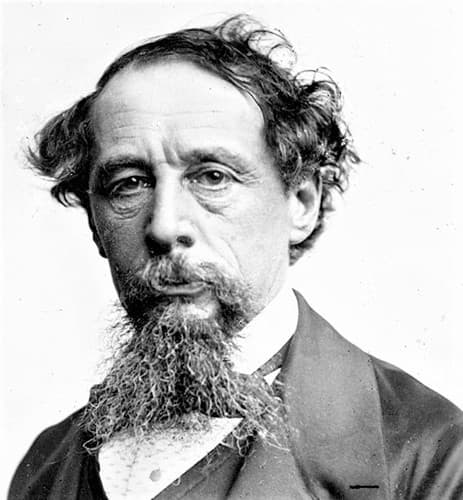
Charles John Huffam Dickens was an English writer and social critic who created some of the world's best-known fictional characters and is regarded by many as the greatest novelist of the Victorian era. His works enjoyed unprecedented popularity during his lifetime and, by the 20th century, critics and scholars had recognised him as a literary genius. His novels and short stories are widely read today.







