“There are some people who are never content with what they have, however much it may be.”
— Wormold reflecting on his life and the pursuit of more.

Graham Greene (1958)
Genre
Thriller / Mystery
Reading Time
220 min
Key Themes
See below
Sign in to track this book
In Graham Greene's satirical thriller, a vacuum cleaner salesman in Havana invents elaborate spy reports to keep his MI6 salary, only to find his fictional world of secret weapons and double agents materialize around him.
James Wormold, a British expatriate and widowed vacuum cleaner salesman in Havana, struggles financially to support his extravagant teenage daughter, Milly. His life changes when Hawthorne, a charming but persistent MI6 agent, approaches him. Hawthorne believes Wormold, with his British connections and seemingly innocuous business, would make an excellent spy. Despite having no experience or interest in espionage, Wormold, desperate for extra income to maintain Milly's lifestyle and pay for her riding lessons and Catholic school, reluctantly accepts. He is assigned the code name '59200/5' and told to recruit a sub-agent network and send reports on Cuba's political and military situation.
Faced with generating intelligence but lacking any actual sources or knowledge of espionage, Wormold fabricates. He invents an entire network of sub-agents, drawing names from his Rotary Club list and local acquaintances, giving them fictional jobs like pilots and professors. To justify the expenses he claims for these non-existent agents, he invents elaborate reports. His most audacious creation is a detailed description of a secret military installation in the Cuban mountains, supposedly a sophisticated atomic weapons base, based on diagrams of a new vacuum cleaner model he is trying to sell. London eagerly receives these reports, complete with technical drawings and strategic implications.
London is so impressed by Wormold's 'intelligence' that they send him a dedicated radio operator, Beatrice Severn, to assist him and process his increasingly detailed reports. Beatrice, a no-nonsense and competent agent, initially does not know Wormold's entire operation is fake. Her arrival shows London's genuine belief in the threat from the fictional Cuban installation. Wormold finds himself in a deeper bind, as his fabrications now have real-world consequences, and he struggles to maintain the illusion while trying to keep Beatrice from discovering his deception. He continues to invent stories, now with Beatrice as an unwitting accomplice, further entangling himself in his lies.
Wormold's invented world starts to affect reality in alarming ways. One of his 'agents,' Dr. Hasselbacher, a German doctor and friend, is murdered, seemingly because of his fictional involvement in Wormold's network. Another 'agent,' a pilot named Raul, is involved in a suspicious plane crash. These events deeply disturb Wormold, making him realize that his harmless fabrications are having deadly repercussions. He becomes increasingly paranoid, suspecting that a real enemy intelligence agency has intercepted his reports and is now targeting his fictional network, or perhaps even himself. The line between his lies and the dangerous truth blurs, intensifying his fear and guilt.
Wormold and Beatrice attend a lavish dinner party hosted by Captain Segura, the chief of the secret police, who collects human eyelashes. During the party, a mysterious man tries to poison Wormold's drink. Beatrice, noticing the suspicious activity, intervenes and saves Wormold's life. This incident confirms Wormold's growing fear that a real enemy is targeting him. He now understands that a foreign power, likely the East German secret service, has taken his invented reports seriously and believes his fictional agents are genuine threats. The party, initially a social event, becomes a tense and dangerous encounter.
Overwhelmed by the escalating danger and Dr. Hasselbacher's death, Wormold finally confesses the truth to Beatrice: his entire network and all his reports are fabrications. Beatrice, though initially shocked and angry, quickly grasps the gravity of the situation. Recognizing the real danger, she decides to help Wormold. They devise a plan to expose the truth to London in a way that will protect Wormold from severe repercussions, knowing that confessing outright might lead to his imprisonment or worse. Their plan involves subtly leaking information to discredit his previous reports without directly admitting deception, hoping to prompt London to recall them.
Wormold is invited to another Rotary Club luncheon, only to discover it is a trap. He is lured into the men's room where Carter, an enemy agent, tries to assassinate him. Wormold, in a moment of desperate self-preservation, accidentally kills Carter using a trick he learned from one of his vacuum cleaner demonstrations: a bottle of whisky with a broken neck. This violent act transforms Wormold from a reluctant fabricator into a genuine participant in the world of espionage. He feels a strange mix of horror and grim satisfaction, realizing he has crossed a line he never intended to, effectively becoming a real spy through circumstance and self-defense.
London, having received Beatrice's coded warnings and perhaps sensing the truth, recalls Wormold and Beatrice to England. Upon their return, they meet the higher echelons of MI6. Instead of being punished for his elaborate deception, Wormold is surprisingly offered a new position. MI6, fearing a scandal and the embarrassment of being so thoroughly duped, decides to cover up Wormold's fabrications. They present his actions as a brilliant double-bluff, claiming he intentionally fed false information to flush out enemy agents. This official narrative allows them to save face and offers Wormold a path to escape severe consequences.
Wormold returns to England with Milly, who is thrilled to be in London and quickly finds a new sense of belonging. She even expresses a desire to convert to Catholicism, much to Wormold's amusement. Wormold, now free from the pressures of Havana and financially secure due to MI6's generosity, marries Beatrice. He is given a teaching position at an MI6 training school, where he ironically instructs new recruits on the intricacies of espionage, drawing lessons from his own bizarre and unintentional experiences. His journey from a struggling salesman to a respected (if unorthodox) spy instructor is complete, albeit with a lingering sense of absurdity.
The novel concludes with Wormold settling into his new life, his past deceptions conveniently reinterpreted as strategic genius by MI6. The bureaucratic machinery of espionage, rather than admitting fault, simply absorbs Wormold's chaos into its own narrative. The deaths of Dr. Hasselbacher and Carter are brushed aside, and the entire episode is spun into a success story. Wormold, a man who stumbled into espionage and inadvertently caused real-world consequences with his lies, is ultimately rewarded. The ending highlights the novel's central theme of the absurd nature of power, bureaucracy, and the detached reality of the intelligence world, where truth is often less important than plausible deniability and maintaining appearances.
The Protagonist
Wormold transforms from an innocent, fabricating agent into a man who, through self-defense, commits murder, briefly becoming a genuine participant in the spy world before being absorbed back into a comfortable, if absurd, life.
The Supporting
Milly remains largely unchanged, serving as a catalyst for her father's actions, eventually finding happiness and stability in England.
The Supporting
Beatrice evolves from a strict professional to a compassionate partner, ultimately marrying Wormold and helping him escape his predicament.
The Supporting
Hawthorne remains largely static, embodying the bureaucratic detachment of MI6.
The Antagonist
Segura remains a constant, menacing presence, symbolizing the oppressive political climate.
The Supporting
Hasselbacher's arc is tragically cut short by his murder, serving as a pivotal moment for Wormold's realization of danger.
The Antagonist
Carter's brief but impactful appearance culminates in his death at Wormold's hands, marking Wormold's transformation.
The Mentioned
C remains a static, distant figure, representing the institutional power.
The novel satirizes the intelligence world, portraying it as a realm driven by bureaucracy, self-preservation, and a detached reality rather than genuine intelligence. MI6 eagerly accepts Wormold's fantastical reports, based on vacuum cleaner parts and Shakespeare, without critical analysis. This shows their gullibility and desire for easily digestible 'intelligence.' The ultimate cover-up, where Wormold's deception is spun as a brilliant double-bluff, further emphasizes how institutions prioritize maintaining appearances over confronting uncomfortable truths, turning the deadly serious business of spying into a farcical game.
“''It was difficult to believe that his reports were now circulating among the heads of government, being studied by grave men in underground war rooms.''”
At its core, the novel explores the blurry lines between truth and deception. Wormold's fabricated stories, initially harmless lies to support his family, take on a dangerous reality when other intelligence agencies believe them. This raises questions about what constitutes 'truth' in a world where perception and belief are often more powerful than facts. The novel suggests that truth can be manufactured, and once accepted, it can have real, devastating consequences, as seen with Dr. Hasselbacher's death. MI6's inability to discern Wormold's lies highlights how easily deception can flourish within a closed system.
“''He was a man of facts, but a fact, he had discovered, could be a dangerous thing. It was sometimes safer to deal in fictions.''”
Wormold begins as a relatively innocent man, motivated by love for his daughter, but his lies gradually drag him into a world of real violence and death. Dr. Hasselbacher's murder and Wormold's accidental killing of Carter force him to confront the moral ramifications of his actions, even if unintended. His journey shows how seemingly innocuous choices can lead to a loss of innocence and burden one with guilt. Despite his initial good intentions, Wormold becomes a participant in the brutality he initially only mimicked, questioning whether one can remain 'good' when involved in such a morally ambiguous profession.
“''He had invented a world, and it had become a real world, and now he had to live in it.''”
Havana, a city under a corrupt regime, serves as a backdrop for the British intelligence operation. The novel subtly comments on British post-colonial attitudes, with characters like Hawthorne displaying a patronizing view of locals and a belief in British superiority. The British agents operate with a sense of entitlement, exploiting local conditions for their own geopolitical games, largely detached from the actual lives and struggles of the Cuban people. This highlights the lingering effects of colonial power dynamics, where foreign interests manipulate local situations without true understanding or regard for the consequences on the ground.
“''The British, Wormold sometimes thought, were like children who had been given a toy, a large and complicated toy, and now they didn't know what to do with it.''”
Wormold's deep love and sense of obligation towards his daughter, Milly, drive his actions. His desperate need to provide for her, even at the cost of his integrity, shows the powerful influence of familial bonds. Milly's expensive tastes and innocent demands push Wormold into a dangerous world, showing how personal affections can intertwine with larger, more cynical political forces. This theme provides a grounding human element to the otherwise absurd spy narrative, making Wormold's morally compromised choices understandable, if not entirely excusable.
“''He had to make money for Milly. That was the first, the only, the last excuse.''”
The use of humor, irony, and exaggeration to criticize intelligence agencies.
Greene employs satire to mock the absurdity and incompetence of bureaucratic institutions, particularly MI6. Wormold's fabricated reports, based on vacuum cleaner diagrams and Shakespeare, are readily accepted by his superiors, highlighting the intelligence agency's detachment from reality and its desire for information, however bogus. The ultimate cover-up, where Wormold's deceptions are spun as strategic brilliance, further lampoons the self-serving nature of such organizations, turning what should be a serious profession into a farcical comedy of errors.
The audience is aware of Wormold's deception, while MI6 is not.
Dramatic irony is central to the novel's comedic and suspenseful elements. The reader is privy to Wormold's elaborate lies from the outset, understanding that his 'intelligence' is entirely fabricated. This creates tension and humor as MI6 takes his reports increasingly seriously, sending him resources and personnel like Beatrice, and ultimately believing in the existence of the fantastical 'atomic' installation. This irony underscores the gullibility of the intelligence apparatus and builds suspense as Wormold's lies lead to real-world dangers, such as the deaths of Hasselbacher and Carter.
The 'secret weapon' installation that drives the plot but is ultimately meaningless.
The fictional 'atomic' weapon installation that Wormold invents serves as a classic MacGuffin. It is the central object of desire and concern for MI6 and rival agencies, driving much of the plot's tension and action. However, its non-existence makes it ultimately meaningless in terms of actual strategic value. Its purpose is solely to propel Wormold's story, expose the credulity of the intelligence world, and demonstrate how a fabricated threat can generate real-world consequences, even leading to death and political maneuvering, despite its utter lack of reality.
Unplanned events and chance encounters drive the plot and resolve conflicts.
The plot is frequently advanced by coincidence and serendipitous events. Wormold's initial recruitment by Hawthorne is somewhat arbitrary, and his 'success' as a spy is a stroke of accidental luck. More significantly, his survival and the resolution of his predicament are often due to chance, such as Beatrice noticing the poisoned drink or Wormold accidentally killing Carter with a broken bottle. This device emphasizes the chaotic, unpredictable nature of life and the spy world, suggesting that outcomes are often less about skill or planning and more about fortunate (or unfortunate) happenstance.
“There are some people who are never content with what they have, however much it may be.”
— Wormold reflecting on his life and the pursuit of more.
“One day, when I am rich, I will buy a house, and I will have a garden, and I will grow roses.”
— Milly's simple, materialistic dream.
“The great thing about the British is that they don't care about anything. They just get on with it.”
— Dr. Hasselbacher's observation on the British character.
“It was impossible to tell what was real and what was not. The whole world seemed to be a stage set, and he was an actor who had forgotten his lines.”
— Wormold's growing confusion as his fabricated spy world unravels.
“People don't want to be told the truth. They want to be told a story.”
— Wormold's cynical realization about his superiors and the intelligence world.
“He had invented a world, and now he was trapped in it.”
— Wormold realizing the consequences of his elaborate lies.
“In our profession, the first rule is: never trust anyone.”
— Hawthorne's advice to Wormold, highlighting the nature of espionage.
“The trouble with you, Wormold, is that you have too much imagination.”
— Hawthorne's assessment of Wormold's flaw.
“He was a man who had stumbled into a game of chess without knowing the rules, and now he was making up his own.”
— Wormold's approach to his spy duties.
“The world was full of coincidences, but sometimes they were too neat to be true.”
— Wormold's suspicion about the events unfolding around him.
“A man's life is a foreign country. They do things differently there.”
— A philosophical musing on the uniqueness of individual lives.
“It was astonishing how quickly one could adapt to a life of deception.”
— Wormold's observation on his own changing moral landscape.
“He felt a sudden pang of affection for the whole absurd, dangerous, and utterly improbable situation.”
— Wormold's complex feelings towards his spy life.
Ready to see how well you understood this book? Take our interactive quiz with 10 questions.
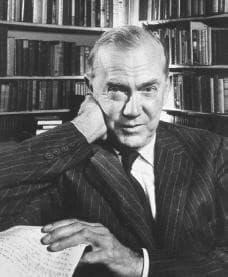
Henry Graham Greene was an English writer and journalist regarded by many as one of the leading English novelists of the 20th century.







