BookBrief
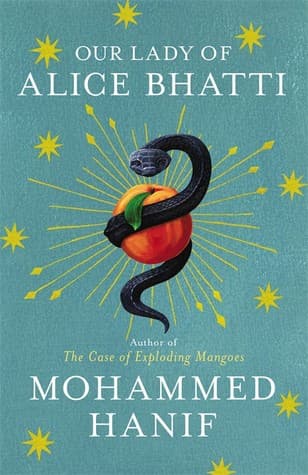
Our Lady of Alice Bhatti cover
Archivist's Choice

Our Lady of Alice Bhatti

Mohammed Hanif (2011)

Genre

Literary Fiction / Spirituality

Reading Time

240 min

Key Themes

See below

Track Your Reading

Sign in to track this book

In Karachi's chaos, a former inmate turned nurse with a healing touch finds dangerous love with a gangster cop, forcing her to choose between her gifts, her passion, and the constant threat of destruction.

Synopsis

Alice Bhatti, newly released from Borstal, starts as a junior nurse at Sacred Heart Hospital in Karachi. She has a natural healing ability, like her father, a part-time healer and former janitor. While working, she catches the eye of Teddy Bunt, an apprentice in Karachi's notorious 'Gentleman Squad' police unit. Despite their different backgrounds—Alice, a Catholic woman from the French Colony, and Teddy, a brutal enforcer—they fall in love and marry against the odds. Their marriage, however, faces constant danger. Teddy's moral compromises within the Gentleman Squad increase, especially after he lets a suspect escape, endangering both their lives. Alice finds herself balancing her healing work with the growing violence around her husband. As the dangers grow, Alice faces her life's harsh realities and makes a defiant, ultimately tragic, choice to protect the small amount of peace she has found.
Reading time
240 min
Difficulty
Medium
Pacing
Moderate
Mood
Dark, Atmospheric, Tragic, Poignant
✓ Read this if...
You enjoy dark literary fiction with a strong sense of place, exploring themes of love, class, and violence in contemporary Pakistan.
✗ Skip this if...
You prefer lighthearted stories or are sensitive to depictions of brutality and societal injustice.

Plot Summary

The Nurse's New Start

Alice Bhatti, recently released from Borstal (a juvenile detention center), returns to her family home in Karachi's French Colony. Her father, Joseph, a retired chief janitor and part-time healer, tries to guide her, but Alice wants to make her own way. She applies for a junior nurse position, grade 4, at the Sacred Heart Hospital for All Ailments. Despite her past and the hospital's chaotic setting, she is hired. She quickly adapts to the demanding work, using her natural healing touch and practical skills from prison, bringing a unique kind of care to the many patients in the hospital's corridors.

A Glimmer of Love

While working at Sacred Heart, Alice meets Teddy Bunt, a young man who trains with Karachi's notorious 'Gentleman Squad' police unit. Teddy is at the hospital, initially as a patient, and is immediately drawn to Alice's quiet strength and kindness. He begins to pursue her intensely, often visiting the hospital for various reasons. Alice, cautious because of her past and the scrutiny she faces as a Catholic woman from the French Colony, is at first wary but eventually finds herself attracted to Teddy's unexpected devotion and the chance for a normal life with him.

The Proposal and the Wedding

Teddy Bunt, with his usual impulsiveness, proposes marriage to Alice. Her community in the French Colony reacts with skepticism and disapproval, seeing Teddy as an outsider and a member of a feared police unit. Teddy's own family, especially his mother, also disapproves of his choice to marry a Catholic woman from a working-class background. Despite these challenges and warnings from those around them, Alice, wanting stability and a real connection, accepts. They have a simple wedding, starting a new, though uncertain, chapter in Alice's life.

Life in the Gentleman Squad Quarters

After their marriage, Alice moves into the police quarters where Teddy lives. This new environment contrasts sharply with her familiar French Colony and the hospital. She faces the rough and often brutal reality of the 'Gentleman Squad's' world, seeing the casual violence and corruption in their daily lives. Alice tries to keep her sense of self and her morals amid the harshness, finding comfort in her work and quiet moments with Teddy. However, the constant tension and Teddy's job begin to weigh on her.

Teddy's Moral Compromise

A key moment happens when Teddy Bunt, during a 'Gentleman Squad' operation, is told to arrest a potentially dangerous suspect. Influenced by his growing love for Alice and a new sense of moral conflict, he makes a choice against the squad's ruthless code: he lets the suspect escape. This act of defiance is unheard of within the 'Gentleman Squad' and immediately puts Teddy in danger. His colleagues become suspicious, and his actions are seen as a serious betrayal, signaling severe consequences for his career and safety.

The Doctor's Offer

As Teddy's situation becomes more dangerous, Dr. Pereira, a respected figure at Sacred Heart Hospital, watches Alice's struggles with concern. Recognizing Alice's excellent nursing skills and her vulnerability, he offers her a chance to leave Karachi for a better life abroad, possibly in Canada, where her talents would be more valued, and she could escape her current dangers. This offer presents Alice with a hard choice: abandon her troubled marriage for a safer future, or stay loyal to Teddy despite the growing risks.

Escalating Danger

After the suspect's escape, the 'Gentleman Squad' starts to close in on Teddy Bunt. Their methods are brutal, and Teddy finds himself increasingly alone and in danger. The squad's suspicion extends to Alice, as they see her influence as the reason for Teddy's deviation from their code. The couple's lives become a constant tightrope walk, with threats from Teddy's colleagues and the criminals they are supposed to control. Alice struggles with fear for Teddy's life and her own, as their fragile happiness is overshadowed by the threat of violence.

The Confrontation

Amidst Alice's personal struggles, her father, Joseph, continues his long, often difficult, relationship with the local Catholic church. Frustrated by the church's perceived hypocrisy and its failure to adequately support its community, especially the marginalized Catholics of the French Colony, Joseph stages a public confrontation. He challenges the church's authority and its leader, Father Nazareth, highlighting the gap between their teachings and their actions. This act, while separate from Alice's immediate crisis, points to broader issues of injustice and the fight for dignity within their community.

Alice's Act of Defiance

Pushed to her limit by the constant pressure and growing danger to Teddy, Alice Bhatti, despite her quiet nature, makes a big decision. She refuses to be a passive victim. Drawing on her inner strength and sense of justice, she takes an unexpected and brave stand. This act, born from love and desperation, directly challenges the corrupt system that threatens to engulf them. It is a moment where Alice fully takes on her role not just as a nurse, but as a force for change in her own life.

The Tragic Climax

The tension that has built throughout the story reaches its tragic end. The 'Gentleman Squad' finally corners Teddy, and a violent confrontation occurs. Alice, trying to protect Teddy and fight for their future, is caught in the middle. The love story that began with careful hope is shattered by the brutal realities of their world. The scene shows the inescapable hold of violence and corruption in Karachi, and the ultimate sacrifice made by those who dare to defy it. The novel ends with the deep and lasting impact of these events on Alice and her community.

Principal Figures

Alice Bhatti

The Protagonist

Alice transforms from a cautious, hopeful individual seeking a fresh start into a defiant woman who makes a profound sacrifice for love and justice.

Teddy Bunt

The Supporting/Love Interest

Teddy's initial bravado and infatuation evolve into a genuine, self-sacrificing love that ultimately leads to his downfall.

Joseph Bhatti

The Supporting

Joseph remains a steadfast, if sometimes abrasive, figure, consistently challenging authority and advocating for his community.

Dr. Pereira

The Supporting

Dr. Pereira consistently offers Alice opportunities for a better life, acting as a benevolent, albeit distant, guardian.

Father Nazareth

The Supporting/Antagonistic

Father Nazareth remains a somewhat static figure, representing institutional authority and its limitations.

Gentleman Squad Members

The Antagonistic

They remain a relentless, monolithic force of oppression and corruption throughout the narrative.

Sister Hina

The Supporting

Sister Hina's initial skepticism gives way to an acknowledgment of Alice's unique competence.

Themes & Insights

Love and Sacrifice

The novel explores the deep and often tragic nature of love in a brutal world. Alice and Teddy's love story is central, showing how love can inspire moral courage (Teddy letting the suspect escape) but also lead to devastating results. Their love is a fragile light against the darkness of their environment, ultimately demanding great sacrifice. This theme appears in Alice's steady commitment to Teddy despite the dangers, and Teddy's willingness to betray his squad for her, ending in the tragic climax where their love demands the ultimate price.

Their love was unexpected, but the consequences are not.

Narrator

Marginalization and Identity

The story deeply examines the experience of marginalized communities in Karachi, especially the Christian population in the French Colony. Alice, as a Catholic woman with a past, navigates a society where she is an outsider, facing prejudice and limited chances. Her identity is further complicated by her marriage to Teddy, a Muslim and a member of a feared police unit. The novel highlights the struggle for dignity and belonging within a society marked by religious, social, and economic divisions, showing how these external pressures shape individual lives and choices, often forcing characters to live on the fringes.

A Catholic snubbed by other Catholics, who are in turn hated by everyone around them, she is also put at risk by her husband...

Narrator

Corruption and Injustice

The widespread corruption and injustice within Karachi's institutions, particularly the police force ('Gentleman Squad'), form a dark background to the story. The 'Gentleman Squad' shows the systemic brutality and impunity that citizens face, highlighting how power is abused and justice is denied. This theme is important for understanding the dangers Teddy and Alice confront, as their personal choices clash with the ingrained corruption. The hospital itself, with its many patients and chaotic conditions, also reflects a broader societal failure to care for its most vulnerable, showing the deep-seated problems within the city.

Can Teddy and Alice ever live in peace? Can two people make a life together without destroying the very thing that united them?

Narrator

The Power of Healing and Compassion

Despite the great despair and violence, the novel celebrates the lasting power of healing and compassion, mainly through Alice's character. Her work as a nurse is not just a job; it is a calling, a way to bring comfort and dignity to suffering people. Her 'gift' for healing, whether spiritual or practical, contrasts with the city's harsh realities. This theme is clear in her interactions with patients at Sacred Heart and her ability to provide comfort where formal systems fail, suggesting that individual acts of kindness can still make a difference amid widespread suffering.

Alice brings succour to the thousands of patients littering the hospital’s corridors and concrete courtyard.

Narrator

Plot Devices & Literary Techniques

The Sacred Heart Hospital for All Ailments

A microcosm of Karachi's societal chaos and a place of both suffering and unexpected solace.

The hospital serves as a central setting and a powerful symbol. It is a chaotic, overcrowded place reflecting the broader societal ills and the overwhelming needs of Karachi's population. Yet, it is also where Alice finds purpose, where she demonstrates her unique healing abilities, and where she first meets Teddy. It represents a space where life and death, hope and despair, constantly intertwine, providing a backdrop for both personal struggles and moments of profound human connection amidst the general dysfunction.

The Gentleman Squad

A notorious and corrupt police unit that embodies the systemic violence and injustice of Karachi.

The 'Gentleman Squad' functions as the primary antagonistic force, representing the brutal and corrupt state machinery. Their presence creates constant tension and fear, directly impacting Teddy's life and, by extension, Alice's. They are a symbol of unchecked power and the pervasive lack of justice in the city, driving much of the plot's conflict and ultimately leading to the tragic climax. Their name is a dark irony, highlighting the gap between official titles and brutal reality.

Alice's 'Gift'

Her innate ability to heal and comfort, often perceived as spiritual, which sets her apart.

Alice's 'gift' is a subtle but significant plot device. It refers to her extraordinary capacity for empathy, her practical skills, and her almost intuitive understanding of how to alleviate suffering, sometimes even hinting at a spiritual healing touch. This 'gift' not only makes her an exceptional nurse but also draws others to her, including Teddy, and sets her apart from her peers. It underscores her unique character and her role as a beacon of hope in a bleak environment, making her 'Our Lady of Alice Bhatti'.

The French Colony

Alice's childhood home, a marginalized Christian enclave reflecting themes of identity and community.

The French Colony is more than just a place; it's a symbol of Alice's marginalized identity as a Catholic in Karachi. It represents a close-knit but often struggling community, facing both internal divisions (like those between Joseph and Father Nazareth) and external prejudice. It is Alice's anchor, her roots, and a constant reminder of her social standing. The instability of its foundations, as mentioned in the description, metaphorically reflects the precariousness of their lives within the larger city.

Critical analysis

Notable Quotes

There are two kinds of people in the world, the ones who make their own rules and the ones who follow rules made by others. Alice Bhatti decided she would be the one making the rules.

Alice's early determination to control her own destiny, despite her circumstances.

In a hospital, everyone is equal. They all smell of antiseptic and fear.

Alice's observation about the universal experience of being in a hospital.

The poor are always waiting for someone to save them, and the rich are always waiting for someone to serve them.

A cynical observation about class dynamics in Pakistan.

God, if there is a God, must be a very busy man, or woman, or neither, or both, to keep track of all the prayers and curses.

Alice's musing on the nature of God and the sheer volume of human supplication.

Love, she thought, was a temporary madness, curable by marriage or by the passage of time.

Alice's pragmatic and somewhat cynical view on love.

Every hospital has its miracles, small and large, visible and invisible. And every hospital has its ghosts.

Reflecting on the dual nature of hospitals as places of healing and suffering.

The city was a permanent bruise, a festering wound, but it was her bruise, her wound.

Alice's conflicted feelings about Karachi, her home city.

Sometimes you have to be a little bit mad to survive in this world.

An internal thought reflecting on the necessity of resilience and unconventional thinking.

Hope was a dangerous thing in a place like this. It made you vulnerable.

Alice's cautious approach to optimism in a challenging environment.

Life was a series of small, almost imperceptible negotiations with fate.

Alice's philosophical view on how individuals navigate their lives.

She was a nurse, not a saint. But sometimes, in the dark, she felt like she was both.

Alice's grappling with her role and the expectations placed upon her.

To be a Christian in Pakistan was to be a permanent guest, always polite, always aware of your place.

An observation on the minority status of Christians in Pakistan.

The human body, she thought, was a magnificent machine, designed to break down in the most inconvenient ways.

Alice's professional and somewhat detached view of the human anatomy.

There was a thin line between devotion and delusion, and Alice often wondered which side she was on.

Alice's internal struggle with her faith and the reality of her circumstances.

Quiz

Test Your Knowledge

Ready to see how well you understood this book? Take our interactive quiz with 10 questions.

10
Questions
~5
Minutes
?
Best Score

Key Questions (FAQ)

Alice Bhatti has recently been released from Borstal, a reformatory institution, before seeking employment. She returns to her childhood home in the French Colony, where her father, a retired chief janitor and part-time healer, resides.

About the author