“There are no other people in the world, Peggy. Just us. We have to make our own world, you and I.”
— Peggy's father tells her this after they arrive at the cabin in the woods, convincing her they are the last people on Earth.

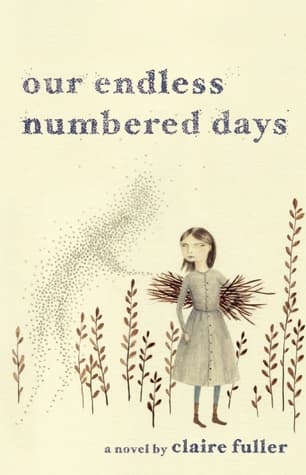
Claire Fuller (2015)
Genre
Literary Fiction / Mystery / Young Adult
Reading Time
394 min
Key Themes
See below
Sign in to track this book
An isolated eight-year-old, convinced by her survivalist father that the world has ended, slowly unearths the chilling truth of their wilderness exile and the strength to reclaim a life she believed lost.
Eight-year-old Peggy Hillcoat lives a normal life in London with her parents, James and Eleanor. One day, her father, James, a survivalist, takes her on a 'holiday' to a remote, dilapidated cabin in a German forest. When they arrive, James tells Peggy that a 'Great Dying' or 'End of Days' has happened, killing everyone else, including her mother, Eleanor. He convinces her they are the only survivors and must rebuild. Peggy, confused and alone with her father, slowly adapts to their new, isolated life, believing his story.
Life in the isolated cabin is primitive and hard. James teaches Peggy survival skills: hunting with snares, foraging for berries and mushrooms, and purifying river water. They live by nature's rhythms, marking time only by the sun and seasons, losing track of specific dates or years. Winters are brutal, with extreme hunger and cold, forcing them to ration supplies. Peggy, though lonely and sometimes scared, internalizes her father's teachings. She grows self-reliant and accepts their 'new world order,' as James reinforces the idea that the outside world is gone.
As Peggy gets older, she occasionally finds objects that don't fit James's story. One discovery is a small, preserved doll hidden in the cabin, which James calls a relic from a previous occupant. Later, she finds a hidden journal, though she cannot read much of it, filled with unfamiliar writing and dates that suggest a history before their arrival. These clues plant small doubts in Peggy's mind, creating a subtle conflict between her father's story and the unexplained items she finds. She mostly suppresses these suspicions.
Years pass, and Peggy becomes a young woman. Her isolation has made her resourceful but also naive about the world beyond their forest. Her father, James, becomes more controlling and possessive, especially as she develops physically. Peggy's curiosity, however, cannot be entirely suppressed. She starts to notice inconsistencies in James's stories and his increasingly erratic behavior. The vastness of the forest and her lack of outside interaction begin to weigh on her, making her long for something more, a vague sense that her father's truth might not be the whole truth.
A key moment happens when Peggy, during a foraging trip, finds a pair of men's boots near the riverbank. This is a significant find, as James has always said they are the only people left. The boots are too new to be old relics and too distinct to be dismissed. This discovery sparks a strong surge of curiosity and defiance in Peggy. She begins to secretly watch the area, looking for the owner. This act of independent investigation marks a turning point; she starts actively seeking answers beyond her father's imposed reality for the first time.
Peggy's search for the boots' owner leads her to a small, hidden cabin nearby, where she meets a man named Dieter. Dieter, initially startled, slowly realizes Peggy's situation and, using a mix of German and broken English, begins to tell her the truth. He explains that the world did not end, and her father has held her captive for years. He tells her about a nearby village and offers help, completely shattering James's constructed reality. This revelation is a shock, forcing Peggy to confront the deception she has lived under for so long.
Armed with Dieter's revelations, Peggy returns to her cabin and confronts James. The confrontation is explosive. James denies everything, trying to regain control and gaslight her. A violent struggle follows. Peggy, fueled by a decade of suppressed fear and new anger, fights back. In the chaos, James is fatally injured. Terrified and alone, but determined to reach the world Dieter described, Peggy flees the cabin, leaving her father behind, and begins a desperate journey through the forest towards civilization.
After days of wandering, disoriented and malnourished, Peggy is found by a search party near a village. She is taken in, identified, and reunited with her mother, Eleanor, who had believed Peggy was dead or lost for years. The reunion is full of emotion and confusion. Peggy struggles to adapt to modern life, overwhelmed by the sensory overload of civilization and the complex emotions of being with a mother she barely remembers, all while dealing with the trauma of her captivity and her father's death.
Back with Eleanor, Peggy struggles to tell the full horror of her experience, especially about James's death. She initially omits her role in his demise, burdened by guilt and fear of further rejection. This unspoken secret creates a subtle barrier between her and Eleanor, even as they try to reconnect. Peggy's journey is now about healing and integration, slowly piecing together her identity and learning to trust again, while Eleanor grapples with the truth of James's actions and the daughter who returned to her, changed.
Through therapy and slow, painful conversations, Eleanor gradually learns the full, harrowing truth of Peggy's captivity, including James's manipulative deception and the final, fatal confrontation. Eleanor is devastated by James's betrayal and the suffering he inflicted on their daughter. With the truth out, Peggy can begin the long process of healing and understanding her trauma. She starts to build a new life, integrating her wilderness skills with the complexities of modern society, and slowly rebuilds her relationship with her mother, forming a bond based on honesty and shared understanding.
The Protagonist
From a naive child held captive, Peggy develops into a strong, independent young woman who breaks free from her father's control and begins to reclaim her identity.
The Antagonist
James descends further into his delusion and controlling behavior, ultimately meeting a violent end at the hands of the daughter he sought to possess.
The Supporting
From a grieving mother, Eleanor becomes a source of stability and healing for her traumatized daughter, working to rebuild their fractured relationship.
The Supporting
Dieter serves as a catalyst for Peggy's escape, providing the crucial information and assistance she needs to break free.
The Mentioned
The doll's discovery and later understanding contribute to Peggy's unraveling of James's lies.
The novel explores the nature of control and manipulation, mainly through James's actions. He creates an elaborate lie, convincing Peggy the world has ended, to control her life, thoughts, and reality. His manipulation includes isolating her, dictating her education, and trying to control her emotions. This theme is clear in how James uses fear and a fabricated story to keep Peggy captive, taking away her autonomy and sense of self until she questions his authority after finding the boots and meeting Dieter.
“He said the world had died, and I was all he had left. And I believed him. I believed him for so long.”
A central theme is the subjective nature of reality, especially when shaped by a powerful, deceptive authority figure. For years, James constructs Peggy's entire reality, making her doubt her perceptions when inconsistencies appear. The discovery of the boots and her meeting with Dieter force her to confront the shocking truth that her 'world' was a lie. This theme shows how easily truth can be distorted and how hard it is to reclaim one's own reality after prolonged gaslighting and manipulation, as seen in Peggy's struggle to adjust to the real world.
“What if the truth was just another story, told by someone else?”
The novel shows the human spirit's capacity for survival and resilience in extreme circumstances. Peggy not only physically survives a decade in harsh wilderness conditions but also mentally and emotionally endures psychological abuse. Her ability to learn survival skills, adapt to isolation, and find the strength to confront her captor shows immense inner fortitude. Even after her escape, her resilience is tested as she navigates healing from trauma and integrating back into a society she barely remembers, showing her will to live and thrive.
“I had learned to live in the forest, and I would learn to live again in the world outside.”
The profound and lasting nature of the mother-daughter bond is a significant element. Eleanor's relentless search for Peggy and her refusal to give up hope show her deep maternal love. When Peggy returns, the theme explores the challenges of rebuilding a severed bond, especially when one person has endured severe trauma and the other carries years of grief and unanswered questions. Their journey of reconnection is slow and painful, needing patience and understanding, ultimately strengthening their relationship as they heal together.
“I knew she was my mother, even if I couldn't remember her face. It was a feeling, deep inside me.”
The story is told entirely from Peggy's perspective.
The use of first-person narration is crucial, as it immerses the reader directly into Peggy's subjective experience. We see the world through her eyes, initially believing James's lies alongside her, which amplifies the shock and betrayal when the truth is revealed. This perspective effectively conveys her isolation, confusion, and gradual dawning of suspicion, making her journey of discovery and healing intensely personal and impactful. It also highlights the insidious nature of gaslighting, as her internal monologue reflects her struggle to reconcile her father's narrative with her own observations.
A physical setting that symbolizes isolation and captivity.
The remote cabin in the German forest functions as more than just a setting; it is a potent symbol of Peggy's complete isolation and captivity. Its dilapidated state reflects the brokenness of James's mind and the life he forces upon Peggy. The cabin walls literally and figuratively enclose Peggy, cutting her off from the outside world and any alternative truths. As Peggy grows older, the cabin transforms from a perceived sanctuary into a prison, embodying the psychological cage James builds around her. Its eventual abandonment by Peggy signifies her breaking free from that captivity.
Objects that serve as clues to the truth and catalysts for discovery.
Various objects found by Peggy throughout her captivity act as crucial plot devices. The hidden doll (Liesel's doll) and the journal are early, subtle hints that James's story is incomplete, planting seeds of doubt in Peggy's mind. Most significantly, the pair of men's boots discovered near the river is the catalyst for Peggy's active investigation. These objects provide tangible evidence that contradicts James's narrative, forcing Peggy to question her reality and ultimately leading her to seek out the truth, driving the plot forward from passive acceptance to active rebellion.
Subtle hints throughout the narrative that all is not as it seems.
Foreshadowing is employed through various subtle clues that hint at James's deception long before Peggy fully understands it. These include James's overly strict rules, his intense possessiveness, the discovery of the doll and the journal, and his increasingly erratic behavior. These small inconsistencies and unsettling details create a growing sense of unease for both Peggy and the reader, building suspense and preparing for the eventual revelation of the 'Great Dying' as a lie. It makes the ultimate twist feel earned rather than abrupt.
“There are no other people in the world, Peggy. Just us. We have to make our own world, you and I.”
— Peggy's father tells her this after they arrive at the cabin in the woods, convincing her they are the last people on Earth.
“He told me that the outside world had been destroyed, that a plague had wiped out everyone.”
— Peggy recalls her father's initial explanation for their retreat into the wilderness.
“We lived by the sun and the moon and the rain. We lived by the rules he made up.”
— Peggy describes their existence in the cabin, governed entirely by her father.
“He taught me how to make a fire, how to catch fish, how to set snares. He taught me everything I needed to know to survive.”
— Peggy reflects on the practical skills her father imparted during their time in the woods.
“The silence was absolute, broken only by the rustle of leaves or the call of a bird. It was a silence that could make you mad.”
— Peggy describes the profound quiet of the forest, hinting at its psychological impact.
“I was his little bird, his only companion, his reason for everything.”
— Peggy internalizes her role in her father's fabricated world.
“Sometimes I would forget what my mother looked like, or what her voice sounded like. It was like she was a dream.”
— Peggy struggles with fading memories of her life before the woods.
“He always said that stories were powerful, that they could change everything.”
— Peggy recalls her father's belief in the power of narrative, ironic given his own deceptive storytelling.
“The forest was both my prison and my protector.”
— Peggy describes her complex relationship with the wilderness.
“I often wondered if I was the only one who remembered the world before.”
— Peggy questions the reality of her father's claims and her own memories.
“He had built a cage around me, but he had also taught me how to fly.”
— Peggy reflects on the contradictory nature of her father's influence.
“The truth was a slippery thing, hard to catch and even harder to hold onto.”
— Peggy meditates on the elusive nature of truth after discovering the reality of her situation.
“I was a wild thing, untamed, but yearning for something I couldn't name.”
— Peggy describes her internal state after her return to civilization.
“Every day was a numbered day, a gift, a chance to begin again.”
— Peggy reflects on the title of the book and her new perspective on life.
Ready to see how well you understood this book? Take our interactive quiz with 10 questions.

Claire Fuller is a critically acclaimed author known for her evocative prose and exploration of complex human relationships. Her debut novel, 'Our Endless Numbered Days,' won the 2015 Desmond Elliott Prize. Fuller's work often delves into themes of isolation, memory, and the natural world, establishing her as a significant voice in contemporary fiction.







