“I am learning how to be sad and happy at the same time.”
— Jude reflects on her mixed emotions after moving from Syria to the U.S.

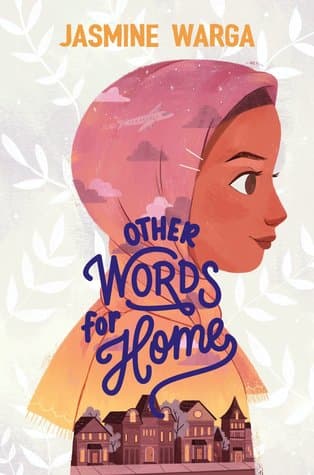
Jasmine Warga (2019)
Genre
Children's / Young Adult
Reading Time
360 min
Key Themes
See below
Sign in to track this book
A young Syrian girl moves to America, finding her voice and a new sense of belonging through a school musical as she navigates displacement and cultural assimilation.
Ten-year-old Jude lives happily in Syria with her Baba, Mama, and older brother, Issa. She loves the beach, the food, and watching American movies with Issa. Issa loves American rock music and dreams of moving there. Jude is close to her best friend, Fatima, and enjoys her daily routines. However, news of escalating violence and bombings in other parts of Syria begins to reach their quiet coastal town. Her parents discuss the unrest in quiet tones, and the atmosphere becomes tense. Despite the growing fear, Jude tries to keep her childhood normal, but the threat of war is real and ever-present, slowly coming closer to their peaceful life.
As the conflict intensifies and reaches closer to their hometown, Jude's parents decide that Jude and Mama will move to America. Baba, Jude's father, stays behind to protect their home and business. Issa, her brother, chooses to stay with Baba, believing he can help in the resistance. Jude is heartbroken and confused by this separation. She cannot fully grasp the danger that makes such a big move necessary. The goodbyes are tearful and uncertain, filled with unspoken fears about when or if they will ever be reunited. Jude and Mama pack few belongings, carrying the weight of their family's divided future.
Jude and Mama arrive in Cincinnati, Ohio, where Mama's brother, Uncle Mazin, his wife, Aunt Michelle, and their daughter, Sarah, meet them. The new environment overwhelms Jude; everything feels loud, fast, and unfamiliar. The English language, which she only knows from movies, is spoken too quickly, making her feel alone. She struggles with cultural differences, from the food to social interactions. The comfort of her Syrian home is very different from America. She feels like an outsider, constantly observed and misunderstood, longing for the familiar sights and sounds of her old life and the presence of her Baba and Issa.
Jude begins attending an American middle school, which brings new challenges. She struggles with the language and customs, often feeling invisible or singled out as 'different.' She is called 'Middle Eastern,' a term she never used to describe herself in Syria. Slowly, she makes connections. She befriends Layla, another Arab American girl who is more assimilated, and later, Noah, a kind boy in her class. These friendships give her a needed sense of belonging and help her with her new identity, though she still feels a strong sense of displacement and longs for news from home.
Jude learns her school is holding auditions for the musical, 'Aladdin.' She is hesitant and insecure about her English and singing, but Noah, who is also auditioning, encourages her. Jude has always loved American movies and music, and the idea of being part of a performance sparks excitement. Despite her fears and worry of being judged, she practices a song in secret, putting her emotions and experiences into her voice. This decision is a big step in her journey of adaptation and self-discovery, allowing her to explore a new part of herself in this unfamiliar land.
Communication with Baba and Issa in Syria becomes harder and less frequent. Jude and Mama anxiously wait for calls and messages, but long periods of silence happen, increasing their worry. Jude especially misses Issa, his music, and their shared dreams. She constantly thinks about what he might be doing and if he is safe. The uncertainty about her loved ones' safety weighs heavily on their new life in America, making it hard for Jude to fully embrace her present while her past remains in danger. The news they do receive is often vague and troubling, making their fears worse.
When the day of the musical audition arrives, Jude is very nervous. She sings a song that is simple but meaningful to her, letting her raw emotions about her displacement and hopes show through. Despite her accent and initial shyness, her performance is heartfelt. She doesn't get a lead role, but she is cast in the chorus, which is a victory. This experience gives her a new sense of accomplishment and belonging, proving to herself that she can contribute and be seen in this new world, even in a small way. It is a moment of empowerment, using her voice literally and figuratively.
Jude's friendship with Layla grows, but Jude also sees Layla's struggles with her identity as an Arab American. Layla sometimes tries to distance herself from her heritage, trying to fit in with American culture. Jude understands and empathizes with Layla's situation, even as she herself tries to hold onto her Syrian identity. There are times of tension and misunderstanding between them, showing the different ways they cope with being 'other.' Jude learns that friendship is not always easy, especially when dealing with cultural differences and personal insecurities, but their bond remains important to her.
The news from Syria finally arrives, breaking the fragile peace Jude and Mama had tried to build. They receive a call saying Issa has been seriously injured in the conflict. The details are few and terrifying, leaving them distraught and helpless. Mama is overcome with grief and worry, struggling with the distance and inability to be with her son. Jude feels deep sadness and anger; the reality of the war affects her more than ever. This event shows the constant anxiety and trauma that refugees carry, even when physically safe, reminding them of the ongoing suffering of their loved ones.
Despite the bad news about Issa, Jude continues with the musical. The rehearsals and the performance become a way for her to express her emotions and find a temporary escape. On opening night, Jude performs with her classmates, feeling a sense of unity and belonging with her new friends. She realizes that while her heart aches for her family in Syria, she is also building a new life and finding new joys in America. The stage is a place where she can be herself, where her voice, though part of a chorus, contributes to something beautiful. It is a moment of bittersweet triumph, celebrating new beginnings while holding onto the pain of the past.
By the end of the school year, Jude has grown a lot. She is more confident in English, has made new friends, and has found her love for performance. While the pain of separation from Baba and the worry for Issa remain, she has learned to live with both sadness and happiness. She starts to see Cincinnati not just as a temporary refuge but as a place where she can build a future. She understands that she is both Syrian and American, holding onto her heritage while embracing her new experiences. She looks forward to the summer, knowing that while her journey is far from over, she has found a way to make a new home.
The Protagonist
Jude transforms from a quiet, displaced girl yearning for her old life into a more confident individual who embraces her dual identity and finds a new sense of belonging.
The Supporting
Mama endures profound grief and worry, but remains a steadfast and loving presence for Jude, adapting to new circumstances for her daughter's future.
The Supporting
Issa's character remains in Syria, his story unfolding through their worry and the news they receive, representing the ongoing conflict and its personal toll.
The Supporting
Baba's character remains in Syria, serving as a constant reminder of the family's fractured state and the ongoing conflict.
The Supporting
Sarah moves from initial reserve to a more understanding and supportive friend for Jude, demonstrating cultural empathy.
The Supporting
Layla helps Jude adapt while grappling with her own identity and the desire to fit in, showing the varied experiences of Arab Americans.
The Supporting
Noah serves as a catalyst for Jude's confidence, encouraging her to participate in the musical and embrace her new life.
The Supporting
Uncle Mazin provides a crucial sanctuary for Jude and Mama, offering stability and a new family structure in America.
Jude's journey is about discovering who she is in a new place. In Syria, she was simply Jude; in America, she becomes 'Middle Eastern,' a label that makes her think about her heritage and how people see her. She struggles to balance her Syrian past with her American present, eventually learning to embrace a dual identity. Her participation in the school musical and her poetry writing are acts of self-expression that help her define herself beyond being a refugee. This theme is clear as she tries to fit in while keeping her cultural roots.
“I am learning how to be sad and happy at the same time.”
The novel shows the experience of displacement, both physical and emotional. Jude feels like a 'foreigner' in America, struggling with the language, customs, and the overwhelming feeling of being an outsider. She constantly longs for her home in Syria and her separated family. The theme explores how she slowly finds a sense of belonging in Cincinnati, through new friendships, family connections, and finding her own voice. It shows the challenge of making a new home while carrying the memories and trauma of the old one, suggesting that belonging can be found in unexpected places and within oneself.
“I am a girl who is learning how to be a girl in a new place. I am a girl who is learning how to be a girl in a new language.”
The effect of war on families is a main theme. Jude's family is broken by the conflict, with Baba and Issa staying in Syria while Jude and Mama seek refuge. The constant worry, the infrequent and tense phone calls, and the news of Issa's injury show the deep emotional toll of separation. Despite the physical distance, the bonds of love and concern remain strong, driving Mama's decisions and Jude's longing. The theme also explores the strength found in the remaining family (Jude and Mama) and the new support system from Uncle Mazin's family.
“How can a heart be in two places at once?”
Jude's journey is marked by her search for a voice, both literally and figuratively. At first, she struggles with English, feeling silent and unseen. Her love for American movies and music, shared with Issa, hints at her eventual embrace of performance. Writing poetry becomes a private way for her to express her emotions, helping her process her experiences. Her decision to audition for the school musical, and her performance, is a strong act of finding her public voice and expressing her true self, showing that language barriers do not stop one's ability to communicate or connect.
“Maybe words are like a compass, pointing you in the right direction.”
Despite the big challenges Jude faces—leaving her home, language barriers, culture shock, and constant worry for her family—she shows resilience. She adapts to new situations, forms new friendships, and pursues new passions like the musical. The novel shows the human ability to hope even in the darkest times, with Jude finding moments of joy and possibility amidst her sadness. Her journey shows the strength of the human spirit to endure, adapt, and succeed when facing adversity, creating new paths forward.
“I am learning that hope is a thing with feathers, but it also has roots.”
The story is told through Jude's eyes in free verse poetry.
The entire novel is written in first-person free verse poetry from Jude's perspective. This device allows for an intimate and immediate portrayal of Jude's thoughts, feelings, and sensory experiences. The poetic form, with its sparse language and evocative imagery, effectively conveys Jude's struggle with a new language and her internal world, where emotions often transcend literal words. It also highlights her developing 'voice' and her budding interest in expressing herself, mirroring her journey of self-discovery and adaptation in America.
Juxtaposition of Syrian and American cultures to highlight Jude's adjustment.
The novel constantly draws contrasts between Jude's life in Syria and her new life in America. Details about Syrian food, family customs, the Mediterranean Sea, and the Arabic language are frequently juxtaposed with descriptions of American school lunches, loud malls, English slang, and cold winters. This device effectively illustrates Jude's culture shock, her feelings of being an outsider, and the challenges of assimilation. It also helps to paint a vivid picture of both worlds, making Jude's sense of displacement and her gradual adaptation more tangible for the reader.
Symbols of aspiration, cultural bridge, and a source of shared connection.
American movies and music serve as significant symbols throughout the story. Initially, they represent a shared dream between Jude and Issa, a glimpse into a world they aspire to. In America, they become a point of connection for Jude, first with Issa's memory, then with new friends like Noah and her interest in the musical. 'Aladdin' specifically acts as a cultural bridge, being a story with Middle Eastern roots performed in an American context. These elements highlight Jude's ability to find familiarity and belonging in unexpected cultural touchstones.
A powerful symbol of home, memory, and longing for the past.
The sea, particularly the Mediterranean coast of Syria, is a recurring and potent symbol in Jude's memories. It represents her home, her childhood, and the peace and stability she left behind. She often recalls the sights, sounds, and smells of the sea, especially when feeling overwhelmed or homesick in Cincinnati. The sea embodies her profound longing for her past and her family in Syria. Its absence in her new land underscores her displacement and the stark difference between her two lives, making it a constant reminder of what she has lost.
“I am learning how to be sad and happy at the same time.”
— Jude reflects on her mixed emotions after moving from Syria to the U.S.
“Home is not just a place, but a feeling you carry inside you.”
— Jude contemplates the meaning of home while adjusting to her new life.
“Sometimes you have to be brave enough to say the things that are hard to say.”
— Jude gathers courage to speak up about her experiences and feelings.
“I am from a place that is not on the map, but it is in my heart.”
— Jude describes her connection to Syria despite being far away.
“Change is a storm that can either break you or shape you into something stronger.”
— Jude reflects on the challenges of adapting to a new country.
“In America, I am learning that quiet can be a kind of loud.”
— Jude observes cultural differences in expression and communication.
“My name is a story, and I am still writing it.”
— Jude thinks about her identity and how it evolves with her experiences.
“Friendship is a bridge between two different worlds.”
— Jude forms a bond with a classmate who helps her navigate American life.
“I carry my homeland in my accent, in my memories, in the way I see the world.”
— Jude acknowledges how her Syrian heritage influences her perspective.
“Sometimes the bravest thing is to just keep going, even when you're scared.”
— Jude perseveres through difficulties in her new environment.
“Words can be a shelter when you feel lost in a new place.”
— Jude finds comfort in poetry and writing as she adjusts.
“I am not just one thing; I am a collection of all the places I've been and the people I've loved.”
— Jude embraces the complexity of her identity as an immigrant.
“Hope is a small, stubborn seed that grows even in the hardest soil.”
— Jude maintains optimism despite the challenges she faces.
“In the silence between words, I find pieces of myself I didn't know were missing.”
— Jude reflects on self-discovery through quiet moments and reflection.
Ready to see how well you understood this book? Take our interactive quiz with 10 questions.

Biography coming soon.

Dan Gemeinhart
4.5

Kate O'Hearn
4.4

Jeanne Birdsall
4.4

Jen Wang
4.4

Wendelin Van Draanen
4.3

John Marsden
4.3

Chris Van Allsburg
4.3

Jennifer A. Nielsen
4.2