“The thing about history is that it’s not a straight line. It’s a messy, winding road, and sometimes you have to go back to understand where you’re going.”
— Molly reflects on the past and its impact on the present.

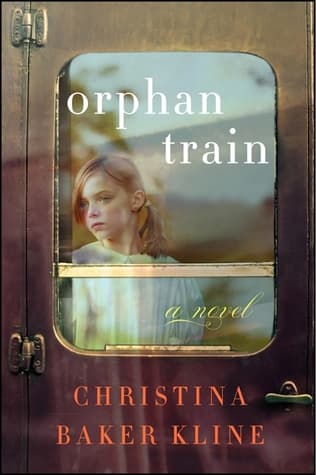
Christina Baker Kline (2013)
Genre
Historical Fiction / Young Adult
Reading Time
270 min
Key Themes
See below
Sign in to track this book
A ninety-one-year-old orphan train rider and a troubled Penobscot foster teen forge an unlikely bond while unearthing a shared past of displacement and resilience.
Seventeen-year-old Molly Ayer lives with her foster parents, Ralph and Dina, on Mount Desert Island, Maine. She is close to leaving the foster care system and has a history of shoplifting. After being caught stealing a copy of 'Jane Eyre,' Molly gets a choice: juvenile detention or community service. Her social worker, Jack, arranges for her to help ninety-one-year-old Vivian Daly clean her cluttered attic. Molly initially dislikes the task, feeling it is a punishment that keeps her from her boyfriend, Gino. She sees Vivian as just another 'old lady' and struggles with her own feelings of being abandoned and an outsider.
Molly begins working in Vivian's dusty attic, filled with trunks and boxes of memories. Vivian, a sharp but quiet woman, at first gives little information about the items. Molly finds old photographs, children's clothing, and a small, carved wooden bird. As Molly sorts through the belongings, she becomes more curious about Vivian's life, sensing a significant story behind the ordinary objects. This early sorting creates a connection between the two women, as Molly's own feeling of not belonging matches the quiet history she finds in Vivian's home.
Vivian starts telling her past, revealing her original name was Niamh Power. She was born in Ballyshannon, Ireland, and moved to New York City with her family in 1929 to escape poverty. They lived in a crowded apartment on the Lower East Side. Niamh describes the difficulties of immigrant life, the close community, and how the Great Depression affected them. She especially loved her younger siblings, Maisie and James, and her parents. This first sharing is hard for Vivian, as it forces her to face long-hidden memories of happiness and later loss.
Tragedy strikes Niamh's family when a tenement fire kills her parents and younger siblings, Maisie and James. Niamh is the only survivor, left alone and traumatized. She is then placed in the New York Foundling Hospital, an orphanage. The experience is harsh and impersonal; they take her identity, cut her hair, and give her a new name, Dorothy. This time marks a deep loss of self and safety, leaving her scarred and afraid to form attachments. Molly listens closely, recognizing the pain of separation and loss that reminds her of her own experiences.
In 1930, at age ten, Niamh (now Dorothy) is put on an 'orphan train' going west from New York City. She is one of hundreds of children sent to new homes in the Midwest. The journey is long and confusing, filled with fear. The children are shown on stages in various towns, picked by families like livestock. Dorothy holds onto a small, carved wooden bird, a gift from her father, as her only link to her past. This journey shows the impersonal nature of the orphan train system and the children's vulnerability.
Dorothy's experiences with foster families are mostly bad. Her first placement is with the Groves, a farming family in Minnesota who use her for labor and treat her poorly. Mrs. Groves is especially harsh, and Dorothy is forced to work hard in terrible conditions. She eventually runs away and is then placed with the Byrnes, a wealthier but equally uncaring family who treat her as a servant. The constant mistreatment and lack of true affection make her believe she is unlovable and unwanted. This leads her to hide her true self and adapt to survive.
Dorothy's situation gets a little better when she is placed with the Nielsen family in Minnesota. Mrs. Nielsen, a kind woman, gives Dorothy some stability and teaches her to sew. Dorothy connects with the family's young daughter, Jeanne. She also meets Hans, a young man who shows her real affection. For the first time, Dorothy experiences a sense of belonging and love. However, her past trauma and fear of being abandoned make it hard for her to fully accept this happiness. She struggles with her identity, still using the name 'Dorothy' while wanting to be 'Niamh.'
A series of events leads Dorothy to leave the Nielsens. She becomes pregnant by Hans, but he dies in a logging accident. Devastated and alone, she gives birth to a daughter, May. Unable to care for her, Dorothy makes the heartbreaking choice to place May in an orphanage. This decision reflects her own abandonment and causes her deep guilt. She then moves to Maine, looking for a fresh start and a complete break from her past. At this point, she legally changes her name to Vivian Daly, hoping to let go of the painful memories of Niamh and Dorothy and create a new, unburdened identity.
As Vivian shares her story, Molly's early doubt turns into deep understanding. She sees the similarities between Vivian's experiences and her own feelings of being an outsider and facing an uncertain future. Molly's art project, a quilt made from Vivian's old clothes, becomes a visible sign of their connected lives. Inspired by Vivian's strength, Molly decides to help Vivian search for information about her daughter, May, and her siblings, Maisie and James. This search gives Molly purpose and a connection beyond her own immediate problems.
Through Molly's research, they find that May was adopted and now lives in California as Sarah. Vivian and Sarah are happily reunited, a touching moment of peace for Vivian. They also learn that Vivian's sister, Maisie, survived the fire and lived a full life, adding another layer of emotional healing. Molly's relationship with her foster parents, Ralph and Dina, also gets much better. She decides to stay with them, finding a stable home and a sense of family she had long wanted. She continues her education, following her passion for art.
Vivian, having faced and accepted her past, finds peace and a new sense of purpose through her reunited family. She continues her relationship with Sarah and her grandchildren. Molly, no longer defined by her difficult past, thrives in her new home with Ralph and Dina. She applies to college to study art. Her experiences with Vivian have shaped her views and given her a deeper understanding of strength and the importance of history. Their unexpected friendship changes both women, showing how sharing stories can heal old hurts and create new paths.
The Protagonist
Vivian transforms from a woman silently burdened by her past to one who confronts her trauma, shares her story, and finds peace through reconciliation with her lost family.
The Protagonist
Molly evolves from a resentful, alienated teenager to an empathetic, self-aware young woman who finds purpose, belonging, and a path forward.
The Supporting
Ralph remains a steady, supportive figure, his quiet patience eventually helping Molly to feel safe and loved in their home.
The Supporting
Dina moves from a frustrated foster mother to a truly loving and understanding maternal figure for Molly.
The Supporting
Hans is a catalyst for Vivian's brief happiness and subsequent heartbreak, remaining a significant memory in her life.
The Supporting
Sarah is reunited with her birth mother, bringing healing and completion to Vivian's life.
The Supporting
Jack serves as a consistent source of support and guidance for Molly.
The Supporting
Mrs. Nielsen provides a temporary haven and a model of kindness for young Vivian.
The novel deeply explores how people create their identity, especially when they are displaced or orphaned. Both Vivian (Niamh/Dorothy) and Molly struggle with who they are and where they belong. Vivian, stripped of her name and family, constantly adapts to new identities to survive, losing touch with her true self. Molly, a Penobscot Indian in a mostly white foster system, feels like an outsider. Their journey together helps them reclaim their heritage and find a sense of belonging, whether it is Vivian reconnecting with her Irish roots and lost family or Molly finding a stable home and purpose with Ralph and Dina, and her Penobscot heritage.
“How do you know who you are when you've been so many different people?”
Both Vivian and Molly show great strength when facing hardship. Vivian goes through extreme poverty, losing her entire family, the dehumanizing orphan train, and multiple abusive foster homes. Despite these traumas, she finds ways to survive, adapt, and eventually build a quiet life. Molly, too, has faced the instability of the foster care system and her own inner problems. Their stories highlight how people can endure deep suffering, adapt to change, and find strength to overcome past traumas, often through unexpected connections and the power of sharing one's story.
“I was a survivor. It was a badge I wore with honor.”
Vivian telling her life story to Molly is key to the healing process for both characters. Vivian's memories, at first locked away and painful, become a source of freedom as she shares them. Molly's role as listener and recorder helps Vivian process her past and gives Molly a new view on her own problems. The objects in Vivian's attic, like the wooden bird and old photographs, prompt these memories, showing how physical items can hold powerful stories. This theme emphasizes how sharing personal histories can connect generations, build understanding, and lead to deep self-discovery.
“Stories are what make us human. It's how we understand ourselves and others.”
Loss is a common theme, experienced by both main characters in different ways. Vivian suffers the terrible loss of her birth family, her name, her cultural identity, and later, her first love and her daughter. Molly experiences the ongoing loss of a stable family, a consistent home, and a clear sense of her heritage within the foster system. The novel explores the long-term effects of these losses, including lasting grief, guilt, and fear of abandonment. The healing process involves acknowledging these losses, grieving them, and finding ways to include them in one's life story without being consumed by them, eventually leading to acceptance and peace.
“Sometimes you have to give up to get. Sometimes you have to give up what you want most to get what you need most.”
Alternating chapters between Vivian's past and Molly's present.
The novel employs a dual narrative structure, alternating between Vivian Daly's historical account of her life as an orphan train rider in the 1930s and Molly Ayer's contemporary story as a foster teenager in Maine. This allows for a direct comparison of their experiences, highlighting parallels in themes like abandonment, identity, and resilience across different eras. The past narrative enriches the present, providing context and emotional depth to Vivian's character, while Molly's present-day journey drives the plot forward and eventually helps uncover Vivian's lost history.
A carved wooden bird representing connection to the past and hope.
The small, intricately carved wooden bird, a gift from Niamh's (Vivian's) father, serves as a powerful symbol throughout the novel. It is her only tangible link to her birth family and her Irish heritage after the fire. It represents memory, connection to one's roots, and a glimmer of hope amidst despair. Vivian holds onto it through all her hardships, and it becomes a testament to her enduring spirit and the importance of holding onto fragments of one's past, even when everything else is lost. Molly also finds meaning in this object, recognizing its significance to Vivian.
A physical space filled with objects that unlock memories and secrets.
Vivian's attic functions as more than just a storage space; it is a repository of her past, a physical manifestation of her suppressed memories and hidden identity. As Molly helps Vivian sort through the trunks and boxes, each object – photographs, clothing, letters – acts as a trigger for Vivian's storytelling. The attic thus becomes a symbolic space for excavation, discovery, and ultimately, healing. It represents the journey into the subconscious and the process of confronting and making peace with one's history.
A collaborative art project symbolizing the weaving together of two lives and their shared history.
Molly's community service project involves creating a quilt from Vivian's old clothes and fabric scraps. This quilt becomes a powerful symbol of the merging of their two lives and their shared experiences of displacement and resilience. Each piece of fabric holds a story from Vivian's past, and as Molly stitches them together, she is not only creating a physical object but also metaphorically weaving together their narratives, finding connections between their seemingly disparate lives. The quilt represents healing, connection, and the creation of something beautiful and meaningful from fragmented pieces.
“The thing about history is that it’s not a straight line. It’s a messy, winding road, and sometimes you have to go back to understand where you’re going.”
— Molly reflects on the past and its impact on the present.
“Home wasn’t a place, it was a feeling. A feeling of belonging, of being loved.”
— Vivian thinks about her search for a true home.
“We are all made of stories. Some of them are true, some of them are not, but they are all part of who we are.”
— Molly contemplates the narratives that shape identity.
“Sometimes the best way to find yourself is to get lost.”
— Vivian reflects on her journey of self-discovery.
“The past is never really gone. It’s always there, lurking in the shadows, waiting to be remembered.”
— A thought about the enduring presence of past experiences.
“You can’t choose your family, but you can choose how you let them affect you.”
— Molly considers the influence of her biological and foster families.
“Even the most broken things can be mended, sometimes even made stronger than before.”
— A hopeful thought about resilience and recovery.
“It’s funny how the things we try to forget are often the ones that define us the most.”
— Vivian thinks about suppressed memories and their significance.
“Kindness, like a ripple, spreads outwards, touching lives in ways we can never fully comprehend.”
— A reflection on the impact of small acts of kindness.
“The world is full of people who will tell you what you can’t do. But you are the only one who gets to decide what you will do.”
— Molly finds her inner strength and agency.
“Sometimes the greatest strength is found in vulnerability.”
— Vivian learns to open up about her past.
“Every person has a story worth telling, if only someone is willing to listen.”
— Molly realizes the importance of giving voice to untold histories.
“It’s not about where you come from, but where you’re going, and who you become along the way.”
— A theme throughout the book about overcoming one's origins.
Ready to see how well you understood this book? Take our interactive quiz with 10 questions.

Christina Baker Kline is a critically acclaimed author known for her historical fiction. Her novel "Orphan Train" was a runaway bestseller, spending over 100 weeks on The New York Times Best Seller list and selling millions of copies worldwide. Kline's work often explores themes of belonging, family, and the past, as seen in her other notable novels like "A Piece of the World."







