“The island was always there, and then it wasn't.”
— Reflecting on the mysterious nature of the island and its disappearances.

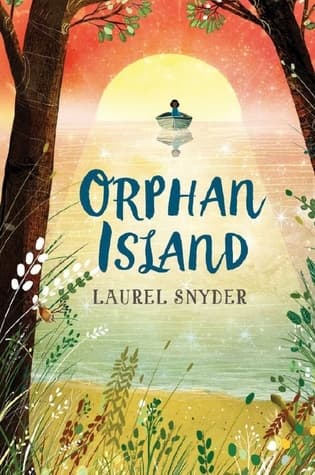
Laurel Snyder (2017)
Genre
Fantasy / Children's / Young Adult
Reading Time
300 min
Key Themes
See below
Sign in to track this book
On a mysterious, idyllic island where children live in perfect harmony, a young girl named Jinny grapples with the heartbreaking tradition of a boat arriving each year to replace the eldest child with a new one, forcing her to confront her own impending departure.
The story begins on the day of the Changing, an annual event on the mysterious Orphan Island. Nine children live on the island, and each year a boat arrives, taking the eldest child away and delivering a new, young child. This year, Jinny, an almost-eleven-year-old girl, watches as her best friend, Deen, the current Elder, is taken by the boat. His departure leaves Jinny as the new Elder, a role she both fears and feels a sense of duty towards. The boat also brings a new, tiny girl named Ess. Jinny immediately feels the weight of her new responsibility: to care for Ess and teach her the ways of the island, just as previous Elders taught her.
With Deen gone, Jinny is the Elder, responsible for the other children and maintaining the island's routines. The youngest, Ess, is a challenging newcomer, often crying and resisting. Jinny tries to teach Ess about the island's simple rules: how to find food, where to sleep, and the importance of the 'circle'—the unspoken agreement among the children. Ess, however, is a defiant and curious child, constantly asking 'Why?' and questioning the established order. Jinny finds herself increasingly overwhelmed by the demands of leadership and the emotional void left by Deen's absence.
Ess's inquisitive nature becomes a source of both frustration and subtle revelation for Jinny. Unlike the other children who accept the island's mysteries, Ess constantly asks about the boat, where the children go, and why things are the way they are. Her questions force Jinny to confront her own unexamined beliefs about the island. Jinny tries to uphold the traditions, telling Ess the same stories and explanations she was told, but Ess's relentless 'Why?' begins to chip away at the established truths. Jinny starts to notice inconsistencies and details she had previously overlooked, prompted by Ess's fresh perspective.
One day, Ess's adventurous spirit leads her to break a significant island rule: venturing too far into the dense, central woods alone. This act causes panic among the other children, especially Jinny, who feels she is failing in her duty as Elder. Jinny, along with the other children, searches frantically for Ess. When they finally find her, Ess is unrepentant, further challenging Jinny's authority. This incident shows Jinny's struggle to enforce the island's unwritten laws and to maintain the delicate balance of their isolated community, while also fearing for Ess's safety.
As Jinny grapples with her role, faint memories of her own arrival on the island begin to surface. She recalls fragments of a different life, a world beyond the island, though these memories are hazy and fleeting. Ess's persistent questions and Jinny's growing uncertainty about the island's true nature spur this nascent recollection. Jinny also starts to observe the other children more closely, noticing their individual personalities and how they interact with the island's mysteries, making her question if they too hold suppressed memories or intuitions about their origins.
Ess, ever the explorer, discovers an unusual carving on the oldest and largest tree on the island, a tree the children usually avoid. The carving is complex and deliberate. She brings this discovery to Jinny, who initially dismisses it. However, Ess's insistence and her own growing doubts compel Jinny to investigate. The carving sparks further questions about the island's history and the previous Elders, suggesting a more complex past than the simple narrative they have always accepted. This discovery fuels Ess's determination to uncover the island's secrets.
A significant deviation from the island's established rhythm occurs when the boat reappears on the horizon much earlier than the usual annual schedule. This unexpected arrival throws the children into confusion and fear. Jinny, who had been preparing herself for her eventual departure, now faces an accelerated timeline and the daunting prospect of leaving Ess and the others without a fully prepared Elder. The early return of the boat shatters the children's sense of predictable order and forces them to confront the instability of their existence.
With the boat's premature return, Jinny faces a moral dilemma. According to tradition, as the Elder, she should depart. However, Ess is still very young and not yet ready to assume the full responsibilities of the Elder, nor has she been fully integrated into the island's ways. Jinny feels a fierce protectiveness over Ess and a deep desire to ensure her safety and proper upbringing on the island. This conflict forces Jinny to question the nature of the 'Changing' and her role within it, contemplating a choice that goes against everything she's been taught.
Driven by her protective instincts, Jinny devises a desperate plan to hide Ess from the approaching boat. She confides in the other children, explaining her decision and the potential consequences. While some children are fearful and resistant to breaking the island's sacred traditions, others, particularly those who have grown fond of Ess, agree to help. They work together to create a hiding place for Ess, an act of collective defiance against the island's seemingly immutable laws. This act signifies a shift in the children's understanding of their agency and the possibility of altering their fate.
As the boat draws near, Jinny stands firm, facing the unknown. She has made her decision: she will go, but she ensures Ess is hidden and safe. In a poignant moment, Jinny boards the boat, leaving the island and the children she has protected. The departure is filled with a mixture of fear, sorrow, and a newfound sense of self-determination. As she leaves, Jinny reflects on her time as Elder, her bond with Ess, and the mysteries of the island. She embraces the uncertainty of her future, understanding that her journey is a continuation of the cycle, yet also a unique path she has chosen.
The Protagonist
Jinny transforms from a compliant follower of tradition into a leader who challenges the established order out of love and a desire to protect the innocent.
The Supporting
Ess remains a catalyst for change, her innocent but relentless questioning acting as a foil to Jinny's traditionalism.
The Supporting
Deen's arc is completed at the beginning of the story, symbolizing the cyclical nature of the island's existence and the inevitable departure of the eldest.
The Supporting
Alex's arc is subtle, showing his gradual acceptance of Jinny's leadership, even when it challenges tradition.
The Plot Device/Antagonist
The boat's 'arc' is cyclical, but its early return introduces an element of unpredictability, challenging the children's assumptions about its fixed nature.
The island children form a unique, self-sustaining family unit, bound by shared experience and the island's mysterious rules. Jinny's role as Elder highlights the responsibilities and sacrifices in maintaining this community. The deep bond she forms with Ess, for example, goes beyond traditional familial ties, showing how love and protection can define a family, even in unconventional circumstances. The children rely on each other for survival, companionship, and emotional support, creating a small society where each child plays a vital role in the collective well-being.
““We took care of each other. That was the rule. That was the only rule.””
Loss is an inherent part of life on Orphan Island, with the annual departure of the eldest child. Jinny experiences profound grief over Deen's departure, highlighting the emotional toll of these cycles. The children must learn to accept this recurring loss as part of their existence. The story also explores the resistance to acceptance, particularly when Jinny attempts to defy the boat's early return to protect Ess. This theme explores the tension between resignation to fate and the struggle to alter it, emphasizing the pain of separation and the resilience required to endure it.
““The boat always came. And the boat always left. And the island always stayed.””
Jinny's transformation into the Elder immediately places a heavy burden of responsibility on her shoulders. She must care for the younger children, teach them the island's ways, and maintain order. Her struggle to guide Ess, who constantly questions everything, shows the challenges of leadership. Jinny often feels overwhelmed and inadequate, yet she perseveres out of a deep sense of duty and love. This theme explores the sacrifices and emotional weight that come with leading a community, especially one where the stakes are as high as survival and adherence to an ancient, mysterious cycle.
““It was her job, now, to be the Elder. To keep them safe. To keep them whole.””
The children's identities are tied to Orphan Island. They know no other home, and their sense of self is shaped by their roles within the community and the island's unique rhythm. Jinny's faint memories of a 'before' suggest a fragmented identity, while Ess's constant questioning challenges the accepted narrative of their belonging. The struggle to understand where they come from and where they go after leaving the island is central to their search for identity. The island provides a strong sense of belonging, but also imposes a singular, inescapable fate.
““Who were they, if not the children of the island?””
The entire narrative is a coming-of-age story for Jinny. She transitions from a child to an Elder, taking on adult responsibilities and facing moral dilemmas. Her journey is marked by personal growth, self-discovery, and the difficult choices she must make. The annual 'Changing' ritual itself is a powerful metaphor for the transitions and rites of passage in life, where one stage ends and another begins. Jinny's final decision to board the boat, despite her fears, signifies her acceptance of her own transition and her readiness to embrace the unknown, marking her true maturation.
““This was what it meant to be the Elder. To choose.””
The annual ritual of a child arriving and an Elder departing.
The Changing is the central plot device, driving the narrative and establishing the island's unique rules. It creates a cyclical structure for the children's lives, introducing new characters while removing others. This ritual is the primary source of tension and emotional impact, as characters must confront the inevitable loss of their friends and the assumption of new responsibilities. The early return of the boat breaks this established cycle, creating a crisis that forces Jinny to make a profound choice and challenging the children's understanding of their world.
A vessel that appears from the mist, bringing and taking children.
The boat functions as an enigmatic, almost mythical, force in the story. It is the catalyst for all major plot points, representing both destiny and the unknown. Its origins and destination are never fully explained, contributing to the island's mystique. The boat's unpredictable nature (its early return) serves as a turning point, disrupting the established order and forcing the characters to confront their limited understanding of their existence. It is a symbol of the inevitable, yet also of the potential for unexpected shifts in fate.
The children have no memory of life before the island, or of their Elder's departure.
The collective amnesia surrounding their past and the fate of previous Elders is a crucial plot device. It contributes to the island's mystery and allows the children to accept their unique existence without constant questioning (until Ess arrives). Jinny's faint, surfacing memories hint at a world beyond the island, creating a sense of unease and a desire for truth. This device highlights the theme of identity and belonging, as the children's understanding of themselves is limited by their lack of a complete past. It also amplifies the emotional impact of the Changing, as each departure is a final, unremembered farewell.
A lush, self-sustaining island that provides for the children but also dictates their fate.
The island acts as more than just a setting; it is a character in itself, embodying both benevolence and an unyielding, mysterious power. It provides all the children's needs—food, shelter, safety—but also imposes the strict rule of the Changing. Its lushness and beauty contrast with the inherent sadness of the children's transient existence. The island's secrets, hinted at by the oldest tree and Ess's discoveries, add to its enigmatic nature, suggesting a deeper history and purpose beyond what the children understand. It represents a contained, seemingly perfect world that is nonetheless governed by forces beyond their control.
“The island was always there, and then it wasn't.”
— Reflecting on the mysterious nature of the island and its disappearances.
“Every time a new child came, the oldest child left.”
— Describing the fundamental, unchanging rule of Orphan Island.
“What was it like, out there? What was it like to not be on the island?”
— Jinny pondering the world beyond her known existence.
“She was the new Eldest now, and that meant everything was different.”
— Jinny's realization and acceptance of her new role and responsibilities.
“The island didn't care about their feelings. It just was.”
— A reflection on the island's indifferent, constant presence.
“Sometimes you just had to trust the way things were, even if you didn't understand them.”
— Jinny grappling with the unexplained rules of the island.
“A new child was a new beginning, and also an ending.”
— The bittersweet paradox of the island's cycle of arrival and departure.
“She had to be brave, not just for herself, but for the others.”
— Jinny understanding the weight of her leadership.
“The ocean was always there, a promise and a threat.”
— Describing the dual nature of the sea surrounding the island.
“There was a rhythm to the island, a slow, steady beat.”
— Perceiving the inherent order and routine of life on the island.
“She missed him, even though she barely remembered him.”
— Jinny's feelings about the Eldest who left before her.
“It was not a choice, but a necessity.”
— Reflecting on the inevitability of the island's rules.
“The island kept its secrets close.”
— Acknowledging the many unanswered questions about the island's nature.
“She was learning to be the Eldest, one small step at a time.”
— Jinny's gradual process of adapting to her new role.
Ready to see how well you understood this book? Take our interactive quiz with 10 questions.







