“The stars are not for Man.”
— A recurring theme and warning against human ambition in space.

Ben Bova (1984)
Genre
Fantasy / Science Fiction
Reading Time
144 min
Key Themes
See below
Sign in to track this book
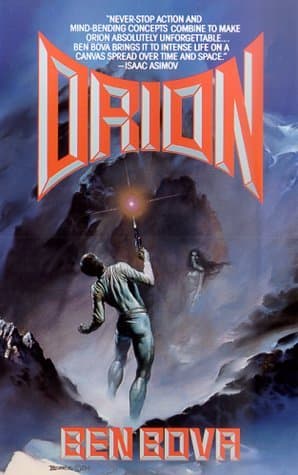
An immortal warrior, touched by ancient cosmic powers, relentlessly hunts his eternal nemesis across the vast expanse of human history, from primeval caves to a nuclear showdown, to save Earth from ultimate darkness.
In the prehistoric past, a powerful hunter named Orion leads his tribe. During a hunt, he encounters a mysterious woman named Anya, who reveals herself to be a servant of the Creators. She informs Orion that he is destined to become their champion against the malevolent Dark Lord, a cosmic entity who seeks to dominate all life. Orion, initially skeptical, witnesses the Dark Lord's destructive power firsthand when it threatens his tribe. He accepts Anya's offer, undergoing a transformation that grants him immense strength, near-immortality, and cosmic awareness. His first task is to protect humanity's nascent spark from the Dark Lord's influence.
Millennia later, Orion is reborn as a pharaoh in ancient Egypt, ruling over a flourishing civilization. He struggles to maintain order and guide humanity's progress while subtly combating the Dark Lord's insidious presence. The Dark Lord, often manifesting through corrupt priests or rival kingdoms, attempts to sow discord, incite wars, and spread ignorance, aiming to stunt humanity's development. Orion, aided by Anya, works to establish stable societies and promote knowledge. During this era, he learns more about the cyclical nature of his existence and the endless conflict, experiencing both triumphs and the bitter taste of human fallibility.
Orion next finds himself reincarnated as Achilles, the legendary Greek warrior during the Trojan War. He is a formidable fighter, but also struggles with the human emotions of pride, rage, and grief, which are amplified by his underlying cosmic awareness. The Dark Lord, through various guises and manipulations, fuels the conflict, delighting in the suffering and destruction. Orion, guided by Anya, tries to mitigate the war's devastation, but is often caught in the tide of human passions. He experiences the pain of losing loved ones and questions the Creators' distant oversight, feeling the burden of his eternal fight in a world consumed by mortal struggles.
In the Roman Empire, Orion is a respected general, striving to bring order and civilization to a vast, sprawling world. He works to establish laws, infrastructure, and a stable society, believing that a strong, unified humanity is the best defense against the Dark Lord. However, the Dark Lord's influence manifests through political corruption, imperial ambition, and the brutal realities of conquest. Orion witnesses the rise and fall of empires, the cyclical nature of human power, and the constant struggle between order and chaos. He fights not just on battlefields, but also against the internal decay that threatens to unravel everything he builds.
During the Age of Exploration, Orion is a daring sea captain, venturing into unknown waters and discovering new lands. He sees this era as a chance for humanity to expand its horizons and embrace new knowledge, a direct counter to the Dark Lord's desire for ignorance and control. The Dark Lord, however, manipulates rulers and religious figures to suppress scientific inquiry, spread fear of the unknown, and instigate conflicts over newly found territories. Orion protects explorers, navigators, and scientists, ensuring that their discoveries are shared and not hoarded or destroyed. He fights against superstition and fanaticism, championing reason and progress.
As the Industrial Revolution takes hold, Orion is reborn as an inventor and industrialist, witnessing humanity's rapid technological advancement. He understands the immense potential for progress and betterment, but also sees the new avenues for exploitation and suffering that arise. The Dark Lord seizes upon the environmental destruction, social inequality, and dehumanization caused by unchecked industrialism, using it to foster despair and division. Orion works to improve working conditions, promote sustainable practices, and ensure that technology serves humanity rather than enslaving it. He grapples with the ethical dilemmas of progress and the unintended consequences of human ingenuity.
In the crucible of World War II, Orion is a soldier on the front lines, directly confronting the most devastating conflict humanity has ever known. The Dark Lord's influence is strong, manifesting in the ideologies of hatred, genocide, and total war. Orion experiences the horrors of combat, the profound loss of life, and the moral compromises forced upon individuals. He fights not just against enemy soldiers, but against the despair and nihilism that the Dark Lord seeks to instill in humanity. Anya's guidance becomes more urgent, as the stakes are higher than ever, and the very survival of civilization hangs in the balance.
With humanity venturing into space, Orion finds himself as an astronaut and scientist, leading humanity's push beyond Earth. He views space exploration as the ultimate expression of human curiosity and potential, a way to transcend earthly limitations and escape the Dark Lord's grip. The Dark Lord, however, attempts to sabotage space programs, create international rivalries, and instill fear of the unknown cosmos, trying to keep humanity confined and vulnerable. Orion works to foster international cooperation, overcome technological challenges, and protect humanity's nascent steps into the galaxy, recognizing that this new frontier offers both immense hope and new dangers.
In a near-future setting, Orion navigates a world dominated by advanced technology, artificial intelligence, and global interconnectedness. He sees the potential for a utopian society, but also the dangers of surveillance, misinformation, and technological control. The Dark Lord exploits these vulnerabilities, using information warfare, digital manipulation, and the erosion of privacy to further enslave humanity's minds and spirits. Orion works as a hacker and freedom fighter, battling against oppressive regimes and corporate monopolies that are secretly controlled by the Dark Lord. He struggles to protect individual liberty and the truth in an age where reality itself can be manufactured.
The narrative culminates in a future ravaged by nuclear war, a desolate landscape that is the stage for Orion's final confrontation with the Dark Lord. Humanity is on the brink of extinction, reduced to scattered, desperate survivors. The Dark Lord, now manifesting with immense, almost physical power, reveals his true cosmic form and his ultimate goal: the complete annihilation of all life and consciousness. Orion, having accumulated the wisdom and experience of countless lifetimes, gathers the last vestiges of human hope and prepares for a climactic battle that will determine the fate of not just Earth, but potentially all creation. Anya stands by him, offering her final support and guidance.
In the devastating final battle, Orion confronts the Dark Lord directly. The conflict is cataclysmic, tearing apart the very fabric of reality. Orion utilizes all the knowledge, skills, and cosmic power he has gained throughout his many lives. He understands that simply defeating the Dark Lord is not enough; he must sever its connection to humanity and ensure it can never return. With Anya's final, heart-wrenching guidance, Orion makes a profound sacrifice, merging his essence with the very fabric of time and space, becoming a guardian presence that forever holds the Dark Lord at bay. His act ensures humanity's survival and a chance to rebuild, free from the cosmic entity's direct influence.
The Protagonist
Orion evolves from a simple warrior into a cosmic guardian, learning to balance his divine mission with his human experiences, ultimately making the ultimate sacrifice to protect humanity.
The Supporting
Anya remains a constant, unwavering presence, her arc defined by her steadfast support and her ultimate sorrowful farewell to Orion.
The Antagonist
The Dark Lord's power and influence grow across history, culminating in a direct, physical confrontation, but it is ultimately defeated and contained.
The Mentioned
The Creators remain largely static and mysterious, their role defined by their initial act of creation and their ongoing, distant guidance.
The Supporting
Each human character has their own brief arc within their specific historical context, contributing to Orion's evolving understanding of humanity.
This is the central theme, manifested through Orion's endless battle against the Dark Lord across all epochs. It explores how this cosmic conflict reflects and influences human history, with the Dark Lord preying on humanity's weaknesses and Orion championing its potential. The theme suggests that while the forms of evil may change (war, ignorance, corruption, technological dystopia), the underlying struggle against malevolent forces is constant. It is seen in Orion's fight against the Dark Lord's influence in the Trojan War, driving human conflict, and in the final confrontation amidst nuclear desolation, where the Dark Lord represents ultimate annihilation.
“For as long as there is light, there will be shadow. And I am the sword that cuts the darkness.”
The novel deeply examines humanity's capacity for both incredible progress and devastating self-destruction. Orion witnesses humanity's triumphs in art, science, and social organization, but also its recurring failures in war, prejudice, and environmental degradation. The theme questions whether humanity can truly overcome its darker impulses and reach its full potential, especially when guided or misled by cosmic forces. This is evident in Orion's attempts to guide civilizations in ancient Egypt and Rome, only to see them eventually fall, or his efforts to harness the Industrial Revolution's power for good while battling its exploitative side.
“They rise, they fall, they dream, they destroy. But always, they reach for the stars.”
Orion's constant rebirths and his near-immortality are central to the narrative, exploring the psychological and emotional toll of living countless lives. He experiences profound love and loss repeatedly, carrying the memories and wisdom of millennia, which can be both a strength and a heavy burden. The theme explores how an eternal being maintains purpose and connection to fleeting mortal lives, and the loneliness that comes with such a fate. His struggles as Achilles, grappling with human emotions despite his cosmic awareness, exemplify this burden, as does his long vigil across the centuries.
“Each life a memory, each death a scar. And the mission, eternal.”
The story explores the tension between Orion's predetermined destiny as the Creators' champion and the free will of humanity. While Orion is bound to his mission, he often grapples with how much he can truly influence human choices and whether humanity's fate is truly in its own hands or part of a larger cosmic design. The Dark Lord's manipulations also highlight how external forces try to sway free will. This is seen in Orion's frustration when humanity chooses war or ignorance despite his efforts, questioning if his interventions truly change the fundamental course of history or merely guide it.
“We set the stage, Orion. But the actors, they must choose their own lines.”
Orion's continuous rebirth into new bodies across different historical eras.
This device allows the narrative to span vast stretches of human history, from prehistory to a distant future. It enables Orion to be a direct participant and observer in key historical moments, showcasing the evolution of humanity and the persistent nature of the cosmic conflict. Each reincarnation provides a new perspective and set of challenges, preventing the story from being confined to a single time period and emphasizing the 'eternal' aspect of Orion's struggle. It also serves as a mechanism for Orion to accumulate wisdom and experience, informing his actions in later lives.
Ethereal beings who provide guidance and context to the protagonist.
Anya functions as Orion's consistent link to the Creators and the broader cosmic struggle. She provides exposition, explains the rules of their conflict, and offers moral and strategic guidance. This device ensures that Orion (and the reader) understands the stakes beyond his immediate human experience. Her presence grounds Orion's often solitary existence and provides a sounding board for his doubts and frustrations, acting as a reminder of his overarching mission when he gets caught up in human affairs.
A cosmic entity embodying malevolent forces, often taking various forms.
The Dark Lord serves as a tangible, albeit multifaceted, representation of evil, chaos, and stagnation. By personifying these abstract concepts into a conscious, intelligent antagonist, the story provides a clear opposing force for Orion. The Dark Lord's ability to manifest in different ways – from inciting human conflict to directly possessing individuals – allows it to remain a constant, adaptable threat throughout history, demonstrating how evil adapts and persists across different eras and societal structures, culminating in a final, ultimate form.
The use of real historical periods and events as backdrops for the cosmic conflict.
The novel leverages iconic historical periods (ancient Egypt, Trojan War, Roman Empire, World War II, etc.) to ground the fantastical cosmic struggle in a recognizable human context. This device allows the author to explore the themes of human progress, conflict, and morality through the lens of specific historical events, showing how the cosmic battle influences and is influenced by human choices. It also adds a layer of epic scope and realism to Orion's journey, making the eternal struggle feel deeply interwoven with humanity's actual story.
“The stars are not for Man.”
— A recurring theme and warning against human ambition in space.
“You are a weapon, Orion. A tool. Nothing more.”
— A harsh reminder to Orion of his true purpose by one of his creators.
“There is no freedom for a god, only endless responsibility.”
— A reflection on the burdens of immense power and divine status.
“He was a being forged for war, yet he yearned for peace.”
— Describing Orion's internal conflict between his nature and his desires.
“The past is never truly dead; it merely sleeps, waiting to be awakened.”
— A philosophical observation on history and its enduring influence.
“Even a god can bleed.”
— Highlighting the vulnerability of even the most powerful beings.
“Love is the greatest weapon, and the greatest weakness.”
— A paradoxical statement about the dual nature of love in the face of conflict.
“He had walked among the stars, and touched the face of eternity.”
— A poetic description of Orion's vast experiences and cosmic journey.
“The universe cares nothing for your grand plans, only for its own inexorable flow.”
— A humbling reminder of humanity's insignificance in the grand scheme.
“To create life is to embrace chaos.”
— A statement on the unpredictable nature and consequences of creation.
“There are some battles that even a god cannot win alone.”
— Emphasizing the importance of allies and shared struggle, even for powerful beings.
“The ultimate truth is that there are no ultimate truths, only perspectives.”
— A relativistic philosophical statement on the nature of reality and knowledge.
“He was a god in chains, yearning for the freedom of a mortal.”
— Orion's desire to escape his divine constraints and experience human existence.
Ready to see how well you understood this book? Take our interactive quiz with 10 questions.
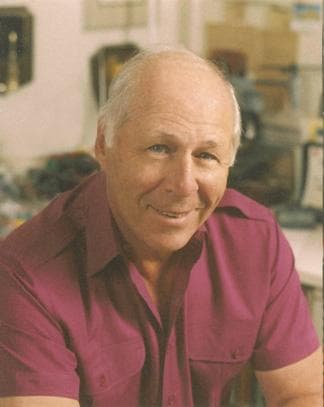
Ben Bova was a prolific American author of science fiction, known for his "Grand Tour" series, including "Orion" and "Jupiter." A recipient of the Hugo Award, Bova was also a respected editor and educator, dedicated to promoting scientific literacy through his engaging and often epic space-exploration-focused narratives.







