“Each life is a forest of its own, and the forest is the only thing that matters.”
— Elmar's reflection on individual lives and their unique complexities.

Richard Powers (2014)
Genre
Literary Fiction
Reading Time
400 min
Key Themes
See below
Sign in to track this book
An aging composer, mistaken for a bioterrorist because of his home microbiology lab, flees authorities with a plan to turn his search for hidden musical patterns into a final artistic statement.
Peter Els, a reclusive composer in his seventies, lives in an old house in suburban New Jersey. He is busy with his latest experimental project: making music from the genetic code of microorganisms. He has turned his home into a basic biology lab, growing various bacteria and trying to turn their DNA sequences into musical notes. One evening, federal agents from Homeland Security arrive at his door, interrupting his quiet life. A neighbor reported unusual biological waste, alerting them to his activities. Panicked and worried his artistic work will be misunderstood, Peter decides to flee. He leaves behind his life and his work, including a mysterious culture he calls 'Death Fugue'.
After escaping, Peter Els becomes an accidental fugitive. His flight from authorities and the discovery of his 'bio-lab' quickly become a national news story. The media, looking for sensationalism, calls him 'the Bioterrorist Bach,' portraying him as a dangerous, strange genius possibly involved in biological warfare. Peter, meanwhile, travels west, initially without a clear destination. He is driven by an urge to escape and a growing idea for a final, grand artistic statement. He changes his identity, using cash and avoiding digital traces, while the manhunt intensifies, fueled by public fear and government suspicion.
As Peter travels, his mind goes back to his youth, especially his time at a small college where he first became involved in avant-garde and electronic music. He remembers his mentor, the influential music professor Richard Daltrey, who encouraged his experimental ideas. More clearly, he recalls his intense relationship with Clara, a fellow student and talented musician. Their shared love for unusual sounds and their youthful idealism fueled their artistic goals. These memories show Peter's lifelong commitment to pushing musical limits and Clara's strong influence on his early artistic development, even as their relationship later broke due to his intense focus on art.
Peter’s journey includes painful memories of his son, Daniel, and the end of his marriage to Sylvia. He remembers the time he was consumed by his most ambitious project: an opera based on the myth of Orpheus, a large, challenging work that was never finished. This opera, meant to be a new blend of sound and story, became a symbol for his own life—a grand vision that was too difficult to fully achieve. The failure of the opera, combined with his growing distance from his family due to his artistic obsessions, led to deep guilt and regret, especially regarding his relationship with Daniel, who felt neglected by his artist father.
Peter, now in hiding, realizes he needs help to carry out his bold plan. He decides to contact Maddy, a brilliant former student he believes will understand his artistic vision. Maddy, now a successful music producer, is initially shocked and doubtful to hear from her old, controversial professor. However, Peter’s strong belief and the sheer boldness of his idea start to interest her. He explains his plan to create a piece that will not only clear his name but also make the world truly listen to life's hidden music, a work he believes will be his ultimate legacy. Maddy, despite the risks, becomes involved in his project, offering her technical skills and a link to the outside world.
Back in New Jersey, authorities continue their investigation into Peter Els. The 'Death Fugue' culture he left behind becomes a key part of their inquiry. Forensic scientists carefully analyze the sample, at first fearing it is a deadly pathogen. However, their analysis slowly reveals a surprising truth: the culture is not a biological weapon but a harmless, genetically modified organism designed to glow and change color in response to certain stimuli, creating a living, evolving piece of biological art. This discovery begins to change the story around Peter, hinting at his true artistic, rather than harmful, intentions, though the public view of him as a 'bioterrorist' changes slowly.
With Maddy's help, Peter carefully plans his final artistic act. He chooses the vast, echoing space of the Grand Canyon as his stage, believing its natural acoustics and isolation are perfect for his unusual performance. Their journey there is filled with tension and close calls with authorities, who are still actively searching for him. During this time, Peter further explains his artistic philosophy to Maddy, sharing his belief that music is part of all natural processes, from rustling leaves to murmuring cells. Maddy, initially practical, finds herself increasingly moved by Peter's deep dedication and his unique way of seeing the world.
At the Grand Canyon, Peter and Maddy set up their equipment, a complex arrangement of microphones, sensors, and synthesizers designed to capture and amplify the unheard sounds of nature and life itself. Peter's goal is to create a living, breathing symphony that includes everything from the earth's electromagnetic fields to the microscopic vibrations of insects, mixed with parts of his past compositions and the genetic sequences of his 'Death Fugue.' He sees this as his Orphic descent, a final attempt to retrieve the lost music of the world and bring it back to humanity, a gesture of both defiance and deep connection.
Maddy manages to broadcast Peter's Grand Canyon performance to the world, a live stream meant to be both his artistic farewell and his defense. The broadcast is a challenging, abstract soundscape, unlike anything most people have heard. While some listeners are interested and moved by its unusual beauty, many others remain confused or dismissive, still focused on the 'bioterrorist' story. Authorities, having tracked the broadcast, quickly close in on Peter's location, making his artistic statement tied to his capture. The performance becomes a brief moment of pure art against the backdrop of an unforgiving security state.
Federal agents finally arrest Peter Els at the Grand Canyon. He offers no resistance, having completed his final artistic act. While the immediate aftermath involves legal proceedings and public scrutiny, a subtle change begins. The scientific community and a growing part of the public, especially those who truly listened to his broadcast, start to understand the deep artistic and philosophical basis of his work. His 'Death Fugue' is eventually recognized as a harmless, beautiful creation, and the narrative around Peter slowly begins to change from dangerous criminal to misunderstood artist, though the legal system still runs its course.
In the years after his capture and eventual release (or continued legal battle, depending on how the ending is interpreted), Peter Els's work and story are re-evaluated. His Grand Canyon performance, initially dismissed, becomes a subject of academic study and artistic inspiration. Maddy, changed by her experience with Peter, continues to support his work and explore the connection between music, science, and nature. Peter's 'Death Fugue' is shown in galleries, and his ideas about the music of life gain acceptance. He becomes a posthumous or reclusive cult figure, an Orpheus who, though unable to bring back his beloved Eurydice (the world's full attention in his lifetime), ultimately plants seeds for a new way of listening.
The Protagonist
Peter transforms from a misunderstood recluse into a national fugitive, ultimately using his predicament to create his most profound and public work, forcing the world to confront his artistic philosophy.
The Supporting
Maddy evolves from a successful but somewhat jaded professional into a passionate advocate for Peter's radical artistic philosophy, finding renewed purpose in her own creative life.
The Supporting/Mentioned
Clara's story is primarily seen through Peter's flashbacks, serving as a touchstone for his youthful idealism and the early, uncompromised stages of his artistic journey.
The Supporting/Mentioned
Sylvia's arc is largely in the past, her story illustrating the personal sacrifices and failures of Peter's life outside of his art.
The Supporting/Mentioned
Daniel's story is primarily a source of Peter's regret, serving as a symbol of the human relationships Peter failed to nurture.
The Supporting/Mentioned
Daltrey's influence is primarily in Peter's past, shaping his early artistic development and providing a foundational understanding of experimental music.
The novel explores the idea that music is not just a human creation but a natural part of the universe. Peter Els believes that sound is everywhere, from a bacterium's 'song' to the earth's electromagnetic hum, and his life's work is to make these unheard melodies audible. This theme appears in Peter's microbiology experiments, his desire to turn DNA into musical notes, and his Grand Canyon performance, which aims to amplify nature's hidden symphony. The book questions common definitions of music, asking readers to 'listen' more closely to the world. For example, Peter's 'Death Fugue' is at first feared as a weapon but is later shown to be a beautiful biological soundscape.
“Music, he understood now, was not something made, but something found. It was the law governing the universe, the ratios that held the planets in their orbits, the vibrations that gave life to every cell.”
Orfeo examines the complex, often clashing, relationship between artistic expression, scientific research, and national security. Peter's new blend of biology and music is misunderstood by a fearful security state, showing how creative and scientific exploration can be stopped or criminalized when misunderstood. His flight from Homeland Security highlights the tension between individual freedom of expression and government control. The story questions whether society can tell the difference between true artistic and scientific pursuit and perceived threats, especially in a time of increased surveillance and fear. The 'Bioterrorist Bach' nickname shows this societal misunderstanding.
“He wasn’t a terrorist. He was a composer. But in this new world, the distinction was lost in the static.”
The novel explores the artist's single-minded dedication, often at the cost of personal relationships and a normal life. Peter Els's lifelong pursuit of his unique musical vision leads to the end of his marriage to Sylvia, distance from his son Daniel, and a reclusive life. His artistic obsession is both his greatest strength and his tragic flaw. The unfinished Orpheus opera, a symbol for his unfulfilled personal life, reflects the sacrifices he made. Yet, his commitment to his art ultimately gives his life meaning and allows him to create his most important work, suggesting that such sacrifices, while painful, can also lead to great creation.
“He had traded a wife, a son, a normal life, for the chance to hear the world sing. And he would do it again.”
Peter's journey as a fugitive is a search for redemption—both personal and artistic—and a desire to leave a lasting legacy. Accused of being a bioterrorist, he tries to clear his name and, more importantly, to prove the value of his life's work through a final, impactful artistic statement. His Grand Canyon performance is not just an escape from the law but an attempt to share his deep understanding of the world with an audience that has misjudged him. The later re-evaluation of his work, especially the 'Death Fugue,' suggests that true artistic merit and truth can eventually overcome misunderstanding and fear, securing his place in history as a visionary.
“This wasn’t just music. This was his last will and testament, a message in a bottle cast into the ocean of human noise.”
The myth of Orpheus, the musician who goes into the underworld to retrieve his lost love, forms the novel's structure and themes. Peter Els is a modern Orpheus, using music to navigate a personal and societal 'underworld' of misunderstanding and fear. His attempt to bring the universe's 'lost music' back to humanity mirrors Orpheus's quest to retrieve Eurydice. The unfinished opera Peter once composed about Orpheus further emphasizes this parallel. His journey into hiding and his final performance in the Grand Canyon can be seen as his own descent and attempt to bring forth something profound, hoping the world will truly listen, unlike Orpheus's fateful glance back.
“He was Orpheus, descending into the din of the digital age, hoping to bring back a single, perfect note.”
The ongoing pursuit of Peter Els by Homeland Security frames the entire narrative.
The manhunt for Peter Els, labeled 'the Bioterrorist Bach,' serves as the central framing device for the novel. It propels the plot forward, creating urgency and suspense, while also forcing Peter to reflect on his past. The public and media's perception of him as a dangerous fugitive contrasts sharply with his true artistic intentions, highlighting themes of misunderstanding and the clash between art and state security. This external pressure is what drives Peter to create his ultimate, public artistic statement, transforming his flight into a performance.
Peter's fragmented recollections of his past inform his present journey and motivations.
Throughout his flight, Peter's mind frequently returns to key moments in his past: his early love with Clara, his mentor Richard Daltrey, his marriage to Sylvia, and his estranged son Daniel. These non-linear flashbacks provide crucial backstory, revealing the origins of his artistic philosophy, the sacrifices he made, and the personal regrets that haunt him. They enrich the character's depth, explain his motivations, and allow the reader to understand the profound dedication and the human cost behind his singular artistic vision.
A mysterious microorganism culture that becomes a symbol of Peter's misunderstood art.
The 'Death Fugue' is a genetically engineered microorganism culture that Peter leaves behind during his escape. Initially feared by authorities as a potential bioweapon, it is eventually revealed to be a harmless, beautiful piece of bio-art that changes color and glows in response to stimuli. This device is central to the novel's themes, embodying the clash between art and security, the beauty of the unseen world, and the profound misunderstanding of Peter's intentions. Its eventual re-evaluation serves as a symbol of Peter's ultimate vindication.
Peter's ambitious, never-completed opera based on the Orpheus myth.
Peter's unfinished opera based on the myth of Orpheus serves as a powerful symbol within the novel. It represents his past artistic ambitions, his struggles with grand visions, and the personal sacrifices he made. The opera's incompleteness mirrors the perceived incompleteness of his own life and his fractured relationships. Its presence highlights the Orpheus myth as a central thematic framework for the entire story, casting Peter as a modern Orpheus seeking to bring lost music back to the world, even if it means a descent into a kind of underworld.
“Each life is a forest of its own, and the forest is the only thing that matters.”
— Elmar's reflection on individual lives and their unique complexities.
“Music was the only language that could speak the unspeakable.”
— Peter Els's lifelong conviction about the power of music.
“The past was a foreign country, but the present was a city under siege.”
— Peter Els grappling with his past and the immediate crisis he faces.
“Every human heart was a score waiting to be played.”
— Elmar's perspective on the potential within each person.
“He had always believed that a life without music was a life half-lived.”
— Peter Els's core belief about the necessity of music.
“The greatest art was always a form of escape, a way to build a better world.”
— A general reflection on the purpose and power of art.
“To be truly alive was to be constantly reinventing oneself, even when it hurt.”
— A commentary on the continuous process of self-discovery and change.
“He had spent his whole life trying to capture the sound of the universe, and all he had was static.”
— Peter Els's feeling of failure and frustration in his musical pursuits.
“Love was a fugue, a melody that kept returning in different guises.”
— Elmar's musical interpretation of the nature of love.
“The silence was not empty; it was pregnant with all the music that could be.”
— Peter Els's perception of silence as a space of potential.
“Every note was a prayer, every chord a question.”
— A profound statement about the spiritual and intellectual depth of music.
“Memory was a composer, constantly rewriting the score of the past.”
— A vivid metaphor for the subjective and fluid nature of memory.
“The greatest danger lay not in what we knew, but in what we refused to learn.”
— A broader philosophical statement on ignorance and its consequences.
“He yearned for a music that could mend the broken world, even if only for a moment.”
— Peter Els's deep desire for music to have a healing, transformative power.
“Life was a composition, and we were both the composers and the instruments.”
— A reflective thought on agency and destiny in one's life.
Ready to see how well you understood this book? Take our interactive quiz with 10 questions.
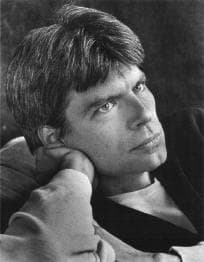
Richard Powers is an American novelist whose works explore the effects of modern science and technology. His novel The Echo Maker won the 2006 National Book Award for Fiction. He has also won many other awards over the course of his career, including a MacArthur Fellowship. As of 2023, Powers has published thirteen novels and has taught at the University of Illinois and Stanford University. He won the 2019 Pulitzer Prize for Fiction for The Overstory.







