“There are some things you just can't say, even to your own mama. Some things you can't even think.”
— Jennifer reflecting on her grandmother's unspoken past and her own secrets.

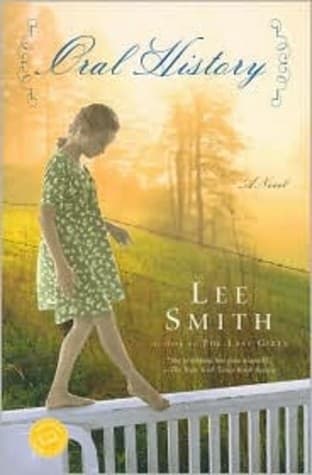
Lee Smith (1983)
Genre
Literary Fiction / Historical Fiction
Reading Time
360 min
Key Themes
See below
Sign in to track this book
A college student records her family's oral history in the Appalachian mountains, uncovering generations of dark secrets, forbidden loves, and strong spirits.
Jennifer, a college student from a wealthy background, decides to spend her summer vacation in Hoot Owl Holler, the birthplace of her maternal grandmother, Ora Mae. She brings a tape recorder to collect an 'oral history' for a college project, hoping to understand the mysterious stories her grandmother hinted at. Her mother, who left the Holler years ago, disapproves of Jennifer's quest, seeing it as a dangerous and pointless look into a past best forgotten. Jennifer, however, feels a deep, almost instinctive pull to uncover her roots and her family's secrets, especially those about a legendary, beautiful, and possibly cursed ancestor named Dory.
When Jennifer arrives in Hoot Owl Holler, her distant relatives and other mountain residents greet her with suspicion and cautious hospitality. She stays with her aunt, who is initially hesitant to talk about the past. Slowly, Jennifer begins to interview various characters, including older women who remember Dory. She hears fragmented, often conflicting accounts of her family's history, filled with superstitions, folk tales, and the harsh realities of mountain life. The stories involve hardship, moonshining, religious fervor, and a sense of fatalism. Jennifer finds herself drawn into the Holler's unique rhythm and culture, a world very different from her own.
Jennifer's interviews consistently mention Dory Bazzle, her great-great-aunt. Dory is remembered as a woman of great beauty and a wild, untamed spirit. She was said to have deeply affected everyone she met, inspiring both love and jealousy. Jennifer learns about Dory's passionate and forbidden love affair with a fiddle player named Richard Bazzle, who was also her cousin. Their relationship was full of danger and societal disapproval, leading to a series of tragic events. The older women speak of Dory with a mix of awe, pity, and a lingering sense of dread, hinting at a curse that followed her and, perhaps, her descendants.
As Jennifer looks deeper, the stories show Dory's life and her eventual downfall. Driven by their intense, forbidden love, Dory and Richard tried to escape the Holler's judgment, but their efforts failed. The community's disapproval, combined with misfortunes and Dory's increasingly erratic behavior, led to a tragic end. Richard was killed, and Dory, consumed by grief and perhaps madness, was believed to have taken her own life or disappeared mysteriously. Many Holler residents believe that Dory's unfulfilled love and restless spirit brought a curse upon the family, showing up in later generations through various misfortunes, mental illness, and early deaths.
Jennifer's grandmother, Ora Mae, is a central figure in the family's story. Ora Mae was Dory's niece, and she saw firsthand how Dory's tragedy affected the family. Ora Mae herself had a difficult life in the Holler, marked by poverty, hard labor, and a constant struggle against the perceived curse. Jennifer learns of Ora Mae's determination to escape the Holler and its traditions, especially after suffering her own personal losses and seeing other family members' mental decline. Ora Mae's flight from the mountains to a new, more 'civilized' life represents a break from the past, though it never fully erased the Holler's influence on her.
The 'curse' of Dory and the Holler's harsh realities echo through the generations, affecting Jennifer's mother and other relatives. Jennifer's mother, despite trying to distance herself from her mountain origins, carries a deep anxiety and unease she inherited from Ora Mae. Other family members Jennifer meets show traits that seem to be signs of the family's history: some accept their fate, others are fiercely independent, and some struggle with mental health issues or a lingering sadness. Jennifer begins to understand her mother's desperate desire to protect her from this past, even as she herself is drawn deeper into its complexities.
As Jennifer collects more stories and spends more time in Hoot Owl Holler, she finds herself increasingly drawn to the place and its people. The academic detachment she brought with her slowly gives way to a deeper, more personal connection. She begins to understand the resilience, humor, and unique wisdom of the mountain folk, even amidst their hardships and superstitions. She feels a sense of belonging she had not expected, a recognition of her own roots in the rugged landscape and the strong, often troubled, individuals who live there. The Holler, initially a research subject, becomes a part of her identity.
Jennifer's persistent questioning eventually uncovers even darker secrets than she first expected. Beyond Dory's romantic tragedy, she hears whispers and direct accounts of incest within the family, especially in the isolated early generations. These revelations are often shared with shame, resignation, or a matter-of-factness born of generations of acceptance in a closed community. She also learns of violence, including murder, often tied to land disputes, moonshining, or passionate jealousies. These grim details complicate her understanding of her ancestors, challenging her romanticized ideas of mountain life and forcing her to confront the raw, often brutal, aspects of her family's past.
Richard Bazzle's fiddle is a recurring and strong symbol throughout Jennifer's research. It is not just an instrument but has a mystical quality, often associated with Dory's spirit and the 'curse.' Stories suggest that the fiddle holds a piece of Dory's restless soul, and its music can evoke powerful emotions, sometimes even madness or a sense of foreboding. Jennifer hears accounts of the fiddle being played by unseen hands or its music heard echoing through the hollers, especially on moonlit nights. This supernatural element reinforces the mountain folk's belief that Dory's presence still lingers, a beautiful and tragic ghost haunting her descendants and the landscape she once lived in.
By the end of her summer in Hoot Owl Holler, Jennifer has collected a vast, complex, and often contradictory oral history of her family. She has faced the beauty and brutality, the love and tragedy, the resilience and madness of her ancestors. The experience changes her; she is no longer the naive college student who arrived, but someone with a deeper understanding of her own identity and the complex nature of her heritage. While she does not find definitive answers to all the mysteries, she achieves a deep sense of connection and acceptance. She realizes that the 'curse' is perhaps less about supernatural retribution and more about the lasting legacy of hardship, passion, and the choices made by those who came before her.
The Protagonist
Jennifer transforms from an academic observer to an emotionally invested participant, embracing her complex heritage.
The Central Ancestor/Legendary Figure
Her life is a tragic arc from vibrant beauty and passionate love to madness and mysterious disappearance.
The Jennifer's Grandmother
Ora Mae's arc is one of escape and survival, carrying the Holler within her despite leaving it behind.
The Dory's Lover
His life is a brief, intense blaze of forbidden love, ending in tragedy.
The Supporting
Her arc is static, defined by her desire to escape and repress her past, though she ultimately fails.
The Supporting
She remains a steadfast keeper of the past, gradually revealing its complexities to Jennifer.
The Supporting
His character is largely static, serving as a symbol of the Holler's enduring musical and spiritual legacy.
The Supporting
His character is largely static, offering a realistic, unromanticized view of mountain life.
The novel explores how one's identity is linked to their family history and place of origin. Jennifer's search for her Appalachian roots is a journey of self-discovery, as she deals with the complex, often disturbing, truths of her ancestors. The book shows how even those who try to escape their heritage, like Jennifer's mother and grandmother, are forever shaped by it, carrying its burdens and its strengths. Dory and Ora Mae's stories show how the past lives on within individuals, influencing their choices and their sense of self. Ultimately, Jennifer finds belonging by accepting her full, complicated heritage.
“You can take the girl out of the mountains, but you can't take the mountains out of the girl.”
The narrative is built on storytelling, as Jennifer collects fragmented oral histories from various family members and Holler residents. The book shows how stories are passed down through generations, shaping collective memory, keeping legends alive (like Dory's), and preserving identity and culture. It also shows that truth is subjective, as different characters offer conflicting versions of events, each with their own biases, beliefs, and superstitions. Sharing these stories helps the characters process their past and helps Jennifer understand her present.
“A story is like a river, always changing, always flowing, but the water's still the same.”
The central tragedy of Dory and Richard Bazzle's forbidden love affair—cousins in a passionate, doomed relationship—drives much of the plot. Their story explores the destructive power of love that defies societal norms and the harsh consequences a rigid community exacts. This theme connects with the idea of a 'curse' on the family, suggesting that their transgression led to generations of misfortune. The intensity of their bond and its tragic end serve as a cautionary tale, showing how deeply personal choices can affect an entire lineage, even those born long after the initial events.
“Some loves are too big for this world, and they just break everything around them.”
The Appalachian mountains of Hoot Owl Holler are more than just a setting; they are a character. The rugged, isolated landscape shapes the lives, beliefs, and resilience of its inhabitants. The book looks at the unique culture of the mountain folk, including their superstitions, their strong family ties, their deep connection to the land, their music (especially the fiddle), and their often harsh struggle for survival. This theme contrasts the 'civilized' world Jennifer comes from with the raw, untamed nature of the Holler, showing the beauty, hardship, and fierce independence that define this specific cultural environment.
“The mountains hold their secrets close, and sometimes, they just don't want to let them go.”
A pervasive theme is that the past is never truly past, but a living force that continues to influence the present. The family's history of tragedy, incest, violence, and mental illness hangs over the characters like a perpetual cloud, often called a 'curse.' Jennifer's mother's desire to forget and Ora Mae's escape show the heavy burden of this legacy. The novel explores how individuals cope with or succumb to this burden, and how understanding it can lead to either acceptance or continued struggle. Jennifer's journey is an attempt to unpack and ultimately reconcile with this inherited burden.
“Some things just get in your blood, child, and there ain't no washing them out.”
The narrative is constructed from fragmented, subjective accounts.
The entire novel is presented as an 'oral history,' composed of various characters' testimonies, interviews, and recollections. This device allows for a multifaceted and often contradictory exploration of the family's past. Each speaker offers a unique perspective, colored by their personal experiences, beliefs, and relationship to the events. This creates a rich, layered narrative that challenges the reader to piece together the 'truth' from conflicting accounts, highlighting the subjective nature of memory and storytelling. It also immerses the reader directly into the Appalachian culture, as the distinct voices and vernacular of the characters are central to the experience.
A symbolic object representing passion, music, and the lingering spirit of the past.
Richard Bazzle's fiddle serves as a powerful symbol throughout the novel. It represents the intense, untamed passion of Dory and Richard's love, the raw beauty of mountain music, and the enduring, almost supernatural, presence of the past. Stories of the fiddle being played by unseen hands or its music evoking strong emotions suggest it carries the restless spirits of the lovers, acting as a conduit between the living and the dead. The fiddle embodies the artistic and spiritual core of the Holler, a tangible link to a tragic history that refuses to be forgotten, constantly echoing the 'curse' and the family's deep-seated melancholia.
A recurring motif that explains family misfortunes and highlights fatalism.
The idea of a 'curse' on the Bazzle family, stemming from Dory and Richard's forbidden love, is a prominent plot device. It serves as a mystical explanation for the generations of misfortune, mental illness, and tragic deaths that plague the family. While some characters interpret it literally, Jennifer's journey allows for a more nuanced understanding: the 'curse' can also be seen as the accumulated trauma, genetic predispositions, and the harsh socio-economic realities of mountain life passed down through generations. This device explores themes of fatalism versus free will, and how cultural beliefs can shape perceptions of destiny.
The setting functions as a character, shaping lives and holding secrets.
Hoot Owl Holler and the surrounding Appalachian mountains are more than just a backdrop; they are an active 'character' in the story. The isolation, rugged beauty, and harshness of the landscape deeply influence the characters' lives, their beliefs, and their sense of identity. The mountains are depicted as both a source of sustenance and a place that breeds insularity, poverty, and unique cultural traditions. They hold the family's secrets, echoing the past through their stillness and enduring presence. The Holler represents a world apart, resistant to change, where old ways and old stories retain immense power, defining generations of its inhabitants.
“There are some things you just can't say, even to your own mama. Some things you can't even think.”
— Jennifer reflecting on her grandmother's unspoken past and her own secrets.
“A story is just a way of holding onto things you don't want to lose.”
— Richard reflecting on the power of oral histories and storytelling.
“The past ain't never really past. It just waits.”
— Granny Younger's oft-repeated phrase, emphasizing the lingering influence of history.
“Love is just a fancy word for wanting.”
— Ora Mae's cynical view on relationships and desire.
“Some folks just got a taste for trouble, like it's a sweet peach.”
— Local gossip about characters who seem to attract misfortune.
“You can always tell a lot about a person by what they don't say.”
— Jennifer's realization about the gaps and silences in the family stories.
“The mountains hold onto secrets tighter than a miser holds a coin.”
— A description of the Appalachian setting and its mysterious nature.
“Every family has a ghost, whether they know it or not.”
— Richard's thoughts on the lingering presence of past generations.
“It's a powerful thing, to know where you come from.”
— Jennifer's growing understanding of her heritage as she collects stories.
“Sometimes the truth is too much for folks to bear, so they make up a better one.”
— A character explaining the embellishments and omissions in family narratives.
“You can't outrun your own blood, no matter how fast you go.”
— A common saying within the community about inescapable family ties.
“The voices in your head are just the ones you've heard before, echoing.”
— Richard contemplating the influence of past stories and people on his own thoughts.
“Life just keeps on unfolding, like a quilt that's been folded up too long.”
— An older character's reflection on the continuous, sometimes surprising, turns of life.
“There's a lot of things you can learn from listening, if you just shut your mouth.”
— Granny Younger's advice on the importance of attentive listening.
Ready to see how well you understood this book? Take our interactive quiz with 10 questions.

Biography coming soon.







