“The oracle did not tell the future. It told the present, and the present was always changing.”
— When the young oracle, Cassandra, first understands her gift.

Genre
Fantasy / Children's / Historical Fiction / Young Adult
Reading Time
240 min
Key Themes
See below
Sign in to track this book
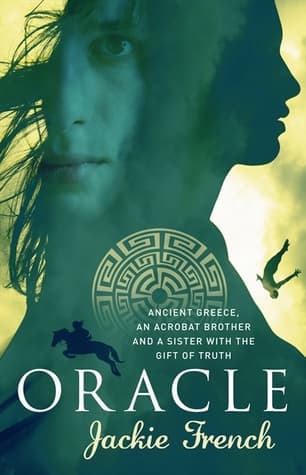
In an ancient world of acrobats and kings, a young girl's vision of the future starts a dangerous journey across Greece, mixing history, myth, and truth.
Nikko, a young boy from a small, unnamed village, lives a simple life with his younger sister, Thetis, who can see glimpses of the future. Their quiet life ends when Mycenaean raiders attack their village. The raiders, led by a brutal warrior, ransack homes and capture villagers, including Nikko and Thetis, planning to sell them into slavery. Nikko tries to protect Thetis, but they are both overwhelmed and bound. Their journey from home is harsh and terrifying, ending their childhood innocence and pushing them into a dangerous, unknown world where their survival depends on their wits and unique skills.
While captive, Nikko and Thetis discover their acrobatic talents. As they are shown for sale in a Mycenaean city, their agility and balance catch the eye of a powerful courtier. Instead of being sold into hard labor, they are brought before the King of Mycenae, a man who loves entertainment and omens. Their acrobatic shows, which they quickly develop, become a source of fascination for the court. The King is particularly charmed by Thetis, not just for her physical skill but for her ability to speak truths about the future, often in cryptic but accurate ways. They go from potential slaves to performers, though still under the King's control.
Thetis's visions become more frequent and clear. One day, during a performance, she foresees a huge earthquake that will destroy much of Mycenae and warns the King directly. The King, proud and used to flattery, is furious at this unwelcome prophecy, seeing it as a challenge to his power and a source of bad luck. He refuses to believe her, dismissing her vision as childish nonsense or an attempt to undermine him. In a rage, he orders Thetis imprisoned, believing he can silence the truth by silencing the messenger. Nikko is devastated and fears for his sister's life, knowing the King's anger often means death.
After Thetis's imprisonment, Nikko is left alone and desperate at the Mycenaean court. He is watched closely, but his acrobatic skills still make him valuable. He realizes he must find a way to rescue his sister. He meets Euridice, a spirited horse dancer who also performs for the King. Euridice, who dislikes the King's cruelty and sees the injustice done to Thetis, offers to help Nikko. Together, they plan an escape. Using their combined skills — Nikko's agility and Euridice's knowledge of the stables and her horses — they manage to slip away from the heavily guarded palace under cover of night, leaving Mycenae behind.
Nikko and Euridice begin a dangerous journey across the rugged lands of ancient Greece. They face many challenges, including harsh weather, dangerous animals, and the constant threat of being chased by the King's guards. Euridice's skill with horses is important, allowing them to travel quickly, but they must also be careful of other travelers and bandits. Their journey is not just physical; it tests their endurance and their growing trust in each other. Nikko is driven by his determination to find Thetis, while Euridice, initially motivated by a sense of justice, becomes deeply invested in their quest and Nikko's safety.
While Nikko and Euridice are still traveling, Thetis's prophecy comes true. A massive earthquake hits Mycenae, just as she predicted. The city, built on unstable ground, is destroyed, its grand palaces and fortifications crumbling. The chaos is immense, with many lives lost and the city in disorder. This event proves Thetis's abilities were real, showing her warnings were not baseless. The King, if he survived, would face the results of his arrogance and his failure to listen to the oracle's warning. The earthquake changes the land, both literally and figuratively, for everyone involved.
After weeks of hard travel, Nikko and Euridice finally reach Delphi, a sacred site known for its oracle. Delphi is a place of mystery and spiritual power, very different from the busy, materialistic court of Mycenae. They find the atmosphere here to be one of reverence and quiet thought. Nikko hopes this is where he will find answers about Thetis's fate and possibly reunite with her. The journey has changed both of them, making Nikko more resilient and Euridice more caring. They are greeted by the priests and priestesses who guard the sacred site, who recognize something special in Thetis's gifts.
Upon arriving at Delphi, Nikko learns that Thetis, after her escape or release during the earthquake, made her way to this sacred place. Her prophetic abilities, scorned in Mycenae, are respected and understood at Delphi. She has been recognized as the new Oracle, a powerful seer who shares the will of the gods with mortals. Thetis, though still young, has accepted her destiny and its responsibility. She is no longer the frightened girl from the village, but a figure of spiritual authority. The reunion with Nikko is emotional, but it is clear that Thetis's path has changed greatly from his own.
Nikko, though initially sad about the distance that has grown between him and his sister due to her new role, comes to understand and accept Thetis's destiny as the Oracle. He realizes that her gifts are for a greater purpose than just their family. Euridice also finds a sense of belonging and purpose at Delphi, helping Nikko and supporting Thetis. They both decide to stay at Delphi, becoming part of the community that protects and serves the Oracle. Their past lives in the village and at the Mycenaean court seem distant, replaced by a future dedicated to wisdom, prophecy, and the unfolding of history through Thetis's visions. Their journey has brought them to a place where they can contribute to a larger story.
With Thetis as the Oracle, and Nikko and Euridice by her side, a new chapter begins for all three. Nikko, with his loyalty and protectiveness, becomes a trusted confidant and guardian for Thetis, helping her with her prophetic duties. Euridice, with her practical skills and courage, finds a role in supporting the Delphic community and perhaps training new horse dancers for sacred rituals. The novel ends with the feeling that their individual destinies have met at Delphi, forming a new kind of family and purpose. They are no longer just survivors, but active participants in shaping the future, with Thetis's visions guiding them through the turbulent ancient world.
The Protagonist
Nikko transforms from a fearful, protective boy into a resilient, trusted guardian who accepts his sister's extraordinary destiny.
The Protagonist/Oracle
Thetis evolves from a frightened girl with an unusual gift into the powerful and revered Oracle of Delphi.
The Supporting
Euridice transitions from a cynical court entertainer to a loyal ally and friend, finding purpose at Delphi.
The Antagonist
The King remains static in his arrogance, leading to his downfall and the destruction of his kingdom.
The Mentioned
They serve as an initial catalyst, their role ending after the capture.
The Supporting
They provide a stable and guiding presence, facilitating Thetis's acceptance of her role.
The novel explores the tension between fate and individual choices. Thetis's prophetic abilities suggest a fixed future, yet her actions and the choices of those around her, like Nikko and Euridice, influence how that destiny happens. The King's refusal to believe Thetis's prophecy of the earthquake shows that even if destiny is set, one's response to it can determine personal outcome. Thetis accepts her destiny as the Oracle, but her choice to use her gift for a greater good defines her.
“The future is a river, always flowing, but sometimes a great rock can change its course, if someone dares to move it.”
The main conflict is about the King's inability to accept Thetis's inconvenient truth about the coming earthquake. This theme shows how truth, even unwelcome, is unavoidable, and ignoring it leads to disaster. The King's pride prevents him from listening to the warning, causing the destruction of Mycenae. Conversely, Thetis's courage to speak her truth, despite the danger, leads her to a place where her gift is valued and respected, making her the Oracle. The story strongly suggests listening to uncomfortable truths.
“A king who cannot hear the truth, even when it is whispered by a child, is a king whose kingdom will crumble.”
Nikko's loyalty to his sister, Thetis, is the emotional heart of the story. His entire journey is driven by his wish to protect and reunite with her. This bond is tested by separation, danger, and Thetis's change, but it stays the strongest force in his life. Euridice's loyalty, first to justice and then to Nikko, also shows the power of chosen family and friendship in overcoming hardship. The novel suggests that these deep personal connections provide strength and purpose in a chaotic world, allowing characters to face difficult challenges.
“He would walk to the end of the world, if that was where his sister was. There was no other path for him.”
Nikko and Thetis must adapt quickly to challenging circumstances, from slavery to performing for a king, and finally to spiritual leadership. Their acrobatic skills are a good example of this adaptability, allowing them to survive and even succeed in the Mycenaean court. Euridice's resourcefulness and horsemanship also show this theme. The characters learn to navigate dangerous lands, political plots, and personal change, highlighting the human ability to endure and find new purpose in the face of drastic change. Their journey from a simple village to the complex world of Delphi shows their resilience.
“The wind changes, the tide turns. Only fools stand still and expect the world to wait for them.”
Thetis's visions of the future, often cryptic but always accurate.
Thetis's prophetic abilities serve as the central plot device, driving the narrative forward and creating dramatic tension. Her visions, particularly the one about the earthquake, foreshadow major events and create a sense of impending doom. This device not only reveals plot points before they happen but also highlights the theme of destiny and the consequences of ignoring warnings. The prophecies also define Thetis's character arc, transforming her from a peculiar child into a revered Oracle, and shape the paths of Nikko and Euridice as they seek to understand and respond to these future revelations.
Nikko and Euridice's arduous travel across Greece to find Thetis.
The physical journey undertaken by Nikko and Euridice is a classic quest narrative. It serves not only to advance the plot by moving characters from one significant location (Mycenae) to another (Delphi) but also acts as a catalyst for their personal growth and the strengthening of their bond. Along the way, they encounter various challenges and learn valuable lessons about survival, trust, and the nature of the world outside the court. The journey is a metaphor for their transition from innocence and servitude to self-reliance and purpose, ultimately leading them to their destined roles at Delphi.
A sacred site and the ultimate destination, representing spiritual authority and truth.
The Oracle of Delphi functions as a powerful symbolic and literal destination. Initially, it is a distant hope, a place where prophecy is understood and respected, contrasting sharply with the Mycenaean court's dismissal of Thetis's gifts. Upon arrival, it becomes the stage for Thetis to embrace her true calling, transforming her from a persecuted seer into a revered spiritual leader. The Oracle represents wisdom, spiritual truth, and a refuge for those with unique gifts, providing a sense of belonging and purpose for the protagonists that was absent in their earlier lives.
Nikko and Thetis's physical talents, used for survival and entertainment.
The acrobatic skills of Nikko and Thetis are a key plot device for their initial survival and integration into the Mycenaean court. These skills save them from slavery, providing them with a temporary means of existence and keeping them in proximity to the King. Beyond mere entertainment, their agility and balance represent their adaptability and resourcefulness, allowing them to navigate dangerous situations and ultimately aiding Nikko in his escape. The skills are a double-edged sword: they offer temporary safety but also place them under the King's unpredictable whims.
“The oracle did not tell the future. It told the present, and the present was always changing.”
— When the young oracle, Cassandra, first understands her gift.
“There are many ways to be brave, and not all of them involve a sword.”
— A mentor advises Cassandra on the nature of courage.
“A lie can run around the world before the truth has even got its boots on.”
— Discussing the spread of misinformation and rumors in Troy.
“Sometimes the greatest power is to choose not to use it.”
— Cassandra grappling with the burden and responsibility of her prophetic visions.
“The gods do not make our choices for us. They merely provide the stage.”
— A philosophical discussion about free will versus fate.
“To see is not always to understand. And to understand is not always to accept.”
— Cassandra's frustration with people's unwillingness to believe her prophecies.
“Every ending is a new beginning, even if it doesn't feel like it at the time.”
— Reflecting on loss and the cyclical nature of life.
“Fear is a powerful master, but hope is an even stronger servant.”
— During a moment of despair in the siege of Troy.
“The smallest kindness can light up the darkest day.”
— An observation about human connection amidst hardship.
“History is not just what happened, but who tells the story.”
— Discussing the subjective nature of historical accounts.
“Even the strongest walls can crumble from within.”
— A metaphor for the internal weaknesses that lead to Troy's downfall.
“The future is not set in stone, but woven from the threads of our choices.”
— Cassandra's evolving understanding of her prophetic abilities and human agency.
“Silence can be a louder weapon than any shout.”
— When Cassandra chooses to withhold a prophecy, or her warnings are ignored.
“Wisdom is not found in knowing all the answers, but in knowing which questions to ask.”
— An elder imparting a lesson to a young Cassandra.
Ready to see how well you understood this book? Take our interactive quiz with 10 questions.
Biography coming soon.







