“I will not be a pawn in your game, my lord. I am Ophelia.”
— Ophelia asserting her agency against a male figure's manipulation.

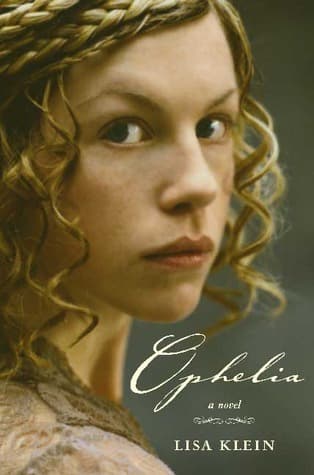
Lisa M. Klein (2006)
Genre
Fantasy / Historical Fiction / Young Adult / Romance
Reading Time
360 min
Key Themes
See below
Sign in to track this book
In a dangerous Elsinore, a sharp Ophelia navigates forbidden love with Prince Hamlet and plans a risky escape to reclaim her life amid the court's unraveling madness.
Ophelia, a spirited and motherless girl, spends her childhood at Elsinore Castle, often with the castle boys, including Laertes and sometimes Prince Hamlet. Her father, Polonius, the Lord Chamberlain, is often distant, leaving Ophelia to her own activities. She builds a close bond with Horatio, Hamlet's scholar friend, who teaches her to read and supports her interest in books and learning, a pursuit considered unusual for a girl of her status. Ophelia's quick wit and intelligence are clear from a young age, often clashing with the more traditional expectations of court life. She observes the politics and hidden tensions within the Danish court, even as a child.
As Ophelia grows, she becomes a lady-in-waiting to Queen Gertrude, a position that gives her closer access to the royal family and the court's inner workings. Her intelligence and sharp observations make her a valuable companion to the Queen. During this time, her childhood friendship with Prince Hamlet becomes a secret, passionate love affair. They meet in hidden places within Elsinore, sharing books, poetry, and intimate moments. Hamlet is taken by Ophelia's intellect and independent spirit, seeing her as different from the other court ladies. Their love is a dangerous secret, as their social standings make an open union impossible.
King Hamlet's sudden death, Prince Hamlet's father, causes chaos and mourning in the court. The official cause is a snake bite, but rumors of foul play spread. Queen Gertrude marries King Hamlet's brother, Claudius, with unusual speed, barely a month after the funeral. This quick remarriage deeply upsets Prince Hamlet, who returns from Wittenberg for his father's funeral and feels alienated and suspicious. His grief is made worse by his mother's actions, and he begins to show signs of deep sadness and unpredictable behavior, which worries Ophelia and the rest of the court.
Hamlet's friend, Horatio, tells him he has seen King Hamlet's ghost. When Hamlet confronts the ghost, it reveals that Claudius murdered him by pouring poison into his ear while he slept. The ghost demands revenge. This news devastates Hamlet, who decides to pretend to be mad to uncover the truth and plan his revenge. As part of his act, he treats Ophelia cruelly, sending her mixed messages and rejecting her, believing it will protect her and let him pursue his plan without distraction. Ophelia is heartbroken and confused by his sudden change in behavior.
Polonius, sure that Hamlet's madness comes from his unrequited love for Ophelia, aims to prove it to the King and Queen. He tells Ophelia to return Hamlet's love letters and hides to watch their interaction. Hamlet, aware of their spying, further humiliates Ophelia, telling her to 'get thee to a nunnery.' Later, Hamlet arranges for a group of traveling actors to perform a play, 'The Mousetrap,' which closely shows his father's murder. Claudius's reaction during the play confirms his guilt to Hamlet, who now knows his suspicions are true.
After the play, Hamlet is called to his mother's chambers. Polonius, still trying to uncover the truth behind Hamlet's 'madness,' hides behind a curtain to listen to their conversation. During a heated argument with Gertrude, Hamlet hears a noise and, believing it is Claudius spying, thrusts his sword through the tapestry, killing Polonius. This act has deep consequences, making Hamlet's situation worse and isolating him further. Ophelia is devastated by her father's death, and her grief, along with Hamlet's unpredictable behavior and rejection, starts to push her towards a mental breakdown.
Her father Polonius's death, combined with Hamlet's continued 'madness' and his earlier rejection, overwhelms Ophelia. She begins to wander the castle halls, singing songs, giving out imaginary flowers, and speaking in riddles; her mind is clearly breaking. Her sharp intellect is now broken by sorrow and despair. Meanwhile, Laertes returns from France, angry about his father's murder and his sister's madness. Claudius, always manipulative, uses Laertes's grief and desire for revenge, subtly guiding him towards a plot against Hamlet, further complicating the tragic situation.
While Ophelia's 'madness' is real in its grief, she keeps some of her former intelligence and cleverness. She overhears conversations and connects the dangerous plots around her, realizing she is a pawn in a deadly game and that her life is in danger. She sees that staying at Elsinore means certain doom, either from the court's plans or her own despair. Using her inner strength and resourcefulness, Ophelia begins to create a desperate plan to escape Elsinore entirely. This plan involves faking her own death to disappear from the court's reach.
Ophelia carefully plans her escape, with help from a loyal, elderly woman from the castle, whom she has befriended. She stages a scene that looks like a drowning accident, allowing herself to be discovered in a way that suggests she has given in to her grief and fallen into the river. The court, already convinced of her madness, believes she has taken her own life. However, Ophelia has arranged for the old woman to help her disappear safely after the staged event, allowing her to escape the suffocating confines and deadly politics of Elsinore Castle and begin a new life under a different identity.
After successfully faking her death, Ophelia escapes Denmark, leaving behind Elsinore's tragedy and madness. She travels to a convent in Germany, where she adopts a new identity and finds safety. Here, she is free from court life's limits, the expectations placed on her, and her past pain. She can pursue her love of learning and live a peaceful life. However, Ophelia carries a deep and dangerous secret: she is pregnant with Hamlet's child. This secret connects her forever to the prince she loved and the kingdom she escaped, ensuring that Elsinore's legacy will continue through her.
The Protagonist
Ophelia transforms from an innocent, intellectual girl into a heartbroken woman who, through cunning and resilience, reclaims her agency and escapes a tragic destiny, finding freedom and a new purpose.
The Love Interest / Tragic Figure
Hamlet descends from a grieving son into a vengeful, 'mad' prince, ultimately sacrificing his love and his life in pursuit of justice, leaving a trail of destruction in his wake.
The Supporting / Antagonist
Polonius remains a static character, driven by his own self-importance and desire for control, leading directly to his demise and contributing to Ophelia's suffering.
The Supporting
Gertrude remains largely static, unable to escape the consequences of her choices and ultimately dying without full understanding or redemption.
The Antagonist
Claudius successfully usurps the throne through murder, but his reign is plagued by guilt and paranoia, leading him to further villainy and ultimately his downfall.
The Supporting
Horatio remains a steadfast and loyal friend, witnessing the tragedy unfold and ultimately serving as the chronicler of the events, carrying the story forward.
The Supporting
Laertes returns to Denmark as a grieving, vengeful son, becoming a pawn in Claudius's plot and ultimately dying while seeking retribution for his family.
The Supporting
The Old Woman serves as a catalyst for Ophelia's escape, demonstrating unwavering loyalty and compassion.
The Mentioned / Plot Device
The ghost's appearance initiates the central conflict of the story, serving as a catalyst for Hamlet's tragic journey.
This theme explores Ophelia's struggle to reclaim control over her life in a patriarchal society and a dangerous court. Initially, Ophelia is a pawn, used by her father, the King, and even Hamlet. Her 'madness' can be a form of protest, but her act of faking her own death and escaping Elsinore is a strong assertion of her control. She refuses to be a tragic victim, choosing survival and self-determination over the fate set for her, especially in a world where women have limited choices. Her decision to live and raise Hamlet's child in secret is an act of self-preservation and hope for a future beyond the court's reach.
““I would live. I would choose life over death. I would defy them all.””
The intense, secret love between Ophelia and Hamlet is the emotional center of the story. Their intellectual and passionate connection offers a brief break from the court's schemes. However, this love is broken by Hamlet's feigned madness and his cruel rejection of Ophelia, which she sees as a deep betrayal. This betrayal, along with the political betrayals (Claudius's murder of King Hamlet), shows how love can be sacrificed or destroyed by ambition, revenge, and the realities of power. Ophelia's heartbreak is a direct result of Hamlet's calculated deceit, forcing her to face how fragile trust and affection are.
““He had loved me, I knew he had. But he had chosen his revenge over me, and that was a betrayal I could not forgive.””
Ophelia's journey is one of self-discovery. Growing up as a motherless girl with a distant father, she makes her identity through her intellect and her forbidden love for Hamlet. When her world collapses, she must confront who she is beyond her roles as daughter or lover. Her 'madness' can be a crisis of identity, but her decision to escape and create a new life in a convent under a new name is the ultimate act of self-redefinition. She sheds the identity given to her by Elsinore and embraces a future where she can truly be herself, free from her past's expectations and tragedies, making a new path as a mother and an independent woman.
““I was no longer Ophelia, daughter of Polonius, lover of Prince Hamlet. I was simply me, and that was enough.””
Elsinore Castle is a place where power corrupts. Claudius's ambition leads him to murder his brother and the king, starting a chain of deceit, paranoia, and violence. Polonius's desire to stay in the King's favor leads to his meddling and death. Even Hamlet, in his pursuit of justice, gets caught in revenge's corrupting influence, leading him to sacrifice his love and commit murder. The entire court is full of schemes and manipulation, showing how the pursuit and maintenance of power can erode morality, destroy relationships, and lead to tragedy, affecting even innocent figures like Ophelia.
““Elsinore was a gilded cage, beautiful on the outside, but filled with venom and deceit within.””
The novel shows the limits placed on women in 16th-century Denmark. Ophelia is constantly reminded of her lower position, first by her father who dictates her relationships and actions, and then by the court which sees her as emotional and fragile. Her intelligence and love of learning are seen as unusual or even dangerous. Her 'madness' is easily accepted because it fits the societal expectation of a woman overwhelmed by grief. Her escape, however, is an act of defiance against these patriarchal limits, as she reclaims control over her body, her future, and her child, choosing an independent life over the tragic end set for a woman of her status.
““A woman’s worth, I had learned, was measured by her beauty and her obedience, not by her mind or her heart.””
Allows intimate access to Ophelia's thoughts and emotions.
The story is told entirely from Ophelia's first-person perspective, offering readers an intimate and subjective view of the events unfolding at Elsinore. This device is crucial for re-framing the classic Hamlet narrative, allowing Ophelia's voice, intelligence, and emotional journey to take center stage. It provides insight into her internal struggles, her love for Hamlet, her observations of court politics, and her eventual descent into 'madness' and subsequent recovery. This perspective challenges the traditional portrayal of Ophelia as merely a tragic, passive figure, revealing her as an active and intelligent protagonist capable of agency and survival. It allows the reader to understand her motivations and the depth of her suffering and resilience.
The audience is aware of truths that characters within the story are not, particularly regarding Ophelia's 'madness'.
Dramatic irony is employed throughout the novel, particularly concerning Ophelia's 'madness' and her eventual escape. While the court believes Ophelia has genuinely lost her mind and later drowned herself in despair, the reader is privy to her inner thoughts and her cunning plan. This creates tension and suspense, as the reader anticipates how Ophelia will execute her escape while the other characters remain oblivious to her true state of mind and intentions. It also highlights the superficiality of the court's understanding of Ophelia, underscoring her intelligence and resilience, which are underestimated by those around her.
Ophelia's feigned insanity serves as a protective disguise and a means of gaining information.
Ophelia's descent into 'madness' is a complex plot device. While rooted in genuine grief and heartbreak, it also becomes a strategic veil for her, mirroring Hamlet's own feigned insanity. This 'madness' allows her to move through the court with less scrutiny, overhearing crucial conversations and gathering information that would otherwise be inaccessible. It also acts as a shield, protecting her true thoughts and intentions from the suspicious eyes of Claudius and Polonius. Ultimately, her perceived insanity is what makes her staged drowning believable, enabling her final escape and highlighting her cunning and determination to survive in a world that seeks to control and destroy her.
Flowers represent Ophelia's emotional state, lost innocence, and subtle messages.
Flowers are a recurring symbolic element, particularly during Ophelia's period of 'madness.' In the original play, she distributes specific flowers with symbolic meanings. In Klein's novel, these flowers represent her fragmented emotional state, her lost innocence, and sometimes, subtle, coded messages. The act of giving away imaginary or real flowers highlights her vulnerability and her connection to nature, but also serves as a poignant reminder of the beauty and fragility of life, and the way her own beauty and innocence have been trampled by the court's treachery. The absence of certain flowers, or the specific ones she mentions, subtly conveys her internal state and the truths she cannot speak directly.
“I will not be a pawn in your game, my lord. I am Ophelia.”
— Ophelia asserting her agency against a male figure's manipulation.
“Words, like daggers, can wound without shedding blood.”
— Ophelia reflecting on the power and danger of language.
“There is a madness born of silence, and I feared it more than any scream.”
— Ophelia contemplating the psychological toll of suppressed emotions.
“Love, I learned, was a fragile thing, easily shattered by suspicion and deceit.”
— Ophelia's disillusionment with love after experiencing betrayal.
“A woman's wit is her sharpest weapon, if she dares to wield it.”
— Ophelia recognizing the power of female intelligence in a patriarchal society.
“The world was a stage, and we were all players, bound by our scripts, yet longing to improvise.”
— Ophelia's philosophical observation on fate versus free will.
“Sometimes, the only way to find your voice is to lose everything else.”
— Ophelia's journey of self-discovery through hardship.
“Grief is a heavy cloak, but hope, a tiny spark, can still ignite a fire.”
— Ophelia's resilience in the face of immense sorrow.
“To be seen, truly seen, was a vulnerability I had not known I craved.”
— Ophelia's yearning for genuine connection and understanding.
“The truth, like a river, will always find its way to the sea, no matter how many dams are built.”
— Ophelia's belief in the ultimate triumph of truth.
“I would rather be a wild flower in the field than a rose in a gilded cage.”
— Ophelia's preference for freedom and authenticity over societal constraints.
“Memory is a tricky companion; it can be a comfort or a torment.”
— Ophelia reflecting on the dual nature of past experiences.
“Even in the darkest of times, there is always a flicker of light, if one only chooses to look for it.”
— Ophelia's enduring optimism amidst despair.
“To forgive is not to forget, but to release oneself from the chains of bitterness.”
— Ophelia's understanding of forgiveness as an act of self-liberation.
Ready to see how well you understood this book? Take our interactive quiz with 10 questions.







